How to Choose the Right Materials for Travel Bags: The Complete Manufacturer Guide
A comprehensive B2B engineering guide to selecting travel bag materials: comparing polyester, nylon, Oxford, canvas, TPU coatings, hardware, and structural interlinings across durability, GSM, abrasion, and manufacturing cost.
Selecting the optimal materials for a commercial travel bag is one of the most critical product development decisions a brand owner, product manager, or purchasing director will ever make. A fabric that feels luxuriously tactile and looks visually captivating in a showroom or design swatch binder can fail catastrophically after three cycles of commercial airport baggage handling, heavy overpacking, sudden monsoon downpours, or six months of daily commuting. The materials you specify do not merely dictate the aesthetic exterior of the finished bag—they fundamentally govern tare weight, structural integrity, tensile tear strength, seam fatigue resistance, water repellency, production cycle efficiency, total landed manufacturing cost, and customer brand loyalty.
For custom bag brands and procurement teams, making an unverified material assumption early in the prototyping phase triggers costly downstream consequences: repeated sample iterations, delaminating waterproof coatings, blown-out zipper seams, excessive return rates on e-commerce platforms, and lost retail shelf placements.
To choose the right materials for travel bags, brand developers must systematically evaluate six interdependent variables: the specific travel use case and load dynamics, environmental weather exposure, mechanical abrasion and stress vectors, target bill-of-materials (BOM) cost thresholds, volumetric shipping weight constraints, and brand market positioning. Rather than evaluating shell fabrics in isolation, successful bag development treats material selection as a cohesive, engineered ecosystem encompassing the primary outer shell, high-tenacity thread, internal lining, structural EVA and PE stiffeners, heavy-duty webbing, and precision-engineered zippers and hardware.
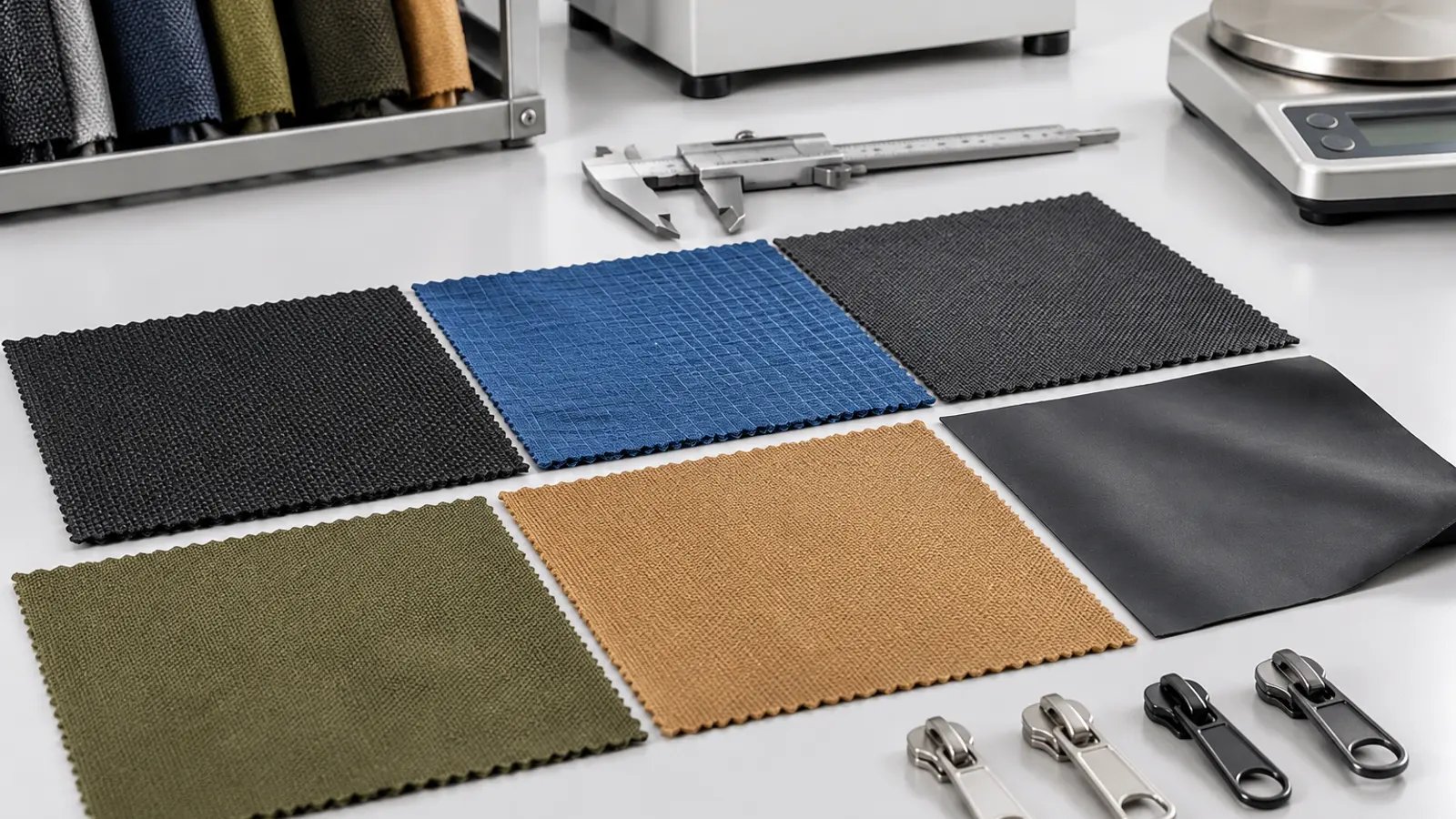
At Senszx, our two decades of OEM and ODM bag manufacturing experience in China have demonstrated that market-leading travel gear rarely relies on a single exotic, expensive fabric. Instead, commercial success stems from the precise, balanced integration of shell fabrics, specialized backings, reinforced load anchors, and durable closures calibrated to the exact price-to-performance sweet spot of your target demographic. This factory-grade technical guide breaks down the science, engineering parameters, testing protocols, and procurement strategies behind choosing the best travel bag materials.
1. Core Engineering Factors: What to Evaluate Before Selecting Travel Bag Fabrics
Before examining specific polymer names or requesting fabric swatches from suppliers, product development teams must establish clear technical parameters. Specifying a fabric purely by aesthetic appeal or marketing terminology without understanding its mechanical stress profile inevitably creates functional failure. Every travel bag is subjected to a unique combination of dynamic mechanical loads, friction, environmental hazards, and logistical stresses.
Travel Scenarios, Carrying Dynamics, and Load Distribution
The physical job a travel bag performs dictates its foundational material architecture. A 40-liter carry-on backpack engineered for multi-week international travel experiences vastly different mechanical stresses compared to a lightweight packable daypack, an executive wheeled garment bag, or a rugged outdoor expedition duffle.
- Weekend and Urban Commuting (20L–35L): Focuses on lightweight maneuverability, scratch resistance against daily abrasion, padded electronic protection, and refined aesthetic textures. Shells generally utilize 420D–600D high-density nylon or polyester with lightweight 210D linings and localized 5mm–8mm EVA foam padding.
- Adventure and Expedition Travel (50L–100L+): Demands extraordinary tear propagation resistance, puncture resistance, heavy load transfer capability, and heavy-duty water barrier performance. Shells require 840D–1680D Ballistic nylon, 900D TPU-laminated tarpaulin, or heavy ripstop fabrics reinforced with high-tenacity nylon webbing harnesses.
- Business and Professional Travel: Prioritizes structured form retention, wrinkle resistance, refined matte surface finishes, luxury touchpoints, and dedicated padded compartments for laptops, tablets, and sensitive electronics. Often leverages tight-weave 840D ballistic nylon, coated polyester dobby, or microfiber leather trims combined with velvet-lined protective pockets.
- Packable and Modular Organizers (Packing Cubes, Toiletry Bags): Prioritizes minimal tare weight, flexible compressibility, translucent visibility, and stain/liquid resistance. Utilizes 70D–210D diamond ripstop nylon, silicone-coated nylon, or flexible transparent TPU films.
The internal contents of the bag also dictate load distribution. Dense, rigid items like laptops, cameras, footwear, and toiletry bottles create localized point-load pressure against exterior seams and bottom panels. Conversely, soft apparel creates uniform outward radial tension against perimeter zippers. Understanding these interior load dynamics ensures that internal dividers and external stress panels are reinforced with appropriate structural interlinings.
Mechanical Stresses: Abrasion, Puncture, Tensile Pull, and Seam Shear
Throughout international transit, a travel bag undergoes continuous mechanical abuse across several distinct physical failure vectors:
- Surface Abrasion: The bottom corners, base panels, and side walls repeatedly slide across abrasive tarmac, airport luggage carousels, overhead bin composite linings, and concrete curbs. High-contact abrasion zones require dense yarn counts, high-tenacity filament fibers, or sacrificial abrasion-resistant base panels (such as 1680D Oxford or molded PVC/TPU skids).
- Tear Propagation: Sharp luggage rack corners, cargo bay metal edges, or overfilled sharp objects can puncture the shell. Once punctured, external tensile stress attempts to propagate the tear. Ripstop grid structures and high-tenacity nylon polymers resist tear propagation far more effectively than standard plain-weave fabrics.
- Tensile and Grab Strength: The capacity of the fabric to withstand extreme outward bursting force when a bag is packed to maximum capacity.
- Seam Shear and Needle-Hole Pullout: When a fully packed 20 kg bag is hoisted rapidly by its top grab handle, hundreds of Newtons of concentrated force transfer through a narrow stitch line. If the fabric has a loose weave density or weak backing, the needle perforations can elongate, causing thread pullout or seam separation.
- Flex Fatigue and Crease Resistance: Coated fabrics must withstand tens of thousands of folding, creasing, and flexing cycles across wide temperature ranges without developing micro-cracks or delaminating the internal waterproof barrier.
Environmental Exposure: Moisture, UV Degradation, and Thermal Extremes
Global travelers expose their luggage to drastic climatic swings—from humid equatorial downpours and freezing sub-zero aircraft cargo holds to desert UV exposure and marine saltwater mist.
- Water Resistance vs. Waterproofing: A common mistake in product briefs is conflating water-resistant fabrics with waterproof bag construction. A PU-coated 600D polyester fabric may possess a 1,500 mm hydrostatic head rating, but under sustained rainfall, water will penetrate through needle stitch perforations, zipper teeth, and seam joins unless the bag incorporates taped seams, RF-welded construction, or storm-flap zipper covers.
- UV Stability and Colorfastness: Prolonged exposure to solar radiation degrades synthetic polymers and fades dyed yarns. Exterior fabrics require UV-stabilized masterbatch dyes achieving Grade 4–5 on the AATCC 16 colorfastness scale.
- Thermal Flexibility (Cold-Crack Resistance): In cargo compartments, temperatures frequently plunge below -20°C. Low-grade PVC backings become brittle and shatter under impact at sub-zero temperatures. In contrast, Polyurethane (PU) and Thermoplastic Polyurethane (TPU) coatings maintain structural elasticity down to -30°C.
Commercial Realities: BOM Budgets, Volumetric Freight, and Sales Channels
Material selection cannot occur in a vacuum separate from commercial manufacturing economics. Product designers must balance target bill-of-materials (BOM) costs with retail pricing tiers and shipping logistics.
- E-Commerce DTC Brands: Must rigorously control finished product tare weight and packaging dimensions. Heavy 16oz cotton canvas or rigid PVC-backed luggage increases individual carton weight and dimensional freight fees on Amazon FBA and direct air couriers. Lightweight, high-tenacity 420D nylon or 600D polyester with compact flat-folding capability maximizes container packing density and minimizes global fulfillment expense.
- Wholesale and Retail Brands: Require substantial shelf presence, tactile hand-feel, structural self-standing capability when empty, and batch-to-batch color consistency. Structured 900D–1200D Oxford with laminated EVA backing allows bags to stand upright on retail displays without collapsing.
| Travel Bag Category | Typical Volume (L) | Primary Shell Material | Secondary Reinforcement | Target Fabric GSM | Key Durability Priority |
|---|---|---|---|---|---|
| Carry-On Travel Backpack | 35L – 45L | 420D Nylon / 600D Polyester | 1000D Nylon Base Panel | 220 – 320 g/m² | Seam shear strength & abrasion |
| Heavy-Duty Expedition Duffle | 60L – 110L | 900D TPU Tarpaulin / 1680D Oxford | 2-Inch High-Tenacity Nylon Webbing | 450 – 650 g/m² | Hydrostatic water barrier & puncture |
| Ultralight Packable Daypack | 18L – 25L | 70D – 210D Ripstop Nylon | Silicone / PU Micro-Coating | 65 – 120 g/m² | Tear propagation resistance & pack volume |
| Executive Business Briefpack | 20L – 30L | 840D Ballistic Nylon | Microfiber Leather Accent Trims | 280 – 380 g/m² | Structured form retention & scratch resistance |
| Heritage Canvas Weekender | 40L – 55L | 16oz Waxed Cotton Canvas | Full-Grain Leather Load Anchors | 480 – 550 g/m² | Classic tactile aesthetic & heavy tensile strength |
| Compressible Packing Cube | 5L – 15L | 210D Diamond Ripstop Polyester | Nylon Monofilament Mesh Window | 75 – 110 g/m² | Flex fatigue & lightweight breathability |
| Waterproof Wet/Dry Toiletry Bag | 3L – 8L | 420D Nylon + 0.3mm TPU Film | Welded Watertight Perimeter Seams | 180 – 260 g/m² | Chemical/lotion resistance & leak prevention |
2. In-Depth Comparison of Primary Travel Bag Shell Fabrics
The exterior shell fabric represents the first line of defense against transit wear and serves as the visual identity of your travel product. While hundreds of proprietary trade names exist, commercial travel bag manufacturing centers around five primary textile polymer families: Polyester, Nylon, Oxford, Canvas, and Coated/Synthetic Leathers.
Polyester: The Cost-Efficient, Multi-Application Workhorse
Polyester (Polyethylene Terephthalate / PET) is the most widely specified synthetic textile in the global luggage and backpack industry. It offers an exceptional combination of tensile strength, dimensional stability, chemical resistance, vibrant color dyeability, and procurement affordability.
- Dimensional Stability & Moisture Resistance: Unlike natural fibers, polyester fibers absorb virtually no moisture (moisture regain <0.4%). Polyester will not stretch, sag, or weaken when saturated with water, ensuring that travel bags retain their precise pattern shape in humid environments.
- Dyeing & Graphic Printing: Polyester accepts disperse dye sublimation, screen printing, heat-transfer vinyl, and digital all-over printing with exceptional color saturation and lightfastness.
- Denier Variations:
- 210D – 300D Polyester: Primarily utilized for interior lining compartments, shoe bags, internal organizers, and drawstring pouches.
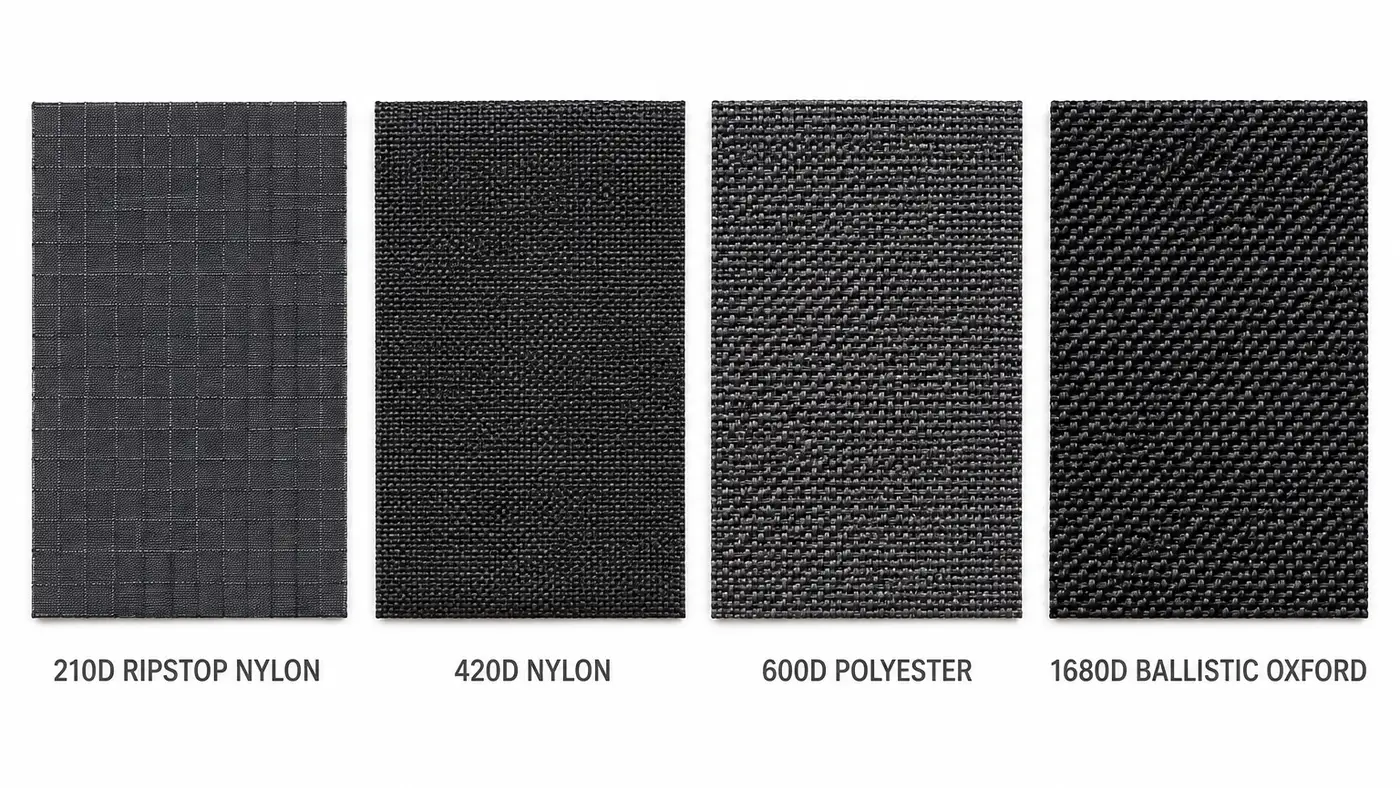
- 600D Polyester (600D x 600D / 600D x 300D): The absolute gold standard for mid-market travel backpacks, sports gym duffels, and promotional luggage. Balances robust tear resistance with an economical price point.
- 900D – 1200D Polyester: Heavy-duty woven constructions offering substantial structural rigidity and elevated abrasion thresholds for wheeled duffels and luggage side panels.
- Manufacturing Limitations: Polyester has a lower melting point and lower abrasion resistance per gram compared to high-tenacity nylon. Under extreme friction across rough asphalt, polyester yarns can fibrillate and wear through faster than equivalent-denier nylon.
Nylon: The Premium Benchmark for Tensile Strength and Abrasion Resistance
Nylon (Polyamide 6 and Polyamide 6,6) is the gold standard for high-performance outdoor, tactical, and premium lifestyle travel gear. Nylon molecules possess superior intermolecular hydrogen bonding, conferring exceptional elasticity, tensile breaking strength, and surface lubricity.
- Superior Abrasion Resistance: Nylon fibers exhibit a low coefficient of surface friction, allowing abrasive surfaces to slide over the yarns rather than abrading them. On standardized Martindale abrasion tests, high-tenacity 420D nylon frequently outperforms standard 600D polyester.
- Elastic Recovery: Nylon has superior elongation and elastic recovery under shock loading. When an overpacked travel bag is dropped or strained, nylon fibers stretch slightly to absorb peak dynamic impact and recover their original geometry without seam rupture.
- Specialized Nylon Variants:
- High-Tenacity Nylon 6,6 (Cordura® Type): Engineered with air-textured yarns (ATY) that produce a rich matte cotton-like hand feel combined with extraordinary military-grade abrasion and puncture resistance.
- Ripstop Nylon (210D / 420D Ripstop): Features a specialized crosshatch reinforcement grid woven at 3mm–5mm intervals using double or triple high-denier yarns. If the base fabric punctures, the tear halts at the reinforced grid line.
- Ballistic Nylon (840D x 2 / 1050D x 2 / 1680D): Originally developed for military fragmentation vests, ballistic nylon utilizes a 2x2 basketweave construction with heavy filament yarns. It delivers an unmistakably premium, lustrous texture, extreme burst strength, and decades-long operational life.
- Procurement Considerations: Nylon is typically 25%–40% more expensive than equivalent polyester, requires higher dyeing temperatures with acid dyes, and has a slightly higher moisture regain (approx. 4%), which must be stabilized using quality PU backings.
Oxford Fabric: The Versatile Structural Weave
Oxford fabric is not a standalone fiber type, but rather a specific woven construction technique characterized by a basketweave or modified plain weave where multiple warp yarns cross over an equal number of weft yarns. Oxford fabrics can be woven using 100% polyester, 100% nylon, or blended yarns.
- Key Characteristics: Oxford weaves produce a distinctive, slightly pebbled surface texture with excellent breathability, substantial body, and superior puncture resistance. When combined with back coatings (PU, PVC, or TPU), Oxford fabric becomes highly structured and impermeable to water.
- Standard Industry Specs:
- 300D Oxford: Lightweight, supple, and cost-efficient for casual weekender bags and packing cubes.
- 600D Oxford: The universal industry benchmark for everyday travel backpacks, duffel bags, and soft-sided luggage shells.
- 1680D Double-Strand Oxford: Ultra-heavyweight commercial fabric offering maximum structural heft and industrial durability for professional equipment cases and rugged luggage bases.
Heavyweight Cotton Canvas: Timeless Heritage and Natural Tactility
Canvas is a plain-woven, heavy-duty textile traditionally crafted from 100% cotton, unbleached linen, or poly-cotton blends. Measured in ounces per square yard (oz/yd²), canvas is the premier choice for heritage luggage, luxury weekender bags, safari duffels, and vintage-inspired travel accessories.
- Aesthetic Appeal & Patina: Canvas offers an authentic, tactile richness that synthetic polymers cannot duplicate. With extended use, quality canvas develops a distinctive, personalized patina that premium lifestyle consumers cherish.
- Waxed Canvas Variations: Impregnating cotton canvas with paraffin or beeswax formulas creates "Tin Cloth" or waxed canvas. The wax infusion renders the cotton water-resistant, stiffens the weave structure, and produces rugged pull-up distress marks during handling.
- Engineering Trade-Offs: Heavy canvas (14oz–18oz) is significantly heavier than synthetic fabrics, absorbs atmospheric moisture if untreated, dries slowly, and is susceptible to mildew in humid storage environments. For modern travel applications, custom fabrics often blend 65% polyester with 35% cotton to maintain the organic canvas look while improving tear strength and reducing dry times.
PU, Microfiber, and Genuine Leather: Luxury Finishes and Accent Trims
Leather and synthetic leather alternatives provide refined touchpoints on carry handles, zipper pull tabs, corner reinforcement patches, shoulder pad facings, and logo patches.
- Microfiber Leather (Sea-Island Fiber): The highest-grade synthetic leather available. Composed of 3D non-woven polyamide microfibers impregnated with high-grade polyurethane, microfiber leather matches or exceeds genuine leather in tensile strength, tear resistance, and breathability, while offering uniform thickness, zero surface defects, 30% lighter weight, and superior water resistance.
- Standard Polyurethane (PU) Leather: A cast polyurethane skin bonded to a polyester or woven backing. Provides a smooth, uniform aesthetic for mid-tier travel bags at a fraction of genuine leather's cost, but requires quality resin formulation to prevent hydrolytic degradation (peeling) in humid climates over time.
- Full-Grain Genuine Cowhide: Delivers unmatched luxury, natural grain variation, and prestigious brand cachet for executive duffels and weekender luggage. Requires meticulous factory pattern cutting around natural hide scars and precise skiving at sewn seam junctions.
RPET (Recycled Polyester): Sustainable Commercial Material Sourcing
As global consumers and enterprise retail buyers demand environmental sustainability, RPET (Recycled Polyethylene Terephthalate) has transitioned from an experimental niche to a mainstream procurement standard.
- The Recycling Process: Post-consumer plastic water bottles are collected, washed, sterilized, flaked, and melted into recycled polymer chips, which are subsequently extruded into continuous filament yarn.
- Performance Parity: Modern mechanical and chemical recycling technologies produce GRS-certified (Global Recycled Standard) RPET yarns that match virgin polyester within 95%–98% of original tensile breaking strength, elongation, and dye absorption.
- Certification Rigor: When sourcing RPET travel bag fabrics, brands must require valid GRS Transaction Certificates (TC) tracking the supply chain from bottle collection facility to weaving mill to verify authentic post-consumer recycled content.
| Material Type | Typical Denier / Spec | Tensile Strength (N) | Abrasion Cycles (Martindale) | Approx. Raw Fabric Cost | Best-Fit Travel Application |
|---|---|---|---|---|---|
| Polyester Oxford | 600D x 600D (PU Coated) | 950 – 1,200 N | 20,000 – 35,000 | $ (Low – Mid) | Standard travel backpacks, gym duffels |
| High-Tenacity Nylon | 420D / 500D Cordura® | 1,400 – 1,800 N | 50,000 – 80,000 | $$$ (High) | Outdoor trekking backpacks, tactical travel |
| Ballistic Nylon | 840D x 2 / 1680D | 2,200 – 2,800 N | 100,000+ | $$$$ (Premium) | Executive business luggage, pilot briefcases |
| Ripstop Nylon | 210D / 420D Grid | 800 – 1,300 N | 30,000 – 45,000 | $$ (Mid – High) | Lightweight packable bags, gear organizers |
| Heavy Cotton Canvas | 16 oz (540 GSM) | 1,100 – 1,400 N | 15,000 – 25,000 | $$$ (High) | Heritage weekender duffels, luxury totes |
| TPU Tarpaulin | 900D Polyester + TPU | 1,800 – 2,400 N | 60,000 – 90,000 | $$$ (High) | 100% waterproof expedition duffels |
| Microfiber Leather | 1.0mm – 1.4mm thickness | 1,200 – 1,600 N | 60,000 – 80,000 | $$$$ (Premium) | Luxury travel luggage trims, premium accents |
| GRS Recycled RPET | 600D RPET Oxford | 900 – 1,150 N | 20,000 – 30,000 | $$ (Mid) | Sustainable eco-conscious travel lines |
3. Demystifying Textile Specs: Denier, GSM, Thread Count, and Weave Geometries
Procurement specifications that state simply "600D Polyester" leave dangerous room for supplier interpretation. In international textile manufacturing, two fabrics labeled "600D" can vary by more than 100% in weight, hand feel, tear strength, and cost depending on yarn engineering, weave density, and back coating chemistry.
Denier (D) vs. GSM (Grams per Square Meter)
Understanding the distinction between linear yarn density and finished surface areal weight is essential for accurate product specification:
- Denier (D): Measures the linear mass density of the individual yarn filament. By definition, 1 Denier equals 1 gram of yarn mass per 9,000 meters of length. A higher Denier number indicates a thicker, heavier yarn.
- GSM (g/m²): Measures the total weight of one square meter of finished fabric. GSM accounts for yarn denier, weaving density (warp and weft thread count), chemical dyeing agents, water-repellent surface finishes, and the weight of internal PU, PVC, or TPU back coatings.
A raw, uncoated 600D x 600D polyester fabric typically weighs approximately 180 – 200 GSM. When treated with a standard 2-pass Polyurethane (PU) coating, the finished weight increases to 230 – 260 GSM. However, if that identical 600D base fabric is laminated with a heavy 0.25mm Polyvinyl Chloride (PVC) backing, the finished weight surges to 420 – 480 GSM.
When drafting factory tech packs, brands should always specify both the base yarn Denier and the required finished GSM tolerance range (e.g., "600D x 600D Polyester Oxford with 2-pass PU coating, finished weight 240 GSM ± 10 GSM").
Weave Density, Thread Count (T), and Construction Patterns
The thread count (expressed as the sum of warp yarns and weft yarns per square inch) and the geometric weave pattern dictate how tightly the yarns interlock:
- Plain Weave: The simplest 1x1 over-under weave. Produces flat, uniform surfaces ideal for direct graphic printing and basic lightweight linings (e.g., 210T Polyester Taffeta).
- Oxford Weave: A basketweave variant where paired yarns interlock (2x2 or 2x1). Balances porosity, structural flexibility, and surface abrasion resistance.
- Twill Weave: Diagonal parallel rib pattern (2x1 or 2x2 twill). Yields superior drape, supple softness, and high snag resistance, making it an ideal choice for luxury linings and casual bag shells.
- Dobby and Jacquard Weaves: Incorporate custom textured geometric micro-patterns (hexagons, diamonds, carbon-fiber textures) engineered directly into the loom. Delivers distinctive aesthetic depth and localized tear-stopping properties.
The Myth of "Higher Denier Always Equals Better Durability"
A widespread misconception among emerging product developers is assuming that an 840D or 1200D polyester fabric is automatically more durable than a 420D nylon fabric. Fiber polymer molecular integrity and yarn tenacity consistently override nominal yarn thickness:
- High-tenacity Nylon 6,6 filament yarns achieve a tenacity rating of 8.0–9.5 grams per denier (g/d).
- Standard recycled polyester yarns achieve a tenacity rating of approximately 4.0–5.2 g/d.
Consequently, a tightly woven 420D high-tenacity nylon fabric will exhibit significantly higher tensile grab strength and superior abrasion endurance than a loosely woven, low-density 600D or 900D commercial polyester fabric, while weighing 30% less. Choosing materials requires evaluating the complete physical test profile rather than relying on Denier numbers alone.
| Denier Code | Standard Yarn Composition | Nominal Base Fabric GSM (Uncoated) | Finished Coated GSM Range | Primary Component Role in Travel Gear |
|---|---|---|---|---|
| 70D – 150D | Polyester / Nylon Taffeta | 45 – 75 g/m² | 65 – 110 g/m² | Main interior compartment linings, pocket dividers |
| 210D | Nylon / Polyester Plain | 80 – 100 g/m² | 110 – 150 g/m² | Packing cubes, laundry bags, drawstring sacks |
| 300D | Polyester Oxford / Ripstop | 120 – 145 g/m² | 160 – 210 g/m² | Lightweight daypacks, toiletry organizer shells |
| 420D | High-Tenacity Nylon / Poly | 150 – 180 g/m² | 200 – 260 g/m² | Carry-on travel backpacks, weekender side walls |
| 600D | Polyester / Oxford Weave | 180 – 210 g/m² | 230 – 320 g/m² | Universal backpack shells, duffle bodies, luggage faces |
| 840D | Junior Ballistic Nylon | 240 – 280 g/m² | 310 – 390 g/m² | Premium business luggage, laptop briefpacks |
| 1000D | Textured Nylon (Cordura® type) | 310 – 350 g/m² | 380 – 480 g/m² | Extreme-duty base panels, military tactical travel |
| 1680D | Double-Strand Ballistic Oxford | 380 – 440 g/m² | 460 – 580 g/m² | Wheeled luggage bottoms, heavy tool & equipment bags |
4. Coatings, Backings, and Laminations: Engineering Weather Resistance and Structure
Raw woven fabrics inherently possess microscopic voids between intersecting warp and weft yarns. Without chemical surface treatments and back laminations, water, dust, and fine particulate matter will pass freely through the weave. The internal coating applied to the underside of the fabric determines whether a travel bag remains flexible, retains a crisp tailored silhouette, and protects interior contents against torrential rainfall.
Polyurethane (PU) Coatings: Breathable, Flexible, and Cold-Resistant
Polyurethane (PU) coating is applied as liquid polymer resin spread across the reverse side of the woven fabric in one, two, or three successive passes, then cured in thermal ovens.
- Waterproof Hydrostatic Head: PU coatings are classified by the water column pressure they can withstand before droplets penetrate:
- PU 600 mm – 800 mm: Standard splash-resistant backing; provides light weatherproofing and stabilizes weave fraying.
- PU 1,000 mm – 1,500 mm: Commercial travel gear standard; resists moderate continuous rain.
- PU 3,000 mm – 5,000 mm+: High-performance outdoor rating; withstands heavy storms and prolonged water pooling.
- Key Advantages: PU coatings remain exceptionally soft, lightweight, and pliable. Crucially, PU does not emit noxious chemical plasticizer odors and retains structural elasticity in sub-zero temperatures down to -30°C.
- PU Variants:
- PU Clear: Transparent finish that preserves the natural reverse weave appearance.
- PU Milky / White: Opaque white backing that blocks show-through on light-colored exterior fabrics.
- Breathable PU Micro-Porous: Allows water vapor molecules to escape while blocking liquid water droplets (essential for ventilated footwear compartments).
Polyvinyl Chloride (PVC) Backings: Maximum Rigidity and Economic Body
PVC backing involves laminating a continuous sheet of plasticized polyvinyl chloride film to the reverse side of the fabric using heat and adhesive rollers.
- Structural Rigidity: PVC provides immense physical structure, making fabrics extremely stiff, self-standing, and completely 100% impermeable to liquid water through the fabric surface.
- Weight and Temperature Vulnerabilities: PVC is dense and heavy, adding significant tare weight to travel bags. Furthermore, standard PVC formulations suffer from plasticizer migration over time, causing an unpleasant vinyl odor. In freezing climates, PVC stiffens dramatically and is prone to cold-cracking if folded sharply. PVC is best reserved for stationary equipment bags or budget-focused travel luggage bases where rigidity is required without expensive internal EVA foam lamination.
Thermoplastic Polyurethane (TPU) Laminations: The Premium High-Performance Barrier
TPU lamination represents the cutting edge of waterproof textile engineering. A continuous, flexible thermoplastic polyurethane membrane (typically 0.1mm–0.5mm thickness) is heat-fused directly onto the front face or reverse side of nylon or polyester fabrics.
- Superior Mechanical Bond: TPU creates an unbreakable molecular bond with base yarns, completely eliminating the risk of bubbling, cracking, or peeling over years of heavy usage.
- Radio-Frequency (RF) Weldability: TPU-laminated fabrics can be fused together using high-frequency RF electromagnetic welding or ultrasonic welding, creating seamless, airtight, and 100% watertight seams without needle penetrations. This technology is essential for expedition duffle bags, floating boat bags, and submersible travel gear.
- Environmental Profile: TPU is non-toxic, recyclable, and free from phthalates, plasticizers, and volatile organic compounds (VOCs).
Durable Water Repellent (DWR) Surface Finishes
While back coatings (PU/PVC/TPU) prevent water from penetrating through the interior of the fabric, DWR chemistry is applied to the exterior face of the fabric.
- Water-Beading Physics: DWR lowers the surface energy of exterior fibers, causing water droplets to form tight spherical beads that roll off the bag surface rather than saturating ("wetting out") the outer woven yarns.
- C6 vs. C0 Eco-DWR: Historically, C8 and C6 long-chain fluorocarbon treatments dominated the industry. Today, global environmental compliance mandates transition to C0 Fluorocarbon-Free (PFC-Free) DWR finishes, which utilize silicone or plant-based polymer dendrimers to achieve water-beading performance without persistent environmental bioaccumulation.
| Coating / Backing Type | Hydrostatic Head Rating | Flexibility at Sub-Zero (-15°C) | Finished Added Weight | RF Heat Weldable? | Environmental Compliance |
|---|---|---|---|---|---|
| 1-Pass Clear PU | 400 – 800 mm H₂O | Excellent (Soft) | +15 – 25 g/m² | No (Sewn only) | REACH / Prop 65 Compliant |
| 2-Pass / 3-Pass PU | 1,500 – 3,500 mm H₂O | Excellent (Supple) | +35 – 60 g/m² | No (Sewn only) | REACH / OEKO-TEX Standard |
| Heavy PVC Lamination | 10,000+ mm (Impermeable) | Poor (Prone to cracking) | +180 – 260 g/m² | Limited | Requires Phthalate-Free Spec |
| Hot-Melt TPU Film | 10,000 – 20,000 mm H₂O | Superior (Zero cracking) | +60 – 140 g/m² | Yes (100% Watertight) | Non-Toxic, Eco-Friendly, Recyclable |
| Silicone Elastomer | 2,000 – 5,000 mm H₂O | Superior (Ultralight) | +10 – 20 g/m² | No (Ultra-slick) | PFC-Free, High UV Resistance |
5. Interior Linings, Structural Padding, and Internal Architecture
A travel bag is not a hollow fabric shell—it is an engineered three-dimensional structure. The internal architecture determines how smoothly packing cubes slide into compartments, how effectively expensive electronics are shielded from drops, and whether the bag retains its clean silhouette when only half full.
Lining Fabric Selection: Durability, Visibility, and Tactility
The interior lining protects the raw internal seams and coated backing of the shell fabric while interacting directly with the traveler's belongings.
- 210D Polyester / Nylon Plain Weave: The universal industry standard for travel bag interiors. Offers high tear strength to withstand snagging from keys, zippers, and rough accessories.
- High-Contrast High-Visibility (Hi-Vis) Linings: Premium travel brands frequently specify bright high-contrast lining colors (such as safety orange, electric yellow, or warm silver-grey) in 210D polyester. Light-colored interiors reflect ambient light, allowing travelers to easily locate dark charging cables and accessories in dim airplane cabins.
- Plush Brushed Tricot & Velvet: Soft, non-abrasive micro-fleece laminated over 3mm–5mm EVA foam, specified exclusively for padded laptop sleeves, tablet compartments, and scratch-sensitive eyewear/camera pockets.
- Waterproof Ripstop Lining (Dry Compartments): Utilized for separated shoe bags, gym apparel dividers, and leakproof bottom compartments.
Structural Foam Cushioning: EVA vs. PE vs. EPE
Cushioning foams serve dual purposes: protecting interior cargo from external drop impacts and distributing load weight across the traveler's shoulders and lumbar anatomy.
- EVA Foam (Ethylene-Vinyl Acetate): Closed-cell, high-density elastomeric foam. Delivers superior shock absorption, high rebound resilience, and long-term resistance to compression set (will not permanently flatten under prolonged heavy loads). The gold standard for ergonomic shoulder straps, back panel padding, and laptop sleeve impact protection.
- PE Foam (Polyethylene): Semi-rigid closed-cell foam offering excellent structural stiffness and puncture protection. Commonly inserted into luggage side walls, bottom panels, and perimeter rims to maintain geometric form.
- EPE Foam (Expanded Polyethylene / Pearl Cotton): Lightweight, economical open-cell foam. Provides basic cushioning for cost-sensitive promotional bags, but compresses permanently under sustained heavy loads.
Rigid Stiffeners and Internal Reinforcements
- High-Density Polyethylene (HDPE) Sheets: 0.8mm–2.0mm flexible plastic sheets inserted into backpack back panels and wheeled duffel bases to prevent sharp cargo from poking the traveler's spine and provide torsional stability.
- Internal Fiberglass Rods & Aluminum Stays: Lightweight internal framing rods channeled into heavy travel packs (45L+) to transfer vertical load directly onto padded hip belts.
- Perimeter Piping (Welt Cords): Extruded plastic or rubber core cords wrapped in 210D fabric sewn into perimeter seams to maintain crisp edge structure and protect seam stitching from abrasive wear.
6. Zippers, Buckles, Webbing, and Hardware Selection for Travel Bags
Hardware and trim failures account for over 70% of consumer travel bag warranty claims. Specifying a world-class 1000D Cordura shell is utterly pointless if the main compartment zipper teeth separate under pressure or an injection-molded shoulder buckle snaps during transit.
Zipper Engineering: Coil vs. Vislon vs. Waterproof Zippers
Zippers on travel luggage undergo immense lateral bursting tension when overpacked bags are zipped shut.
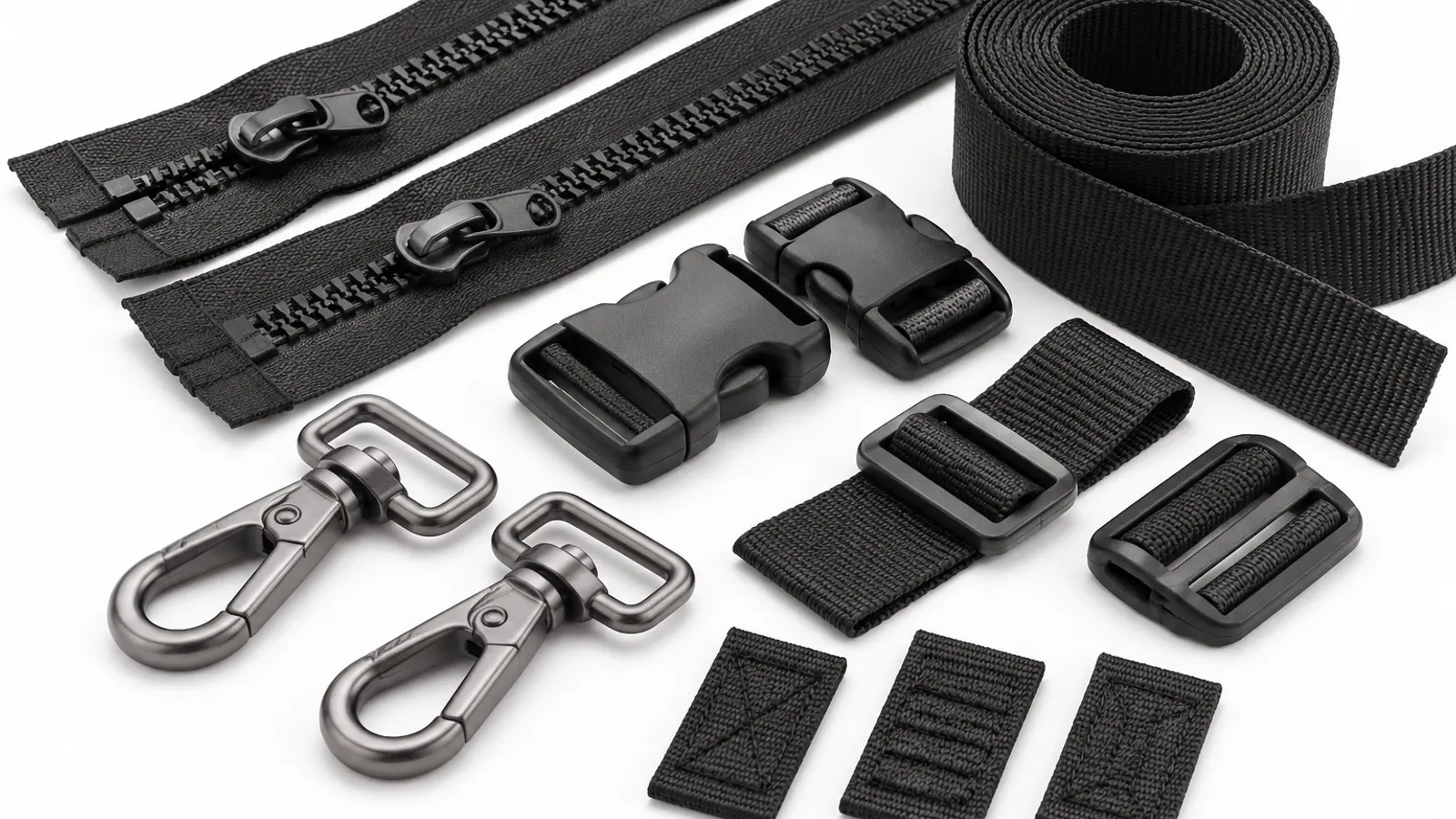
- Nylon Spiral Coil Zippers: The undisputed standard for travel luggage. Flexible, smooth-gliding, and highly resistant to lateral crosswise bursting force.
- Size #5 Coil: Pocket closures, interior dividers, and packing cube perimeters.
- Size #8 Coil: Standard secondary compartments and laptop sleeve openings.
- Size #10 Heavy-Duty Coil: Main exterior luggage openings, heavy duffle closures, and high-tension perimeter seams.
- Inverted / Reverse Coil Zippers: The zipper coil is sewn facing inward toward the bag interior, presenting a smooth, minimalist matte fabric tape on the exterior that shields zipper teeth from dirt and abrasion.
- PU Coated Water-Repellent Zippers (e.g., YKK AquaGuard®): Features a laminated polyurethane tape that creates a tight weather seal when closed, blocking wind-driven rain from entering exterior tech pockets.
- Luggage Security Sliders: Die-cast zinc alloy slider bodies engineered with interlocking loops that accommodate TSA-approved padlocks.
Learn more about full hardware and puller customization in our dedicated guide to custom zipper pulls and buckles.
Plastic Hardware: POM (Acetal) vs. Nylon
Plastic side-release buckles, strap adjusters (ladder locks), D-rings, and swivel hooks must withstand high tensile drop loads and sub-zero impacts.
- Polyoxymethylene (POM / Acetal): High-rigidity engineering thermoplastic with a low coefficient of friction. Delivers crisp, audible locking clicks, dimensional stability, low moisture absorption, and excellent performance in sub-zero cold. The premier choice for primary waist buckles and sternum clips.
- Nylon (Polyamide) Hardware: Offers extreme impact resistance and high tensile flexibility, but absorbs ambient humidity, which can slightly soften buckle retention in tropical climates.
Heavy-Duty Webbing: Polypropylene (PP) vs. Nylon vs. Polyester
Webbing distributes concentrated haul loads from handle anchors and shoulder harnesses across the main body of the bag.
- Nylon Webbing: Supreme tensile breaking strength, silky smooth luster, soft hand feel, and exceptional abrasion resistance. Specified for premium lifestyle luggage and tactical harnesses.
- Polyester Webbing: High tensile strength, minimal elongation under load (will not stretch when wet), and superior UV resistance. Ideal for exterior compression straps and tie-downs.
- Polypropylene (PP) Webbing: Lightweight and economical with low water absorption, but has a rougher hand feel and lower melting point. Best suited for internal utility loops and entry-level luggage straps.
- Reinforced Bartack Stitching: Webbing anchor points must always be secured using computerized CNC box-X and multi-pass bartack stitch patterns penetrating through internal reinforcement webbing patches (herringbone stay tape) to distribute load across a broad surface area.
| Hardware / Trim Component | Standard Material Specification | Typical Dimension / Gauge | Tensile Break Strength | Critical Quality Check |
|---|---|---|---|---|
| Main Luggage Zipper | Nylon Spiral Coil (YKK / SBS) | Gauge #10 Interlocking Slider | Lateral Burst > 850 N | Smooth glide around curved corners |
| Tech Pocket Zipper | PU Coated Reverse Coil | Gauge #5 / #8 Matte Tape | Lateral Burst > 450 N | Zero delamination of PU film |
| Shoulder Strap Buckle | Virgin POM (Acetal) | 25mm / 38mm (1.0" / 1.5") | Tensile Pull > 600 – 900 N | Sub-zero cold impact drop test (-20°C) |
| Load-Bearing Webbing | High-Tenacity Filament Nylon | 25mm / 38mm / 50mm | Tensile Break > 4,500 – 8,000 N | Box-X bartack anchor reinforcement |
| Shoulder Swivel Snap Hook | Die-Cast Zinc Alloy (Electroplated) | 25mm / 38mm Gate Opening | Tensile Pull > 800 – 1,200 N | 48-Hour Neutral Salt Spray Test |
| Internal Seam Binding | 210D Polyester / Nylon Tape | 20mm – 25mm Bias Cut | N/A (Fray prevention) | Clean folded edge, zero loose threads |
7. Category-Specific Material Blueprints: From Carry-Ons to Expedition Duffels
To simplify your procurement and tech pack development, Senszx has compiled proven material recipes across the seven most popular commercial travel bag categories:
1. The 40L International Carry-On Travel Backpack
- Primary Shell: 420D High-Tenacity Nylon or 600D Recycled RPET Oxford (2-pass PU coating, 240 GSM).
- Bottom & Base Panel: 1680D Ballistic Oxford or 1000D Cordura Nylon for extreme abrasion resistance.
- Internal Lining: 210D High-Visibility Orange/Grey Polyester Taffeta.
- Structural Padding: 8mm High-Density EVA Foam in shoulder straps + 10mm dual-layer EVA/PE back panel.
- Zippers & Hardware: #10 YKK Lockable Coil for main clamshell opening; #8 YKK for secondary pockets; POM Duraflex buckles.
- Explore Manufacturing: Review our dedicated custom travel bags and custom backpack production solutions.
2. The Heavy-Duty Waterproof Expedition Duffle (70L–100L)
- Primary Shell: 900D High-Density Polyester with double-sided matte TPU film lamination (550 GSM).
- Seam Construction: High-Frequency RF Welded waterproof seams combined with reinforced heavy bartacks.
- Bottom Panel: 0.5mm textured abrasion-resistant TPU skid base.
- Zippers & Hardware: Heavy-duty #10 airtight/watertight zipper with molded T-bar pullers; 50mm high-tenacity seatbelt nylon webbing.
- Related Guide: See our deep-dive on anti-theft travel bag manufacturing.
3. The Heritage Canvas Weekender Duffle
- Primary Shell: 16oz Waxed Cotton Duck Canvas (520 GSM) with water-repellent wax finish.
- Accent Trims: 1.8mm Full-Grain Pull-Up Cowhide Leather on carry handles, zipper tabs, and bottom skid feet.
- Internal Lining: 8oz Poly-Cotton Twill Lining (breathable and soft).
- Hardware: Heavy-duty die-cast solid brass or antique brushed nickel metal zippers (#8 brass) and metal swivel snap hooks.
- Related Guide: Discover full manufacturing parameters in our custom travel bags with logo guide.
4. The Executive Business Travel Briefpack
- Primary Shell: 840D Junior Ballistic Nylon + Microfiber Leather front accent face panel.
- Internal Lining: 150D Twill Polyester + Soft Velvet fleece for dedicated 16-inch laptop and tablet sleeves.
- Structural Reinforcement: 1.2mm HDPE Spine Sheet + 8mm closed-cell EVA edge impact bumpers.
- Hardware: Matte gunmetal electroplated metal hardware + #8 reverse coil zippers with custom-engraved zinc alloy pulls.
8. Quality Testing, Physical Lab Verification, and Quality Assurance Standards
Never approve mass production based purely on paper spec sheets or visual digital renderings. Professional bag manufacturers subject all raw materials and pre-production prototypes to rigorous laboratory testing.
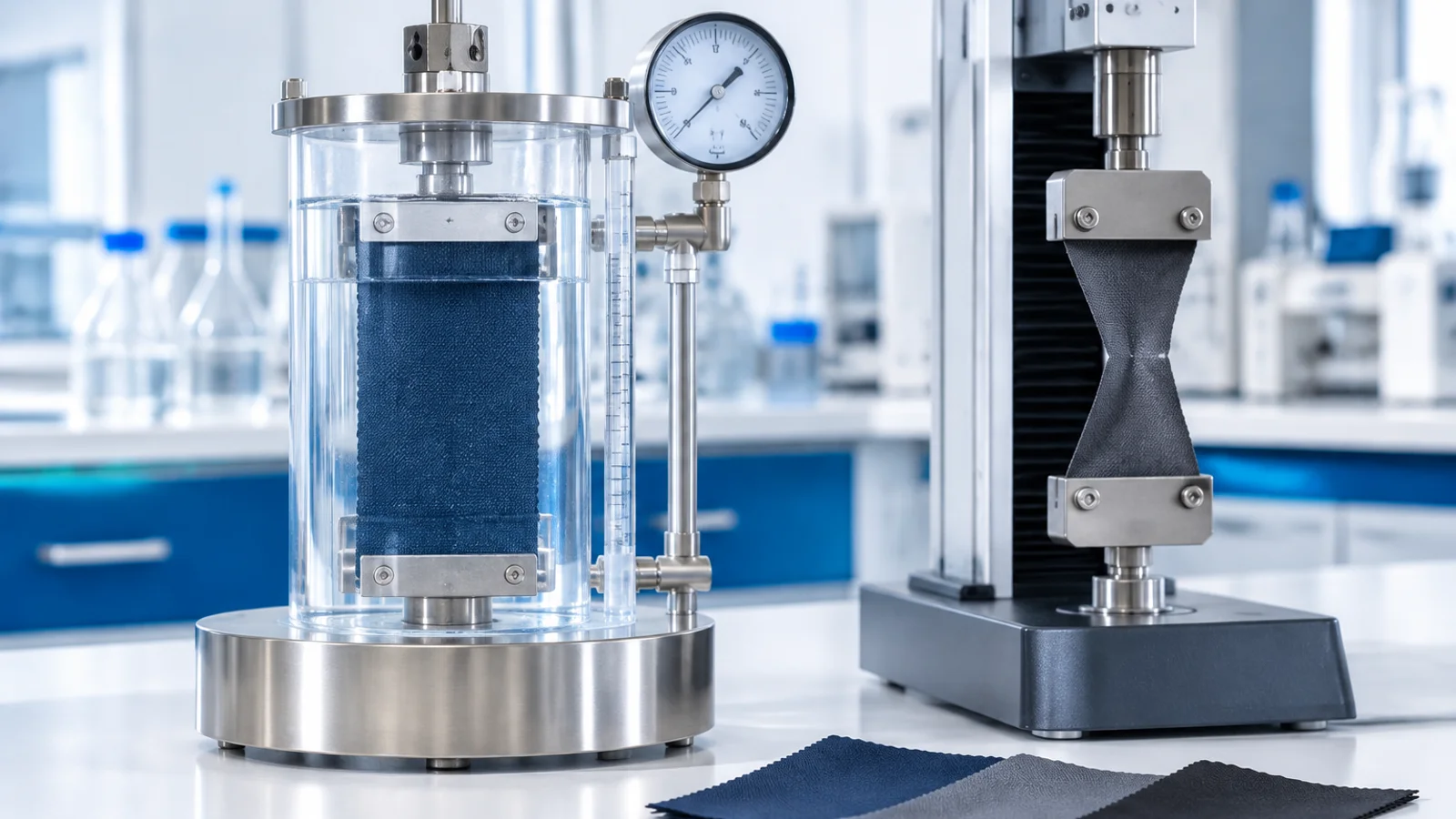
At Senszx, our dedicated quality assurance laboratory executes standardized physical testing protocols:
- Martindale & Wyzenbeek Abrasion Testing (ASTM D4966 / ASTM D4157): Measures the number of friction rubbing cycles a fabric endures before yarn breakage occurs. Standard commercial luggage requires ≥25,000 cycles; premium ballistic nylon achieves ≥100,000 cycles.
- Hydrostatic Head Water Column Testing (AATCC 127 / ISO 811): Clamps fabric under a pressurized column of water to record the exact pressure (in mm of water column) at which three water droplets penetrate the coating.
- Tensile Grab and Tongue Tear Strength (ASTM D5034 / ASTM D2261): Evaluates maximum tensile force required to rupture fabric swatches in warp and weft directions.
- Seam Strength & Slippage Resistance (ASTM D1683): Tests the integrity of sewn seams under continuous lateral mechanical tension, verifying stitch density (7–8 stitches per inch) and thread strength.
- Neutral Salt Spray Corrosion Testing (ASTM B117): Exposes metal zippers, sliders, snap hooks, and rivets to a 5% sodium chloride fog at 35°C for 24, 48, or 72 hours to ensure metal plating will not corrode, pit, or oxidize when exposed to marine travel.
- Colorfastness to Rubbing / Crocking (AATCC 8): Tests dyed fabric against dry and wet friction cloths to prevent dark dyed fabrics from transferring color onto light-colored traveler apparel.
Learn more about our multi-stage inspection procedures on our comprehensive quality control overview.
9. The 8 Most Expensive Mistakes in Travel Bag Material Sourcing
Over decades of contract manufacturing, our engineering team has audited hundreds of failed third-party sample prototypes. Avoiding these eight common pitfalls will save your brand thousands of dollars in redesign costs and prevent reputational damage:
- Specifying Nominal Denier Without Confirming Finished GSM: Requesting "600D Polyester" without stating the required weave density and PU coating weight allows low-cost mills to supply loosely woven, lightweight 160 GSM fabric that frays at seams.
- Over-Specifying Heavy PVC Backings for Cold Climates: Choosing cheap PVC backing to achieve fabric stiffness leads to brittle cracking, delamination, and vinyl odor when consumers travel through winter climates.
- Neglecting Seam Engineering and Reinforcement Webbing: Installing heavy-duty shell fabric while sewing grab handles with basic single-row stitching without internal stay tape leads to handle tear-out under standard 15 kg loads.
- Using Undersized Zippers on Primary Compartments: Specifying lightweight #5 coil zippers for main luggage openings leads to zipper tooth blowout under lateral overpacking tension. Primary luggage clamshells require #8 or #10 gauge zippers.
- Mismatched Metal Plating Across Component Suppliers: Sourcing zipper pullers, D-rings, and buckles from different component vendors without enforcing a unified Pantone / electroplating standard produces clashing metal shades (e.g., yellowish shiny gunmetal vs. bluish matte gunmetal).
- Ignoring Volumetric Tare Weight Penalties: Specifying excessively thick, heavy multi-layer materials on 40L backpacks can push empty bag weight over 2.0 kg, triggering consumer complaints regarding airline carry-on weight restrictions.
- Skipping C0 Fluorocarbon-Free DWR Verification: Failing to ensure water-repellent coatings comply with the latest US state and EU chemical regulations (PFC-free mandates) risks customs shipment seizures and retail compliance fines.
- Approving Production Without a Physical Pre-Production Sample: Committing to mass fabric mill orders based only on 10cm swatch swatches without sewing a complete, functional physical prototype. Always test a physical sample before cutting bulk fabric.
10. How Senszx Streamlines Your Travel Bag Prototyping and Mass Production
Developing a market-dominating travel bag requires an experienced manufacturing partner who bridges the gap between creative design concepts and industrialized factory reality.
- Two Decades of Supply Chain Integration: Senszx maintains strategic tier-1 partnerships with certified textile mills, dye houses, and hardware foundries across Asia, securing direct factory-rate pricing on GRS-certified RPET, Cordura-grade high-tenacity nylon, YKK hardware, and custom-molded trims.
- Rapid Physical Sampling (3–5 Days): Our specialized in-house pattern and sample development room turns your sketches, reference photos, or CAD tech packs into fully functional, production-grade physical samples in just 3 to 5 business days. Request your prototype today through our free sample program.
- Complete Product Line Customization: From custom tactical bags and travel duffels to specialized custom gym bags and toiletry organizers, our engineering department guides you through material selection, cost-reduction optimization, and custom logo branding.
- Flexible B2B Partnership: We support emerging brands, Amazon top-sellers, and enterprise retailers with scalable MOQs starting from 500 pieces per style, backed by rigorous inline AQL 2.5 quality control inspection.
- Partner with an Expert: Read our strategic guide on how to choose a bag manufacturer for travel brands to learn more about selecting the right contract manufacturing partner.
11. Frequently Asked Questions (FAQ): Travel Bag Materials & Sourcing
What is the single best all-around material for a travel backpack?
For the vast majority of commercial travel backpacks, 420D to 600D High-Tenacity Nylon with a 2-pass Polyurethane (PU) coating (1,500 mm hydrostatic head) offers the premier balance of tare weight, tear strength, surface abrasion resistance, weatherproofing, and cost efficiency. For price-sensitive collections, 600D x 600D Polyester Oxford provides an exceptional alternative at a lower bill-of-materials cost.
What is the difference between 600D Polyester and 600D Oxford?
"Polyester" refers to the synthetic chemical polymer fiber, while "Oxford" refers to the specific basketweave construction technique. Therefore, 600D Oxford is almost always woven from polyester (or occasionally nylon) yarns. However, a fabric labeled generic "600D Polyester" might be woven in a plain, twill, or loose weave, whereas "600D Oxford" guarantees a structured basketweave texture with superior form retention.
Is Ballistic Nylon significantly better than standard Nylon?
Yes, for heavy-wear applications. Ballistic nylon is woven in a distinctive 2x2 basketweave using thick, high-tenacity filament yarns (traditionally 840D x 2 or 1050D x 2). It delivers more than double the abrasion and puncture resistance of standard plain-weave nylon and features an unmistakable luxurious luster, making it the preferred choice for executive luggage and heavy tool bags.
How do I ensure my travel bags are truly waterproof?
True waterproofing requires an engineered system: (1) Specify an impermeable fabric with TPU lamination or heavy PU coating (≥3,000 mm H₂O); (2) Utilize water-repellent reverse coil zippers (like YKK AquaGuard) protected by wide fabric storm flaps; (3) Seal all stitched needle perforations with heat-applied waterproof seam tape, or construct the bag using Radio-Frequency (RF) welded seams.
Can recycled RPET fabric match the durability of virgin polyester?
Yes. Modern GRS-certified post-consumer RPET filament yarns match virgin polyester within 95%–98% of original tensile breaking strength, elongation, and abrasion resistance. When produced by certified tier-1 mills, consumers cannot detect any visual, tactile, or performance difference between RPET and virgin polyester.
What gauge zipper should be specified for travel bag openings?
Main exterior clamshell luggage openings and heavy duffel closures should always utilize #8 or #10 gauge nylon spiral coil zippers. Secondary front pockets, top organizer compartments, and internal dividers can safely utilize #5 gauge coil zippers. Never specify #3 or #5 zippers for main load-bearing luggage compartments.
What causes synthetic leather (PU) to peel on travel bags after a few years?
PU peeling is caused by hydrolysis—the chemical breakdown of polyurethane resin when exposed to atmospheric moisture, sweat, and ambient heat over time. To prevent peeling, brands must specify "high-hydrolysis-resistant" Polyurethane formulated with polycarbonate or polyether polyols, guaranteed to withstand 3 to 5 years of tropical humidity exposure without surface breakdown.
How does Senszx support material selection during sample development?
When you initiate a project with Senszx, our engineering team analyzes your design sketch, target retail price, and functional requirements. We provide physical fabric swatch cards, execute lab strike-off tests, recommend structural foam and hardware pairings, and produce a fully refined physical sample in 3 to 5 business days. Contact our engineering team today to begin your custom travel bag project.
Hi, I'm Senszx Bag Manufacturer, Hope You Like This Blog Post.
With more than 20 years of experience in OEM/ODM/Custom luggage and bag, I'd love to share with you the valuable knowledge related to luggage and bag products from a top-tier Chinese supplier's perspective.
Senszx Factory
Est. 2006 · Baigou, China
Related articles
Bulk Backpacks: The Complete Wholesale Buying Guide for 2027
How brands, distributors, schools and charities buy backpacks in bulk: sourcing paths, styles, fabrics, customization, unit price drivers, MOQ, lead times, QC and shipping.
Wholesale Toiletry Bags: The Complete Sourcing Guide for 2027
How travel brands, grooming labels, retailers and distributors source toiletry bags in bulk: styles, materials, customization, MOQ, pricing, QC and shipping.
How to Manufacture Custom Tote Bags: The Complete Factory Guide
How custom tote bags are manufactured: canvas selection, tech pack, sampling, screen printing, sewing, QC, MOQ, cost drivers and lead times - from a bag factory.
Get a Custom Bag Quote from Our China Factory
Our sales team is online around the clock and usually replies within the hour.
Email
[email protected]Factory
Qinzheng Road No.89, New Industry Zone, Baigou Town
Baoding City, Hebei Province 074004, China