Wholesale School Backpacks: Bulk Sourcing Guide for 2027
How schools, uniform suppliers and distributors source custom school backpacks in bulk: sizing by age, fabrics, safety standards, MOQ, pricing, lead times and QC - from a factory.
Buying five hundred school backpacks is not the same job as buying five hundred promotional totes. A school bag is carried by a child for 190 school days a year, loaded beyond its design weight most of those days, dragged along floors, sat on, rained on and washed by parents who ignore the care label. It also falls under children's-product regulation in every major market. The bags that survive a school year without a single strap failure are not the ones with the lowest quote; they are the ones whose specification was written before the quote was requested.
This guide is written from the factory side. Senszx has made school backpacks in Baigou, China, since 2006 for uniform suppliers, education distributors, Amazon sellers and school groups across the Gulf, Europe and North America. What follows is the checklist we wish every first-time buyer arrived with: how to size a bag by age group, which fabric to specify and why, which safety tests your market actually requires, what drives the unit price, how MOQ and lead time really work, and what to inspect before you release payment.
Who Buys School Backpacks in Bulk, and What Do They Need?
Four buyer types account for most bulk school backpack orders, and each has a different definition of "good".
| Buyer | Typical order | Priority | Common mistake |
|---|---|---|---|
| School or school group | 300-3,000 pcs, one design, 1-3 sizes | Uniform colour match, crest, durability across a full year | Ordering one size for ages 6-16 |
| Uniform supplier / distributor | 2,000-20,000 pcs, several schools, reorder each year | Consistent re-supply, colour repeatability, stock availability in July-August | Switching factories between years; colours drift |
| E-commerce brand (Amazon, Noon, Shopify) | 500-5,000 pcs per SKU, 3-8 colourways | Photogenic details, review-proof zippers and straps, retail packaging | Under-specifying zippers to hit a price |
| NGO / government programme | 5,000-100,000 pcs, tender-driven | Compliance documents, unit cost, delivery to schedule | Accepting the cheapest bid without a pre-shipment inspection |
The rest of this guide covers the decisions all four share. Where a decision changes by buyer type - for example, retail packaging versus bulk bales - we say so.
How Do You Size a School Backpack by Age Group?
A backpack that is too large is the most common ergonomic failure in school bags: it sits below the hips, pulls the shoulders back and gets filled with more than the child should carry. Size by the wearer's torso, not by how many books a parent would like to fit.
Recommended dimensions and capacity
| Age group | Torso length (approx.) | Bag height | Bag width | Capacity | Typical contents |
|---|---|---|---|---|---|
| Preschool / KG (3-5) | 25-30 cm | 28-32 cm | 22-25 cm | 8-12 L | Lunch box, change of clothes, A5 book |
| Primary lower (6-8) | 30-35 cm | 34-38 cm | 26-28 cm | 14-18 L | A4 folder, 2-3 books, water bottle |
| Primary upper (9-11) | 35-40 cm | 38-42 cm | 28-30 cm | 18-22 L | A4 binder, 4-5 books, lunch, bottle |
| Secondary (12-16) | 40-46 cm | 42-48 cm | 30-32 cm | 22-28 L | Laptop or tablet, 5-7 books, sports kit |
Paediatric guidance commonly cited by school authorities puts the loaded weight of a school bag at no more than 10-15% of the child's body weight. A factory cannot control what goes in the bag, but three design choices help: a capacity ceiling matched to the age band, a padded back panel that keeps the load close to the spine, and a sternum strap that stops shoulder straps sliding outward on small frames.
Two-size versus three-size programmes
Most uniform programmes settle on two sizes (primary and secondary) because it halves pattern, sampling and stock complexity. A three-size programme adds a KG size and is worth it when the school has a large early-years intake; KG bags are also the ones parents photograph and post, so they carry outsized brand value.
Which Fabric Should a School Backpack Use?
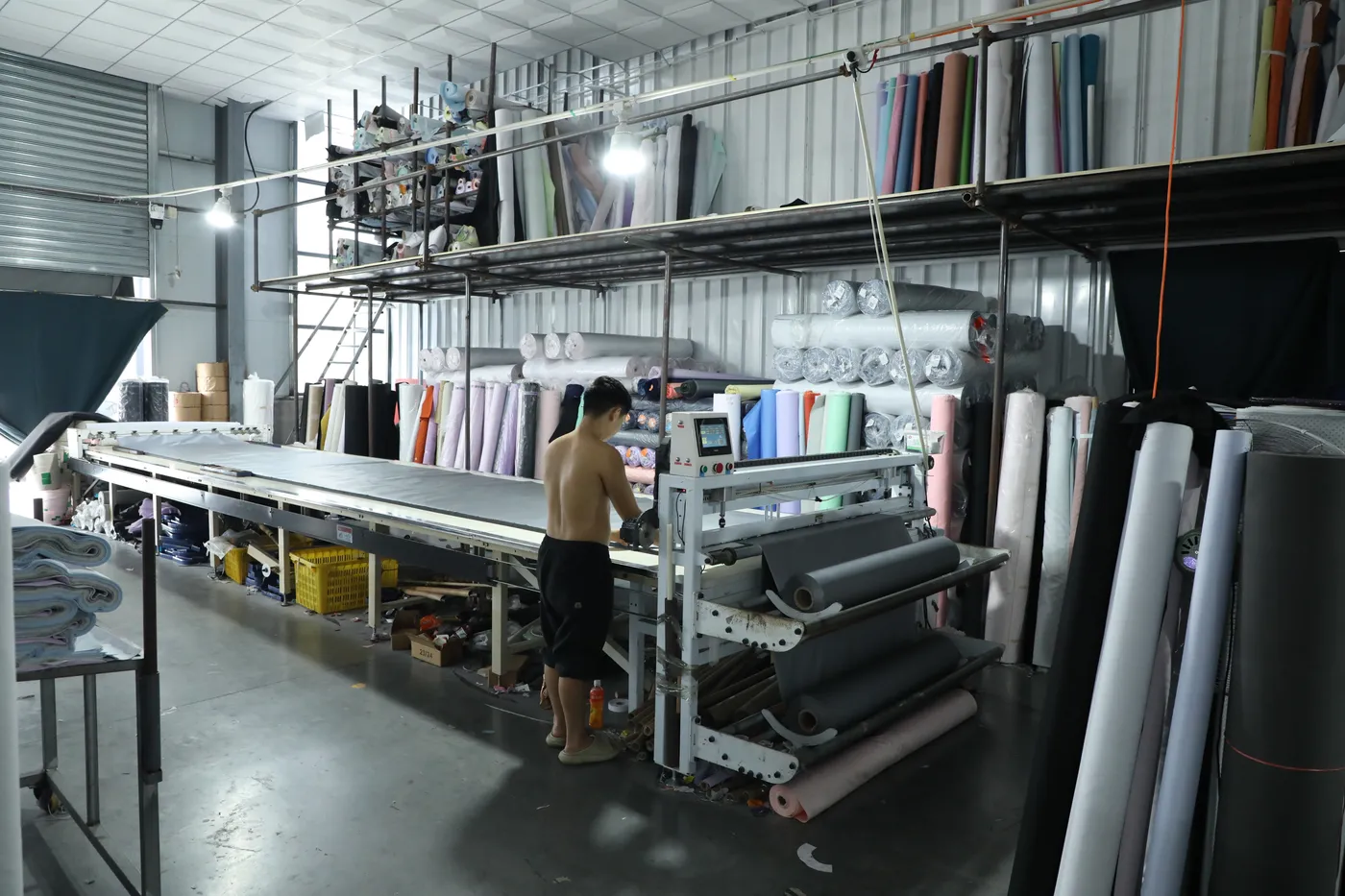
Fabric is the single largest cost driver after quantity and the single largest determinant of how the bag looks after a year. Three families cover almost every school backpack.
Fabric comparison for school use
| Fabric | Weight | Abrasion | Water resistance | Print quality | Cost index | Best for |
|---|---|---|---|---|---|---|
| 600D polyester, PU coated | 300-330 gsm | Good | Good (coating) | Excellent (sublimation, screen) | 1.0 | Primary bags, colour programmes, budget tenders |
| 900D polyester | 380-420 gsm | Very good | Good | Very good | 1.25 | Secondary bags, heavier loads |
| 1680D ballistic polyester | 550-600 gsm | Excellent | Good | Good (dark colours only) | 1.9 | Premium secondary, laptop compartments |
| 420D / 500D nylon | 200-260 gsm | Excellent | Good | Fair | 1.6 | Lightweight KG bags, premium brands |
| Recycled RPET 600D | 300-330 gsm | Good | Good | Excellent | 1.15 | Sustainability tenders, EU/UK programmes |
| Canvas 12-16 oz | 400-540 gsm | Fair | Poor without wax | Excellent (screen) | 1.1 | Heritage look; not recommended for daily school use |
600D polyester remains the default for school backpacks because it prints cleanly in uniform colours, holds a PU coating that sheds light rain, and costs the least per bag. Move to 900D for secondary students who carry 5 kg or more daily; the extra abrasion resistance shows at the base corners after month six. Our 600D vs 900D vs 1680D guide covers the numbers in detail.
Colour matching for uniform programmes
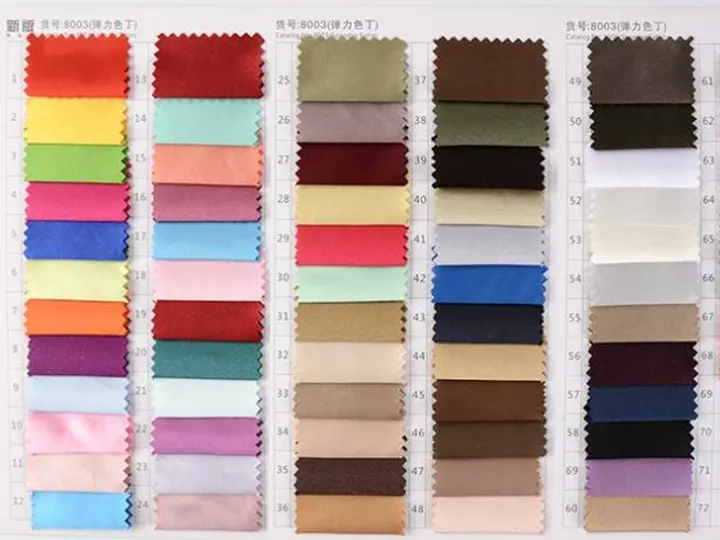
Uniform colours are the reason school bags are rejected at inspection more than any other product we make. Specify the colour as a Pantone TCX reference, not as a name ("navy"), and approve a physical lab dip before bulk fabric is dyed. Where a programme repeats annually, we keep the approved swatch and the mill's dye recipe on file so year-two bags match year-one.
| Colour control step | Who | Output | Time |
|---|---|---|---|
| Pantone TCX selected from swatch book | Buyer | Written reference, e.g. 19-3921 TCX | Day 0 |
| Lab dip (3 shades: on-target, lighter, darker) | Mill via Senszx | 10 x 10 cm dyed swatches | Day 5-7 |
| Buyer approval of one shade | Buyer | Signed swatch | Day 8 |
| Bulk dye lot | Mill | Fabric roll with lot number | Day 15-20 |
| Bulk-to-lab-dip check under D65 light | Senszx QC | Pass / fail; delta E recorded | Day 21 |
What Construction Details Separate a One-Year Bag From a Three-Year Bag?
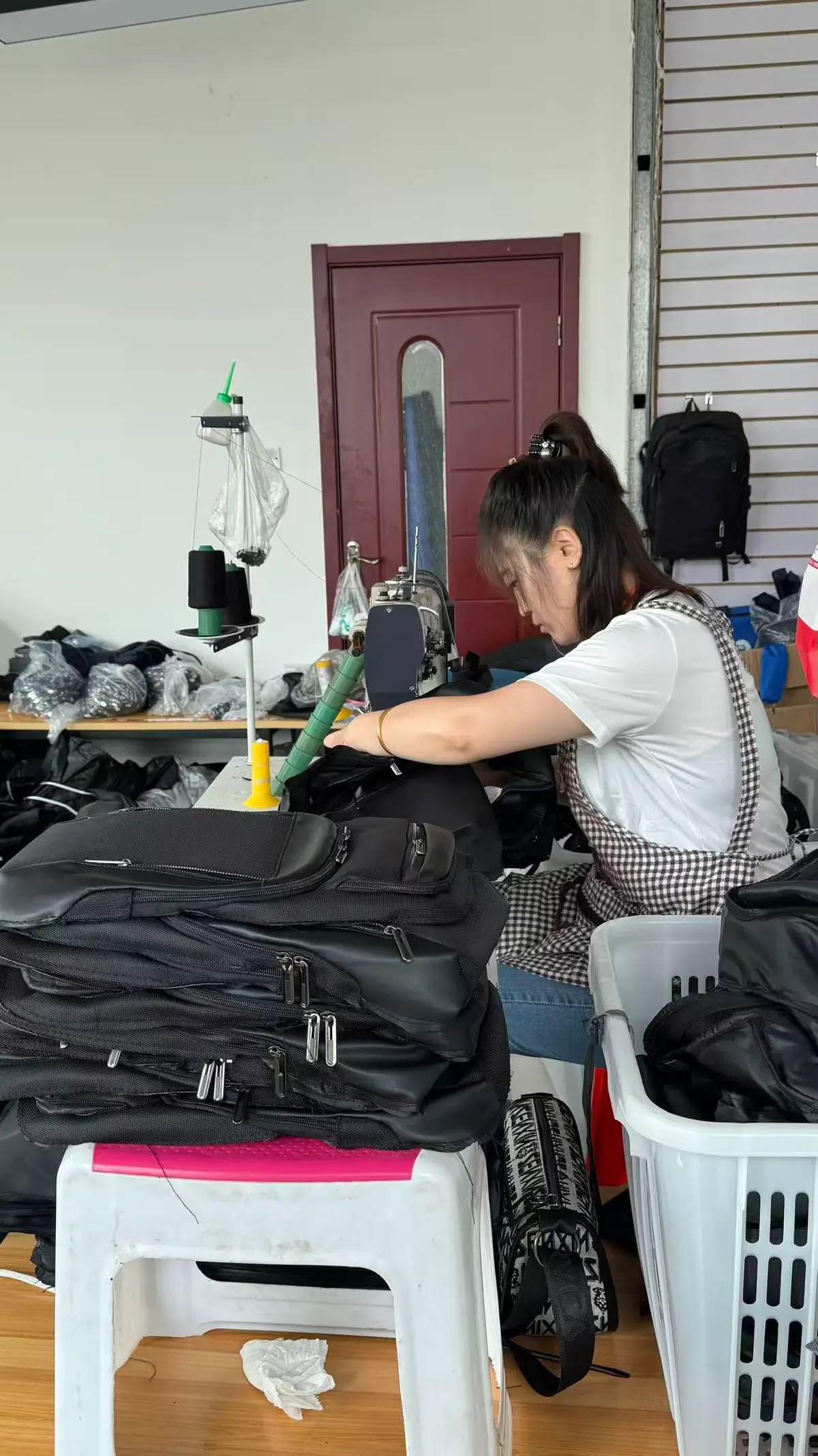
Buyers compare backpacks by looking at them. Children destroy backpacks at points buyers rarely look at: the strap anchors, the top handle, the base corners and the zipper stops.
The seven stress points and how to specify them
| Stress point | Failure mode | Specification that prevents it |
|---|---|---|
| Shoulder strap anchors (top) | Strap tears out under swing load | 42-stitch bartack through webbing + fabric + backing tape; box-X stitch on premium bags |
| Shoulder strap anchors (bottom) | Webbing pulls through triglide | 25 mm webbing, folded and bartacked; triglide with anti-slip teeth |
| Top grab handle | Tears out when bag is lifted loaded | Webbing loop sewn through back panel into a reinforcement patch, bartacked both ends |
| Base corners | Abrasion from floors and stairs | Second layer of 1680D or PU-coated base fabric; bound seams |
| Main zipper | Slider fails or teeth split | #8 or #10 nylon coil, metal slider, two-way for main compartment; tested 3,000 cycles |
| Front pocket zipper | Slider pulls off at end stop | #5 coil with metal top stops, not sewn-in stops |
| Bottle pocket elastic | Stretches out by term two | 25 mm knitted elastic, 40% max stretch, bar-tacked at both ends |
Straps and back panel
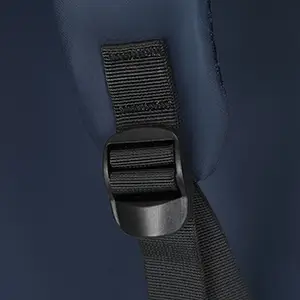
Shoulder straps are where children feel the bag. Specify strap foam by density rather than by thickness: 8-10 mm EVA at 45-50 kg/m3 holds shape for the life of the bag, while cheaper PE foam at the same thickness flattens by the second term. Curved (S-shape) straps fit small shoulders better than straight straps. A mesh-faced padded back panel with two vertical foam channels keeps the load off the spine and lets air circulate - important in Gulf climates where a solid foam panel leaves a sweat patch on a white uniform shirt.
Hardware
Hardware is cheap to upgrade and expensive to get wrong. Every buckle, slider and adjuster on a children's bag should pass a 90 N pull without deformation and have no edges sharp enough to fail a sharp-point test. Our hardware guide lists the standard fittings for school bags; the four that matter most are the sternum clip, the 25 mm triglide, the zipper slider and the D-ring for a name tag.
Which Safety Standards Apply to School Backpacks?
A school backpack is a children's product. That changes the compliance picture compared with an adult laptop bag, and it changes it differently by market.
| Market | Framework | What is commonly tested on a school bag | Documentation buyers request |
|---|---|---|---|
| United States | CPSIA | Lead in substrate and surface coatings, phthalates in plasticised parts, small parts (under 3), sharp points and edges | CPC (Children's Product Certificate) referencing CPSC-accepted lab reports |
| European Union / UK | EN 71-3, REACH, GPSR | Migration of specific elements from coatings and plastics, restricted substances (phthalates, azo dyes, PFAS in some states), general product safety file | Declaration of Conformity, test reports, technical file |
| Saudi Arabia | SASO / SABER | Product Certificate of Conformity for the HS code, shipment certificate per consignment | SABER PCoC and SCoC |
| UAE | MoIAT / ESMA | Conformity to referenced GSO standards for the category | ECAS certificate where required, test reports |
| Australia | ACCC mandatory standards | Lead and phthalates for children's products | Test reports on request |
Two practical points. First, the test report is only valid for the materials tested: if a buyer changes the zipper supplier or the print ink between sample and bulk, the report no longer covers the bag. Second, for Gulf tenders, SABER registration is done by the importer of record, but it needs the factory's test reports and product photos - build 10 working days into the schedule for it.
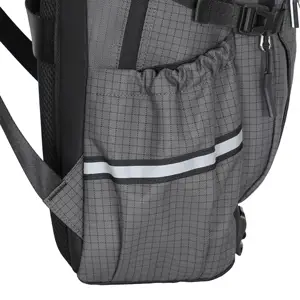
Reflective trim is not legally required for school bags in most markets, but it is the feature parents ask about most. A 25 mm reflective strip on the front panel and strap tips costs well under a dollar per bag and photographs well in tender submissions.
How Are School Crests and Logos Applied?
A school crest has fine detail, several colours and must survive daily abrasion at the front of the bag. The right method depends on the artwork and the quantity.
| Method | Detail limit | Colours | Durability | Setup cost | Unit cost | Best for |
|---|---|---|---|---|---|---|
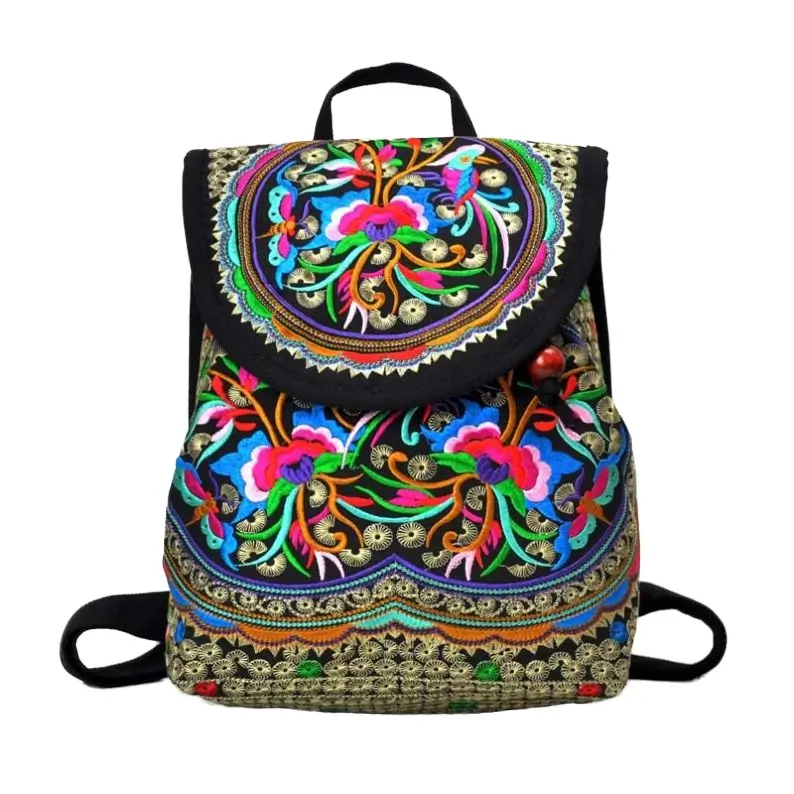
| Embroidery | Text 5 mm+, no gradients | Up to 9 thread colours | Excellent | Digitising fee once | Medium (by stitch count) | School crests, premium programmes |
| Woven label sewn on | Fine detail, small text | Up to 8 | Excellent | Low | Low | Small crests, name-tag windows |
| Screen print | 1 mm lines | 1-4 spot colours | Good | Screen per colour | Very low at volume | Single-colour school names, tenders |
| Heat transfer (PU / silicone) | Photographic detail | Unlimited | Good | Low | Low-medium | Multi-colour crests, e-commerce brands |
| Rubber / PVC patch | Raised 3D shapes | Up to 6 | Excellent | Mould fee once | Low at 1,000+ | Distinctive brand mark, sublimated with a crest |
| Sublimation (all-over) | Photographic | Unlimited | Excellent (in fabric) | Artwork only | Medium | Patterned KG bags, licensed characters |
Embroidery is the default for crests because it reads as "school", not "merch", and it lasts. Keep the crest under 90 mm wide and avoid thread text below 5 mm cap height; digitise once, approve a stitch-out on the actual fabric, then lock the file. The private-label guide covers artwork preparation for each method.
What Does a Bulk School Backpack Cost, and What Moves the Price?
Buyers ask for "the price of a school backpack" the way they might ask the price of a car. The honest answer is a range and a list of what moves you within it.
Indicative FOB price bands
| Specification tier | Fabric | Key features | Indicative FOB China, 1,000 pcs |
|---|---|---|---|
| Tender / entry | 600D polyester, 1 compartment + 1 pocket | Padded straps, screen-printed name, polybag | USD 4.5 - 6.5 |
| Standard primary | 600D PU, 2 compartments, bottle pocket | Embroidered crest, padded back, reflective strip | USD 6.5 - 9.0 |
| Standard secondary | 900D, 2-3 compartments, laptop sleeve | Embroidered crest, chest strap, reinforced base | USD 9.0 - 13.0 |
| Premium / retail brand | 1680D or nylon, 3 compartments, organiser | Custom hardware, woven labels, retail box | USD 13.0 - 22.0 |
These bands are based on typical specifications at 1,000 pieces per design and shift with fabric prices, exchange rates and the details below. They are a planning tool, not a quotation; a quotation needs a specification.
The eight price drivers, in order
| Driver | Typical effect on unit price | Note |
|---|---|---|
| Quantity per design/colour | -8% to -15% each time volume doubles | Sizes count as separate designs for cutting |
| Fabric denier and coating | 600D to 900D adds 10-15%; to 1680D adds 35-50% | Base-only 1680D is a cheaper compromise |
| Number of compartments and pockets | Each extra zip pocket adds 3-6% | Labour plus zipper |
| Zipper grade and count | Metal sliders, two-way, branded pullers add 4-10% | Most reliable place to spend extra |
| Branding method | Embroidery adds 3-8% by stitch count; screen print 1-2% | Digitising and screens are one-time |
| Padding quality | EVA over PE foam adds 2-4% | Visible after one term |
| Packaging | Polybag 0; hang tag +1%; printed retail box +8-15% | Bulk bales save freight for tenders |
| Compliance testing | USD 800 - 2,500 per material set | Spread over the order; reusable for reorders |
What Are Realistic MOQ and Lead Times?
Minimum order quantity is set by fabric and cutting economics, not by policy. A dye lot of 600D polyester is typically 1,000-1,500 metres per colour; a school backpack uses 1.1-1.4 m. That is why MOQs are quoted per colour.
| Item | Senszx standard | Why |
|---|---|---|
| MOQ per design and colour | 100 pcs (stock fabric colours), 500 pcs (custom-dyed) | Custom dye lots start at 1,000 m |
| Sample lead time | 3-5 working days | In-house pattern and sample room |
| Bulk lead time | 20 working days from approved sample and deposit | 100 lines, 10,000 m2 floor |
| Reorder lead time | 15 working days | Patterns, digitising and lab dips on file |
| Compliance testing (parallel) | 10-15 working days | Can run alongside sampling |
| Sea freight to Jebel Ali / Dammam | 18-25 days | Plus SABER SCoC before shipment |
| Sea freight to Rotterdam / Felixstowe | 30-38 days |
The back-to-school calendar, working backwards
Gulf schools open in late August or early September; European schools in early September; Australian schools in late January. Working backwards from a mid-August delivery to a Riyadh warehouse:
| Milestone | Latest date (for 15 Aug delivery, KSA) |
|---|---|
| Goods arrive Dammam and clear | 10 Aug |
| Vessel departs Tianjin / Shanghai | 15 Jul |
| Bulk production complete, final inspection | 8 Jul |
| Production starts (deposit paid, sample approved) | 10 Jun |
| Sample approved, testing complete | 5 Jun |
| Sample requested, specification frozen | 25 May |
| Tender award / purchase decision | 15 May |
Buyers who arrive in July for August delivery can still be served from wholesale stock with a printed logo, but not with custom colours or embroidered crests. The programmes that go smoothly every year place their order in May.
How Should You Evaluate a School Backpack Sample?
A sample is a contract in physical form. Evaluate it against the specification, not against your impression of it, and evaluate it loaded.
Sample evaluation checklist
| Check | How | Pass criterion |
|---|---|---|
| Dimensions | Tape measure, bag stuffed to shape | Within +/- 1 cm of spec |
| Fabric | Compare to approved lab dip under daylight; rub with white cloth | Colour within tolerance; no crocking |
| Load | Fill with 5 kg (primary) or 8 kg (secondary) of books; lift by handle 20 times, carry 10 minutes | No stitch pull at any anchor; straps hold adjustment |
| Zippers | Open and close every zipper 50 times loaded | No snag, slider returns to stop |
| Straps | Adjust from minimum to maximum | Triglide holds under load; no webbing fray |
| Crest | Measure position from top seam and centre line | Within +/- 3 mm; no thread breaks |
| Inside | Turn inside out | Seams bound or overlocked; no raw edges; label content correct |
| Hardware | Pull each buckle by hand; run finger over edges | No deformation; no sharp edges |
| Reflective | Photograph with phone flash from 5 m | Strip visibly returns light |
| Smell | Open the polybag | No strong chemical odour (a sign of uncured coating or PVC) |
Ask for the "golden sample" to be sealed and signed by both parties. Bulk is inspected against it.
How Is a Bulk Order Inspected Before Shipment?
School bags are usually delivered to a deadline that cannot move. That makes pre-shipment inspection more important, not less - a defective lot found in Riyadh in August cannot be remade before term starts.
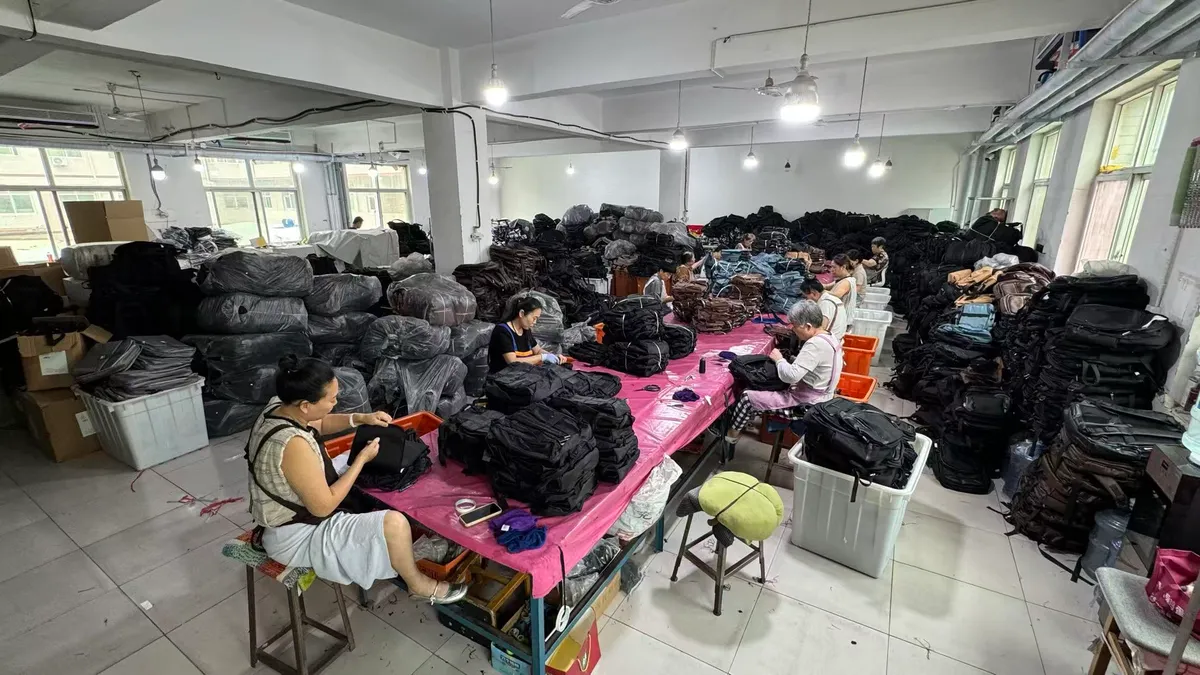
Inspection stages on a school backpack order
| Stage | When | Who | Scope |
|---|---|---|---|
| Fabric incoming | Before cutting | Senszx QC | Colour vs lab dip, GSM, coating adhesion, roll defects |
| First-off | First 20 bags off the line | Senszx QC + buyer photos | Full spec check; freezes the line standard |
| In-line | Every 2 hours per line | Line QC | Stitch density, bartacks, zipper function |
| 100% final | Every bag before packing | Final QC | Function, appearance, label, crest position |
| Load test sample | 5 bags per 1,000 | QC lab | Loaded lift and strap pull to specified force |
| Pre-shipment (third-party optional) | Cartons sealed | SGS / TUV / buyer's agent | AQL 2.5 sampling, carton marks, quantity |
A buyer placing a tender order for the first time should budget for a third-party pre-shipment inspection; it costs a few hundred dollars and produces the report most tender authorities require. Our quality assurance page lists the tests and instruments used in-house.
How Should School Backpacks Be Packed and Shipped?
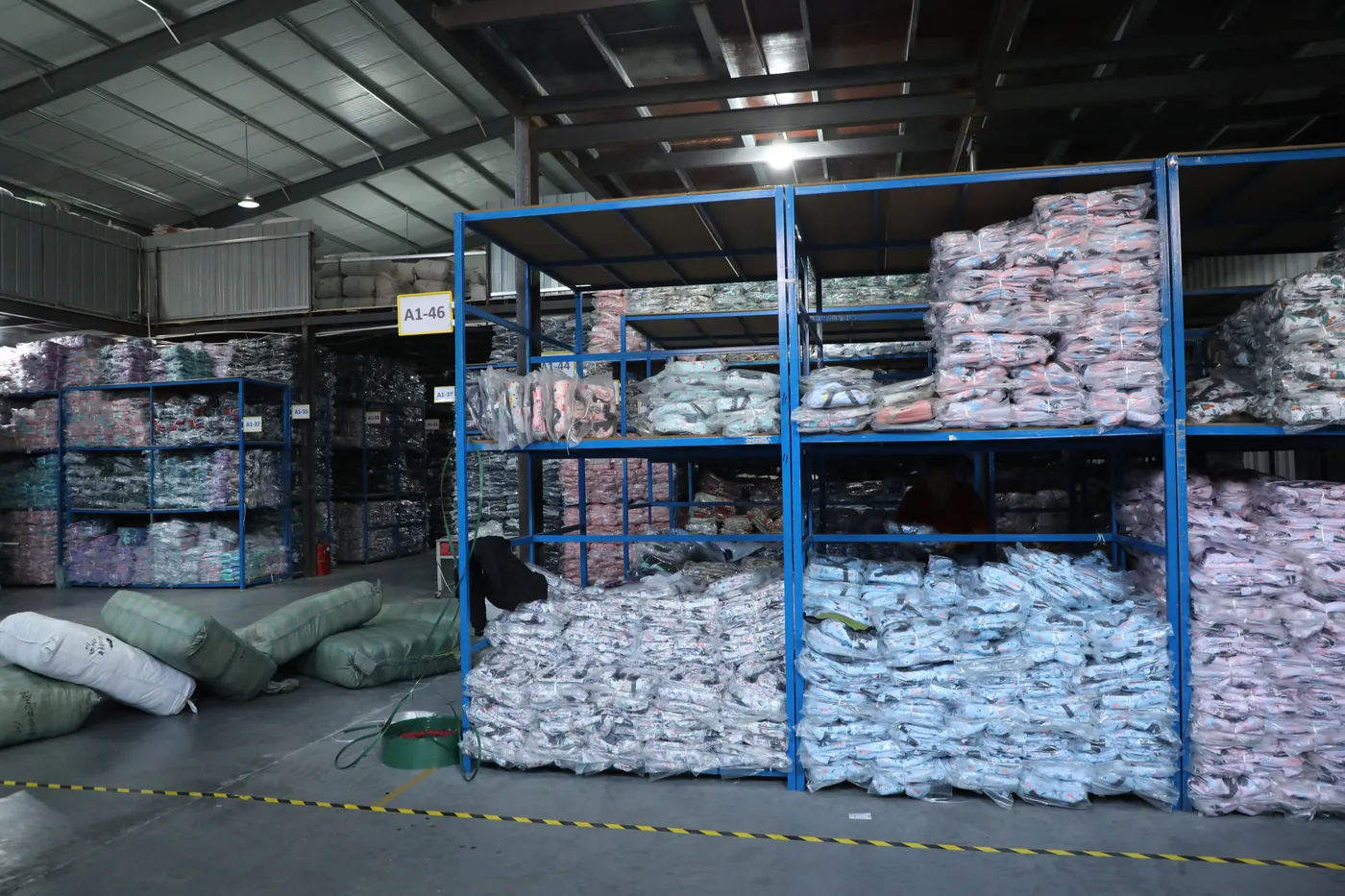
Packing decisions change the landed cost by more than most buyers expect, because backpacks are bulky and light: freight is charged by volume.
| Packing format | Bags per 40' HC | Freight per bag (indicative, to Jebel Ali) | Best for |
|---|---|---|---|
| Individually polybagged, 20 per export carton | ~9,000 - 11,000 | USD 0.25 - 0.35 | Distributors, e-commerce, school hand-out |
| Polybagged, compressed bales of 50 | ~14,000 - 16,000 | USD 0.17 - 0.24 | Tenders, NGO programmes, repacked locally |
| Retail boxed, 12 per carton | ~5,000 - 6,000 | USD 0.45 - 0.65 | Retail brands, gift sets |
Carton marks matter for school programmes: mark size, colour and school name on two faces so the receiving school can distribute without opening every carton. For multi-school distributor orders we pack and mark by school, then palletise by delivery route.
How Do You Choose a School Backpack Manufacturer?
Most factories can make an attractive sample. Fewer can make 8,000 identical bags in the right colour by the right date and then do it again next year. Ask these questions before the quote, not after.
| Question | What a good answer looks like |
|---|---|
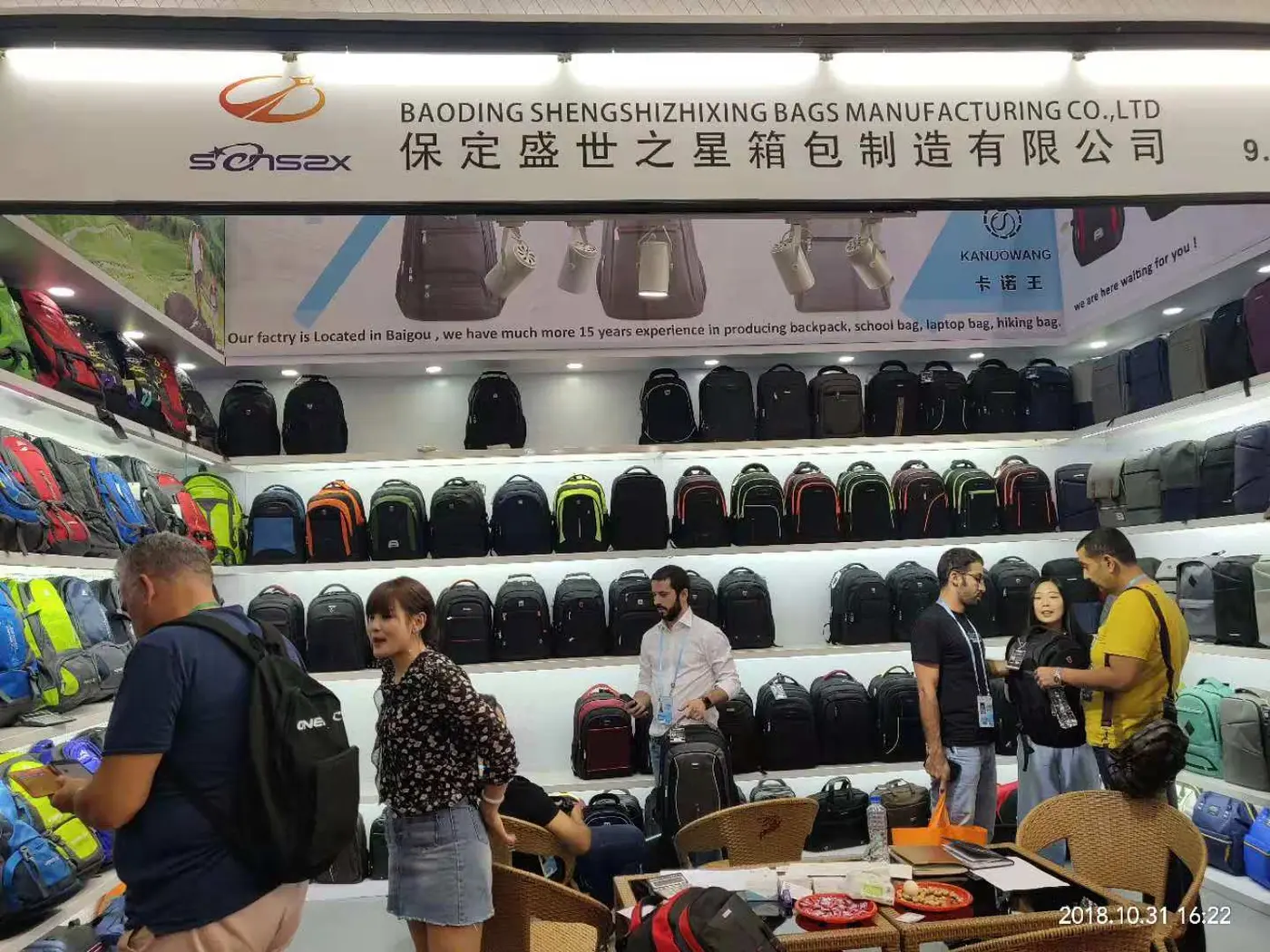
| Do you make school backpacks specifically, and can I see them? | Photos or video of school bags on the line and at trade fairs, not a catalogue render |
| Where is your cutting, sewing and QC - one site or subcontracted? | One site; a walk-through video on request |
| How do you keep colour consistent between years? | Approved swatch and dye recipe kept on file per programme |
| What is your MOQ per colour and why? | A number with a dye-lot explanation |
| What tests do you run in-house, and which need a lab? | Load, zipper cycle, colour fastness in-house; CPSIA / EN 71-3 at accredited lab |
| Can you supply CPC / EN 71-3 / SABER documents? | Yes, with examples from previous orders |
| What happens if bulk does not match the golden sample? | Written remedy: rework, replace or credit, before shipment |
| Will you hold stock fabric for my reorder? | Yes for stock colours; custom colours need a forecast |
Senszx exhibits at the Canton Fair every session and welcomes factory visits in Baigou; the factory tour shows the cutting room, sewing lines, QC and warehouse used for every school order. For the full production process from tech pack to container, see How to Manufacture Custom Backpacks.
Frequently Asked Questions
What is the minimum order for custom school backpacks?
At Senszx, 100 pieces per design in stock fabric colours, or 500 pieces per design when the fabric is custom-dyed to a Pantone reference. Sizes count as separate designs for MOQ.
How much does a custom school backpack cost in bulk?
At 1,000 pieces, most primary-school programmes land between USD 6.5 and 9.0 FOB for a 600D bag with an embroidered crest and padded straps; secondary bags in 900D with a laptop sleeve run USD 9 to 13. Quantity, fabric and zipper grade move the price most.
How long does a bulk school backpack order take?
Sample in 3-5 working days, bulk in 20 working days after sample approval and deposit, then 18-25 days by sea to the Gulf or 30-38 days to Northern Europe. Allow 10-15 days for compliance testing, which can run in parallel with sampling.
What fabric is best for school backpacks?
600D PU-coated polyester for primary school bags: it prints well, sheds light rain and costs the least. 900D polyester for secondary students carrying 5 kg or more. 1680D only where a premium brand price supports it.
What size school backpack for a 6-year-old?
A bag 34-38 cm high, 26-28 cm wide and 14-18 litres suits most 6-8 year olds. The bag should end at or above the waist when the straps are adjusted.
Do school backpacks need safety certification?
Yes, as children's products. The US requires CPSIA testing and a Children's Product Certificate; the EU and UK require EN 71-3 and REACH compliance; Saudi Arabia requires SABER certificates for import; the UAE follows MoIAT conformity requirements. The factory supplies test reports; the importer registers the certificates.
Can you match our school uniform colour exactly?
Yes, from a Pantone TCX reference. We produce a lab dip in three shades, you approve one, and bulk fabric is checked against it under D65 light. For annual programmes the approved swatch and dye recipe are kept on file.
Can each bag have the student's name?
Names on individual bags are impractical in bulk. The usual solution is a sewn-in name-tag window on the inside of the back panel, or a D-ring for a name tag. Both are standard on our school bags.
Are compressed bales safe for backpacks?
Yes for polyester bags with EVA padding: they recover fully within 24-48 hours of unpacking. We do not bale bags with rigid back plates or retail boxes.
Can you supply from stock if we are late?
Yes. Our stock warehouse holds inspected school backpacks in standard colours that ship in 7-10 days with a printed logo. Custom colours and embroidered crests need the full 20-day production run.
What is the difference between a school backpack and a regular backpack?
Sizing to a child's torso, children's-product safety compliance, higher-stress strap and handle construction relative to bag size, reflective trim, name-tag provision, and colour matching to a uniform. The materials overlap; the specification does not.
How do we start?
Send the school's colour reference, crest artwork, age groups and estimated quantity through the free sample request. A sales engineer replies within 12 hours with a specification proposal, indicative price and a sample plan.
Written by
Senszx production team
Sales engineers, pattern makers and QC staff at a BSCI & ISO certified bag factory in Baigou, China, since 2006.
Keep reading
Related articles
How to Manufacture Custom Backpacks: Brief to Container
Factory guide to custom backpack manufacturing: tech pack, materials, sampling, cutting, branding, sewing, load tests, QC, packing, MOQ, cost and lead time.
600D vs 900D vs 1680D Polyester: Which to Specify?
Manufacturer's guide to 600D, 900D and 1680D polyester: real weights, costs, abrasion data, coatings, print behaviour, climate effects and a decision framework.
Get in Touch
Get a Custom Bag Quote from Our China Factory
Our sales team is online around the clock and usually replies within the hour.
Email
[email protected]Factory
Qinzheng Road No.89, New Industry Zone, Baigou Town
Baoding City, Hebei Province 074004, China