
Cutting department
Inside the Senszx Fabric Cutting Room - Where Every Backpack Panel Starts
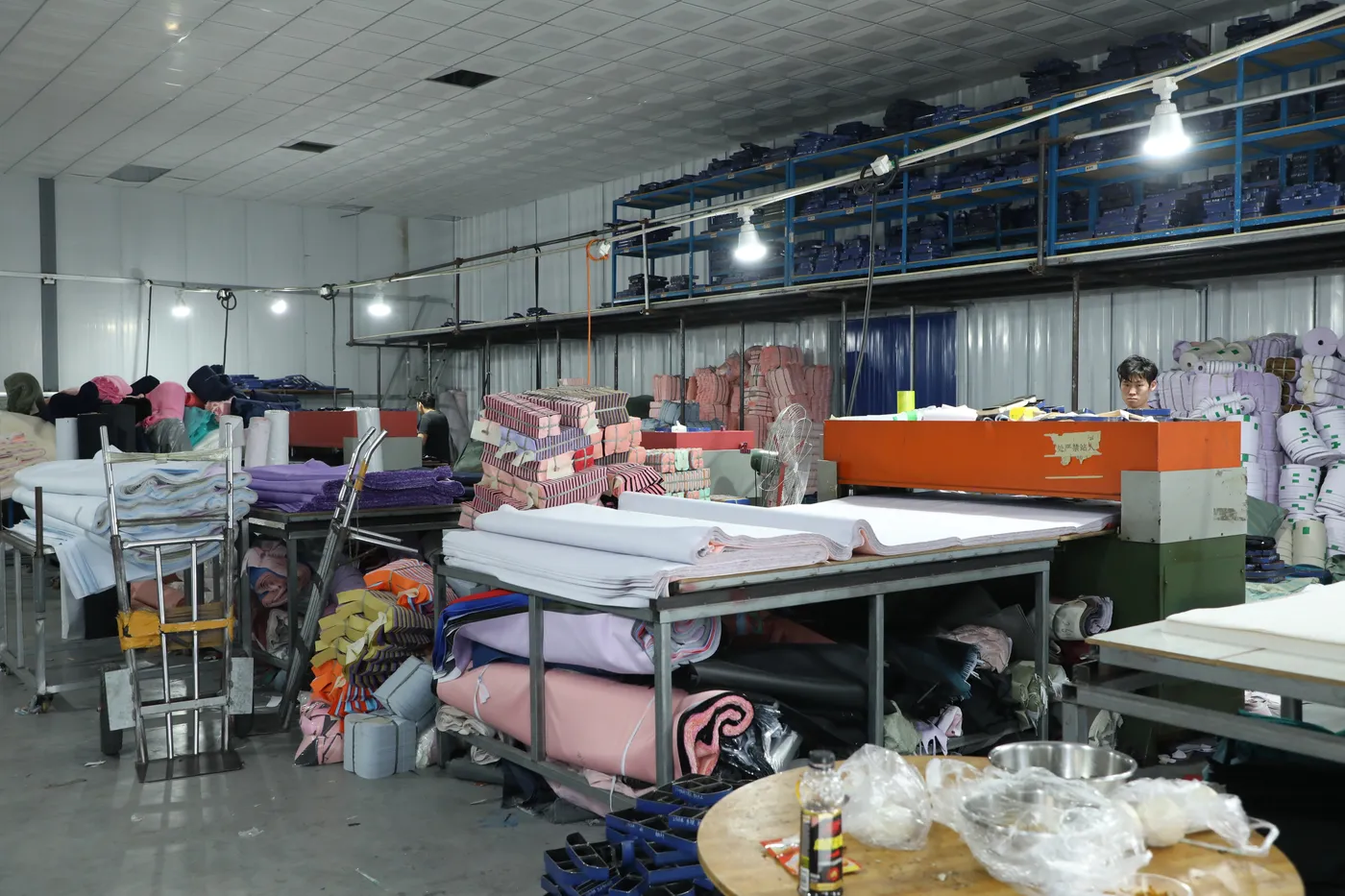
Cutting decides whether 5,000 backpacks are the same backpack. A panel cut 5 mm short changes the fit of a laptop sleeve; a ply that shifted on the spreading table puts a logo off-centre on every bag in the lot. Our cutting room runs automatic spreaders, vacuum-bed CNC cutters and hydraulic die presses side by side, and the same digitised pattern that cut your sample drives the CNC for bulk. This page walks the room in production order, photographed on the floor.
- Automatic spreaders + CNC cutters
- Hydraulic die presses for components
- Same CAD file as your sample
- Panels ticketed by lot, size and colour
01 / 4
Fabric arrives: rolls, inspection and the spreading line
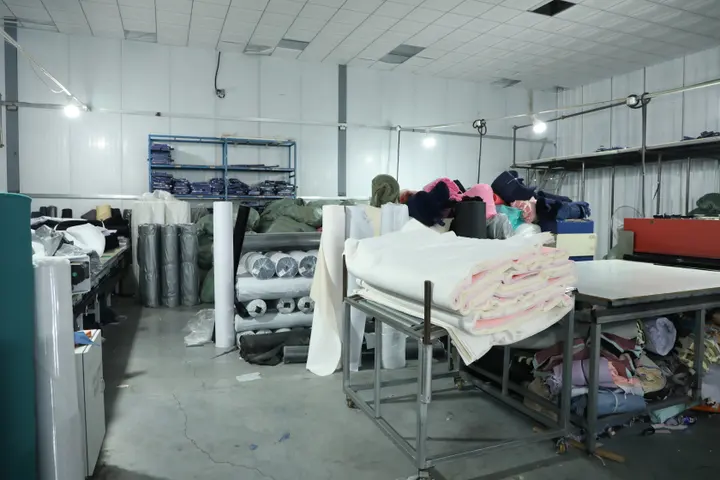
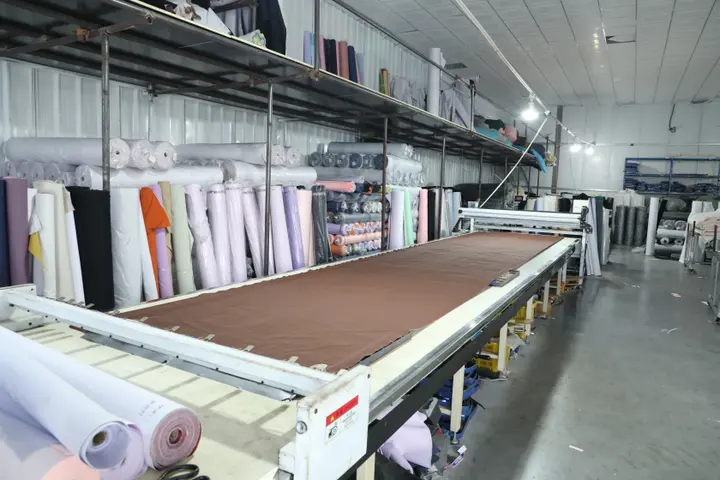
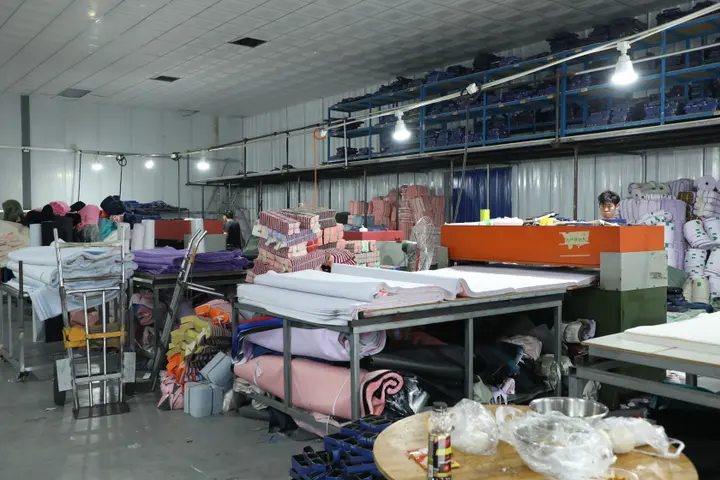
Approved rolls come from the fabric warehouse to the roll racks beside the spreading machines. An automatic spreader lays 30-60 plies of polyester or nylon tension-free onto the table - tension is what makes panels shrink after cutting, so the machine, not a person, controls it. Each ply is checked for the roll defects flagged at incoming inspection and any marked area is cut around.
Spreading height is set by fabric weight: 600D polyester spreads 50-60 plies, 1680D ballistic 25-30, TPU laminates 15-20 because the film would otherwise fuse under the blade.
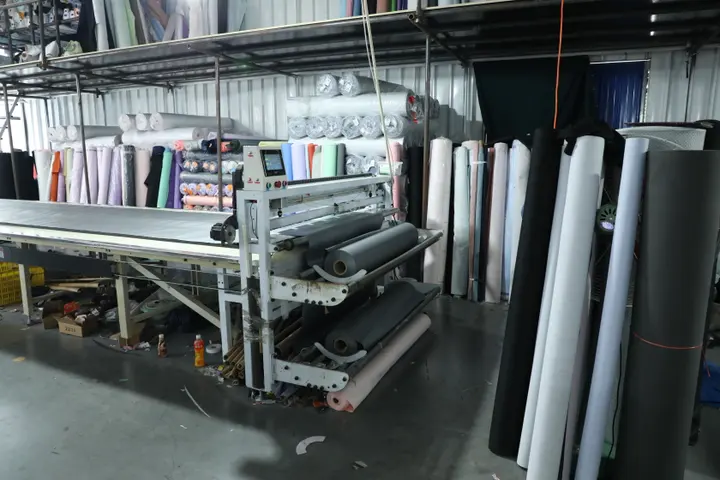
Roll rack
Approved rolls only - tagged from incoming QC.
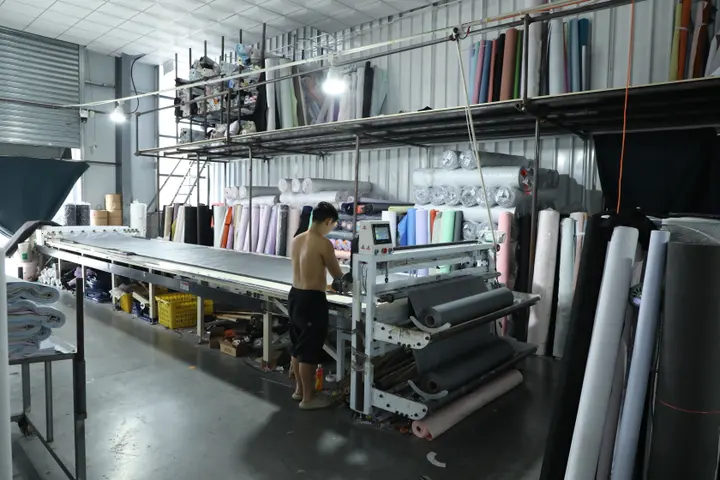
Rolls at the table
Colour lots kept together so shade stays consistent.
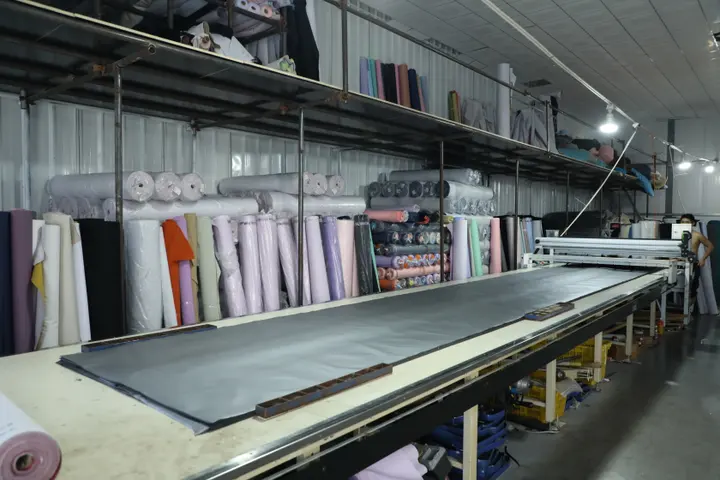
Automatic spreader
Tension-free plies; no post-cut shrinkage.
Multi-ply spread
30-60 plies depending on fabric weight.
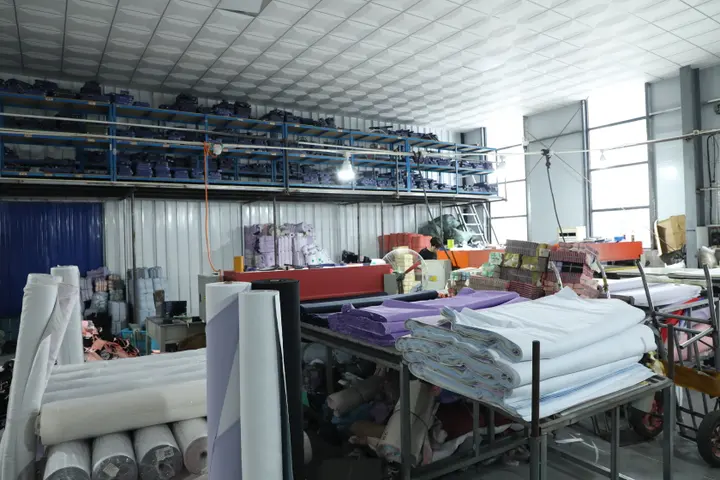
Spreading line
Two spreaders feed the CNC tables.
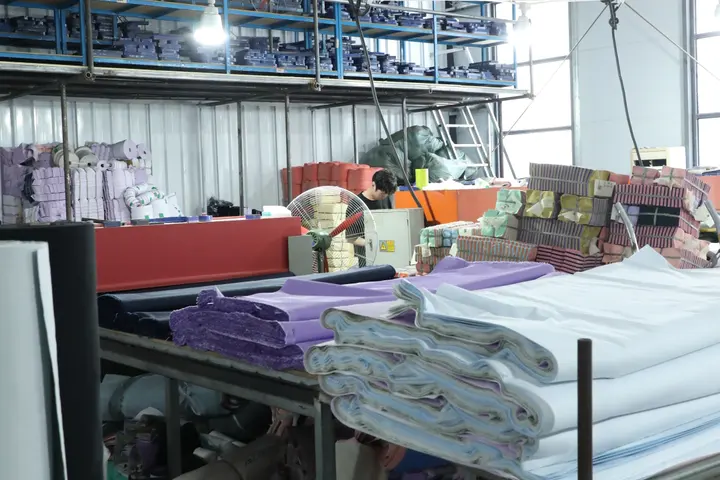
Ready to cut
Plies squared and clamped before the cutter starts.
02 / 4
CNC cutting: the sample pattern becomes 5,000 identical panels
The digitised pattern approved on your sample is nested by software to use the fabric with the least waste, then cut on a vacuum-bed CNC cutter. Vacuum holds the plies flat; the blade follows the CAD line to within a millimetre. There is no hand-tracing and no paper pattern that could stretch or be traced slightly differently on Monday and Friday.
Nesting efficiency is where fabric cost is saved: a well-nested 600D school backpack uses 8-10% less fabric than hand-laid patterns, which is passed into the quote.
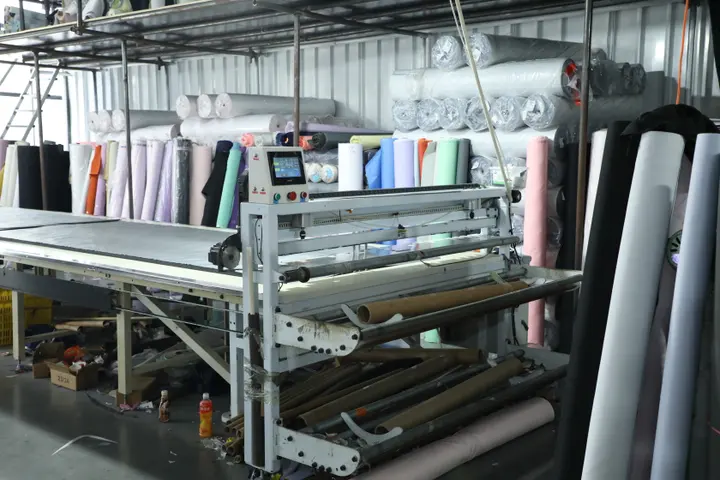
CNC table
Vacuum bed keeps plies flat under the blade.
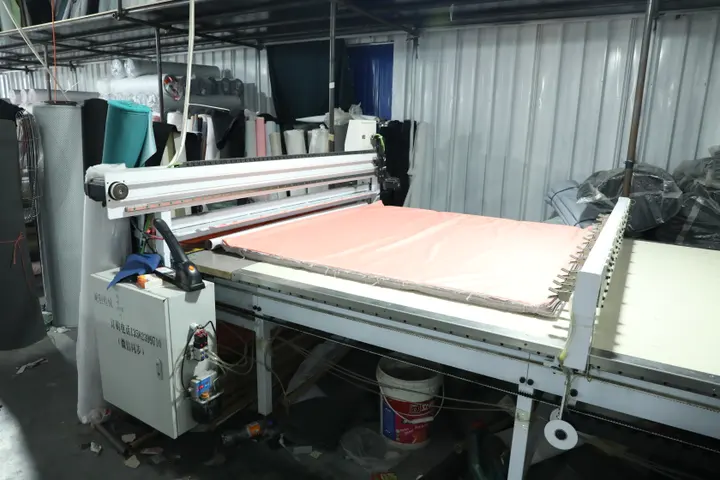
Cutting in progress
Blade follows the CAD line from your sample.
CNC line
Two cutters run in parallel on large orders.
Multi-ply cut
Up to 60 plies of 600D in one pass.
03 / 4
Die cutting: small components, exact every time
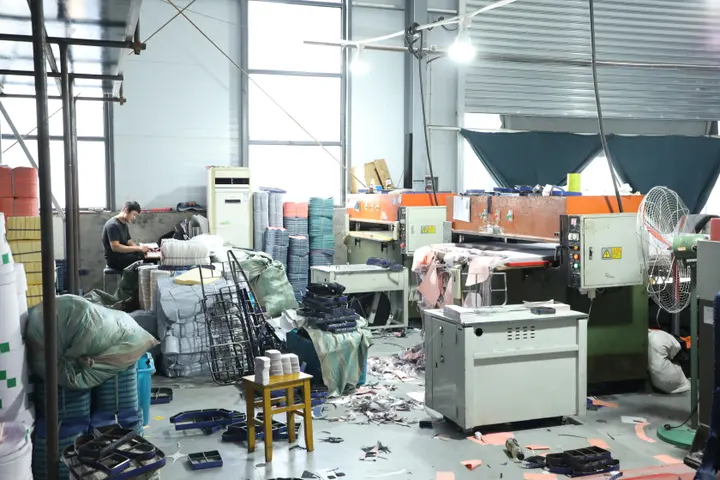
Straps, handle tabs, zipper garages, webbing ends and reinforcement patches are die-cut on hydraulic presses with steel-rule dies. A die guarantees the 8,000th strap tab is the same shape as the first, and cuts foam, PE board and webbing that a CNC blade handles less well. Operators load the press, the die drops through the stack, and components fall into labelled bins.
Dies for standard components are kept on file; a new shape costs USD 30-80 and is made in two days.
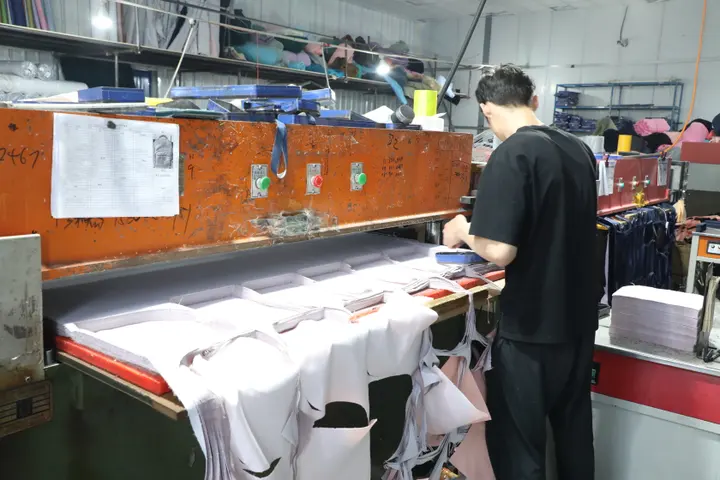
Die press
Steel-rule dies for straps, tabs and patches.
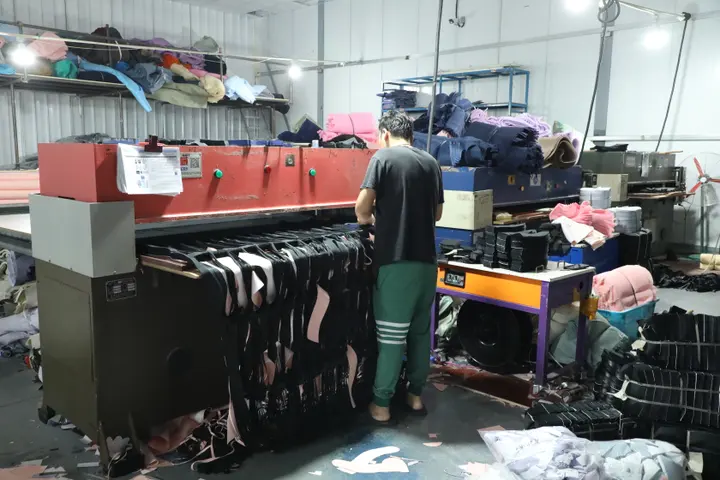
Press head
Cuts foam, PE board and webbing as well as fabric.
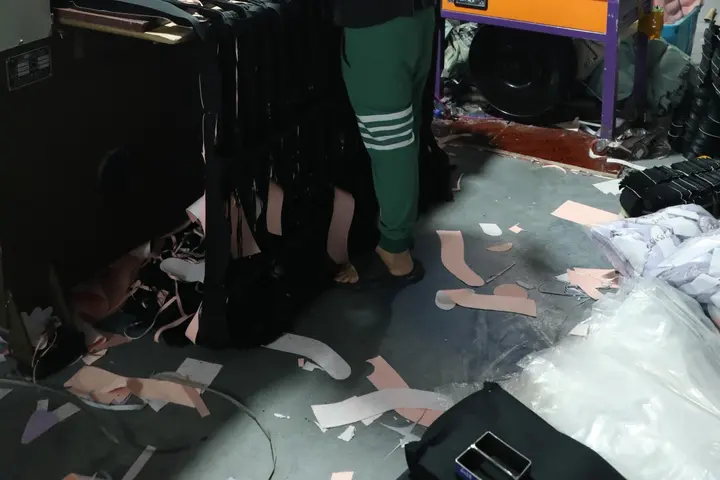
Loading the die
Stacks of fabric cut in one stroke.
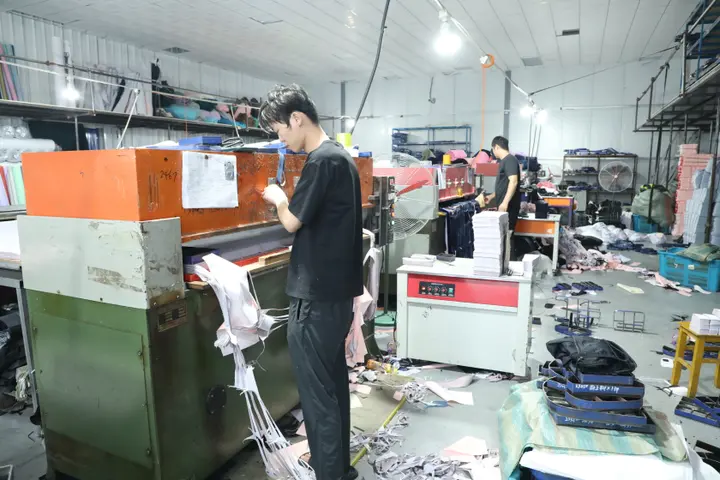
Component station
Small parts into labelled bins.
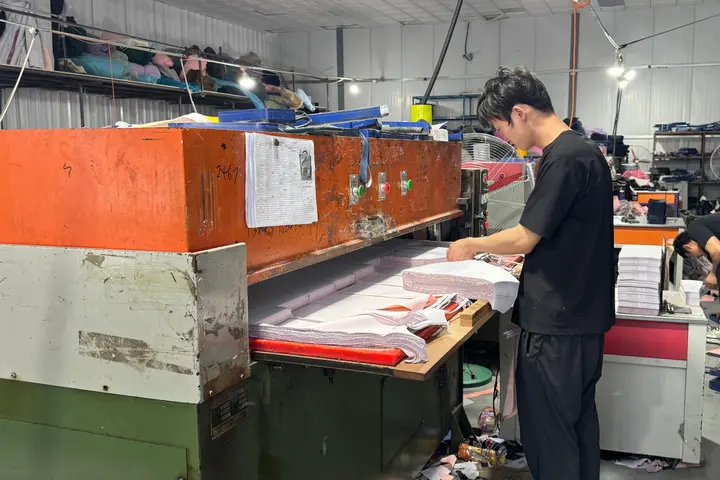
Twin presses
Parallel presses for large component counts.
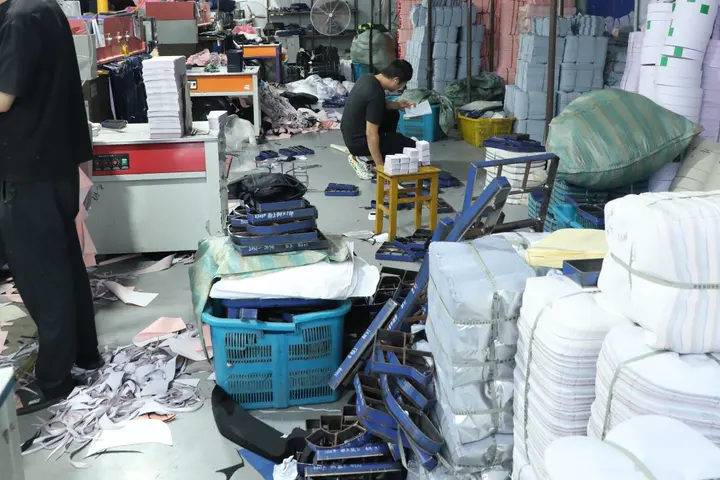
Sorting
Components sorted by style before bundling.
04 / 4
Bundling and ticketing: nothing reaches the sewing line unlabelled
Cut panels are counted, bundled by style, size and colour, and ticketed with lot number, quantity and destination line. Bundles are racked in sewing order so line leaders pull exactly what the operation sheet calls for. A missing or mis-bundled panel is found here, in the cutting room, not at a sewing station forty minutes later.
This is also where colour is checked one more time: panels from different rolls of the same lot are compared under the D65 cabinet before they are bundled together, so no bag is sewn from two shades.
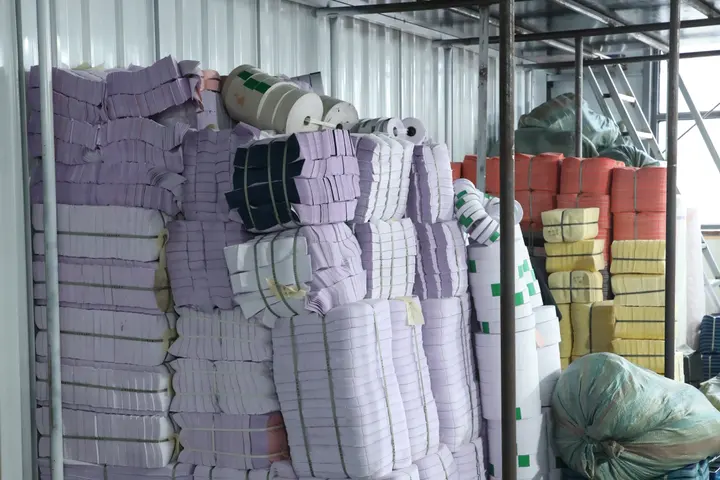
Ticketed bundles
Lot, quantity and line number on every bundle.
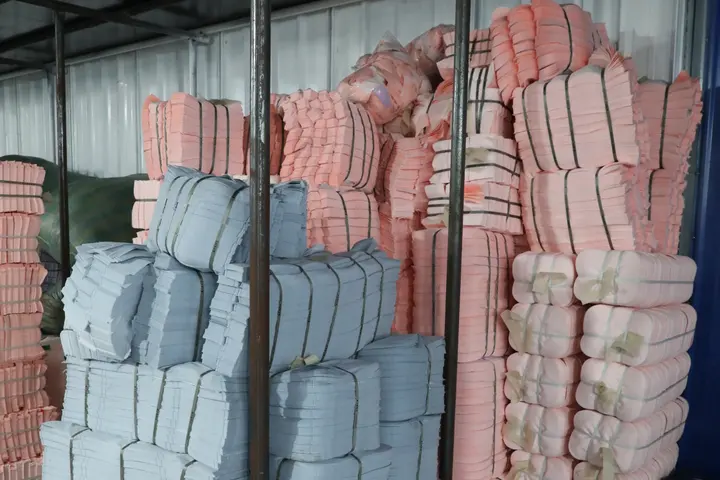
Sorted by colour
One shade per bundle - checked under D65.
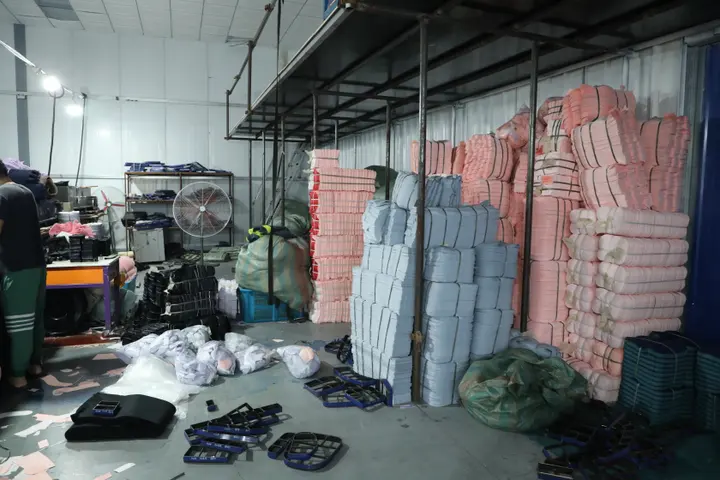
Racked for sewing
Pulled in operation-sheet order.
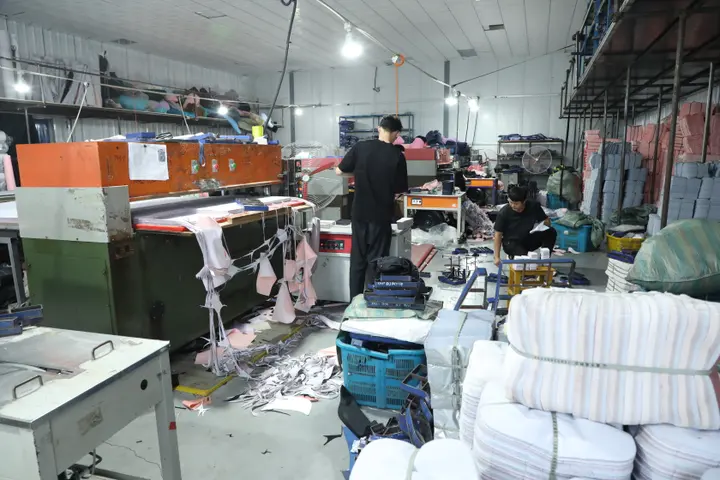
Bundle detail
Counted twice before racking.
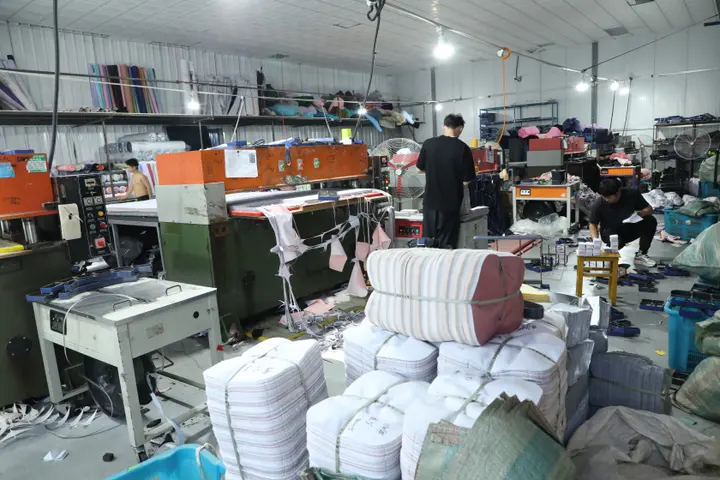
Stacked by lot
Lining and pocket panels.
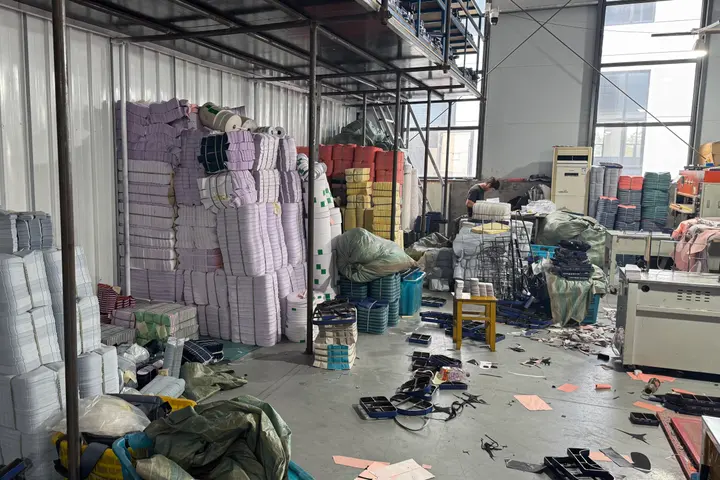
Components by style
Straps, tabs and pockets kitted per style.
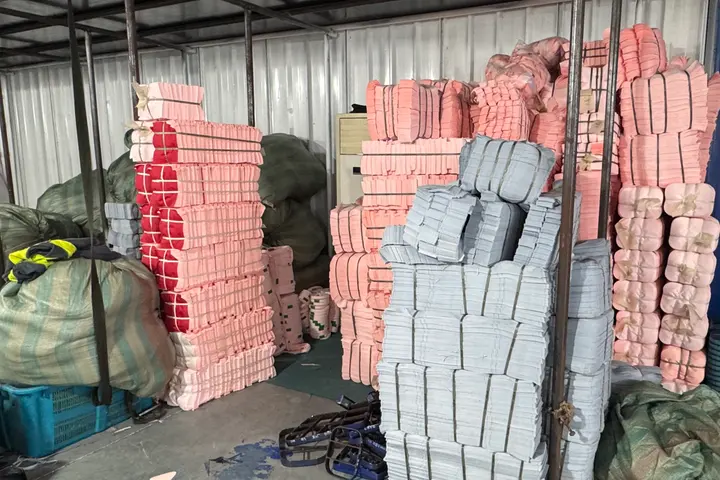
Colour stacks
Ready for the line.
At a glance
Cutting room equipment and capacity
What runs on the floor and what it is used for.
| Equipment | Count | Used for | Capacity / note |
|---|---|---|---|
| Automatic fabric spreaders | 2 | Laying 15-60 plies tension-free | 600D: 50-60 plies; 1680D: 25-30; TPU: 15-20 |
| Vacuum-bed CNC cutters | 2 | All main panels from CAD nest | ~1 mm accuracy; 8-10% fabric saving vs hand cut |
| Hydraulic die-cutting presses | 6 | Straps, tabs, patches, foam, PE board | Steel-rule dies; new die USD 30-80, 2 days |
| Band knives | 4 | Webbing, foam blocks, stiffeners | Hot-knife option seals webbing ends |
| Laser cutter | 1 | PALS laminate, mesh, precision shapes | Sealed edges on laminates |
| D65 colour cabinet | 1 | Shade check between rolls before bundling | Band A/B only |
| Daily output | - | Panels for ~4,000-5,000 backpacks | Two shifts in peak season |
On video
Cutting department on camera
Bag Manufacturing Process
Cutting department FAQ
Why does cutting matter so much for consistency?
Do you cut by hand at all?
How do you avoid shade differences within one order?
What is nesting and why does it save me money?
Can you cut TPU, laminates and mesh?
How are panels tracked to the sewing line?
Do you keep my patterns and dies?
Continue the tour
Related
Production inquiry
See your own panels being cut
Start a project and we send photos of your first cut bundles before sewing begins - or book a live video call to the cutting room.
- Same CAD file from sample to bulk
- Photo of first cut bundles
- Live video to the floor on request
Email
[email protected]