
How to Write a Backpack Tech Pack: Template & Checklist
Factory guide to writing a backpack tech pack: spec sheet, points of measure, BOM, colourways, construction, branding and packing, plus 15 gaps that delay quotes.
Every week our sales engineers receive a request that reads, in full: "Hi, I need 1,000 backpacks like the attached photo, please quote." The photo is a screenshot from a marketplace listing. There is no size, no fabric, no zipper spec, no logo file and no packing instruction. We can answer it - with a range so wide it is useless, or with fifteen questions the buyer did not expect to be asked.
A tech pack removes both problems. It is the document that turns "a backpack like this" into a product a factory can price in one pass, sample correctly the first time and reproduce identically in bulk. This guide explains what a backpack tech pack must contain, in the order a factory reads it, with the exact tables we use in our own sample room. A downloadable template follows the checklist at the end.
What Is a Tech Pack, and Why Does a Factory Insist on One?
A tech pack (technical package) is the complete specification of a product: what it looks like, how big it is, what it is made of, how it is built, how it is branded and how it is packed. For a backpack it typically runs 6-15 pages. It is not a design brief, a moodboard or a marketplace photo; those describe intent, a tech pack describes the object.
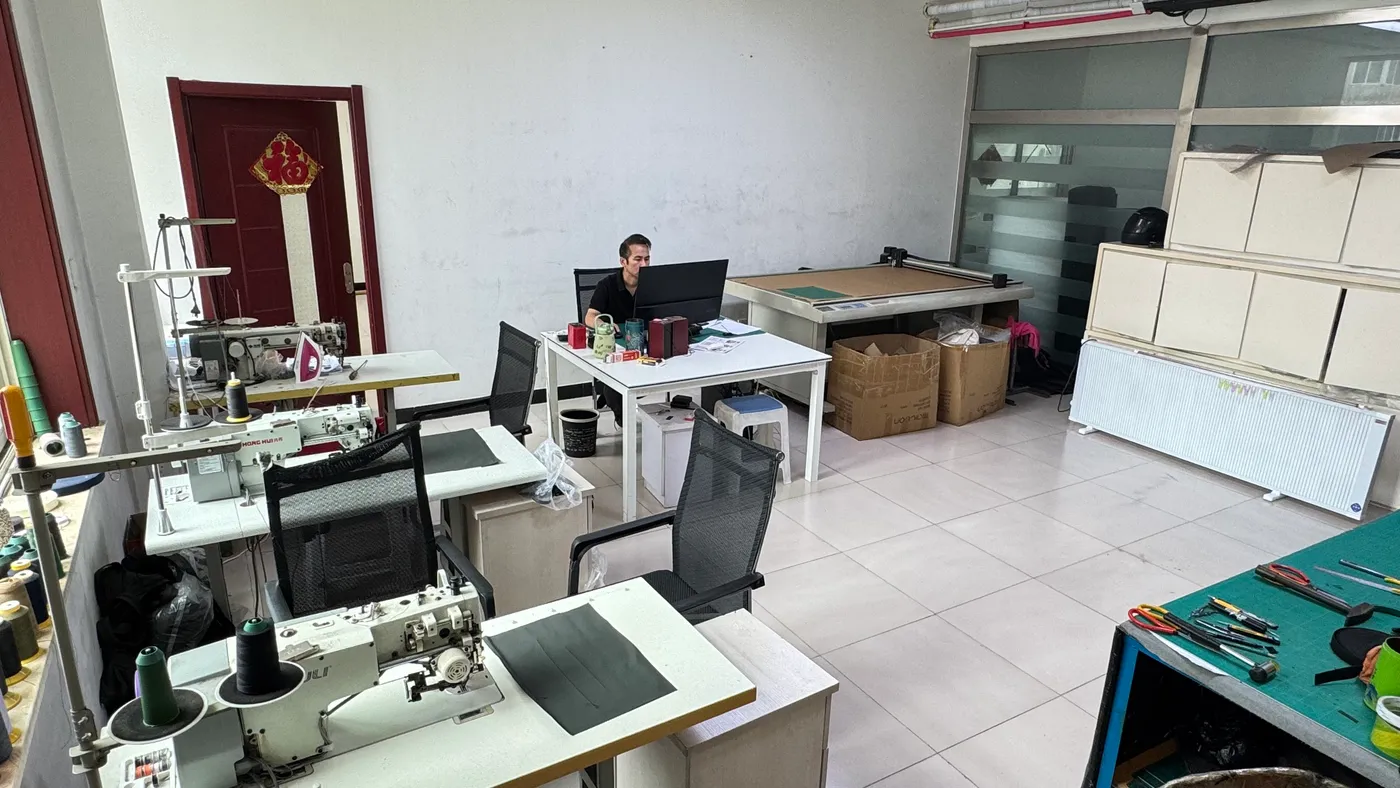
Factories insist on one for three reasons that all save the buyer money:
| Without a tech pack | With a tech pack |
|---|---|
| Quote is a range; the factory pads it against unknowns | Quote is a number; unknowns are zero |
| Sample takes 2-3 rounds as details are discovered | Sample is right in 1-2 rounds |
| Bulk drifts from sample because the "standard" was verbal | Bulk is inspected against a written standard |
| Reorder six months later re-asks every question | Reorder references the pack and the sealed sample |
| Dispute over a defect has no reference | Dispute is settled against the document |
For the buyer the pack is also protection: it is the only evidence of what was agreed. Our private-label guide covers how the pack fits into the full development process; this article is about writing the pack itself.
What Are the Eight Sections of a Backpack Tech Pack?
Tech packs from apparel software often include sections a bag does not need (grading rules, fit comments by size) and omit ones a bag cannot do without (hardware BOM, webbing lengths, foam specifications). The structure below is the one we ask buyers to follow. Sections are in the order our pattern room reads them.
| # | Section | What it answers | Typical length |
|---|---|---|---|
| 1 | Cover and style summary | What is this product, for whom, at what price point | 1 page |
| 2 | Technical drawings with callouts | What does every panel, pocket and seam look like | 2-4 pages |
| 3 | Measurement specification | How big is every part, with tolerances | 1 page |
| 4 | Bill of materials (BOM) | Which fabric, lining, foam, webbing, zipper, buckle, thread, label - per component | 1-2 pages |
| 5 | Colourway chart | Which colour goes on which component, per SKU | 1 page |
| 6 | Construction details | Seam types, stitch density, reinforcement, edge finishing | 1-2 pages |
| 7 | Branding and labelling | Logo method, size, position, artwork files; care and origin labels | 1 page |
| 8 | Packing and shipping | Polybag, hang tag, carton, marks, quantities per carton | 1 page |
The following sections take each in turn.
Section 1: What Goes on the Cover Page?
The cover is the page a sales engineer reads to decide which line, which fabric supplier and which price band the product belongs to. It should answer in ten seconds what the rest of the pack answers in detail.
| Field | Example | Why the factory needs it |
|---|---|---|
| Style name / number | SX-LP-2027-01 "Commuter 22" | Filename for patterns, cutting tickets, cartons |
| Category | Laptop backpack, 22 L | Selects line type and standard tests |
| Target user | Adult commuter, unisex | Sets sizing and strap length |
| Target FOB price | USD 14.50 | Lets the factory propose material trade-offs before sampling |
| Season / launch date | SS27, in-store 1 March 2027 | Backwards-plans production |
| Order quantity estimate | 2,000 pcs, 3 colourways | Sets MOQ conversation and dye-lot planning |
| Revision and date | Rev C, 29 Sep 2026 | Prevents the factory building to a superseded page |
| Contact | Name, email, WhatsApp | Questions go to one person |
| Reference sample | "Physical sample sent DHL 1234567890" or "None" | Tells the factory whether to copy or create |
Two fields are skipped most often and cost the most: target price and quantity. A factory that knows the target can tell you on day one that 1680D and metal hardware will not land at USD 14.50, saving a sampling round.
Section 2: What Should the Technical Drawings Show?
Technical drawings (flats) are line drawings of the bag from every side, with every component labelled. They are not renders. A shaded 3D render shows what the bag looks like; a flat shows how it is built.
Required views
| View | Shows | Common omission |
|---|---|---|
| Front | Front panel, pockets, logo position, zipper directions | Which way the zipper slider rests when closed |
| Back | Back panel padding channels, strap anchors, trolley sleeve, hidden pocket | Strap anchor position from top seam |
| Side (left and right if different) | Bottle pocket, side compression, depth | Depth of bag at top versus base |
| Top | Handle position, zipper opening length, gusset | Handle length and width |
| Base | Base panel material, feet, drain grommet | Whether base is a separate panel |
| Interior (opened) | Laptop sleeve, organiser, key clip, lining colour | Sleeve position relative to back panel |
| Straps detail | Strap shape, padding taper, sternum strap range, adjuster type | Strap width at top versus bottom |
| Exploded / callout page | Numbered callouts linking every component to the BOM | Callouts at all |
Callouts
Every component visible in the drawings gets a number, and that number appears in the BOM. This is the single practice that most reduces back-and-forth. "Zipper" is not a callout; "Z1 - main compartment, #10 nylon coil, two-way, 2 x SL-01 slider" is.
Drawings do not need to be produced in Illustrator. A clean pencil sketch photographed flat with legible callouts is better than a glossy render with none. What matters is that every panel edge, seam line and component is visible and labelled.
Section 3: How Do You Write a Measurement Spec for a Bag?
Bags are measured differently from garments. There is no body to fit; there is a set of points of measure (POM) on the finished, empty bag laid flat, plus a few taken with the bag stuffed to shape. The pack must say which.
Standard points of measure for a backpack
| Code | Point of measure | How measured | Typical tolerance |
|---|---|---|---|
| A | Height | Base seam to top seam at centre back, flat | +/- 1.0 cm |
| B | Width | Side seam to side seam at widest point, flat | +/- 1.0 cm |
| C | Depth | Front to back at base, bag stuffed to shape | +/- 1.0 cm |
| D | Main zipper opening | End stop to end stop along the curve | +/- 1.0 cm |
| E | Front pocket height / width | Seam to seam | +/- 0.5 cm |
| F | Laptop sleeve internal height / width | Inside, flat | +/- 0.5 cm (critical for device fit) |
| G | Shoulder strap length, padded section | Top anchor to end of padding | +/- 1.0 cm |
| H | Shoulder strap width at top / at bottom | Across padding | +/- 0.3 cm |
| I | Strap webbing total adjustable length | Fully extended | +/- 2.0 cm |
| J | Top handle length (inside loop) | Anchor to anchor along the loop | +/- 0.5 cm |
| K | Bottle pocket height / circumference | Seam to seam / around at top | +/- 0.5 cm |
| L | Back panel padding thickness | Calliper through foam | +/- 1 mm |
| M | Sternum strap vertical adjustment range | Top position to bottom position | +/- 1.0 cm |
| N | Weight, empty | Digital scale | +/- 5% |
| O | Volume | Fill with polystyrene beads, decant into measuring vessel | +/- 5% |
Two notes from the inspection table. Laptop sleeve dimensions (F) need a tighter tolerance than anything else: a 16-inch device that does not fit is a return, not a quibble. Volume (O) is the number most buyers quote in marketing and least often measure; if you will print "22 L" on a hang tag, put 22 L in the spec and we will test it.
Stating the tolerance
Every measurement needs a tolerance. Without one, a factory will assume +/- 1 cm and a buyer will assume exact, and the sample review becomes an argument. Tighter tolerances are possible but cost money: +/- 0.5 cm on all POMs roughly doubles the rejection rate at cutting and is rarely worth it outside device sleeves.
Section 4: How Do You Write the Bill of Materials?
The BOM lists every material and component in the bag, one row per item, with enough specification that a purchaser could buy it from a supplier who has never seen the bag. This is where most first tech packs fail: "600D polyester" is a fabric family, not a specification.
BOM template for a backpack
| Callout | Component | Material specification | Colour | Qty / bag | Supplier ref (if any) | Notes |
|---|---|---|---|---|---|---|
| F1 | Body fabric | 600D x 600D polyester, PU coated 1x, 300 gsm +/- 5%, water repellent finish | PMS 19-4010 TCX | 1.15 m | - | Solid, no print |
| F2 | Base fabric | 1680D polyester, PU coated 2x, 580 gsm | Black | 0.20 m | - | Bound to body |
| F3 | Lining | 210D polyester, PU coated, 90 gsm | Grey | 1.30 m | - | Custom print see B3 |
| F4 | Mesh | 3D spacer mesh, 6 mm, polyester | Black | 0.15 m | - | Back panel and strap face |
| P1 | Back panel foam | EVA 8 mm, 45 kg/m3, closed cell | - | 1 pc | - | Two vertical channels |
| P2 | Strap foam | EVA 10 mm, 45 kg/m3 | - | 2 pcs | - | Tapered 60 mm to 45 mm |
| P3 | Laptop sleeve foam | PE 5 mm | - | 1 pc | - | Suspended 40 mm from base |
| W1 | Shoulder strap webbing | PP webbing 25 mm, 1.6 mm thick, 9 kN | Black | 1.4 m | - | |
| W2 | Handle webbing | Nylon webbing 25 mm | Black | 0.30 m | - | Wrapped with F1 |
| W3 | Binding tape | Polyester binding 20 mm | Black | 4.5 m | - | All interior seams |
| Z1 | Main zipper | #10 nylon coil, two-way, closed end | Black tape, black teeth | 1 pc, 60 cm | YKK or equivalent | |
| Z2 | Front pocket zipper | #5 nylon coil, single, closed end | Black | 1 pc, 25 cm | Metal top stops | |
| Z3 | Laptop sleeve zipper | #8 nylon coil, single | Black | 1 pc, 38 cm | ||
| H1 | Zipper slider, main | #10 metal auto-lock, custom logo puller | Gunmetal | 2 pcs | See branding B4 | |
| H2 | Zipper slider, other | #5 / #8 metal auto-lock | Gunmetal | 2 pcs | ||
| H3 | Strap adjuster | 25 mm ladder lock, POM | Black | 2 pcs | Anti-slip teeth | |
| H4 | Sternum buckle | 15 mm side-release, POM | Black | 1 set | ||
| H5 | Key clip | Swivel hook, zinc alloy | Gunmetal | 1 pc | Inside front pocket | |
| T1 | Thread | Polyester core-spun tex 70 | Match F1 | - | Tex 135 for bartacks | |
| L1 | Main brand label | Damask woven, 50 x 20 mm | Per artwork | 1 pc | Front panel bottom right | |
| L2 | Care / origin label | Printed satin, 40 x 60 mm | White | 1 pc | Inside main compartment | |
| L3 | Size / content label | Printed satin | White | 1 pc | Laptop sleeve |
Material specifications that must not be left vague
| Component | Insufficient | Sufficient |
|---|---|---|
| Fabric | "600D polyester" | Denier both directions, coating type and passes, weight in gsm, finish, colour reference |
| Foam | "padded" | Material (EVA / PE / PU), thickness in mm, density in kg/m3 |
| Webbing | "1 inch webbing" | Material (PP / nylon / polyester), width, thickness, breaking strength |
| Zipper | "heavy duty zipper" | Gauge (#5 / #8 / #10), type (coil / vislon / metal), one- or two-way, open or closed end, length |
| Slider | "metal zipper pull" | Gauge, lock type (auto-lock / non-lock), finish, puller type |
| Buckle | "plastic buckle" | Type, webbing width, material (POM / nylon), load rating if relevant |
| Thread | (omitted) | Tex or ticket number, material, colour |
Our fabric guide and hardware guide list the standard options for each row. If you do not know what to specify, write the requirement instead of the material - "must survive 5 kg daily load for 2 years" - and the factory will propose the specification for approval.
Section 5: How Do You Specify Colourways?
A colourway chart maps every BOM component to a colour, per SKU. Without one, "navy backpack" leaves open whether the zipper tape, the webbing, the lining, the binding and the logo thread are also navy, black or contrast - five decisions the factory will make for you and you will dislike at least one of.
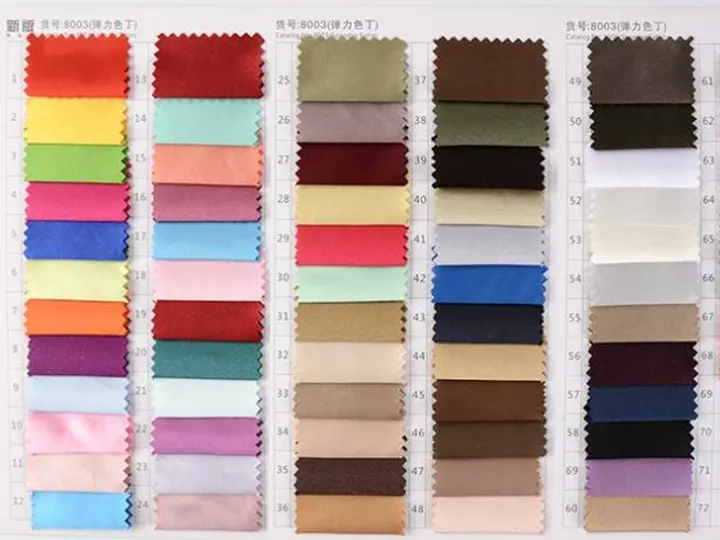
Colourway chart template
| Component | SKU 01 Navy | SKU 02 Olive | SKU 03 Black |
|---|---|---|---|
| F1 Body fabric | 19-4010 TCX | 19-0419 TCX | 19-4007 TCX |
| F2 Base fabric | Black | Black | Black |
| F3 Lining | Grey 17-1502 TCX + print B3 | Same | Same |
| F4 Mesh | Black | Black | Black |
| W1 Strap webbing | Black | Black | Black |
| W3 Binding | Black | Black | Black |
| Z1-Z3 Zipper tape / teeth | Black / black | Black / black | Black / black |
| H1-H5 Hardware finish | Gunmetal | Gunmetal | Gunmetal |
| T1 Thread | Navy DTM | Olive DTM | Black |
| L1 Brand label | Artwork A (white on navy) | Artwork A (white on olive) | Artwork B (grey on black) |
| B1 Logo embroidery thread | White | Sand | Grey |
Three rules. Reference colours by Pantone TCX (textile cotton, the standard for dyed fabric) or by an approved physical swatch, never by name or by a screen colour. Mark "DTM" (dye to match) only where an exact match to the body fabric matters; matching thread, zipper tape and webbing all DTM triples the number of dye lots and the cost. Keep shared components (base, hardware, lining) identical across colourways where you can; it is how three SKUs get the MOQ of one.
Section 6: What Construction Details Does the Factory Need?
Construction is how the pieces in the BOM become a bag. Two factories given the same BOM and drawings will build differently unless the pack says how. Construction notes need not be long; they need to cover the points where choices exist.
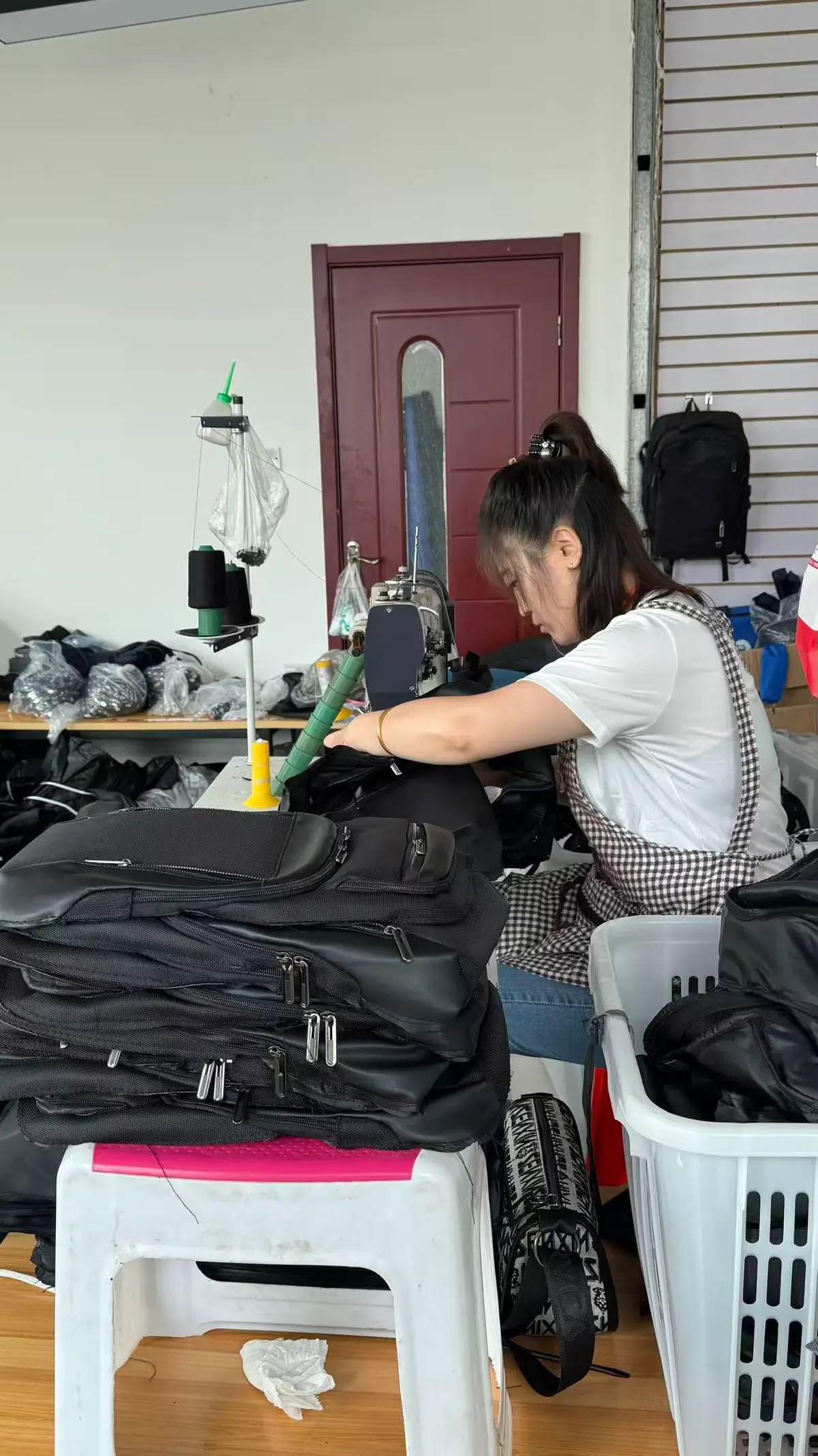
Construction specification checklist
| Area | Specify | Our default if unspecified |
|---|---|---|
| Stitch density | Stitches per inch (SPI) for main seams and topstitching | 8 SPI seams, 7 SPI topstitch |
| Seam allowance | mm | 10 mm |
| Seam type, exterior | Plain, French, bound, welted | Plain, bound inside |
| Seam type, interior | Bound with W3 / overlocked / raw | Bound |
| Topstitching | Where, distance from edge, single or double | 2 mm single on pocket edges |
| Bartacks | Location, count, length, thread | 42-stitch, 12 mm, tex 135, at every strap and handle anchor |
| Strap anchor construction | Webbing through fabric into backing tape / box-X / reinforced patch | Webbing folded, through body fabric and 50 mm reinforcement tape, bartacked |
| Padding attachment | Quilted, glued, floating | Floating in a channel, tacked at top |
| Zipper insertion | Exposed, welted, with rain flap | Exposed with 10 mm fabric welt |
| Zipper garage | Yes / no; which end | Yes at main compartment top |
| Edge finishing | Binding, hot-cut, folded | Hot-cut webbing ends, folded fabric edges |
| Laptop sleeve | Suspended height from base, padding on both faces | Suspended 40 mm, padded back face only |
| Rain / water | Seam tape, DWR, drain grommet | None unless specified |
The strap anchor line is the one to get right. It is the failure buyers see first, and it is decided entirely by construction, not by material. See How to Manufacture Custom Backpacks for the sewing sequence a pack should assume.
Section 7: How Should Branding and Labels Be Specified?
Branding is applied to flat panels before sewing, so its specification has to be complete before cutting starts. The pack must give the method, the artwork, the size, the position and the colour for every mark on the bag.

Branding specification table
| Callout | Mark | Method | Size (W x H) | Position | Colour | Artwork file |
|---|---|---|---|---|---|---|
| B1 | Front logo | Embroidery, satin fill | 60 x 22 mm | 35 mm above front pocket top seam, centred | Thread per colourway | logo-front.ai + logo-front.dst |
| B2 | Strap logo | Rubber patch, sewn | 25 x 12 mm | Left strap, 80 mm from top anchor | Black / white | logo-strap.ai |
| B3 | Lining print | Rotary print on F3 | Repeat 120 mm | All-over | Grey 60% on lining base | pattern-lining.ai |
| B4 | Slider puller | Engraved metal | 28 x 10 mm | All H1 sliders | Gunmetal | logo-puller.ai |
| B5 | Woven label | Damask | 50 x 20 mm | Front panel, 15 mm from base seam, 15 mm from right seam | Per colourway | label-main.ai |
Provide vector files (AI, EPS, SVG or PDF with outlined fonts). For embroidery, either provide a DST file or let the factory digitise once and approve the stitch-out; do not send a JPEG and expect it to embroider well. A 200 x 200 px logo screenshot is the most common single cause of a branding sample being rejected.
Labels required by law
Most markets require a fibre content label, a country of origin label and, for children's products, a tracking label. These are not branding, but they are labels the factory sews in and they belong in the pack:
| Label | Content | Market |
|---|---|---|
| Fibre content | "Shell: 100% polyester. Lining: 100% polyester." | US (Textile Act), EU (Textile Regulation), UK |
| Country of origin | "Made in China" | All |
| Care instructions | Wash / do not wash symbols or text | EU recommended, US voluntary for bags |
| Tracking label (children's) | Batch or date code, manufacturer identifier | US CPSIA |
| Importer address | Company name and address | EU GPSR, UK |
| Brand RN / CA number | If the brand holds one | US / Canada |
Confirm the exact wording with your importer of record; the factory can supply reference label layouts from previous orders in your market.
Section 8: What Goes in the Packing Specification?
Packing is the last page of the pack and the first thing the receiving warehouse sees. Unspecified packing defaults to "one polybag per bag, 20 per carton, factory marks", which suits nobody exactly.
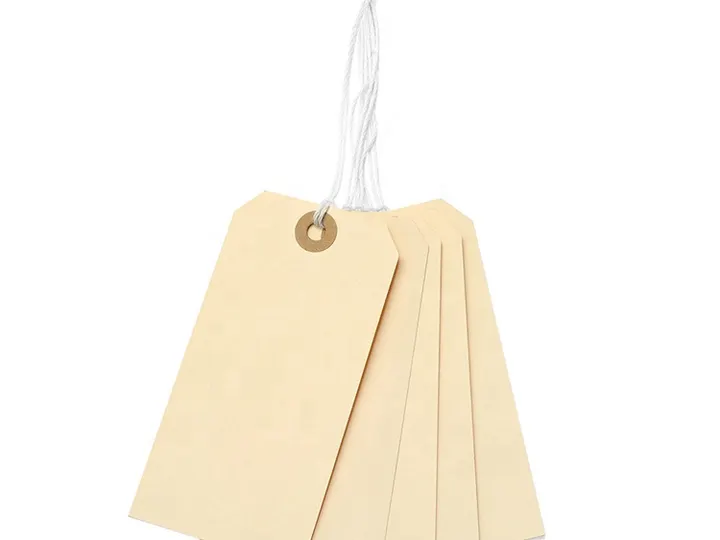
Packing specification template
| Item | Specification |
|---|---|
| Bag preparation | Straps at minimum length, zippers closed, slider at left end, tissue in main compartment (yes / no) |
| Stuffing | Kraft paper crumple to shape front panel (yes / no) |
| Polybag | LDPE 0.04 mm, 40 x 55 cm, self-seal, suffocation warning printed in EN / AR |
| Hang tag | Kraft 300 gsm, 50 x 90 mm, swing tag on main zipper puller, artwork tag-01.ai |
| Barcode label | On polybag, top right; EAN-13 per SKU (list attached) |
| Inner pack | None / 5 per inner polybag |
| Export carton | 5-ply, 60 x 40 x 45 cm, 20 pcs, gross weight < 18 kg |
| Carton marks | Front and side: PO number, style, colour, quantity, carton no. / total, gross and net weight, made in China. No brand name if consignee requests |
| Pallet | Yes / no; 1.2 x 1.0 m; max height 1.8 m; stretch-wrapped |
| Shipping docs required | Packing list per carton; photos of open cartons and loaded container |
Retail programmes will add a retail box, an insert card and a shelf-ready carton. Bulk and tender programmes may replace cartons with compressed bales to cut volume. Our manufacturing guide includes a container-loading table by packing format.
What Are the 15 Gaps That Delay a Quote?
We looked at the tech packs received over the past year and listed the gaps that generated a clarifying question before a quote could be sent. The fifteen below cover most of them.
| # | Gap | Question it forces | Fix |
|---|---|---|---|
| 1 | No target price or quantity | Which material tier to quote? | Add both to the cover |
| 2 | Fabric named by family only | Which weight, coating and finish? | Full fabric spec in BOM |
| 3 | No Pantone reference | Which navy? | TCX code or physical swatch |
| 4 | Zipper gauge missing | #5, #8 or #10? | Gauge, type, length per zipper |
| 5 | Foam thickness only | Which density? | Add kg/m3 |
| 6 | No laptop size | Which device must fit? | Internal sleeve dimensions in POM |
| 7 | Logo as JPEG | Can we have a vector? | AI / EPS / SVG / PDF outlined |
| 8 | Logo size or position missing | How big, where? | mm and reference points |
| 9 | No tolerance on measurements | Is +/- 1 cm acceptable? | Tolerance column |
| 10 | Strap anchor construction unstated | Bartack only or box-X? | Construction table |
| 11 | Interior views missing | What is inside? | Opened-bag flat |
| 12 | Colourway components unmapped | Zipper tape black or DTM? | Colourway chart |
| 13 | Label content missing | What does the care label say? | Label table with text |
| 14 | Packing unspecified | Polybag? Carton count? | Packing page |
| 15 | Reference sample status unknown | Is one coming? | State "sent / not sent" on cover |
A pack that closes all fifteen gets a firm quotation in one round. In our experience that is roughly one pack in ten on first submission; most of the other nine are complete after a single round of questions, which is still faster than sampling blind.
How Does the Factory Use the Tech Pack After the Quote?
The pack does not retire once the price is agreed. It becomes the working document for the next three stages.
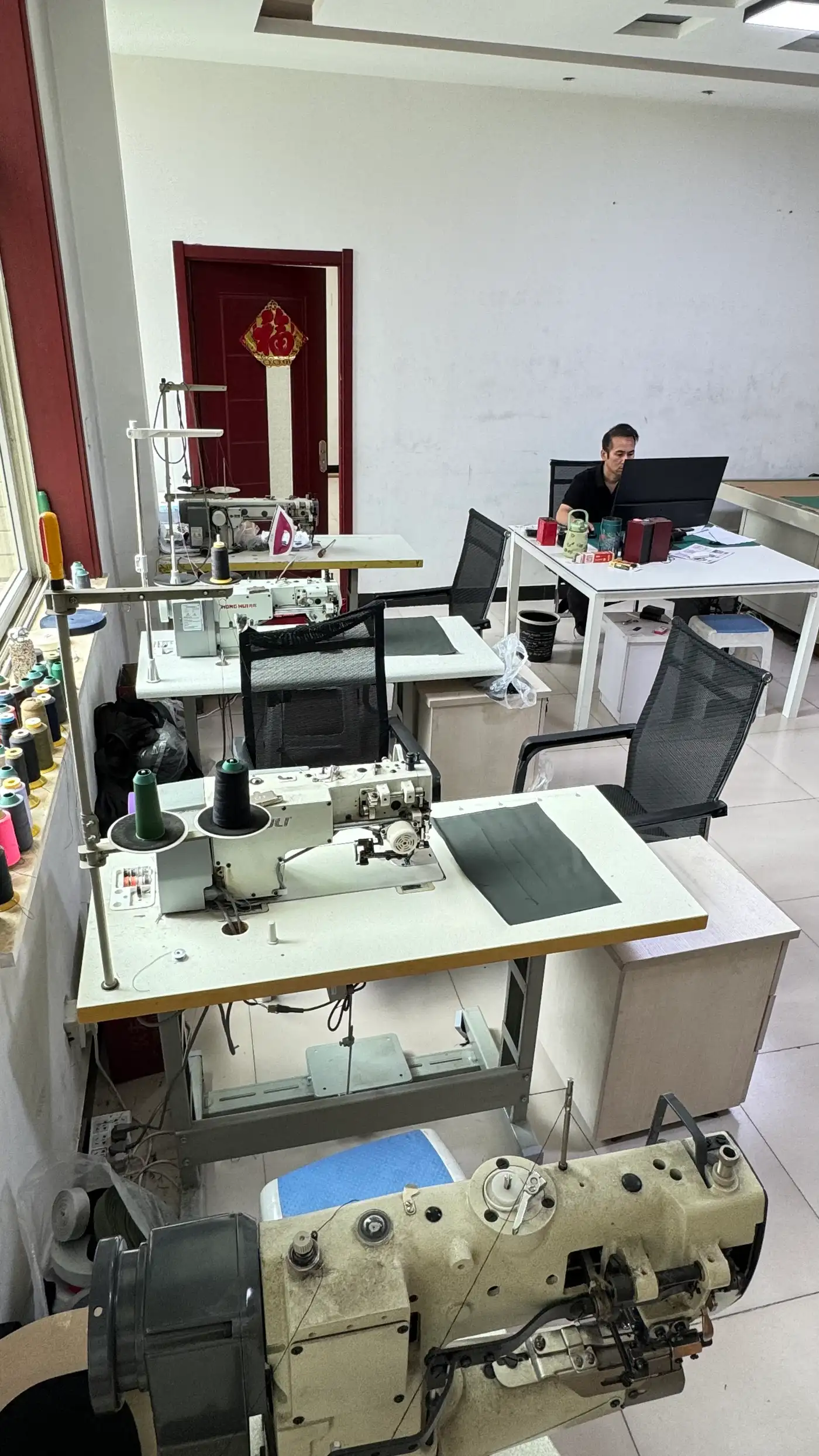
| Stage | How the pack is used | What comes back to the buyer |
|---|---|---|
| Pattern making | POM table and drawings drive the CAD pattern; BOM drives material pulls | Pattern confirmation photos, material swatches |
| Sampling (3-5 days) | Every callout is built as specified; deviations are listed | Sample + deviation list ("Z2 substituted with #5 vislon, coil not available in 25 cm") |
| Sample review | Buyer checks the sample against the pack, not against memory | Approved sample sealed as golden sample; pack revised to Rev D |
| Bulk cutting | Cutting tickets carry the style number and POM; fabric checked against BOM | Fabric inspection report |
| In-line and final QC | Inspectors work from the POM table and construction checklist | Inspection report against the pack |
| Reorder | Pack Rev D + golden sample reproduce the product without re-specification | Same product, 15-day lead time |
The revision discipline matters. When the sample review changes something - a zipper length, a logo position - the pack is revised and re-issued, not annotated in an email. Bulk is built from the latest revision only.
Free Backpack Tech Pack Template
The tables in this article are the template. To use them:
- Copy sections 1-8 into a spreadsheet, one sheet per section.
- Number every component in your drawings and carry the numbers into the BOM, colourway and branding sheets.
- Fill what you know; write the requirement where you do not know the specification.
- Export as PDF, name it
STYLE-NUMBER_RevA_DATE.pdf, and send it with the free sample request.
If you would rather start from our spreadsheet version, ask for it in the sample request and a sales engineer will send the file with example rows filled in.
Frequently Asked Questions
Do I need a tech pack to get a quote?
No, but without one the quote is a range. A complete pack gets a firm price in one round; a photo gets fifteen questions first. Most buyers save a week by writing the pack.
Can the factory write the tech pack for me?
Yes. Send a reference sample or detailed sketch with your target price and quantity, and the sample room drafts the pack as part of development. You review and approve it before sampling. This is the normal route for brands without an in-house product developer.
What software do I need?
None in particular. Adobe Illustrator is common for drawings; a spreadsheet for the BOM and measurements; the export is a PDF. A clean pencil flat photographed with legible callouts is acceptable.
How detailed does the fabric specification need to be?
Denier in both directions, coating type and number of passes, weight in gsm, finish, and a Pantone TCX colour reference. "600D polyester" alone is a family, not a specification.
What is a point of measure?
A defined location on the bag where a dimension is taken, with a code, a method and a tolerance. A backpack typically has 12-16. They are what the QC inspector measures on bulk.
How do I specify a zipper properly?
Gauge (#5, #8, #10), chain type (nylon coil, moulded vislon, metal), one- or two-way, open- or closed-end, length, tape colour, slider type and finish, puller type. See the hardware guide for standard options.
What file format should my logo be in?
Vector: AI, EPS, SVG or PDF with fonts outlined. For embroidery, also a DST file or let the factory digitise once. A JPEG or PNG cannot be used for production.
What is a golden sample?
The approved pre-production sample, sealed and signed by both parties. Bulk is inspected against it and against the final revision of the pack together.
How many revisions is normal?
Two to three: Rev A (initial), Rev B (after quote questions), Rev C (after sample review). More than four usually means the target price or design was not settled before sampling.
Should the pack include the sewing sequence?
Not usually; the factory owns the sequence. It should include the construction points where choices exist - seam types, stitch density, bartacks, anchor construction - which is what the construction table covers.
Can one tech pack cover three colourways?
Yes. The colourway chart maps components to colours per SKU; everything else is shared. That is how three colours share one set of patterns and one MOQ conversation.
How long does it take to write?
For a first backpack, one to two working days with the template. Reusing a previous style's pack as the base cuts it to hours.
Written by
Senszx production team
Sales engineers, pattern makers and QC staff at a BSCI & ISO certified bag factory in Baigou, China, since 2006.
Keep reading
Related articles
Wholesale School Backpacks: Bulk Sourcing Guide for 2027
How schools, uniform suppliers and distributors source custom school backpacks in bulk: sizing by age, fabrics, safety standards, MOQ, pricing, lead times and QC - from a factory.
How to Manufacture Custom Backpacks: Brief to Container
Factory guide to custom backpack manufacturing: tech pack, materials, sampling, cutting, branding, sewing, load tests, QC, packing, MOQ, cost and lead time.
600D vs 900D vs 1680D Polyester: Which to Specify?
Manufacturer's guide to 600D, 900D and 1680D polyester: real weights, costs, abrasion data, coatings, print behaviour, climate effects and a decision framework.
Get in Touch
Get a Custom Bag Quote from Our China Factory
Our sales team is online around the clock and usually replies within the hour.
Email
[email protected]Factory
Qinzheng Road No.89, New Industry Zone, Baigou Town
Baoding City, Hebei Province 074004, China