What Makes a Good Bag Manufacturer for Global Brands: The 10-Pillar Engineering, Factory Audit, Quality Control & OEM/ODM Partner Selection Framework
Discover what makes a good bag manufacturer for global brands. A comprehensive B2B sourcing framework covering category engineering expertise, CAD pattern drafting, raw material supply chain control, 100-line capacity balancing, multi-stage IQC/IPQC/FQC quality protocols, international compliance (BSCI/ISO/CPSIA), single-track 500 MOQ economics, and DDP export logistics.
What Makes a Good Bag Manufacturer for Global Brands: The 10-Pillar Engineering, Factory Audit, Quality Control & OEM/ODM Partner Selection Framework
In the competitive global landscape of consumer lifestyle accessories, technical outdoor packs, executive business luggage, and private-label corporate merchandise, selecting a manufacturing partner is the single most critical strategic decision an executive team will make. A bag is not a static decorative commodity; it is an intimate, high-stress mechanical tool. When a modern consumer invests in a premium everyday commuter backpack, an expandable travel weekender, or a heavy-duty gym duffle, they entrust that product with their expensive laptops, mobile technology, travel documents, professional reputation, and personal mobility across the globe.
A beautiful prototype handcrafted by an elite master sample technician can create an immense amount of false confidence in a brand boardroom. When evaluated on a conference room table, an initial prototype can make almost any overseas supplier look world-class. However, the true industrial test begins weeks later: can that same manufacturing partner faithfully reproduce that approved design across 500, 5,000, or 50,000 units while keeping textile denier, stitch density, seam tolerances, hardware electroplating, zipper smoothness, colorway consistency, chemical compliance, and delivery schedules under absolute control?
For global brand directors, procurement executives, sourcing managers, and DTC founders, the gap between "making a good prototype" and "running an accountable, repeatable manufacturing system" is where supply chain disasters occur. A good bag manufacturer for global brands is not simply a workshop filled with sewing machines, nor is it the supplier that quotes the lowest initial FOB unit price. A truly great bag manufacturer is a vertically integrated engineering partner that bridges the chasm between creative design intent and flawless industrial execution.
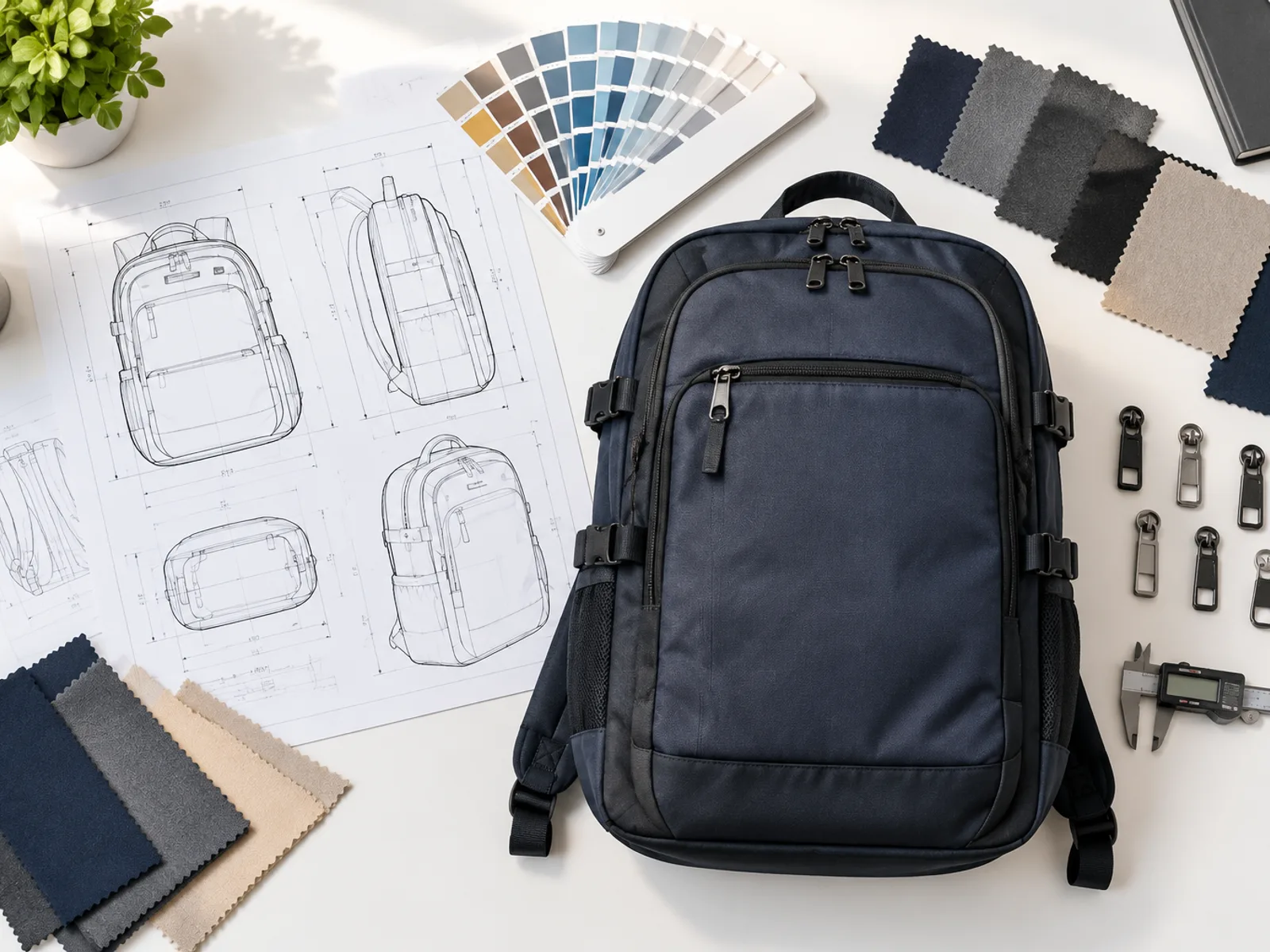
At Senszx, founded in 2006 in Baigou, China—the undisputed global capital of luggage and bag manufacturing—we have spent over twenty years perfecting the art and science of custom soft-goods production. Operating 100 synchronized production sewing lines with BSCI, ISO 9001, ISO 14001, and ISO 45001 accreditations, we partner with discerning brands across North America, Europe, Australia, and worldwide markets to engineer, prototype, and mass-manufacture category-defining bags.
This comprehensive B2B sourcing treatise establishes the definitive 10-Pillar Framework that defines a world-class bag manufacturer for global brands, providing procurement teams with the exact technical, operational, and financial scorecards required to audit, select, and scale with an elite manufacturing partner.
The 10 Non-Negotiable Pillars of an Elite Bag Manufacturer
The 10 Pillars Of A World-class Bag Manufacturer
| Parameter / Specification Stage | Factory Engineering Protocol & Technical Details |
|---|---|
| PILLAR 1 | CATEGORY SPECIALIZATION] Deep structural focus on technical soft goods |
| PILLAR 2 | CAD & DFM ENGINEERING] In-house 2D/3D pattern drafting, rapid 3-5d sampling |
| PILLAR 3 | RAW MATERIAL INTEGRATION] Tier-1 mill relationships, 4-point fabric inspection |
| PILLAR 4 | ADVANCED MACHINERY FLEET] Automated CNC cutting, walking-foot, cylinder-bed |
| PILLAR 5 | 6-GATE QUALITY CONTROL] IQC, IPQC, 100% semi-finished, ISO 2859-1 (AQL 2.5) |
| PILLAR 6 | IN-HOUSE LAB TESTING] Handle jerk (5k cycles), drop tower, crocking, salt |
| PILLAR 7 | SCALABLE LINE BALANCING] 100 synchronized lines, 150k+ pcs/mo, SAM analytics |
| PILLAR 8 | SOCIAL & CHEMICAL COMPLIANCE] BSCI, ISO 9001/14001/45001, CPSIA, REACH, Prop 65 |
| PILLAR 9 | SINGLE-TRACK MOQ ECONOMICS] Transparent 500 MOQ, 100% Development Fee credit |
| PILLAR 10 | END-TO-END DDP LOGISTICS] Volumetric carton packaging, FBA pallets, ocean B/L |
1. Pillar 1: Deep Category Specialization and Structural Product Fit
The first fundamental question a sourcing team must ask is not whether a factory can sew a bag, but whether the factory’s operational DNA matches the specific engineering requirements of the product line. In modern industrial manufacturing, broad generalization is the enemy of quality. A factory producing lightweight cotton grocery totes operates under an entirely different mechanical and labor paradigm than an industrial facility engineering structured technical backpacks.
| Factory Category | Primary Product Focus | Machinery & Workmanship Profile | Suitability for Global Technical Brands |
|---|---|---|---|
| Promotional Soft-Goods Plants | Drawstring sacks, flat non-woven totes, simple shopping bags. | Lightweight single-needle flatbed machines, non-reinforced seams, high-speed piece-rate labor. | Zero (Unsuitable): Inadequate stitch density, lack of walking-foot machines, no internal reinforcement capability. |
| Fashion Handbag Workshops | Women's PU fashion purses, clutches, cosmetic pouches. | Table-top leather skivers, edge-inking stations, light paperboard stiffeners, cosmetic assembly. | Low: Focuses purely on exterior cosmetic finish; lacks understanding of dynamic load paths and heavy webbing anchors. |
| Heavy-Duty Industrial / Luggage Plants (Senszx) | Technical commuter backpacks, travel weekenders, gym duffels, tactical packs. | Automated CNC knife cutters, heavy walking-foot compound-feed machines, post-bed double-needle, computerized cyclic bartackers. | Ideal (High Product Fit): Deep expertise in heavy-denier technical textiles, multi-layer composite structures, and dynamic load distribution. |
1.1 Why Category Specialization Dictates Product Longevity
A high-performance technical backpack or travel weekender is a multi-planar load-bearing structure. When loaded with 15 kilograms of dense cargo, kinetic forces do not distribute evenly; they concentrate along specific geometric vectors:
- Top Grab Handle Anchors: Under abrupt lifting, handle anchor points experience dynamic shock forces up to 3.5 times the static gravitational mass of the bag.
- Shoulder Strap Gussets: Rotational shear stresses act continuously across the upper back-panel seam while walking or running.
- Perimeter Zipper Tracks: Outward volumetric expansion pressure forces zipper coils to pull apart laterally.
A specialized manufacturer understands how to engineer internal sub-surface architectures—such as integrating die-cut 1.2mm high-density polyethylene (HDPE) backing stiffeners, continuous high-tensile seatbelt webbing underlays, and computerized 42-stitch box-and-cross ('X-box') bartacks—to ensure the finished product withstands years of punishing consumer use. Explore our specialized guides on custom laptop backpacks and types of backpacks.
1.2 Structural Comparisons Across Product Silhouettes
Different bag categories impose drastically different physical stress regimes on textile materials, seams, and hardware:
- Technical Daypacks & Laptop Backpacks: Demands multi-density ergonomic back-panel cushioning (EVA + 3D air-mesh), suspended floating laptop cradles protected by 8mm EVA foam, water-resistant perimeter zipper gutters, and balanced sternum strap load transfer.
- Travel Duffels & Weekenders: Requires expansive 40L to 65L main compartment volumes, heavy-duty #8 or #10 continuous nylon coil zippers, reinforced bottom abrasion boots (1680D ballistic nylon or TPU laminates), and heavy-duty die-cast metal swivel snap hooks capable of withstanding >800N pull forces. Discover technical details in our custom travel bags guide and explore our dedicated travel bags factory page.
- Sports & Gym Duffels: Involves separate ventilated shoe tunnels with anti-microbial lining, wet/dry separation pockets lined with heat-sealed waterproof TPU film, exterior water bottle stretch mesh, and heavy-duty carry handles. Review our complete guide to custom gym bags for sports brands and our gym bag manufacturing capabilities.
- Tactical & Modular Packs: Incorporates laser-cut MOLLE attachment matrices, MIL-SPEC 1000D Cordura nylon, NIR-compliant non-reflective IR coatings, heavy-duty ITW Nexus or UTX Duraflex hardware, and continuous load-bearing waist belts. Review our custom tactical backpack sourcing guide and explore our tactical bags facility.
1.3 Technical Mechanics of Soft-Goods Stress Distribution
Understanding the physics of textile failure is what elevates an elite factory engineer above a basic contract stitcher. When soft goods fail in the field, failure typically occurs through three distinct mechanical modes:
- Tear Propagation Along Needle Perforations: If stitch density is too high (e.g., >12 stitches per inch on heavy 900D Oxford), needle penetrations act as a continuous postage-stamp perforation line. Under dynamic load, the fabric tears cleanly along the stitch line. An experienced engineer specifies an optimal 7.0 to 7.5 SPI to maximize thread hold while preserving textile weave tensile strength.
- Seam Peeling vs. Seam Shearing: Standard top-stitched seams subjected to perpendicular pull forces experience rapid seam peeling. By re-engineering the seam geometry into an encapsulated French seam or binding the internal seam with 22mm herringbone twill tape, destructive peel forces are transformed into manageable multi-ply shear resistance.
- Corner Radius Burst Pressures: Sharp 90-degree internal corners concentrate hydraulic and volumetric stress at a single acute point. Grading all interior and exterior corners to a continuous curve with a minimum 35mm to 45mm radius distributes internal pressure smoothly across the entire seam perimeter.
2. Pillar 2: In-House CAD Pattern Engineering & Rapid 3-5 Day Prototyping
A world-class bag manufacturer does not simply follow a sketch; it acts as an extension of the brand's product development team. The speed and precision with which a manufacturer converts a 2D tech pack into a production-ready physical prototype directly determines a brand's time-to-market advantage.
| Parameter / Specification Stage | Factory Engineering Protocol & Technical Details |
|---|---|
| Senszx Rapid Prototyping & DFM Workflow | - |
| Client CAD Tech Pack / Sketch ] - | In-House Optitex 2D Pattern Digitization ---> Automated Laser Acrylic Templates |
| v | - |
| Iterative Refinement (Max 3 Rounds) ] <--- 3 to 5 Day Master Sample Assembly <--- [ Rapid Mill Material Sourcing | - |
| v | - |
| Golden Sample Sign-Off & Locked Master CAD Cut Files | - |
2.1 The In-House Master Sample Room
At Senszx, our dedicated sample development center spans over 500 square meters, staffed by master pattern engineers with an average of 18+ years of technical soft-goods experience. Utilizing advanced CAD pattern software (Optitex and Lectra), our engineers digitize every individual panel, seam allowance, internal alignment notch, and drill-hole coordinate.
Our rapid prototyping protocol delivers finished, photo-ready physical prototypes in 3 to 5 business days:
- Day 1: In-depth DFM review, pattern digitization, seam allowance grading, and laser-cutting of acrylic master templates.
- Day 2: Sourcing exact bulk-grade shell textiles, linings, foam padding, zippers, and hardware from our certified Tier-1 material library.
- Day 3: Hand-crafting the sub-assemblies (front organizer panels, padded shoulder straps, suspended laptop sleeves).
- Day 4: Final 3D assembly, edge binding, logo badge installation, and in-house physical load testing.
- Day 5: High-resolution studio photography review with the client, followed by express international courier dispatch (DHL/FedEx).
Learn how to prepare industry-standard specifications in our comprehensive guides on how to write a backpack tech pack and how to prepare a custom bag RFQ.
2.2 Prototyping Iteration Management: Eliminating Development Lag
Traditional trading companies frequently require 3 to 5 weeks to produce a single prototype revision because they must ship physical samples back and forth between commercial sales offices and outsourced third-tier workshops.
At Senszx, prototype iterations are managed with industrial speed and precision:
- Live High-Definition Video Reviews: Our senior pattern makers conduct interactive video review sessions with client design teams, dissecting internal seam geometry, pocket ergonomics, and hardware placement in real time.
- Micro-Adjustments Within 24 Hours: Minor pattern adjustments (e.g., widening a front gusset by 15mm or modifying a zipper curve radius) are re-cut on our automated CNC laser tables and re-stitched within 24 hours.
- Sealed Master Counter-Samples: Once the client confirms prototype perfection, two identical sealed counter-samples are created. One sample is retained in our Master Quality Room as the physical benchmark; the second is dispatched to the brand HQ for final sign-off.
3. Pillar 3: Raw Material Supply Chain Control & IQC Testing
A bag is only as durable as the raw materials from which it is constructed. Low-tier factories and trading intermediaries frequently cut corners on raw materials, purchasing off-spec surplus fabric bolts or unbranded recycled hardware to maximize short-term profit margins.
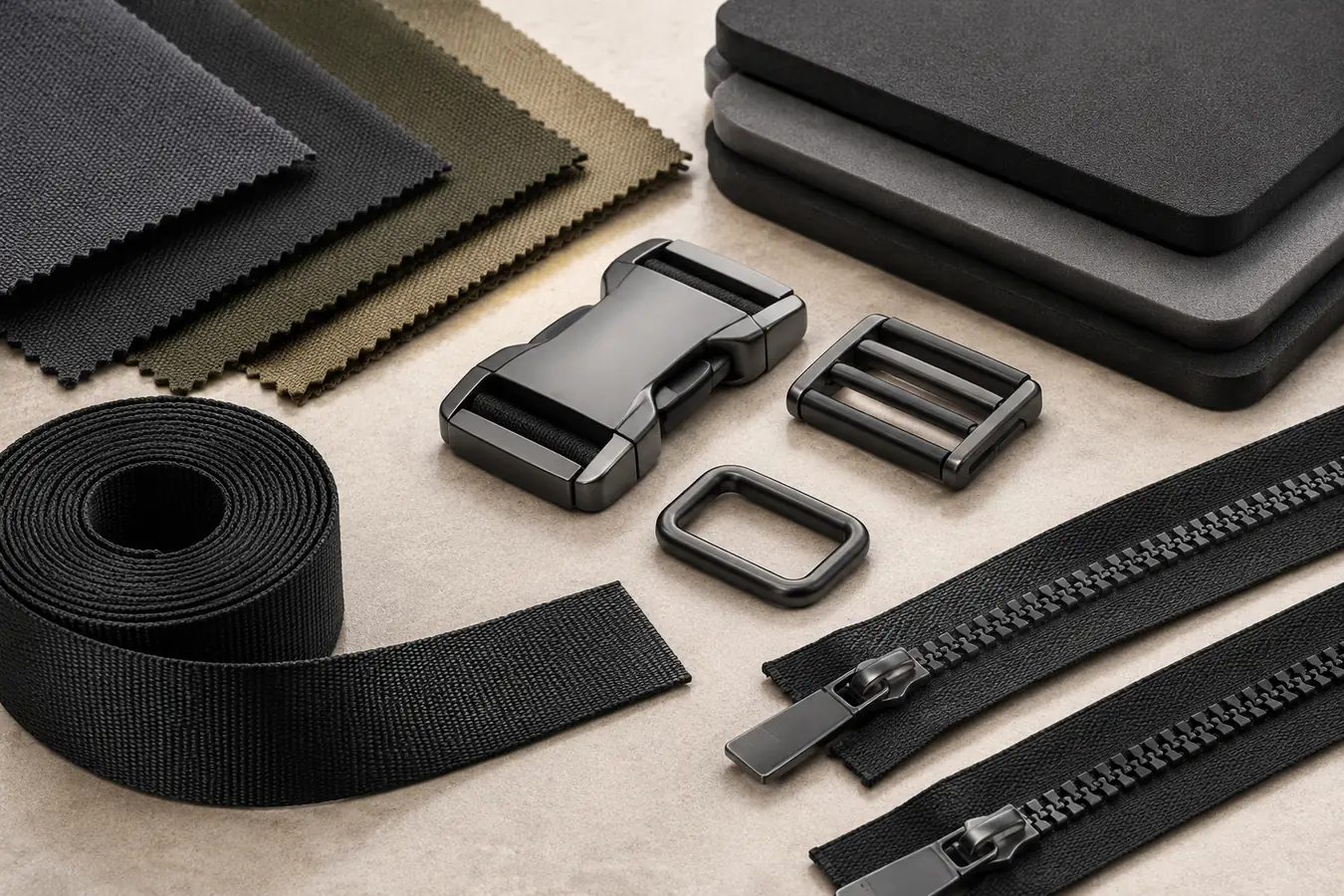
An elite bag manufacturer maintains direct, mill-level procurement relationships with certified Tier-1 textile mills, hardware foundries, and zipper manufacturers.
3.1 The Technical Material Verification Matrix
Senszx enforces strict Incoming Quality Control (IQC) testing on all incoming raw materials before cutting begins:
| Component Category | Preferred Technical Specification (Senszx) | Common Cheap Substitute (Unverified Sourcing) | Tangible Performance Risk of Cheap Substitute |
|---|---|---|---|
| Primary Outer Shell | 900D / 1680D High-Tenacity Oxford Polyester (0.12mm double PU backing, C6 DWR). | Low-tenacity 600D with heavy calcium carbonate filler backing to simulate weight. | Low tear strength (<80N); white creasing marks; backing delaminates within 6 months. |
| Technical Nylon Shell | 500D / 1000D Cordura Nylon 6.6 (air-jet textured yarn, superior abrasion). | Generic polyester texturized yarn dyed to look like Cordura. | Fails Martindale abrasion test (<8,000 rubs vs. >25,000 rubs for genuine Cordura). |
| Interior Lining | 210D Ripstop Polyester / GRS Certified Recycled PET (58g/m², PU coated). | 170T / 190T plain taffeta polyester without ripstop grid. | Tears easily at internal pocket seams when items are pushed inside; zero water resistance. |
| Internal Foam Padding | Closed-Cell Cross-Linked XLPE & High-Density EVA (45kg/m³ to 65kg/m³ density). | Open-cell recycled polyurethane sponge (crumb foam) or low-density EPE pearl wool. | Collapses permanently under shoulder load; loses all shock absorption; absorbs moisture and odor. |
| Load-Bearing Webbing | 100% High-Tensile Polyester Seatbelt Weave Webbing (1.4mm thick, break strength >1,400 kgf). | Low-density polypropylene (PP) ribbon webbing (0.8mm thick). | Frays at cut edges; slips continuously through ladder lock buckles; low tensile break (<300 kgf). |
| Main Opening Zippers | #8 / #10 Reverse Coil with Water-Resistant PU Tape (SBS / YKK certified). | Unbranded generic nylon coil zippers with low-gauge slider bodies. | Teeth separate under lateral pack pressure; slider pulls off track; zipper chain splits open in transit. |
| Plastic Hardware Buckles | Virgin Molded Polyoxymethylene (POM/Acetal) (Tensile break strength >850N). | Recycled brittle Polypropylene (PP) or low-grade ABS plastic. | Snaps and fractures easily in sub-zero winter temperatures or under dynamic foot stepping. |
Review our comprehensive textile technical guides on 600D vs 900D vs 1680D polyester, custom fabrics, and our zipper pullers and buckles guide.
3.2 Engineering Textile Coatings and Eco-Friendly Water Repellency
In modern technical bag manufacturing, surface textile finishes must balance extreme weather resistance with stringent international chemical safety regulations:
- PFC-Free / C0 Durable Water Repellent (DWR): Global outdoor brands are rapidly phasing out fluorinated C8/C6 chemistry. Senszx applies plant-based, fluorine-free C0 DWR coatings that achieve Grade 4.0 spray ratings (AATCC 22) while fully complying with EU REACH and California regulations.
- Thermoplastic Polyurethane (TPU) Film Lamination: Unlike conventional PVC coatings that emit volatile organic compounds (VOCs) and crack in sub-zero cold, our TPU film laminations provide a permanent 10,000mm $H_2O$ waterproof barrier with exceptional flex fatigue resistance down to -30°C.
- GRS-Certified Recycled Synthetics: We maintain certified supply chains for Global Recycled Standard (GRS) rPET (recycled polyethylene terephthalate) polyester and recycled nylon 6, providing complete transaction certificate (TC) traceability from post-consumer plastic bottles to finished bags.
3.3 Hardware Engineering: Zinc Alloy vs. Aluminum vs. POM Polymers
Hardware components represent the mechanical touchpoints of any custom bag. Specifying the correct alloy composition, tensile rating, and electroplating finish prevents catastrophic field failures:
| Hardware Type & Material | Mechanical Tensile Rating | Environmental & Temperature Stability | Best Application in Bag Manufacturing |
|---|---|---|---|
| Die-Cast Zinc Alloy (Zamak 3/5) | Tensile yield strength: 650N to 950N | High dimensional stability; passed 48h salt spray (ASTM B117); matte gunmetal or brushed nickel finishes. | Heavy-duty shoulder strap swivel snap hooks, D-rings, branded zipper pullers, magnetic fidlock mounts. |
| Anodized 6061-T6 Aircraft Aluminum | Tensile yield strength: 1,200N to 1,800N | Ultra-lightweight (60% lighter than zinc alloy); 100% corrosion proof; extreme sub-zero resilience. | High-end technical alpine packs, heavy luggage tension hooks, external carabiner gear loops. |
| Molded Virgin POM (Acetal / Delrin) | Tensile break strength: 750N to 900N | High impact resistance; low friction coefficient; operating temperature range: -40°C to +90°C. | Ergonomic ladder lock adjusters, side-squeeze buckles, sternum strap sliders, cord locks. |
| Recycled Brittle Polypropylene (PP) | Tensile break strength: <280N | Poor impact resistance; becomes brittle and fractures easily below 0°C; slips under webbing load. | UNSUITABLE (Rejected by Senszx): Commonly used by cheap brokers; high failure rate. |
3.4 Zipper Architecture: Coil Pitch, Slider Alloys, and Water Barriers
Zippers represent over 65% of all consumer warranty claims in soft goods. A premier bag manufacturer engineers zipper selections with absolute mechanical rigor:
- Continuous Nylon Coil (#5, #8, #10): The industry standard for flexible, curved openings. #5 coil is specified for internal organizers and exterior flat pockets; #8 coil is standard for main compartment perimeter closures; #10 heavy-gauge coil is reserved for 50L+ expedition travel duffels and tactical luggage.
- Reverse PU Water-Resistant Tape: Inverting the zipper coil and laminating a flexible matte polyurethane (PU) membrane over the exterior creates a modern, sleek aesthetic while sealing out rain and moisture.
- Slider Body Metallurgy & Auto-Lock Mechanisms: High-stress zippers must utilize die-cast zinc alloy slider bodies with internal stainless steel auto-locking leaf springs. This prevents the slider from self-opening when the backpack is packed to maximum volumetric capacity.
4. Pillar 4: Advanced Machinery Fleet and Automated Cutting Infrastructure
The physical infrastructure of a bag factory directly dictates its dimensional tolerance, manufacturing speed, and structural consistency. Hand-sheared fabric panels cut with manual scissors inevitably vary by 3mm to 8mm across a production run, leading to distorted silhouettes, uneven seam allowances, and severe assembly bottlenecks.
4.1 Automated CNC Cutting vs. Manual Shearing
Senszx deploys multi-ply automated CNC reciprocating knife cutting machines and precision laser-cutting tables:
- Computerized Marker Nesting: CAD pattern nesting software optimizes pattern layout across raw fabric spreads, achieving over 95.5% material utilization and reducing scrap waste.
- Tension-Free Fabric Spreading: Heavy fabric rolls are unrolled across 15-meter relaxing tables for 24 hours prior to cutting, completely eliminating textile tension and post-cut panel shrinkage.
- Micrometer Cut Accuracy: Automated CNC reciprocating knives cut through 50 layers of heavy ballistic nylon simultaneously with a precision tolerance of $\pm 0.5\text{mm}$, ensuring that every single fabric piece across a 10,000-unit production run matches the master pattern perfectly.
Inspect our automated cutting technology on our dedicated fabric cutting room page.
4.2 Specialized Industrial Sewing Machinery Inventory
A true Tier-1 bag manufacturer maintains an advanced inventory of specialized sewing machinery configured for distinct assembly operations:
| Machine Category & Model | Mechanical Configuration | Specific Manufacturing Application | Workmanship Benefit |
|---|---|---|---|
| Heavy-Duty Walking Foot (Compound Feed) | Triple synchronized feed mechanism (feed dog, needle, vibrating presser foot). | Stitching heavy multi-layer outer shells (900D/1680D) combined with EVA foam and webbing. | Eliminates ply shift and puckering; guarantees consistent 7.5 SPI stitch length across varying thicknesses. |
| Cylinder-Bed Small-Arm Binding Machine | 46mm diameter horizontal cylinder bed with synchronized edge binder attachment. | Internal seam binding around 3D curved bottom gussets and narrow interior corners. | Completely encapsulates raw fabric edges without binding wrinkles; eliminates internal fraying. |
| Post-Bed Double-Needle Machine | Vertical elevated column bed with twin needle bars and roller presser foot. | Top-stitching structural 3D box corners, luggage shells, and structured perimeter panels. | Delivers parallel, millimeter-precise double top-stitching on complex 3D contours. |
| Programmable CNC Pattern Bartacker | High-speed computerized sewing machine with electronic X-Y stepping motor clamp. | Executing 28, 42, or 56-stitch box-and-cross ('X-box') reinforcing bartacks on strap anchors. | Delivers 100% identical tensile pull strength (>800N) across every single production unit. |
| Hydraulic Die Clicker Press (25 Ton) | Precision hydraulic head with hardened steel rule cutting dies. | Die-cutting dense EVA foam inserts, shoulder strap padding cores, and leather patches. | Produces clean, perfectly beveled 90-degree edges on internal foam padding. |
4.3 Ergonomic Harness Engineering: Multi-Layer Strap Architecture
Shoulder straps and back panels are the primary ergonomic interface between the user and the bag. Constructing a strap that remains comfortable under a 15kg load requires advanced multi-layer lamination:
- Outer Shell Layer: Durable 900D/1000D textile with bound edges, providing structural integrity and abrasion resistance.
- Internal Load-Bearing Core: 38mm high-tensile seatbelt webbing running continuously through the entire length of the strap, transferring tensile loads directly to the top anchor bartack.
- Dual-Density Cushioning Core: Combining a 4mm high-density EVA foam top layer (prevents strap flattening and spreads point-pressure) with a 6mm cross-linked XLPE foam base layer (delivers plush, resilient shoulder cushioning).
- Body-Contact Surface: Breathable 3D sandwich spacer mesh (320g/m²) promoting airflow and moisture evaporation.
- Ergonomic S-Curve Contouring: Grading shoulder strap patterns in a natural anatomical S-curve that contours smoothly around the chest and armpits without chafing.
5. Pillar 5: Six-Gate Quality Control Architecture and ISO 2859-1 (AQL 2.5) Audits
A good bag manufacturer does not treat quality control as an afterthought performed on finished cartons at the shipping dock. Quality must be systematically enforced across every progressive stage of production.
Senszx enforces a rigorous 6-Gate Quality Management System:
Senszx 6-stage Quality Architecture
| Parameter / Specification Stage | Factory Engineering Protocol & Technical Details |
|---|---|
| GATE 1 | IQC] Raw Material Testing: 4-Point Fabric Check, Colorfastness, Hardware Pull |
| v | - |
| GATE 2 | PRE-PROD] Pre-Production Sample Sign-Off & Automated CNC Cut Dimensional Check |
| v | - |
| GATE 3 | IPQC] In-Process QC: Stitch Density (7-8 SPI), Seam Binding, Cyclic Bartacks |
| v | - |
| GATE 4 | 100% QC] 100% Semi-Finished Structural Inspection & Cleanliness Audit |
| v | - |
| GATE 5 | FQC] Final Random Inspection (ISO 2859-1 / AQL 2.5 Major, 4.0 Minor, Drop Test) |
| v | - |
| GATE 6 | LOGISTICS] Carton Palletization, Desiccant Check, Barcode & Container Loading Audit |
5.1 Final AQL Inspection Defect Classification
Final Random Inspection (FRI) is executed by our Chief Quality Inspector in strict accordance with ISO 2859-1 (ANSI/ASQ Z1.4) Normal Inspection Level II:
- Critical Defects (AQL 0.0 / Zero Tolerance Threshold):
- Prohibited sharp metal objects: verified by passing 100% of finished goods through dual-aperture, 9-point calibrated metal detection conveyor tunnels.
- Presence of mold, dampness, or severe chemical odors.
- Incorrect legal country-of-origin labels or missing mandatory polybag suffocation warnings.
- Major Defects (AQL 2.5 Acceptance Threshold):
- Open seams, skipped stitches, broken sewing threads, or seam unraveling.
- Non-functional zippers, misaligned zipper stops, or slider jams.
- Cracked, warped, or non-locking hardware buckles.
- Misaligned brand logos (positional variance $>3\text{mm}$ or angular tilt $>1^\circ$).
- Overall bag exterior dimensions deviating past $\pm 5\text{mm}$ from the approved measurement sheet.
- Minor Defects (AQL 4.0 Acceptance Threshold):
- Untrimmed sewing thread ends exceeding 3mm in non-critical interior locations.
- Minor removable surface chalk marks or dust.
- Slight cosmetic packaging wrinkles on outer polybags.
Explore our comprehensive inspection protocols on our dedicated quality control page.
5.2 In-Process Quality Control (IPQC) Defect Prevention Matrix
Roaming IPQC auditors inspect active sewing lines every 60 minutes, using a standardized defect prevention matrix:
| Seam & Workmanship Defect | Root Industrial Cause | Immediate Shop-Floor Corrective Action (Senszx) |
|---|---|---|
| Skipped Stitches (Missed Loops) | Needle deflection on multi-layer seam; blunt needle point; incorrect needle-to-hook timing. | Replace needle with Titanium Nitride (TiN) SAN 5.2 needle; re-time rotary hook gap to 0.05mm. |
| Seam Puckering (Waviness) | Excessive sewing thread tension; feeding slippage between dissimilar fabric layers. | Reduce needle thread tension; adjust walking-foot alternating lift height; switch to silicone-lubricated thread. |
| Yarn Fraying at Seam Edge | Inadequate seam allowance (<8mm); uneven cutting edge; binding tape guide misaligned. | Reset CNC cut offset; re-align cylinder-bed binding folder guide to ensure 100% encapsulation. |
| Uneven Stitch Density (<7 SPI) | Operator pulling fabric manually through machine; worn presser foot feed dog. | Replace worn feed dog teeth; retrain operator on constant feed rate; enforce 7.5 SPI gauge check. |
| Bartack Misplacement (>2mm) | Manual positioning on standard lockstitch machine; lack of pneumatic clamping jig. | Program computerized pattern bartacker with mechanical acrylic positioning template. |
6. Pillar 6: In-House Mechanical Laboratory Stress Testing
In addition to visual and dimensional inspections, a world-class bag manufacturer operates an in-house physical testing laboratory to validate mechanical strength under simulated real-world abuse.
| Laboratory Test Method | Testing Equipment & Applied Mechanical Force | Industry Benchmark Requirement | Senszx Factory Standard (Exceeds Benchmark) |
|---|---|---|---|
| Dynamic Handle Jerk Test | Reciprocating eccentric cam jerk tester; bag loaded with 18kg dynamic payload. | 2,500 continuous cycles at 30 jerks/min without handle anchor tearing. | 5,000 Continuous Cycles with zero seam elongation or hardware deformation. |
| Shoulder Strap Drop Test | 1.0-meter free-fall drop tower; backpack loaded with 20kg dead weight. | 15 drops arrested solely by shoulder strap webbing and ladder lock buckles. | 25 Consecutive Drops with zero webbing slippage (<1.5mm) and zero buckle cracking. |
| Zipper Reciprocating Fatigue | Lateral cross-tension zipper tester under 150N constant pull-force. | 2,500 open/close cycles at 30 cycles/min without tooth disengagement. | 5,000 Open/Close Cycles with smooth slider action force remaining <4.0N. |
| Fabric Hydrostatic Water Column | Suter hydrostatic pressure tester (AATCC 127 / ISO 811); pressure rate 60 mbar/min. | 1,000mm $H_2O$ water pressure resistance before droplet penetration. | 1,500mm to 10,000mm $H_2O$ depending on PU/TPU coating specification. |
| Martindale Fabric Abrasion | Martindale abrasion tester (ISO 12947-2) under 12 kPa wool abradant pressure. | 15,000 rubs without yarn breakage or surface coating peeling. | >25,000 Rubs for technical 900D/1680D Oxford and Cordura textiles. |
| Hardware Salt Spray Corrosion | Heated salt spray chamber (ASTM B117); 5% neutral NaCl fog at 35°C for 48 hours. | No red rust; minor surface tarnishing permitted on low-grade hardware. | Zero Red Rust, Zero Pitting, Zero Electroplating Flaking after 48 hours. |
6.1 Calibration and Compliance Documentation
In-house laboratory testing is only meaningful when testing instruments are rigorously maintained and calibrated:
- Annual Third-Party Metrology Calibration: All load cells, hydrostatic gauges, and universal tensile testers undergo annual metrological verification by certified metrology institutes, maintaining traceable calibration certificates.
- Itemized Batch Test Reports: Every mass production run receives an archived Laboratory Test Certificate certifying exact physical test results (handle jerk, seam tensile, hydrostatic water column) alongside the final AQL 2.5 inspection report.
- Accredited Third-Party Lab Verification: For major enterprise retail contracts, Senszx coordinates external testing through accredited global laboratories (SGS, Intertek, Bureau Veritas, TÜV) to provide third-party validation for regulatory compliance.
7. Pillar 7: Scalable Capacity, Standard Allowed Minutes (SAM) & Line Balancing
Factory capacity numbers are completely meaningless without understanding the industrial engineering principles of Standard Allowed Minutes (SAM) and production line balancing. Producing 100,000 flat promotional drawstring bags requires minimal labor minutes, whereas producing 10,000 multi-compartment travel backpacks requires hundreds of thousands of complex sewing operations.
Senszx Industrial Manufacturing Capacity Profile
| Parameter / Specification Stage | Factory Engineering Protocol & Technical Details |
|---|---|
| Synchronized Active Sewing Lines | 100 Dedicated Industrial Production Lines |
| Total Specialized Manufacturing Fleet | 350+ Specialized Machines (Walking-Foot/CNC/Post-Bed) |
| Skilled Production Workforce | 260+ Full-Time Master Seamstresses & Technicians |
| Monthly Mass Production Output | 120,000 to 180,000 Units (Category Dependent) |
| Standard Mass Production Turnaround | 20 Calendar Days (500 to 5,000 pcs) |
| Parallel Active Project Capacity | 30 to 45 Multi-SKU Production Programs in Parallel |
7.1 Line Balancing and SAM Breakdown Case Study
Senszx industrial engineers break down complex bag styles into granular assembly operations, calculating precise Standard Allowed Minutes (SAM) to balance operator workloads and eliminate bottlenecks:
| Station # | Assembly Operation Description | Machine Type Assigned | SAM (Minutes) | Key Quality Checkpoint |
|---|---|---|---|---|
| ST-01 | Sub-assembly: Front organizer pocket zip & key leash | Single-Needle Lockstitch | 2.8 min | Zipper teeth alignment, leash pull strength |
| ST-02 | Sub-assembly: Exterior front face panel joining & piping | Walking-Foot Compound Feed | 3.5 min | Piping radius consistency, 7.5 SPI stitch |
| ST-03 | Sub-assembly: Padded shoulder strap foam lamination | Walking-Foot with Guide | 4.2 min | Centered webbing, balanced foam thickness |
| ST-04 | Sub-assembly: Computerized 42-stitch cyclic bartacks | CNC Pattern Bartacker | 1.8 min | Bartack coordinate alignment, knot lock |
| ST-05 | Sub-assembly: 3D air-mesh back panel & lumbar EVA core | Walking-Foot Compound Feed | 3.9 min | Lumbar foam placement, mesh tension |
| ST-06 | Sub-assembly: Suspended floating laptop compartment | Single-Needle with Binding | 3.1 min | 25mm floor clearance, velvet lining smooth |
| ST-07 | Main assembly: Top handle & strap anchors to back frame | Heavy Walking-Foot (TiN) | 4.5 min | HDPE backing plate centered, cross-box stitch |
| ST-08 | Main assembly: Perimeter #8 PU water-resistant zipper | Cylinder-Bed Synchronized | 5.2 min | Zero corner wave, smooth slider glide |
| ST-09 | Main assembly: 3D front-to-back perimeter joining | Post-Bed Double-Needle | 6.8 min | Parallel top-stitch, symmetry tolerance <2mm |
| ST-10 | Final assembly: Internal herringbone seam binding | Cylinder-Bed Binding Machine | 5.5 min | 100% raw edge encapsulation, zero missed ply |
| ST-11 | Finishing: 100% thread trimming & visual audit | Dedicated Inspection Table | 2.5 min | Cleanliness, zipper pull test, shape check |
| ST-12 | Packaging: Metal detection tunnel & polybag sealing | Calibrated Metal Tunnel | 1.2 min | Zero metal fragments, correct barcode label |
| TOTAL | Complete Manufacturing Cycle Per Unit | 12 Integrated Stations | 45.0 min | Daily Output per 20-Person Line: ~240 units |
8. Pillar 8: International Social & Chemical Compliance (BSCI, ISO, CPSIA, REACH)
For global brands selling in the United States, European Union, United Kingdom, and international retail chains, compliance is an absolute legal and commercial prerequisite. Non-compliant soft goods expose brand executives to severe financial penalties, customs seizures, product recalls, and catastrophic brand reputation damage.
8.1 Chemical and Social Audit Accreditations
Senszx maintains full compliance across global regulatory frameworks:
- US CPSIA & California Proposition 65: Total Lead content in substrates/coatings <100 ppm; regulated Phthalates (DEHP, DBP, BBP, DINP, DIDP, DNHP) <0.1%. Read our CPSIA safety testing guide.
- EU REACH (Regulation EC 1907/2006): Complete screening against the candidate list of Substances of Very High Concern (SVHC >240 chemicals), heavy metals, and nickel release.
- BSCI (Business Social Compliance Initiative): Audited annually to guarantee fair living wages, humane working hours, modern workplace health and safety, and ethical environmental management.
- ISO 9001:2015 / ISO 14001:2015 / ISO 45001:2018: Certified organizational management systems governing quality control, environmental sustainability, and worker safety.
Review our verified certificates on our certifications page.
8.2 The BSCI Social Audit Protocol: 13 Key Performance Areas
Senszx undergoes annual, unannounced third-party social compliance audits under the amfori BSCI framework, verifying total adherence across 13 Key Performance Areas (PA):
- PA 1: Social Management System: Documented corporate policies, worker grievance mechanisms, and management accountability.
- PA 2: Workers Involvement and Protection: Democratic worker representation, safety committees, and anonymous feedback channels.
- PA 3: Rights of Freedom of Association: Protection of collective bargaining rights without employer interference.
- PA 4: No Discrimination: Zero tolerance for discrimination based on gender, race, religion, age, or disability.
- PA 5: Fair Remuneration: Verified payment of living wages exceeding statutory minimum wage standards, with transparent payslips.
- PA 6: Decent Working Hours: Strict enforcement of maximum standard working hours (40-48 hrs/week) and voluntary, compensated overtime.
- PA 7: Occupational Health and Safety (OHS): Modern fire suppression systems, marked emergency exit routes, PPE provision, and ergonomic workstations.
- PA 8: No Child Labor: Absolute zero-tolerance verification through mandatory government ID authentication prior to hiring.
- PA 9: Special Protection for Young Workers: Safeguarding apprentices from hazardous machinery or night shifts.
- PA 10: No Precarious Employment: Written employment contracts provided to 100% of the manufacturing workforce.
- PA 11: No Bonded Labor: Zero recruitment fees, zero retention of personal identity documents.
- PA 12: Protection of the Environment: Strict control of wastewater discharge, energy efficiency programs, and licensed non-hazardous waste disposal.
- PA 13: Ethical Business Behaviour: Zero bribery, anti-corruption policies, and complete intellectual property confidentiality.
9. Pillar 9: Single-Track MOQ Economics & Transparent Development Programs
Traditional overseas factories frequently impose rigid, multi-thousand-unit Minimum Order Quantities (MOQs) that lock expanding brands into excessive inventory risk. Conversely, tiny cottage workshops that accept micro-batches lack automated cutting tables, quality control laboratories, and export compliance certifications.
Senszx bridges this gap through our Single-Track OEM/ODM MOQ Structure:
- Single-Track 500-Piece MOQ: 500 pieces per style/colorway represents the optimal industrial convergence of raw material mill dyeing efficiency, automated CNC cutting yield (>95%), and sewing line operator balancing.
- The 100% Credited Development Fee Program: For visionary startups, new product launches, or expanding collections needing physical prototyping before committing to 500 units, we charge an upfront engineering fee covering complete CAD pattern drafting, material sourcing, and up to 3 iterative sample rounds. 100% of this development fee is credited directly back against your mass production invoice upon placing the bulk order.
Discover low-risk catalog styles in our wholesale backpacks in stock section or browse our custom bag catalog.
9.1 Multi-SKU Colorway Matrix Optimization
When an emerging brand launches a new bag silhouette, offering multiple colorways (e.g., Solid Black, Olive Drab, Navy Blue) is critical for retail appeal. However, splitting a 500-unit total order across 3 colorways can trigger material MOQ penalties if managed improperly.
Senszx optimizes multi-SKU production through smart structural standardization:
- Standardizing Internal Substrates: We standardize all internal non-visible structural elements—including 210D lining fabric, internal EVA foam cores, HDPE frame sheets, zipper slider hardware, and edge binding tapes—across all colorway SKUs.
- Isolating Outer Shell Colorways: By standardizing internal components, we achieve high-volume raw material pricing while allowing our clients to offer multiple vibrant exterior shell colorways within a single 500-unit production order without incurring small-batch surcharge penalties.
9.2 Capital Efficiency and Inventory Velocity Analysis
For high-growth DTC and lifestyle brands, managing working capital is the primary determinant of corporate solvency. Committing to a traditional 3,000-unit factory MOQ for an unproven bag style ties up approximately $60,000 to $90,000 in illiquid inventory, incurring heavy domestic warehouse storage fees and high risk of dead-stock liquidation.
By partnering with Senszx under our single-track 500 MOQ framework:
- Initial working capital commitment is reduced by 75% to 80% (approximately $12,500 to $18,000 total inventory spend).
- Capital is freed up for performance marketing, influencer partnerships, and customer acquisition.
- When sales velocity validates market demand, our scalable 100-line infrastructure allows rapid replenishment runs (500 to 5,000 units) manufactured and dispatched within 20 calendar days.
10. Pillar 10: End-to-End DDP Export Logistics and Volumetric Packaging Optimization
The final pillar of manufacturing excellence is export execution. Soft goods contain significant empty internal volume. Shipping un-optimized bags by air or ocean freight results in brands paying exorbitant "dimensional weight" charges.
10.1 Volumetric Packaging Engineering
Senszx applies advanced packaging engineering to reduce landed logistics costs:
- Precision Flat-Folding & Cardboard Collars: Custom-engineered folding methods compress empty interior volume without creasing structural EVA foam panels, reducing carton cubic meters (CBM) by up to 35%.
- Heavy-Duty 5-Ply Export Master Cartons: Constructed from double-wall Kraft corrugated board (ECT 44 / 275# burst strength) engineered to survive severe ocean container humidity and rough intermodal transit without carton crushing.
- Container Palletization Density: Cartons are dimensioned specifically to maximize space utilization inside 40ft High Cube (HQ) containers, fitting over 7,500 to 12,000 backpacks per container.
- Complete DDP / FOB / CIF Logistics: We manage all export documentation, customs clearance, and direct-to-warehouse drayage across the United States, Europe, and global destinations. Review our payment information and frequently asked questions.
Export Master Carton Engineering & Palletization Spec
| Parameter / Specification Stage | Factory Engineering Protocol & Technical Details |
|---|---|
| Master Carton Construction | 5-Ply Double-Wall Heavy-Duty Kraft Corrugated (BC-Flute) |
| Edge Crush Test (ECT) Strength | ECT 44 / 275 lbs/in² Mullen Burst Strength |
| Individual Polybag Packaging | 2.5 mil Virgin LDPE with Multilingual Suffocation Warning |
| Moisture Protection | 25g Micro-Porous Desiccant Silica Gel Pouch Per Carton |
| 40ft High Cube (HQ) Capacity | 68 CBM Payload (approx. 7,800 to 11,500 backpacks) |
| Incoterms Supported | FOB Tianjin/Shenzhen, CIF Long Beach/Rotterdam, DDP Direct |
10.2 Global Ocean Shipping Transit Times & Logistics Gateways
Senszx coordinates direct container drayage from our factory loading docks to China's major export shipping hubs (Tianjin Port and Shenzhen/Guangzhou Ports), connecting directly to global logistics corridors:
| Destination Port / Region | Average Ocean Transit Time | Customs Clearance & Domestic Drayage | Total Factory-to-Door Lead Time |
|---|---|---|---|
| US West Coast (Los Angeles / Long Beach / Oakland) | 14 to 18 Days | 3 to 5 Days (Automated ISF & AMS filing) | 18 to 23 Calendar Days |
| US East Coast (New York / Savannah / Charleston) | 28 to 34 Days (via Panama Canal) | 3 to 5 Days | 32 to 39 Calendar Days |
| Northern Europe (Rotterdam / Hamburg / Antwerp) | 26 to 32 Days | 3 to 4 Days (EU Import VAT & EORI) | 30 to 36 Calendar Days |
| United Kingdom (Southampton / Felixstowe) | 28 to 34 Days | 3 to 4 Days | 32 to 38 Calendar Days |
| Middle East / GCC (Jebel Ali, Dubai / Dammam) | 16 to 22 Days | 2 to 4 Days (SABER / SASO verified) | 19 to 26 Calendar Days |
| Australia (Sydney / Melbourne / Brisbane) | 14 to 18 Days | 2 to 3 Days | 17 to 22 Calendar Days |
Direct Sourcing Comparison Matrix: How Suppliers Stack Up
| Sourcing Dimension | Tier-1 Factory-Direct (Senszx) | Small Cottage Workshop | Sourcing Trading Company | Virtual Sourcing Broker |
|---|---|---|---|---|
| Physical Assets & Lines | 100 Synchronized Lines, CNC cutting, testing lab. | 5-10 generic sewing machines; manual hand cutting. | Office showroom only; zero manufacturing assets. | Home office / laptop; zero assets. |
| Sampling Turnaround | 3 to 5 business days with in-house CAD pattern makers. | 10 to 20 days; relies on manual paper patterns. | 15 to 25 days; must relay to external workshops. | 20 to 30 days; multi-tiered handoffs. |
| Mass Production Lead Time | 20 calendar days (500 to 5,000 units). | 45 to 60+ days; severe labor bottlenecks. | 35 to 50 days; vulnerable to factory rescheduling. | Unpredictable; frequent shipping delays. |
| In-Line Quality Control | 6-Gate System (IQC, IPQC, 100% semi-finished, FQC). | Casual visual check by sewing operators. | Pre-shipment inspection (PSI) only at 100% completion. | Relies entirely on unverified supplier claims. |
| Lab Stress Testing | In-house physical lab (Handle jerk, drop tower, crocking). | Zero physical testing equipment. | None; charges extra for external lab reports. | None. |
| Compliance Certifications | BSCI, ISO 9001/14001/45001, CPSIA, REACH. | None; uncertified working conditions. | Holds trading certificates; underlying factories unverified. | None. |
| Cost Structure & Transparency | Direct cost-plus BOM pricing; zero middleman markups. | Low initial quote; hidden material downgrades. | 15% to 35% hidden trading margin markup. | 10% to 20% commission layered over marked-up cost. |
| MOQ Flexibility | 500 pcs/style (100% Development Fee credit-back). | 100-300 pcs, but lacks quality control. | 1,000 to 3,000 pcs minimum. | 2,000+ pcs minimum. |
The 6-Phase Sourcing Playbook: From Initial RFQ to 40ft HQ Container Delivery
To ensure maximum operational predictability and cost control, global brands should follow a structured, 6-phase procurement workflow when executing custom bag manufacturing programs with Senszx:
The 6-phase Factory-direct Sourcing Playbook
| Parameter / Specification Stage | Factory Engineering Protocol & Technical Details |
|---|---|
| PHASE 1 | TECHNICAL RFQ & FEASIBILITY REVIEW] Timeline: Days 1-2 |
| Brand submits 2D CAD tech pack, target dimensions, material specs, target FOB price. | - |
| Factory engineering team performs DFM stress-point analysis and provides detailed BOM quotation. | - |
| PHASE 2 | CAD PATTERN DRAFTING & MATERIAL SOURCING] Timeline: Days 3-4 |
| Digitizing 2D pattern geometry in Optitex CAD software; preparing acrylic cutting templates. | - |
| Procuring master textile swatches, zipper chains, custom hardware samples, and foam cores. | - |
| PHASE 3 | PHYSICAL PROTOTYPE SAMPLING & ITERATION] Timeline: Days 5-8 |
| Master sample technicians hand-craft 1st physical prototype in dedicated sample room. | - |
| High-res photo/video review with brand; dispatching sample via express courier (DHL/FedEx). | - |
| Client testing and review; executing up to 2 refined iteration rounds if required. | - |
| PHASE 4 | GOLDEN SAMPLE APPROVAL & CONTRACT SIGN-OFF] Timeline: Days 9-10 |
| Client signs off on Golden Master Sample and formal Master Production Specification Sheet. | - |
| Finalizing 500+ unit purchase order; deposit confirmation; locking mass production schedule. | - |
| PHASE 5 | AUTOMATED CUTTING & MASS SEWING PRODUCTION] Timeline: Days 11-28 |
| Gate 1 IQC textile inspection and automated multi-ply CNC knife cutting. | - |
| 100 synchronized sewing lines execute assembly under continuous roving IPQC inspection. | - |
| 100% semi-finished trimming, structural integrity checks, and clean-line finishing. | - |
| PHASE 6 | FINAL FQC AUDIT, PACKAGING & CONTAINER LOADING] Timeline: Days 29-30 |
| Chief Quality Auditor executes ISO 2859-1 (AQL 2.5/4.0) random sampling inspection. | - |
| Metal detection tunnel scanning; virgin LDPE polybag packaging; 5-ply Kraft master cartoning. | - |
| Direct ocean container drayage loading at factory docks; issuing full Bill of Lading (B/L). | - |
Summary & Next Steps: Partner Directly with Senszx
A good bag manufacturer is not a distant, anonymous vendor; it is the strategic operational engine that powers your brand’s commercial growth. By partnering directly with Senszx, you gain complete engineering transparency, pristine sample-to-bulk fidelity, certified social and chemical compliance, and a scalable 100-line manufacturing infrastructure dedicated to your success.
Initiate Your Custom Bag Development Today
Contact our senior engineering team to review your tech pack, optimize your Bill of Materials, receive a direct factory quotation, and dispatch your rapid 3-5 day prototype sample:
- Email Direct: [email protected]
- WhatsApp / Direct Line: +86 17331531825
- Request a Sample: Get a Free Sample
- Submit Technical RFQ: Contact Our Engineering Team
Hi, I'm Senszx Bag Manufacturer, Hope You Like This Blog Post.
With more than 20 years of experience in OEM/ODM/Custom luggage and bag, I'd love to share with you the valuable knowledge related to luggage and bag products from a top-tier Chinese supplier's perspective.
Senszx Factory
Est. 2006 · Baigou, China
Related articles
How to Choose the Right Materials for Travel Bags: The Complete Manufacturer Guide
A comprehensive B2B engineering guide to selecting travel bag materials: comparing polyester, nylon, Oxford, canvas, TPU coatings, hardware, and structural interlinings across durability, GSM, abrasion, and manufacturing cost.
Bulk Backpacks: The Complete Wholesale Buying Guide for 2027
How brands, distributors, schools and charities buy backpacks in bulk: sourcing paths, styles, fabrics, customization, unit price drivers, MOQ, lead times, QC and shipping.
Wholesale Toiletry Bags: The Complete Sourcing Guide for 2027
How travel brands, grooming labels, retailers and distributors source toiletry bags in bulk: styles, materials, customization, MOQ, pricing, QC and shipping.
Get a Custom Bag Quote from Our China Factory
Our sales team is online around the clock and usually replies within the hour.
Email
[email protected]Factory
Qinzheng Road No.89, New Industry Zone, Baigou Town
Baoding City, Hebei Province 074004, China