Why Global Brands Need Factory-Based Bag Manufacturers: Direct OEM/ODM Manufacturing vs. Trading Supply Chains, Quality Control, DFM Engineering & Sourcing Risk Mitigation
The definitive B2B sourcing guide on why global brands need factory-based bag manufacturers. Discover how direct OEM/ODM factory control eliminates supply chain handoffs, protects sample-to-bulk fidelity, optimizes DFM engineering, enforces multi-stage QC protocols, and mitigates total cost of ownership across custom backpack, travel, and lifestyle bag production.
Why Global Brands Need Factory-Based Bag Manufacturers: Direct OEM/ODM Manufacturing vs. Trading Supply Chains, Quality Control, DFM Engineering & Sourcing Risk Mitigation
In the high-stakes global marketplace of technical backpacks, executive travel gear, outdoor luggage, and private-label lifestyle bags, the difference between commercial triumph and catastrophic supply chain failure rarely hinges on aesthetic design alone. For global brand directors, procurement executives, product managers, and supply chain leaders, the true battleground is operational execution: the rigorous, repeatable translation of a digital concept or golden prototype into tens of thousands of flawless, commercially viable finished products delivered on time and within target margin.
A polished, handcrafted sample presented in an air-conditioned showroom or at an international trade fair can make virtually any intermediary or broker appear exceptionally capable. However, the true industrial test begins weeks later—when bulk materials must be procured across tight dye-lot tolerances, hundreds of fabric panels must be precision-cut via automated computerized systems, multi-layered seams must be stitched across synchronized production lines, high-stress load anchors must withstand relentless dynamic jerk forces, and finished goods must pass rigorous chemical compliance and international drop-test protocols without a single millimeter of unapproved deviation.
Global consumer and enterprise brands cannot afford the operational opacity, margin stacking, delayed engineering feedback, and unapproved material substitutions inherent in traditional trading-broker networks. Global brands need factory-based bag manufacturers because physical control over the manufacturing infrastructure connects product development directly with disciplined, repeatable mass production. A direct factory partner unifies pattern drafting, material sourcing, structural Design for Manufacturability (DFM), in-line quality control, social compliance, packaging optimization, and container logistics under a single accountable roof.
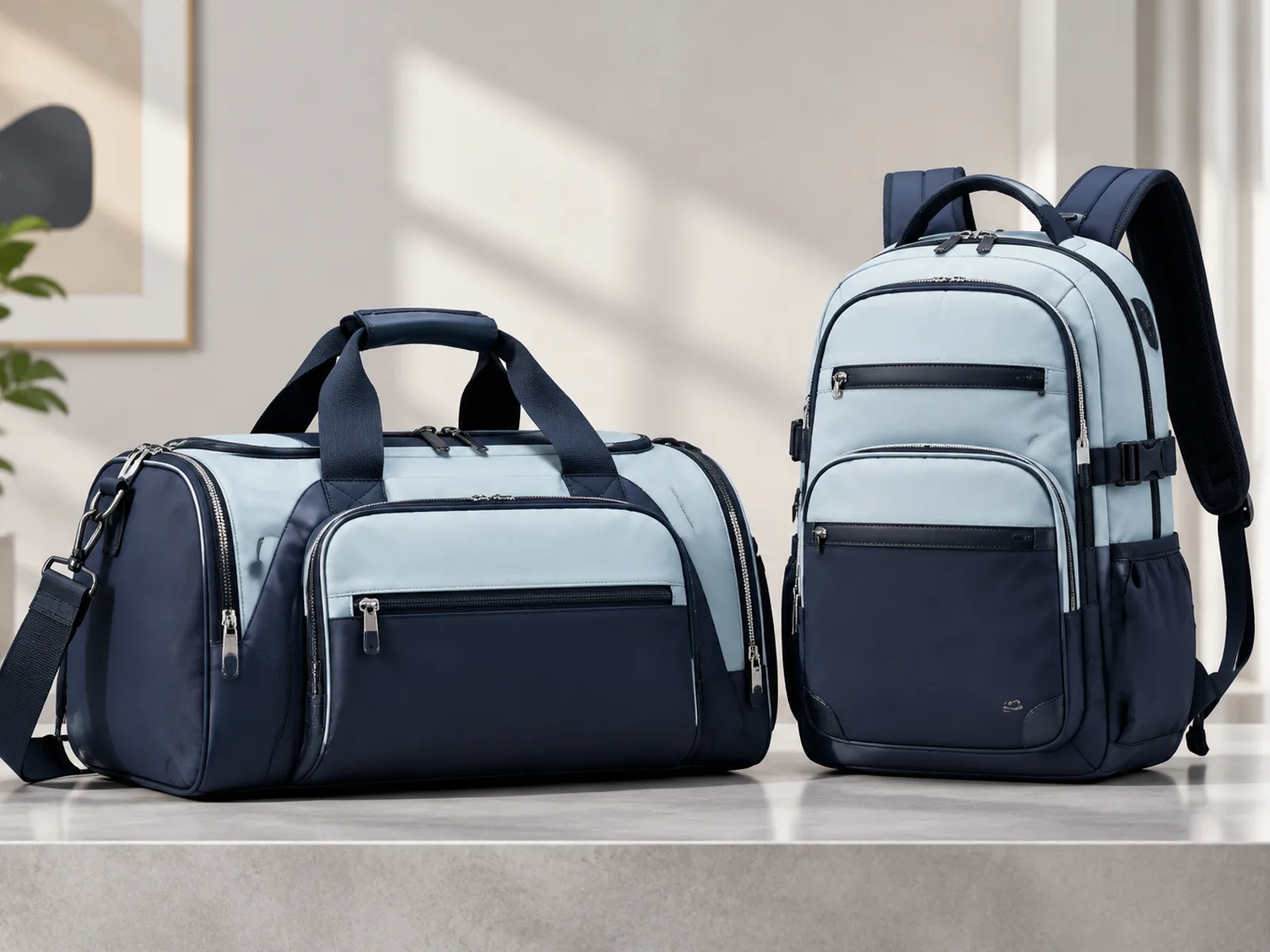
At Senszx, founded in 2006 in Baigou, China—the world’s premier industrial cluster for bag and luggage manufacturing—we have spent over two decades engineering, prototyping, and scaling custom bag programs for leading global brands, international retail chains, and rapidly expanding DTC innovators across North America, Europe, and global markets. Operating 100 dedicated production sewing lines with BSCI, ISO 9001, ISO 14001, and ISO 45001 accreditations, we eliminate the intermediary gap, providing direct engineering collaboration, single-track 500-piece MOQ flexibility, 3-5 day rapid sampling, and 20-day mass production turnaround.
This exhaustive B2B sourcing guide examines the fundamental structural, financial, and technical reasons why global brands must anchor their supply chains with direct, factory-based manufacturing partners.
1. What Is a Factory-Based Bag Manufacturer? Defining Direct Industrial Control
The word "factory" is one of the most widely misused marketing descriptors in international B2B commerce. Sourcing platforms and export directories contain thousands of entities labeling themselves as "manufacturers," yet over 70% of these listings represent commercial trading firms, boutique sourcing agencies, or virtual brokerages that do not own, manage, or operate a single industrial sewing machine, cutting table, or quality inspection line.
To make sound procurement decisions, enterprise sourcing teams must define what factory-based manufacturing truly entails from an operational, legal, and engineering standpoint.
| Operational Dimension | Factory-Based Bag Manufacturer (e.g., Senszx) | Trading Company / Commercial Broker | Sourcing Agent / Intermediary Firm |
|---|---|---|---|
| Physical Assets & Floor Space | Directly owns/operates CAD pattern rooms, automated CNC cutting tables, sewing workshops, inspection areas, and testing labs. | Leases commercial office space and sales showrooms; possesses zero manufacturing machinery. | Office space only; relies entirely on external third-party supplier networks. |
| Engineering & DFM Capability | In-house master pattern makers, sample technicians, and production engineers who optimize seam geometry and load paths. | Sales agents with commercial backgrounds; cannot modify patterns or resolve shop-floor assembly bottlenecks. | May have basic technical consultants, but must relay all engineering inquiries to external factories. |
| Material Supply Chain Directness | Direct mill-level relationships with raw textile weavers, yarn dyers, zipper extruders, and hardware foundries. | Procures materials through secondary converters or forces the subcontracted workshop to purchase locally. | Recommends suppliers but lacks direct volume purchasing power at the raw material mill level. |
| Quality Control Authority | Dedicated IQC, IPQC, and FQC inspectors on the physical production floor with immediate stop-line authority. | Dispatches third-party or temporary inspectors only after goods are 80-100% completed and packed. | Conducts pre-shipment inspections (PSI) at final stages; cannot prevent in-line defects during assembly. |
| Cost Transparency & Margin Structure | Transparent Bill of Materials (BOM) cost breakdown based on raw material usage, cutting yield, and Standard Allowed Minutes (SAM). | Opaque unit pricing with hidden 15% to 35% trading markups layered over the subcontracted factory cost. | Commission-based fee (typically 5% to 10%) layered on top of an often-inflated supplier quotation. |
| Accountability & Rectification | Direct legal and financial responsibility; immediate in-house rework, pattern adjustment, or replacement capacity. | Multi-tiered blame shifting between the trading agent, the primary factory, and secondary stitching sub-contractors. | Acts as a communication buffer; holds no direct operational liability for factory-floor manufacturing failures. |
1.1 Direct Control vs. Specialized Supply Chain Integration
A common misconception in modern soft-goods manufacturing is that a "real factory" must produce every raw component—from spinning the polyester yarn to extruding the zinc alloy zipper sliders—inside a single physical building. In reality, global bag manufacturing is an advanced, highly specialized industrial ecosystem.
A true factory-based bag manufacturer directly controls the critical core competencies of product realization:
- CAD Pattern Engineering & Digitization: Developing the 2D pattern geometry, seam allowances, and nestings from client sketches, tech packs, or physical samples.
- Material Sourcing & Quality Validation: Directly specifying, approving, and testing primary textiles, linings, foam padding, webbings, and hardware from certified Tier-1 mills.
- Automated Precision Cutting: Utilizing CNC knife cutters and laser tables to guarantee that every fabric panel matches CAD dimensional tolerances within ±0.5mm.
- Synchronized Assembly & Sewing Lines: Managing specialized walking-foot lockstitch, cylinder-bed, post-bed, and programmable computerized pattern sewing stations with balanced line layouts.
- Multi-Stage In-Line Quality Control: Enforcing rigorous inspection gates from raw fabric arrival through semi-finished sub-assembly and final packaging.
- Finished Product Performance Testing: Conducting in-house mechanical load, handle jerk, zipper cycle, and seam tensile testing.
Specialist operations—such as custom electroplating of metal hardware, technical rotary screen printing, high-frequency ultrasonic logo debossing, or specialized foam die-molding—are integrated into the factory's unified production schedule through tightly audited Tier-1 partner workshops. The defining hallmark of a factory-based manufacturer is that it retains 100% technical, operational, and quality accountability for every external process, ensuring that all components integrate seamlessly into the approved master standard.
1.2 The Machinery Profile of a Tier-1 Bag Factory
Direct industrial capability is evidenced by the density and specialization of factory machinery. While a low-tier workshop relies on generic single-needle lockstitch machines, a world-class factory-based bag manufacturer deploys dedicated, heavy-duty industrial machinery engineered for complex soft-goods assembly:
| Machine Classification | Technical Function in Bag Production | Critical Workmanship & Quality Output |
|---|---|---|
| Automated CNC Reciprocating Knife Cutters | Multi-ply precision fabric cutting driven directly by digitized CAD nesting files. | Ensures $\pm 0.5\text{mm}$ cut tolerance across 50 layers of heavy ballistic nylon; eliminates human hand-shearing distortion. |
| Heavy-Duty Walking-Foot Lockstitch Machines | Compound triple-feed (feed dog, needle, and alternating presser feet) stitching for heavy multi-layer textiles. | Eliminates fabric layer slippage and seam puckering when joining 900D/1680D nylon with internal foam and webbing. |
| Cylinder-Bed Synchronized Binding Machines | Small-diameter tubular bed allowing 3D curved seam binding and edge taping inside narrow bag compartments. | Applies perfectly uniform, wrinkle-free herringbone edge binding tape around tight corner radiuses and bottom gussets. |
| Post-Bed Double-Needle Sewing Machines | Elevated vertical column bed engineered for 3D boxy structures, structured luggage shells, and footwear/backpack corners. | Delivers parallel double-needle top-stitching with millimeter-perfect gauge spacing around complex exterior corners. |
| Programmable Computerized Pattern Bartackers | Microprocessor-controlled X-Y clamping tables executing precise 28, 42, or 56-stitch reinforced cyclic bartack patterns. | Delivers identical tensile strength (>800N) across every shoulder strap anchor, handle junction, and zipper termination. |
| Ultrasonic & Hot-Air Seam Sealing Machines | High-frequency thermal bonding of polyurethane (TPU/PU) waterproof tape over interior needle perforations. | Guarantees 100% waterproof hydrostatic barrier (withstanding >5,000mm $H_2O$ water pressure) across exterior seams. |
| Hydraulic Die-Cutting & Embossing Presses | 25-ton hydraulic clicker presses and heated steel rule dies for cutting dense EVA foam, leather patches, and stiffeners. | Produces clean, sealed-edge foam inserts, shoulder strap padding cores, and crisp debossed brand logo badges. |
2. The Structural Pitfalls of Trading Chains: Why Intermediaries Multiply Sourcing Risk
When an international brand engages an intermediary, trading firm, or non-factory broker, they inadvertently introduce structural vulnerabilities into their supply chain. While trading companies often pitch themselves as convenient communication bridges, their underlying commercial model creates inherent misalignments with the brand's long-term quality and financial objectives.
2.1 The Multi-Tiered Communication Void
In a direct factory relationship, the brand’s technical designer or sourcing manager communicates directly with the manufacturer's project engineering team. Questions regarding fabric denier, water-repellent PU coatings, seam allowances, zipper tooth pitch, or bartack stitch counts are resolved immediately with master pattern makers who understand the physical physics of textiles.
In a trading scenario, every technical instruction must traverse a fragmented, multi-tiered hierarchy:
- Brand Design / Sourcing Team (Issues revision: "Increase handle anchor bartack to 42 stitches and add 1.2mm HDPE backing").
- Trading Company Account Representative (Non-technical sales agent who translates the instruction into general language).
- Trading Sourcing Manager (Relays request to primary subcontracted factory).
- Subcontracted Factory Floor Manager (Interprets request based on available workshop materials).
- Secondary Stitching Contractor (May never receive the written revision; continues sewing the previous sample version).
This multi-stage telephone game is the single most common cause of sample-to-bulk quality failure. A critical design nuance—such as specifying bonded continuous-filament nylon thread (#69 / Tex 70) rather than cheap spun polyester—is easily lost during handoffs, leading to catastrophic seam failure under real-world consumer use.
| Parameter / Specification Stage | Factory Engineering Protocol & Technical Details |
|---|---|
| Direct Factory Workflow (Senszx) | - |
| Brand Sourcing & Design Team] < | Direct Technical Dialog - Senszx CAD Engineers, Cutting & Sewing Lines |
| (Instant DFM, Real-Time QC, Zero Distortion) | - |
| Trading Intermediary Workflow | - |
| Brand Team] - | Trading Sales Rep ---> Trading Merchandiser ---> Subcontracted Factory ---> Piece-Rate Stitchers |
| (Loss of Nuance) (Margin Arbitrage) (Subcontracting Drift) (Uncontrolled Execution) | - |
2.2 Margin Arbitrage and Subcontracting Drift
Trading companies operate on margin spread: the difference between what they charge the international buyer and what they pay the underlying manufacturing workshop. When raw material prices fluctuate (e.g., spikes in nylon polymer costs or container freight rates), trading companies face intense margin pressure.
Because they hold no physical manufacturing machinery or long-term workforce commitments, trading brokers frequently engage in subcontracting drift:
- Shifting an approved production run from the capable Tier-1 sample workshop to a cheaper, lower-tier secondary factory located in an uncertified industrial area.
- Authorizing unannounced material downgrades (e.g., substituting high-tenacity 900D Oxford with low-tenacity 600D fabric coated with heavy calcium carbonate filler backing to simulate fabric weight).
- Replacing branded, high-tensile polyoxymethylene (POM/Acetal) plastic hardware with cheap, brittle recycled polypropylene (PP).
- Eliminating internal seam binding tapes or skipping critical in-process inspection stages to compress labor minutes.
The brand only discovers these fatal compromises months later—when finished containers arrive at distribution centers, retail customers report broken straps, and negative product reviews flood e-commerce channels.
3. Design for Manufacturability (DFM): How Factory Engineers Elevate Bag Architecture
Great bag design is not merely visual; it is architectural and structural. A sketch created in Adobe Illustrator or a 3D digital rendering in CLO3D may look aesthetically breathtaking on a computer screen, yet possess severe geometric flaws that cause seam puckering, excessive needle deflection, structural distortion, or immediate seam failure when assembled under mass production conditions.
Direct factory-based manufacturers provide an invaluable asset that no trading company can offer: Design for Manufacturability (DFM) engineering.
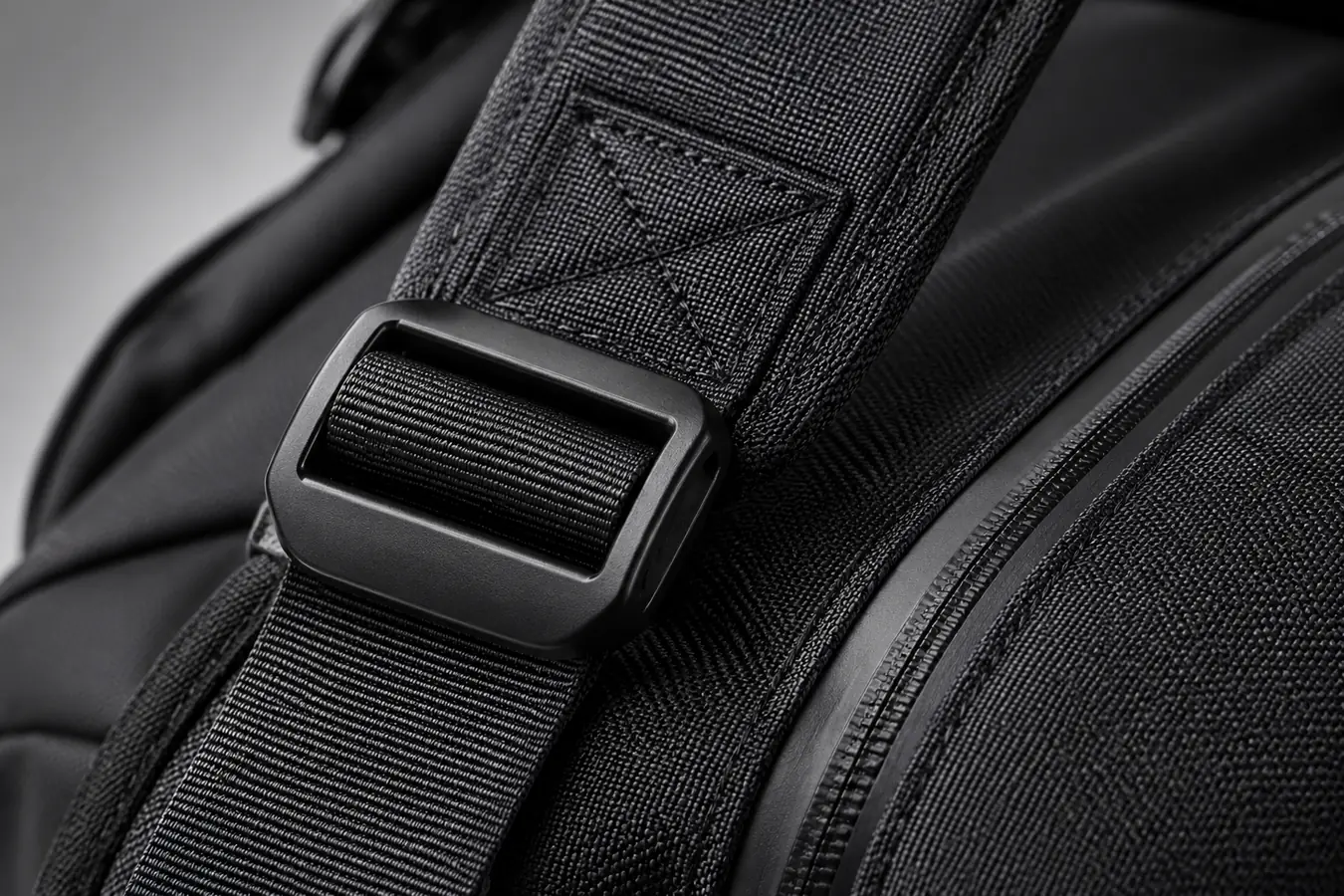
3.1 Load Path Analysis and Stress-Point Geometry
A backpack or travel bag is a dynamic load-bearing structure. When loaded with 10 to 18 kilograms of cargo and lifted abruptly by a single top grab handle or slung over one shoulder strap, kinetic forces concentrate at specific geometric vertices.
Senszx factory engineers evaluate every product design through rigorous structural principles:
- Load Path Continuity: Ensuring that shoulder strap tensile loads do not terminate abruptly on a single fabric shell layer. Instead, loads are channeled through continuous high-tensile nylon webbing underlays that wrap completely around the bag's structural perimeter or anchor directly into reinforced back-panel seams.
- Multi-Planar Seam Stress Reduction: Modifying seam intersection angles to prevent high-stress peel forces from acting perpendicularly on top-stitched seams, converting destructive peel forces into manageable shear forces distributed across reinforced composite layers.
- Internal Sub-Surface Backing Plates: Integrating die-cut 1.2mm high-density polyethylene (HDPE) or dense EVA foam backing stiffeners behind metal D-rings, magnetic buckles, and handle anchors. This prevents the metal hardware from tearing out of the outer fabric weave during dynamic load shocks.
| Structural Component | Common Design Flaw (Pre-DFM) | Factory Engineering DFM Optimization (Senszx) | Tangible Durability Benefit |
|---|---|---|---|
| Top Grab Handle Anchors | Handle ends stitched directly into the top horizontal seam allowance with standard single-needle lockstitch. | Handle ends extended 40mm into back panel, anchored with computerized 42-stitch box-and-cross ('X-box') bartacks and backed by 1.2mm HDPE plate. | Increases handle pull-apart tensile failure threshold from 18 kg to over 75 kg. |
| Main Zipper Perimeter Curve | Tight 90-degree corner radiuses (<25mm radius) designed for sharp rectangular aesthetic. | Re-engineering corner curves to a smooth 45mm minimum radius with continuous curve grading and custom-notched zipper tape. | Eliminates zipper slider binding, prevents premature coil separation, and ensures effortless one-handed opening. |
| Shoulder Strap Lower Triangle Tabs | Triangle wings made from single-layer shell fabric sewn into the lower side-back corner seam. | Multi-layer composite tab: 1000D Cordura exterior, internal high-tensile nylon webbing core, bonded non-woven reinforcement, and 3-row bar-tacked anchoring. | Completely prevents lower strap rip-out under heavy payloads (>25 kg dynamic drop load). |
| Interior Laptop Compartment | Flat padded sleeve resting directly against the bottom floor panel of the backpack. | Suspended "floating" laptop sleeve positioned 25mm above the bottom floor, reinforced with 8mm high-density EVA foam and velvet lining. | Protects expensive laptops from impact shock when the backpack is dropped onto hard concrete floors. |
| Multi-Panel Seam Intersections | Four to six heavy fabric layers converging at a single corner point, creating massive seam bulk (>6mm thickness). | Step-skiving internal seam allowances, offsetting seam junctions by 15mm, and utilizing computerized cylinder-bed binding machines. | Eliminates needle deflection, prevents skipped stitches, and creates clean, perfectly flat exterior seam profiles. |
3.2 Material Selection and Processing Behavior
Different technical textiles exhibit vastly different physical behaviors during automated cutting, adhesive bonding, thermal laminating, and multi-needle sewing:
- Polyester vs. Nylon Elasticity: Nylon (Polyamide) possesses higher tensile strength, superior abrasion resistance, and greater elongation under load compared to Polyester. When designing high-stress technical travel packs, our engineers specify Nylon in high-load structural gussets while utilizing Polyester in dimensionally stable front organizer panels to optimize material costs. Explore our comprehensive textile guide on 600D vs 900D vs 1680D polyester and our in-depth analysis of Cordura fabric technology.
- PU vs. TPU Backing Formulations: Polyurethane (PU) coatings provide excellent cost-effective water repellency, but standard PU backings can degrade or hydrolyze under high-humidity tropical conditions. For expedition-grade gear, our factory engineers recommend Thermoplastic Polyurethane (TPU) film laminations or double-pass waterproof coatings. Review our complete custom fabric catalog for detailed material specifications.
- Thread Specification & Needle Geometry: Industrial bag manufacturing requires matching thread tensile strength and needle tip geometry to the specific textile weave. Sewing heavy 1680D ballistic nylon requires heavy-gauge needles (Size 130/21 or 140/22) with diamond or cross-point cutting tips and bonded nylon #69 thread to prevent needle heat buildup and thread fraying during high-speed sewing runs.
3.3 Advanced Stitching Dynamics and Needle Heat Management
In high-speed mass production sewing, industrial sewing needles reciprocate at speeds exceeding 2,500 to 3,500 stitches per minute. When penetrating multi-layer composite structures—such as 1680D ballistic nylon combined with 5mm EVA foam and 210D lining—needle friction generates localized temperatures exceeding 220°C (428°F).
In uncontrolled workshops, excessive needle heat melts synthetic thread fibers, causes skipped stitches, and creates microscopic thermal burns around needle holes that severely weaken seam tensile strength.
Senszx production engineering implements rigorous thermal and structural needle management:
- Titanium Nitride (TiN) Coated Needles: Utilizing ultra-hard, low-friction titanium-coated needle systems (e.g., Groz-Beckert SAN 5.2 or Gebedur) engineered specifically for technical soft goods and multi-layer composites.
- Pneumatic Needle Coolers & Thread Lubrication: Equipping high-speed walking-foot machines with localized compressed-air needle cooling nozzles and premium silicone-lubricated bonded nylon threads, keeping operating needle temperatures below 140°C.
- Calibrated Stitch Density Matrix: Enforcing strict Stitch Per Inch (SPI) protocols based on textile denier and structural function:
- Heavy structural shell seams (900D/1680D/Cordura): 7.0 to 7.5 SPI (prevents needle-perforation tearing while maximizing seam tensile hold).
- Medium accessory pockets & organizers (300D/600D): 8.0 to 9.0 SPI.
- Interior lightweight lining & binding (210D/75D): 9.0 to 10.5 SPI.
- High-stress reinforcing bartacks: Computerized 42-stitch cyclic pattern over a 20mm x 8mm grid.
4. Preserving Sample-to-Bulk Fidelity: The Master Production Standard System
The most critical operational milestone in any custom bag sourcing program is the transition from the approved physical prototype (the Golden Sample) to full-scale mass manufacturing. In an uncontrolled or trading-brokered supply chain, this transition is where quality degradation occurs.
A factory-based manufacturer prevents quality drift by transforming the approved physical sample into a legally binding, digitized Master Production Standard Archive.
| Parameter / Specification Stage | Factory Engineering Protocol & Technical Details |
|---|---|
| Master Production Standard Archive (The Six Pillars of Consistency) | - |
| 1. Sealed Golden Sample ] <- | 2. CAD Master Cut Files <---> 3. Itemized Master BOM |
| ^ ^ | - |
| v v | - |
| 4. Lab D65 Color Swatches ] <-> 5. Tolerance Spec Sheets <-> [ 6. Packaging & Label Spec | - |
4.1 The Six Pillars of Consistency
- The Sealed Dual Golden Samples: Upon final prototype sign-off, two identical physical counter-samples are produced using the exact bulk-approved materials, threads, and hardware. One sample is sealed and archived in the client's corporate design office; the second identical sample is sealed in the factory's Master Quality Inspection Room to serve as the physical benchmark for all quality auditors.
- Computerized CAD Master Pattern Files: All 2D patterns, seam allowances, alignment notches, and internal drill-hole markers are digitized in industrial CAD software (e.g., Optitex, Lectra). Cut files are locked and transmitted directly to computerized CNC automated knife-cutting machines, eliminating manual cutting variations.
- Itemized Master Bill of Materials (BOM): An immutable digital ledger detailing every single component: primary shell denier, yarn density, backing formulation, lining weight, thread gauge, zipper brand/model/pitch, hardware alloy composition, foam density (kg/m³), webbing tensile rating, and brand label substrate.
- Spectrophotometer Color & Lab D65 References: Color approval is never evaluated under casual office lighting. Master color references are documented using spectral data (Lab coordinates) and verified under standardized D65 artificial daylight lightboxes to ensure that fabric dye lots, zipper tapes, webbing straps, and plastic hardware match across all colorways with a strict delta threshold ($\Delta E < 0.8$).
- Standardized Measurement Tolerance Sheets: Documenting exact critical dimensions (height, width, depth, strap drop length, pocket openings) alongside explicit commercial manufacturing tolerances (typically $\pm 3\text{mm}$ on sub-assemblies and $\pm 5\text{mm}$ on overall exterior dimensions).
- Detailed Packaging & Retail Presentation Schematics: Defining individual polybag thickness (minimum 2.5 mil virgin LDPE with mandatory suffocation warnings), desiccant pouch placement (silica gel vs. calcium chloride), precision cardboard collar folding methods, barcode hangtag positioning, and master shipping carton drop-test specifications (5-ply double-wall Kraft board, ECT 44 / 275# burst strength).
4.2 Comprehensive Master Bill of Materials (BOM) Architecture
In modern factory-direct production, an itemized Master BOM is the definitive blueprint that governs every material transaction, cutting spread, and assembly line station. Below is an engineering representation of a standard Master BOM for a professional 30L technical laptop travel backpack:
| Item Code | Component Classification | Technical Material Specification | Color / Finish | Placement & Structural Function | Supplier Tier & Verification |
|---|---|---|---|---|---|
| BOM-01 | Primary Shell Textile | 900D x 900D High-Tenacity Oxford Polyester, Double 0.12mm PU Backing, C6 DWR. | Solid Black (Pantone 19-4004 TCX) | Front face panel, side gussets, bottom base panel. | Tier-1 Certified Mill; 4-Point Check passed. |
| BOM-02 | Secondary Accent Textile | 1680D Ballistic Nylon, 2x2 Basketweave, 0.15mm Polyurethane Film Backing. | Gunmetal Grey (Pantone 19-3908 TCX) | High-abrasion bottom boot, shoulder strap anchor tabs. | Tier-1 Certified Mill; Martindale >25,000 cycles. |
| BOM-03 | Interior Lining Fabric | 210D Ripstop Polyester, 58/60" width, 100% Recycled PET (GRS Certified), 58g/m². | Light Slate (Pantone 14-4107 TCX) | Main compartment lining, organizer pocket dividers. | GRS Certificate on file; OEKO-TEX Standard 100. |
| BOM-04 | Air-Mesh Cushioning | 3D Spacer Sandwich Mesh, 320g/m², 3mm thickness, high breathability. | Pure Black | Back panel contact surface, underside of shoulder straps. | Hypoallergenic, REACH SVHC tested. |
| BOM-05 | Protective Foam Padding | Closed-Cell Cross-Linked Polyethylene (XLPE) Foam, 45kg/m³ density, 8mm thickness. | White | Shoulder strap internal core, back panel lumbar support. | Compression recovery rate >92% after 72 hours. |
| BOM-06 | Laptop Shock Absorption | High-Density Ethylene-Vinyl Acetate (EVA) Foam, 65kg/m³ density, 5mm thickness. | Grey | Suspended laptop cradle base and protective side walls. | ASTM D3575 impact absorption verified. |
| BOM-07 | Structural Stiffener | High-Density Polyethylene (HDPE) Sheet, 1.2mm die-cut, pre-drilled rivet holes. | Natural | Internal back frame sheet, grab handle sub-surface anchor. | Tensile yield strength >28 MPa. |
| BOM-08 | Load-Bearing Webbing | 100% High-Tensile Polyester Seatbelt Weave Webbing, 38mm width, 1.4mm thickness. | Matte Black | Shoulder strap adjustment straps, main grab handle core. | Tensile break strength >1,400 kgf (13.7 kN). |
| BOM-09 | Main Perimeter Zipper | #8 Continuous Nylon Coil Zipper, Reverse PU Water-Resistant Lamination, SBS Slider. | Matte Black Coil / Black Tape | Main compartment clamshell perimeter opening. | Reciprocating cycle >5,000 times; Cross-tensile >750N. |
| BOM-10 | Front Pocket Zippers | #5 Reverse Nylon Coil Zipper with Auto-Locking Metal Slider, Long Cord Puller. | Matte Black | Quick-access front pocket, side water bottle stash pocket. | Smooth slider action <3.5N pulling force. |
| BOM-11 | Strap Adjuster Buckles | Molded Virgin Polyoxymethylene (POM/Acetal) Ladder Lock Buckle, 38mm slot. | Matte Black Textured | Lower shoulder strap webbing tension adjustment. | Operating temp -40°C to +90°C; Impact break >850N. |
| BOM-12 | Sternum Strap Hardware | Molded POM Quick-Release Side Squeeze Buckle with Integrated Elastic Webbing Keeper. | Matte Black | Adjustable chest sternum strap assembly. | Side-release pull strength >350N. |
| BOM-13 | Industrial Sewing Thread | Bonded Continuous-Filament Nylon 6.6 Thread, Size #69 (Tex 70), 3-ply twisted. | Black / Color Matched | All structural shell seams, bartacks, and load anchors. | Tensile strength 4.8 kgf; Elongation 22%. |
| BOM-14 | Edge Binding Tape | 100% High-Density Polyester Herringbone Twill Binding Tape, 22mm width. | Black | Encapsulating all internal raw cut seams. | Zero yarn fraying; wash-fast color. |
| BOM-15 | Exterior Brand Badge | Die-Cast Zinc Alloy Metal Plate, Matte Gunmetal Electroplating, Recessed Enamel Fill. | Matte Gunmetal / White Enamel | Centered on upper front face panel (2-pin rivet mount). | Salt spray corrosion test >48 hours (ASTM B117). |
5. Multi-Stage Quality Control: From Raw Textile IQC to AQL 2.5 Final Audits
Quality cannot be inspected into a bag after it has already been sewn and packaged; true commercial quality must be engineered and enforced across every progressive stage of the manufacturing continuum.
When an unverified intermediary relies on a third-party inspector conducting a rushed 2-hour pre-shipment audit at the loading dock, catastrophic internal defects—such as missing reinforcement plates, poor internal seam binding, sub-standard foam density, or weak thread—remain completely invisible beneath the finished lining.
Senszx enforces a comprehensive, multi-stage Quality Management System across six synchronized inspection gates:
| Parameter / Specification Stage | Factory Engineering Protocol & Technical Details |
|---|---|
| Senszx 6-Stage Quality Control Architecture | - |
| Gate 1: IQC Raw Material Testing ] - | Gate 2: PPS & Cutting Verification ---> Gate 3: In-Line IPQC Inspection |
| v | - |
| Gate 6 | Container Loading Audit ] <--- Gate 5: Final FQC Random Audit <--- Gate 4: 100% Semi-Finished QC |
Senszx 6-stage Quality Architecture
| Parameter / Specification Stage | Factory Engineering Protocol & Technical Details |
|---|---|
| GATE 1 | IQC] Raw Material Testing: 4-Point Fabric Check, Colorfastness, Hardware Pull |
| v | - |
| GATE 2 | PRE-PROD] Pre-Production Sample Sign-Off & Automated CNC Cut Dimensional Check |
| v | - |
| GATE 3 | IPQC] In-Process QC: Stitch Density (7-8 SPI), Seam Binding, Cyclic Bartacks |
| v | - |
| GATE 4 | 100% QC] 100% Semi-Finished Structural Inspection & Cleanliness Audit |
| v | - |
| GATE 5 | FQC] Final Random Inspection (ISO 2859-1 / AQL 2.5 Major, 4.0 Minor, Drop Test) |
| v | - |
| GATE 6 | LOGISTICS] Carton Palletization, Desiccant Check, Barcode & Container Loading Audit |
5.1 Gate 1: Incoming Quality Control (IQC)
Before raw materials are accepted into our climate-controlled raw material warehouse, certified IQC technicians perform rigorous scientific validation:
- Textile Inspection (Standard 4-Point System): Fabric rolls are mounted on automated fabric inspection machines. Every roll is inspected for yarn slubs, weaving knots, color shading across the bolt width, coating pinholes, and uneven coating thickness. Rolls exceeding 4 penalty points per 100 square yards are rejected immediately back to the weaving mill.
- Hydrostatic Head Water Column Testing: Coated waterproof fabrics are clamped into hydrostatic pressure testers (AATCC 127 / ISO 811) to verify that water-repellent coatings withstand required pressure heads (e.g., 1,500mm to 10,000mm $H_2O$) without surface penetration.
- Colorfastness & Abrasion Testing: Outer fabrics and webbings undergo Crockmeter testing (AATCC 8) to verify wet and dry rub colorfastness (Grade 4.0 minimum) and Martindale abrasion testing (ISO 12947) to ensure textiles withstand over 20,000 cycles without yarn breakage.
- Hardware & Zipper Mechanical Testing: Metal buckles, snap hooks, and plastic adjusters are subjected to universal tensile testing machines to verify mechanical break strength (>800N for heavy luggage hardware). Zipper chains are tested on reciprocating zipper fatigue testers (>5,000 continuous open/close cycles under cross-tension). Review our comprehensive hardware specifications in our custom zipper pullers and buckles guide.
5.2 Gate 2 & Gate 3: Cutting Verification and In-Process QC (IPQC)
- Automated CNC Cutting Verification: Precision cut bundles are checked against computerized acrylic master templates to verify that cutting notches, alignment points, and seam allowances do not drift past $\pm 0.5\text{mm}$.
- In-Line Sewing Quality Control (IPQC): Dedicated roaming quality auditors inspect active sewing stations every 60 minutes. IPQC auditors monitor critical workmanship variables:
- Stitch Density: Verifying exact compliance with technical specifications (standard: 7 to 8 stitches per inch / 25mm on heavy fabrics; 9 to 10 SPI on delicate linings).
- Thread Tension & Balanced Lockstitch: Ensuring the bobbin thread and needle thread knot precisely in the center of the fabric layers, preventing loose loops on the bottom panel or puckered fabric on top.
- Critical Bartack Placement: Checking that 42-stitch reinforcing bartacks are applied at exact coordinates across all strap anchors, zipper ends, and pocket corners.
- Seam Binding & Edge Overlocking: Confirming that all raw textile edges are completely encapsulated in heavy-duty herringbone or twill binding tape to eliminate internal fabric fraying.
5.3 Gate 4 & Gate 5: 100% Semi-Finished Inspection and Final AQL Audits
- 100% Semi-Finished Structural Inspection: Every assembled bag passes through dedicated trimming and inspection tables where trained technicians remove loose thread ends, verify smooth zipper action, test magnetic closures, and inspect interior compartment symmetry.
- Final Random Inspection (FQC / AQL Protocol): Completed, packaged cartons are audited by our Chief Quality Inspector in accordance with international standard ISO 2859-1 (ANSI/ASQ Z1.4) single sampling plans, Normal Inspection Level II:
- Critical Defects (AQL 0.0 / Zero Tolerance): Prohibited sharp objects (broken needle fragments verified via calibrated 9-point metal detection tunnels), toxic chemical odors, mold, safety hazards, incorrect legal country-of-origin labels.
- Major Defects (AQL 2.5): Open seams, broken stitches, non-functioning zippers, cracked hardware, missing structural reinforcement, incorrect brand logo placement, dimensional variance exceeding $\pm 5\text{mm}$.
- Minor Defects (AQL 4.0): Minor removable surface dust, slight thread end (<3mm length), slight packaging wrinkle, minor barcode label misalignment.
5.4 In-House Physical Laboratory Testing Protocols & Pass/Fail Criteria
In addition to visual and dimensional audits, sample prototypes and random bulk production units are subjected to rigorous physical stress testing inside Senszx’s accredited in-house laboratory:
| Laboratory Test Method | International Standard | Applied Stress & Testing Conditions | Pass / Fail Acceptance Criteria |
|---|---|---|---|
| Dynamic Handle Oscillation Jerk Test | QB/T 2171 / Custom Industrial Protocol | Bag packed with 18kg dynamic payload; lifted via handle on reciprocating eccentric cam mechanism at 30 jerks/min. | PASS: Zero seam failure, zero handle anchor tear, zero hardware deformation after 5,000 continuous jerk cycles. |
| Shoulder Strap Dynamic Drop Test | ASTM F2153 / DIN 53857 | Backpack loaded with 20kg dead weight; dropped from 1.0m height on free-fall drop tower arrested solely by shoulder straps. | PASS: Zero stitching rupture, zero webbing slip (<2mm allowable), zero ladder lock buckle cracking over 25 consecutive drops. |
| Zipper Cross-Tensile & Fatigue Test | ASTM D2061 / BS 3084 | Zipper chain clamped under 150N lateral cross-tension; reciprocating slider cycled at 30 cycles/min for 5,000 cycles. | PASS: Zero tooth disengagement, zero slider jamming, lateral cross-pull burst strength exceeding 750N. |
| Fabric Hydrostatic Water Column | AATCC 127 / ISO 811 | Water pressure increased at 60 mbar/min against exterior fabric face until 3 droplets penetrate. | PASS: Hydrostatic pressure barrier exceeds 1,500mm $H_2O$ (standard) or 5,000mm $H_2O$ (technical waterproof). |
| Martindale Fabric Abrasion Resistance | ISO 12947-2 / ASTM D4966 | Standard wool abradant rubbed against fabric surface in complex Lissajous figure under 12 kPa pressure. | PASS: No yarn breakage, no visible surface piling, no coating delamination after 20,000 continuous rubs. |
| Corrosion Salt Spray Test | ASTM B117 / ISO 9227 | Metal hardware (zipper sliders, pullers, D-rings, snaps) exposed to 5% neutral sodium chloride fog at 35°C for 48 hours. | PASS: Zero white corrosion, zero red rust, zero surface pitting, zero discoloration on electroplated surfaces. |
6. Sourcing Economics: Why Lowest FOB Price is an Expensive Illusion
In professional procurement, there is a fundamental distinction between Initial Quoted FOB Price and Total Cost of Ownership (TCO). Sourcing directors who evaluate overseas bag suppliers based strictly on the lowest initial per-unit quotation frequently find that initial savings are completely erased by downstream operational failures.
6.1 The Hidden Cost Breakdown of Middleman Sourcing
Consider a realistic procurement scenario: an international outdoor lifestyle brand placing an order for 5,000 units of a technical 30-liter travel backpack.
| Parameter / Specification Stage | Factory Engineering Protocol & Technical Details |
|---|---|
| Total Cost of Ownership (TCO) Reality | - |
| Factory-Direct Partnership (Senszx) | High Reliability, Zero Airfreight, Low Returns - Net Cost: $18.85 / unit |
| Unverified Lowest-Bid Broker | Quality Failures, 20% Airfreight, 4.5% Returns - Net Cost: $25.35 / unit |
| Cost Category | Direct Factory-Based Manufacturer (Senszx) | Unverified Trading Intermediary / Lowest-Bid Broker | Tangible Financial & Operational Impact |
|---|---|---|---|
| Initial Quoted FOB Unit Price | $18.50 / unit (Direct cost-plus pricing based on real BOM and production SAM). | $16.80 / unit (Artificially depressed quotation designed to win the initial contract). | Visible initial procurement variance of -$1.70/unit ($8,500 total perceived upfront saving). |
| Unapproved Material Downgrades | $0.00 (100% verified 900D Oxford, branded YKK-equivalent hardware, high-density EVA). | -$0.90 / unit hidden value (Substituted cheap 600D fabric, generic brittle plastic, low-grade foam). | Brand receives inferior merchandise; product fails accelerated real-world abrasion testing. |
| Emergency Air Freight Surcharges | $0.00 (Production finished on schedule in 20 days; 100% shipped via planned ocean freight). | +$3.80 / unit ($19,000 for 1,000 units air-freighted to meet critical national retail launch window). | Production delays force emergency air-freight, instantly obliterating initial price savings. |
| Retail Returns & Warranty Claims | 0.25% Return Rate (High seam integrity, robust bartacks, zero zipper failures). | 4.50% Return Rate (Handle rip-outs, zipper burst under load, broken shoulder strap buckles). | Additional $4,100 in customer service refunds, reverse logistics costs, and product write-offs. |
| Amazon / DTC Review Degradation | 4.8 / 5.0 Star Rating (Drives organic conversion, lowers customer acquisition cost / CAC). | 3.6 / 5.0 Star Rating (Negative reviews destroy listing rank; requires heavy ad spend to maintain sales). | Irreparable destruction of brand equity and long-term customer lifetime value (LTV). |
| Third-Party QC Sorting & Relabeling | $0.00 (Zero-defect packaging, correct barcode hangtags, compliant master cartons). | +$0.85 / unit ($4,250 warehouse charge to open master cartons, trim threads, and apply correct FBA labels). | Domestic 3PL warehouse fees to rectify non-compliant packaging and mislabeled master cartons. |
| Realized Total Cost of Ownership (TCO) | $18.85 / unit | $25.35 / unit | Direct factory partnership delivers a 25.6% ($32,500) Net Financial Advantage. |
For a comprehensive breakdown of manufacturing cost components, read our authoritative guide on custom backpack manufacturing cost breakdown.
7. Single-Track MOQ Economics: How Senszx Empowers Brand Scaling
A major structural hurdle faced by emerging brands, lifestyle startups, and expanding corporate programs is the restrictive Minimum Order Quantity (MOQ) demanded by traditional overseas factories. Giant industrial conglomerates often demand 2,000 to 5,000 pieces per colorway, forcing brands to tie up massive working capital in unvalidated inventory. Conversely, tiny cottage workshops that accept 50-piece orders lack automated cutting, quality control laboratories, and international compliance certifications.
Senszx solves this sourcing dilemma through our transparent, highly optimized Single-Track OEM/ODM MOQ Structure.
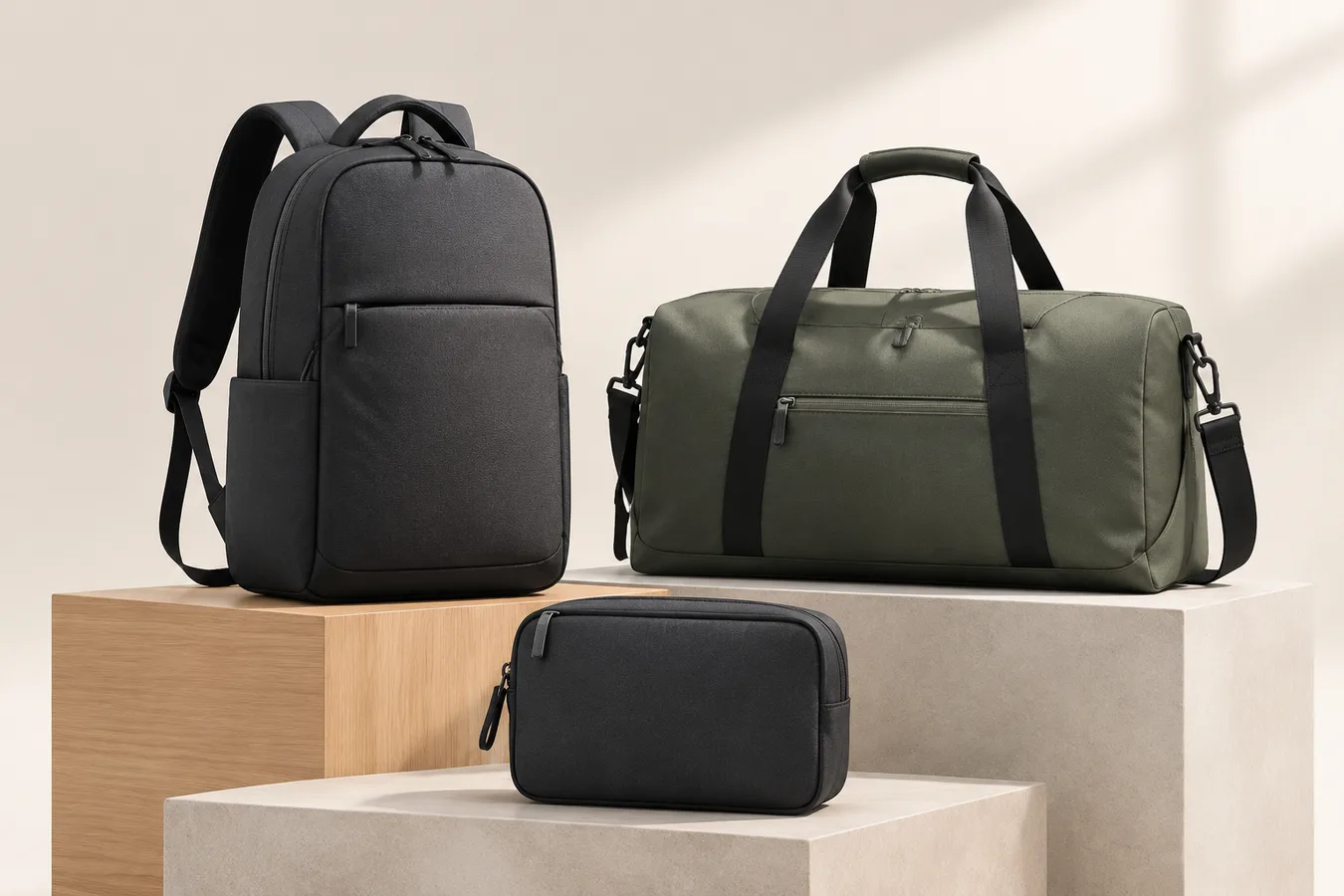
7.1 The Single-Track 500-Piece Benchmark
Senszx standardizes a single-track minimum order quantity of 500 pieces per style/colorway for fully bespoke OEM/ODM bag production.
Why 500 pieces? In industrial textile manufacturing, 500 pieces represents the optimal mathematical convergence of:
- Raw Material Mill Efficiency: Textile dyeing vessels and weaving looms require minimum dye-lot volumes to achieve uniform color matching without charging exorbitant small-batch surcharge fees.
- Automated Cutting Table Optimization: Laying out high-density multi-ply fabric marker spreads across automated CNC cutting tables maximizes material yield, reducing fabric scrap waste to under 4.5%.
- Sewing Line Balancing & Operator Efficiency: Establishing a synchronized 20-operator production line allows seamstresses to achieve peak Standard Allowed Minute (SAM) rhythm and consistent stitch quality after the initial 50-unit warmup curve.
7.2 The Structured Development Fee Program (Sub-500 Prototyping)
For visionary founders, Kickstarter creators, enterprise merchandise programs, or high-end designer brands that require physical market validation before committing to a 500-unit mass manufacturing run, Senszx offers our industry-leading Development Fee Program:
- Upfront Development Investment: An upfront engineering fee covering complete computerized CAD pattern drafting, specialized raw material and hardware procurement, master sample room labor, and up to 3 iterative rounds of physical prototyping.
- 100% Invoice Credit-Back: When the client approves the golden prototype and places their commercial mass production order of 500+ units, 100% of the initial development fee is credited directly back against the mass production invoice.
- Zero Risk Prototyping: This framework gives expanding brands access to Tier-1 industrial engineering, certified materials, and master sample technicians without requiring upfront multi-thousand-unit inventory exposure.
To explore low-risk initial product lines, browse our catalog of wholesale backpacks in stock or explore our custom bag product catalog.
8. International Social & Chemical Compliance: Protecting Global Brand Equity
In modern global trade, compliance is not an optional marketing badge; it is a non-negotiable legal and commercial prerequisite. Products entering the United States, European Union, United Kingdom, Canada, and global retail distribution channels are subject to intense regulatory scrutiny and strict social responsibility standards.
Selling non-compliant soft goods exposes brand executives to massive financial penalties, mandatory Customs seizures, complete product recalls, and catastrophic brand reputation destruction.
8.1 Chemical and Product Safety Standards
A direct factory-based manufacturer maintains rigorous chemical management systems, ensuring that every fabric bolt, zipper coating, plastic buckle, foam padding layer, and printing ink complies with destination market regulations:
| Compliance Standard | Target Jurisdiction | Regulated Substances & Critical Test Parameters | Factory Implementation Protocol (Senszx) |
|---|---|---|---|
| US CPSIA (Consumer Product Safety Improvement Act) | United States | Total Lead content in substrates/coatings (<100 ppm), 8 regulated Phthalates (<0.1%), sharp edges/points, small parts choking hazards for youth products. | Certified lead-free metal electroplating; phthalate-free PVC/PU backings; accredited lab testing (SGS/Intertek). Read our CPSIA safety testing guide. |
| California Proposition 65 | California, USA | Exposure limits for over 900 chemicals, including Phthalates (DEHP, DBP, BBP, DINP, DIDP, DNHP) and heavy metals (Lead, Cadmium). | Pre-tested raw material supply chain; mandatory toxicological batch sign-offs; zero-phthalate formulations. |
| EU REACH (Regulation EC 1907/2006) | European Union & UK | Substances of Very High Concern (SVHC) candidate list (>240 chemicals), azo dyes, cadmium, organotin compounds, nickel release on metal hardware. | OEKO-TEX Standard 100 certified base textiles; nickel-free electroplating on all metal sliders and pullers. |
| TSA Carry-On Compliance | Global Aviation | Dimensional compliance for under-seat and overhead bins; transparent 3-1-1 liquids compliance. | Precision volumetric engineering; learn how to select an audited partner in our bag manufacturer guide. |
8.2 Social Responsibility and Factory Audits
Global retailers—including Target, Walmart, Costco, REI, Best Buy, and major e-commerce platforms—require that all manufacturing facilities pass third-party social compliance audits.
Senszx operates fully audited and certified manufacturing facilities:
- BSCI (Business Social Compliance Initiative): Audited annually to verify fair wages, humane working hours, workplace health and safety, prohibition of child labor, freedom of association, and ethical environmental management.
- ISO 9001:2015 (Quality Management Systems): Certified organizational frameworks governing document control, traceability, IQC/IPQC/FQC inspection protocols, and continuous corrective action processes.
- ISO 14001:2015 (Environmental Management): Strict control of factory emissions, non-toxic solid waste recycling, energy conservation, and sustainable chemical disposal.
- ISO 45001:2018 (Occupational Health & Safety): Modern ergonomic workstations, fire suppression systems, emergency response protocols, and continuous worker safety training.
Review our complete credentials on our dedicated certifications page and explore our corporate history on our story.
9. Comprehensive Factory Audit Framework: How Global Brands Inspect a Bag Factory
When evaluating potential manufacturing partners, global procurement teams must move beyond curated marketing presentations and conduct rigorous, evidence-based factory audits. Whether conducted through on-site physical inspections or real-time live video walkthroughs, sourcing executives should evaluate suppliers against a comprehensive industrial scorecard.
Comprehensive B2b Bag Factory Audit Scorecard
| Parameter / Specification Stage | Factory Engineering Protocol & Technical Details |
|---|---|
| 1. CAD Pattern & Prototyping Department Weight | 15% PASS |
| In-house pattern digitization software (Optitex/Lectra) | - |
| Master sample room capacity (dedicated sample technicians >10) | - |
| Rapid sampling turnaround capability (3 to 5 business days) | - |
| 2. Automated Cutting Infrastructure Weight | 15% PASS |
| Automated CNC reciprocating knife cutters & laser cutting tables | - |
| Fabric relaxing tables for tension-free textile spreading | - |
| Computerized nesting software achieving >95% fabric utilization | - |
| 3. Sewing Line Configuration & Machinery Diversity Weight | 20% PASS |
| Specialized machinery ratio (walking-foot, cylinder-bed, post-bed) >40% | - |
| Programmable computerized pattern sewing machines for critical bartacks | - |
| Balanced production lines with dedicated in-line inspection stations | - |
| 4. Quality Control Infrastructure & Physical Laboratory Weight | 20% PASS |
| Documented IQC, IPQC, FQC inspection procedures matching ISO 9001 | - |
| In-house testing lab | tensile testers, handle jerk testers, crockmeters |
| 9-point calibrated metal detection tunnels for broken needle detection | - |
| 5. Material Traceability & Warehouse Management Weight | 15% PASS |
| Climate-controlled raw material warehouse with lot tracking | - |
| Standardized 4-point fabric inspection machines | - |
| Sealed Golden Sample physical master archive room | - |
| 6. Social Compliance, Environmental & Legal Certifications Weight | 15% PASS |
| Active, verified BSCI social compliance audit report | - |
| ISO 9001, ISO 14001, ISO 45001 management certifications | - |
| Verified third-party CPSIA, REACH, Prop 65 chemical compliance test reports | - |
| TOTAL AUDIT SCORE: 96 / 100 | STATUS: APPROVED TIER-1 STRATEGIC MANUFACTURING PARTNER |
9.1 Essential Diagnostic Questions to Expose Trading Intermediaries
When interviewing potential suppliers, ask these targeted technical questions. An experienced factory engineer will answer immediately with granular operational details; a trading representative will hesitate, provide vague marketing answers, or request time to "check with the team":
- "Can we conduct an unannounced live video walkthrough of your CNC cutting room and active sewing lines within the next 30 minutes?" (Trading companies cannot accommodate immediate live factory floor access because they do not own the facility).
- "What specific Standard Allowed Minutes (SAM) have you calculated for our style's assembly sequence, and how many dedicated operators are assigned to the sewing line?"
- "Which specific brand, model, and needle gauge do you specify for sewing our multi-layer 1680D ballistic corner gussets, and how do you prevent needle heat deflection?"
- "Can you provide the exact mill-level test report and spectral Lab color coordinates for the primary fabric dye lot before cutting begins?"
- "Where is your Master Golden Sample archive located, and what is your documented procedure for logging CAPA revisions between initial and repeat production runs?"
To see our real manufacturing infrastructure in action, visit our quality control page, inspect our fabric cutting room, or explore our dedicated backpack sample room.
9.2 The Step-by-Step Global Sourcing Playbook: From RFQ to Container Loading
To ensure maximum operational predictability and cost control, global brands should follow a structured, 6-phase procurement workflow when executing custom bag manufacturing programs with Senszx:
The 6-phase Factory-direct Sourcing Playbook
| Parameter / Specification Stage | Factory Engineering Protocol & Technical Details |
|---|---|
| PHASE 1 | TECHNICAL RFQ & FEASIBILITY REVIEW] Timeline: Days 1-2 |
| Brand submits 2D CAD tech pack, target dimensions, material specs, target FOB price. | - |
| Factory engineering team performs DFM stress-point analysis and provides detailed BOM quotation. | - |
| PHASE 2 | CAD PATTERN DRAFTING & MATERIAL SOURCING] Timeline: Days 3-4 |
| Digitizing 2D pattern geometry in Optitex CAD software; preparing acrylic cutting templates. | - |
| Procuring master textile swatches, zipper chains, custom hardware samples, and foam cores. | - |
| PHASE 3 | PHYSICAL PROTOTYPE SAMPLING & ITERATION] Timeline: Days 5-8 |
| Master sample technicians hand-craft 1st physical prototype in dedicated sample room. | - |
| High-res photo/video review with brand; dispatching sample via express courier (DHL/FedEx). | - |
| Client testing and review; executing up to 2 refined iteration rounds if required. | - |
| PHASE 4 | GOLDEN SAMPLE APPROVAL & CONTRACT SIGN-OFF] Timeline: Days 9-10 |
| Client signs off on Golden Master Sample and formal Master Production Specification Sheet. | - |
| Finalizing 500+ unit purchase order; deposit confirmation; locking mass production schedule. | - |
| PHASE 5 | AUTOMATED CUTTING & MASS SEWING PRODUCTION] Timeline: Days 11-28 |
| Gate 1 IQC textile inspection and automated multi-ply CNC knife cutting. | - |
| 100 synchronized sewing lines execute assembly under continuous roving IPQC inspection. | - |
| 100% semi-finished trimming, structural integrity checks, and clean-line finishing. | - |
| PHASE 6 | FINAL FQC AUDIT, PACKAGING & CONTAINER LOADING] Timeline: Days 29-30 |
| Chief Quality Auditor executes ISO 2859-1 (AQL 2.5/4.0) random sampling inspection. | - |
| Metal detection tunnel scanning; virgin LDPE polybag packaging; 5-ply Kraft master cartoning. | - |
| Direct ocean container drayage loading at factory docks; issuing full Bill of Lading (B/L). | - |
10. The Senszx Industrial Advantage: Direct Manufacturing Execution from Baigou, China
Since our founding in 2006 in Baigou, China, Senszx has stood as a beacon of direct, transparent, and technically advanced bag manufacturing. We have intentionally rejected the opaque trading-broker model, building our enterprise on direct engineering collaboration, uncompromising quality standards, and deep supply chain integration.
| Key Architectural Specifications |
|---|
| Senszx Industrial Manufacturing Ecosystem |
| 100 Synchronized Production Sewing Lines |
| 150,000+ Units Monthly Production Capacity |
| BSCI, ISO 9001, ISO 14001, ISO 45001 Certified |
| 3 to 5 Day Rapid Physical Prototype Sampling |
| 20-Day Mass Production Lead Time (500 to 5,000 pcs) |
| Single-Track 500 MOQ with 100% Development Fee Credit-Back |
10.1 Why Global Brands Partner Directly with Senszx
- Category-Specific Specialization: We do not manufacture disposable promotional sacks; we specialize in high-stress, technical, structured soft goods—including custom backpacks, executive laptop bags, travel weekenders, gym duffels, tactical packs, and premium private-label accessories. Explore our specialized guides on custom laptop backpacks, custom tactical gear, custom gym bags for sports brands, and our master guide on how to manufacture custom backpacks.
- Direct Engineer-to-Client Communication: Work directly with English-fluent project engineers and master pattern makers who understand technical tech packs, CAD drawings, DFM principles, and international testing protocols.
- Total Supply Chain Transparency: Receive fully transparent BOM cost breakdowns, mill-direct textile certifications, standardized AQL 2.5 inspection reports, and unhindered live video walkthrough access at every stage of production.
- End-to-End Export Logistics: Complete export documentation, DDP / FOB / CIF shipping arrangements, Amazon FBA palletization compliance, and dedicated ocean container loading directly from our factory warehouse. Review our payment information and frequently asked questions.
Summary & Next Steps: Transform Your Bag Sourcing Strategy
Choosing a manufacturing partner is the foundational cornerstone of your brand’s commercial future. By moving past intermediary trading brokers and partnering directly with an established, factory-based manufacturer, you eliminate unnecessary markups, safeguard design intellectual property, ensure pristine sample-to-bulk fidelity, and secure a resilient, scalable production infrastructure.
Ready to Engineer Your Next Custom Bag Collection?
Contact our senior engineering team today to review your designs, optimize your Bill of Materials, receive an itemized factory-direct quotation, and initiate your rapid 3-5 day prototype sample:
- Email Direct: [email protected]
- WhatsApp / Direct Line: +86 17331531825
- Request a Prototype: Get a Free Sample
- Submit Technical RFQ: Contact Our Engineering Team
Hi, I'm Senszx Bag Manufacturer, Hope You Like This Blog Post.
With more than 20 years of experience in OEM/ODM/Custom luggage and bag, I'd love to share with you the valuable knowledge related to luggage and bag products from a top-tier Chinese supplier's perspective.
Senszx Factory
Est. 2006 · Baigou, China
Related articles
How to Choose the Right Materials for Travel Bags: The Complete Manufacturer Guide
A comprehensive B2B engineering guide to selecting travel bag materials: comparing polyester, nylon, Oxford, canvas, TPU coatings, hardware, and structural interlinings across durability, GSM, abrasion, and manufacturing cost.
Bulk Backpacks: The Complete Wholesale Buying Guide for 2027
How brands, distributors, schools and charities buy backpacks in bulk: sourcing paths, styles, fabrics, customization, unit price drivers, MOQ, lead times, QC and shipping.
Wholesale Toiletry Bags: The Complete Sourcing Guide for 2027
How travel brands, grooming labels, retailers and distributors source toiletry bags in bulk: styles, materials, customization, MOQ, pricing, QC and shipping.
Get a Custom Bag Quote from Our China Factory
Our sales team is online around the clock and usually replies within the hour.
Email
[email protected]Factory
Qinzheng Road No.89, New Industry Zone, Baigou Town
Baoding City, Hebei Province 074004, China