What Is Cordura? A Backpack Factory's Guide to Cordura Fabric, Grades and Costs
What Cordura actually is, how Classic, Ballistic, Lite and Eco grades differ, what each costs per meter, and when a backpack factory recommends it over plain nylon.
What Is Cordura? A Backpack Factory's Guide to Cordura Fabric, Grades and Costs
If you are asking what is Cordura, the short answer is this: Cordura is a performance-fabric brand and specification system, not a generic name for every thick nylon. The original and most familiar Cordura constructions use high-tenacity nylon yarns, textured for a tough surface and engineered for high abrasion resistance. The brand covers several families, however, so a 500D everyday pack and a heavy ballistic panel should not be treated as the same fabric.
This distinction matters when a backpack moves from a reference photo to a factory quotation. At Senszx in Baigou, Hebei, we have been making bags since 2006. We check denier, finished weight, coating, color lot, panel placement, and the actual wear points before recommending a fabric. This guide explains what Cordura means at that factory stage: how to compare grades, when 1000D nylon is unnecessary, why ballistic nylon is not automatically Cordura, and where the price premium is justified. Senszx runs 100 production lines and supports BSCI, ISO 9001, ISO 14001, ISO 45001, and CE requirements. For a full custom style, our MOQ is 500 pieces per style; smaller developments use a clear sample-fee route rather than an invented low MOQ.
What Is Cordura? Brand, Fabric or Both
What is Cordura material? It is best understood as a branded family of woven and engineered fabrics whose ownership, approved constructions, and performance claims are controlled by INVISTA. Cordura is a trademark, while nylon is a polymer family and plain weave is a fabric construction. A fabric can be nylon without being Cordura, just as a fabric can be marketed as “ballistic” without being part of the Cordura Ballistic family.
INVISTA does not mean that every yard is woven in one INVISTA-owned factory. Cordura fabrics are produced through authorized textile mills and manufacturing partners that work to the relevant brand requirements. In a product development file, we therefore ask for the specific Cordura family, denier, finished weight, coating, color, and documentation. “Use Cordura” is a useful starting instruction, but it is not a complete material specification.
People often say “Cordura nylon.” In ordinary purchasing language, that phrase is understandable. Technically, it is imprecise because Cordura is the brand and nylon is one material used in many Cordura constructions. Saying “Cordura 500D nylon, PU coated, in color X” is much more useful than saying only “Cordura nylon.” It tells the cutting room what to order and gives quality control a measurable target.
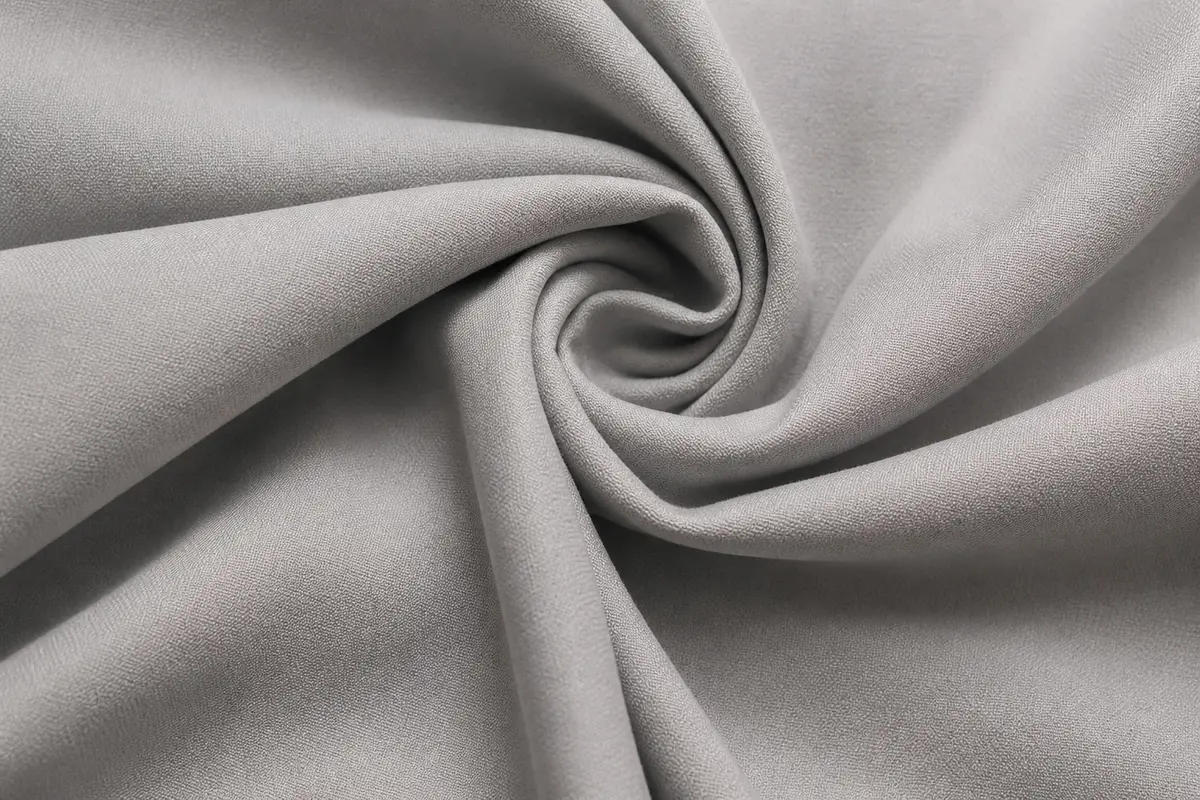
Why the brand name changes a factory specification
A mill's generic 1000D nylon may look almost identical to a branded fabric on a swatch card. The differences can sit in yarn strength, air-jet texturing, weave density, backing, dye consistency, coating adhesion, and test records. Those differences show up at the needle, under a bartack, around a zipper corner, or after repeated dragging across concrete—not necessarily in a ten-second online photograph.
For a buyer, “Cordura” should therefore trigger five follow-up questions:
| Specification to confirm | Why it affects the backpack |
|---|---|
| Product family and denier | Sets an expected balance of abrasion, weight, and price |
| Finished weight in g/m² | Predicts panel handling, bulk, and shipping weight |
| Weave and yarn construction | Affects tear behavior and surface appearance |
| Coating and finish | Influences water resistance, stiffness, and seam behavior |
| Authorized supply and test records | Supports authenticity and repeatability |
Do not approve a substitution merely because the replacement is also labeled nylon. If the body fabric changes from a branded 500D construction to generic 600D polyester, the handle, needle settings, color, coating, and wear result all change. The substitution needs a revised sample and written approval.
What Is Cordura Fabric Made Of
The core answer to what is Cordura fabric made of is high-tenacity nylon, commonly nylon 6,6 in classic performance constructions. Nylon 6,6 is selected for strength, toughness, and resistance to repeated flexing. It is drawn into strong filaments, spun or processed into yarn, woven into a controlled construction, and finished with the coating or treatment required for the end use. Not every product carrying the Cordura name has the same fiber recipe: Cordura's broader product family can include recycled inputs, polyester-related constructions, blends, and specialty finishes. Always identify the exact family.
A key process is air-jet texturing. Jets of air entangle or bulk filaments so the yarn has a more textured, cotton-like surface and a useful balance of coverage and toughness. In a backpack, this texture can help disguise minor scuffs, create a recognizable hand, and support the surface appearance buyers associate with classic Cordura. It is not a magic waterproof treatment and it does not replace a proper coating.
Denier is a yarn measurement, not a durability score
Denier describes the mass of yarn over a standard length: a higher number generally means a thicker, heavier yarn. A 1000D yarn is not automatically twice as abrasion resistant as a 500D yarn. Yarn quality, filament design, weave density, finishing, test method, and the backpack's pattern all matter. We look at the complete construction rather than using denier as a shortcut for quality.
At the sample table, these are practical tendencies rather than promises:
| Denier choice | Factory tendency | Common design trade-off |
|---|---|---|
| 300D-420D | Light and easier to pack | Less forgiving on rough contact points |
| 500D-600D | Strong everyday balance | Moderate weight and broad color availability |
| 800D-1000D | Robust face and structure | More sewing resistance, bulk, and cost |
| 1680D+ | Heavy-duty reinforcement or ballistic look | Highest weight and often a stiffer hand |
A 500D pack can outlast a poorly finished 1000D pack if its seams, bartacks, foam, and pattern are better designed. Conversely, a laptop backpack carried through offices does not automatically benefit from the weight of 1680D panels. We place heavy fabric where the user actually drags, loads, or rubs the product, and use a lighter compatible fabric elsewhere when the design allows it.
Coating should be specified separately. PU, TPU, acrylic, and other finishes can change water resistance, hydrolysis behavior, stiffness, printability, and cost. A fabric with a high denier but a weak or inconsistent coating may disappoint in rain. Conversely, a moderate denier with a sound coating and well-closed seams can perform very well in normal travel.
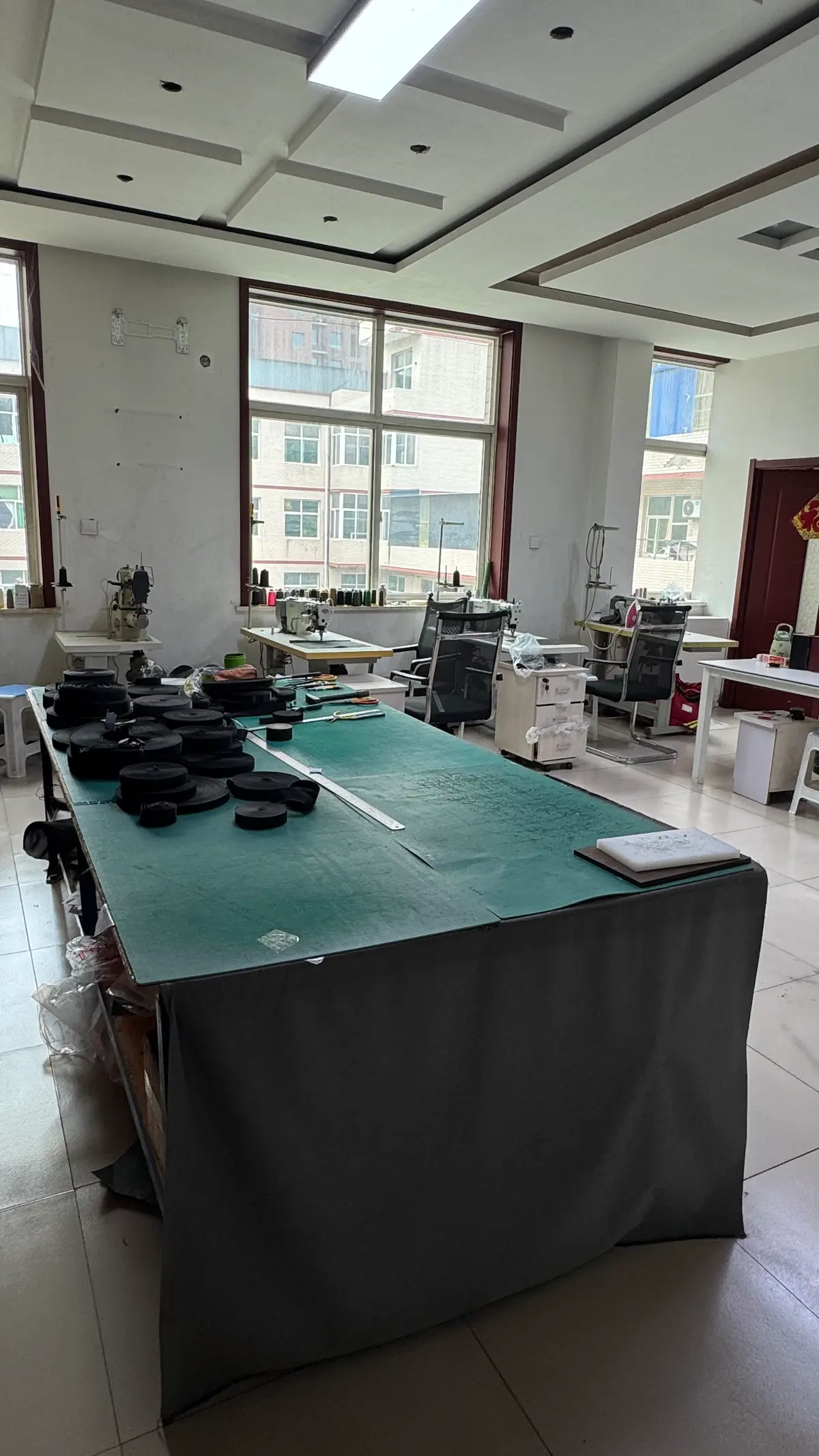
The Cordura Product Family: Classic, Ballistic, Lite, Eco and More
Cordura is not one roll with one universal denier. The exact catalog changes by mill, region, and season, so the ranges below are planning bands for backpack development rather than a replacement for a current mill datasheet. Finished weight is approximate because backing, coating, weave, and width alter the final number. “Abrasion level” is a factory shorthand for the relative duty we would normally assign; a purchase order should name the actual test standard and pass result.
| Series | Typical denier | Approx. finished weight | Relative abrasion level | Typical backpack use | Price level versus plain 1000D nylon |
|---|---|---|---|---|---|
| Cordura Classic | 500D-1000D | About 200-360 g/m² | High | Urban, travel, work, and outdoor daypacks | About 15-35% above |
| Cordura Ballistic | 840D-1680D+ | About 300-600 g/m² | Very high | Motorcycle, tactical, equipment, and base panels | About 35-70% above |
| Cordura Lite | About 200D-500D | About 100-220 g/m² | Medium to high for its weight | Lightweight travel, running, and packable products | About 20-50% above |
| Cordura Eco | About 300D-1000D | About 160-360 g/m² | Depends on construction | Recycled-content travel, work, and lifestyle packs | About 20-55% above |
| Cordura Ripstop and specialty constructions | About 210D-1000D | About 120-360 g/m² | Medium to very high | Technical panels, outdoor packs, and reinforcements | About 20-65% above |
The percentages compare material cost to a similar-width, similar-finish plain 1000D nylon, not to the entire finished backpack. Color, order volume, coating, certification, and freight can move the number. A small custom dye lot may cost more than the percentage suggests; an in-stock black roll at 5,000 pieces may narrow the gap.
Classic is the practical premium choice for laptop, commuter, travel, and outdoor daypacks: its 500D range balances surface toughness, weight, and sewing efficiency. Ballistic is denser and heavier, so we normally reserve it for bottoms, corners, harness zones, motorcycle bags, and equipment cases rather than specifying 1680D across every panel.
Lite suits packable and weight-sensitive products, but still needs reinforcement at corners, strap anchors, and zipper ends. Eco must be verified by recycled content, certification, backing, coating, and test data; “Eco” is not one universal construction. Ripstop helps contain a tear at lower weight, while a smooth 1000D face is generally chosen for surface abrasion. A visible grid does not by itself guarantee high wear resistance.
How the material premium reaches the quotation
At Senszx, the fabric line is only one part of the quote, but it is often the first large variable. A branded roll can require a particular mill, color lot, test document, label route, and purchasing lead time. The cutting plan also matters: heavy fabric creates different blade wear, seam allowances, and panel handling than 420D lining material.
We normally quote the same design at 500, 1,000, and 5,000 pieces so the buyer can see where scale helps. Full custom MOQ is 500 pieces per style. If a project is below 500, a one-time development fee includes three sample rounds. Once bulk reaches 500 pieces or more, that development fee is credited against the production order. This is more transparent than quoting a token minimum and then changing the price after sampling.
Samples are free and typically take 3-5 days once the material and artwork are confirmed. Standard bulk production is about 20 days after approval and material readiness. Exact timing depends on custom dye lots, testing, hardware, and the purchase order—not simply on the number printed beside the fabric name.
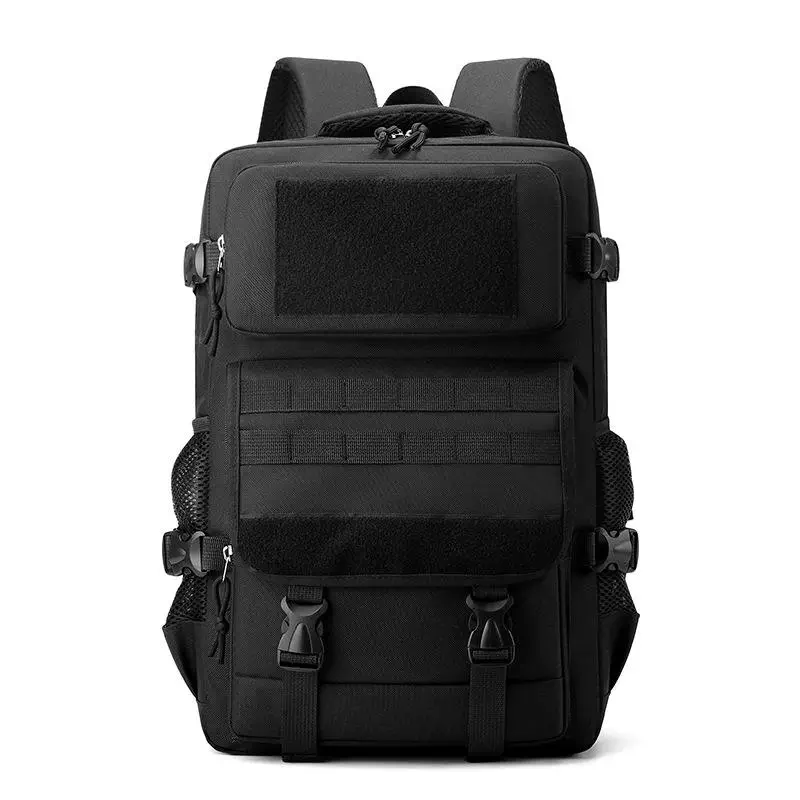
What Is Ballistic Nylon and How It Relates to Cordura
What is ballistic nylon? It is a dense, heavy nylon fabric category whose name comes from an early protective-textile application. In backpack sourcing, “ballistic” usually describes a tightly woven, robust fabric with a smooth or subtly textured face, often beginning around 1680D in commercial bag programs. The term is widely used, so it is not by itself proof of one fiber, one weave, one test result, or one brand.
Cordura Ballistic is the branded version within the Cordura family. Generic ballistic nylon may be made by a non-authorized mill, use a different yarn, carry a different coating, or meet a different abrasion and tear specification. Both may be suitable; they are simply not interchangeable claims. Put the exact requirement on the tech pack: for example, “Cordura Ballistic, target denier and weight, black, specified coating, test documents required,” rather than “ballistic-like.”
There are four practical differences we discuss with buyers:
| Question | Cordura Ballistic | Generic ballistic nylon |
|---|---|---|
| Brand control | Product is tied to the Cordura trademark system | Name may be a broad market description |
| Construction | Must be confirmed by the specific product datasheet | Varies substantially by mill |
| Documentation | Authorized supply and branded claims can be verified | Evidence depends on the supplier |
| Cost | Usually includes a branded performance premium | Can be lower, but consistency must be checked |
Ballistic nylon is especially useful on motorcycle panniers, tactical packs, equipment cases, and the base of a travel backpack. Its downside is not subtle: it can make a 25-liter bag feel overbuilt, push up shipping weight, and create a harder fold at curved seams. We often recommend a hybrid: ballistic fabric on the base and lower corners, 500D Cordura Classic on the body, and a lighter lining inside.
Do not use the word “ballistic” to hide a coating problem. A 1680D face can resist a scrape yet still allow water through an uncoated backing or open seam. Water performance and abrasion performance are separate lines in the specification.
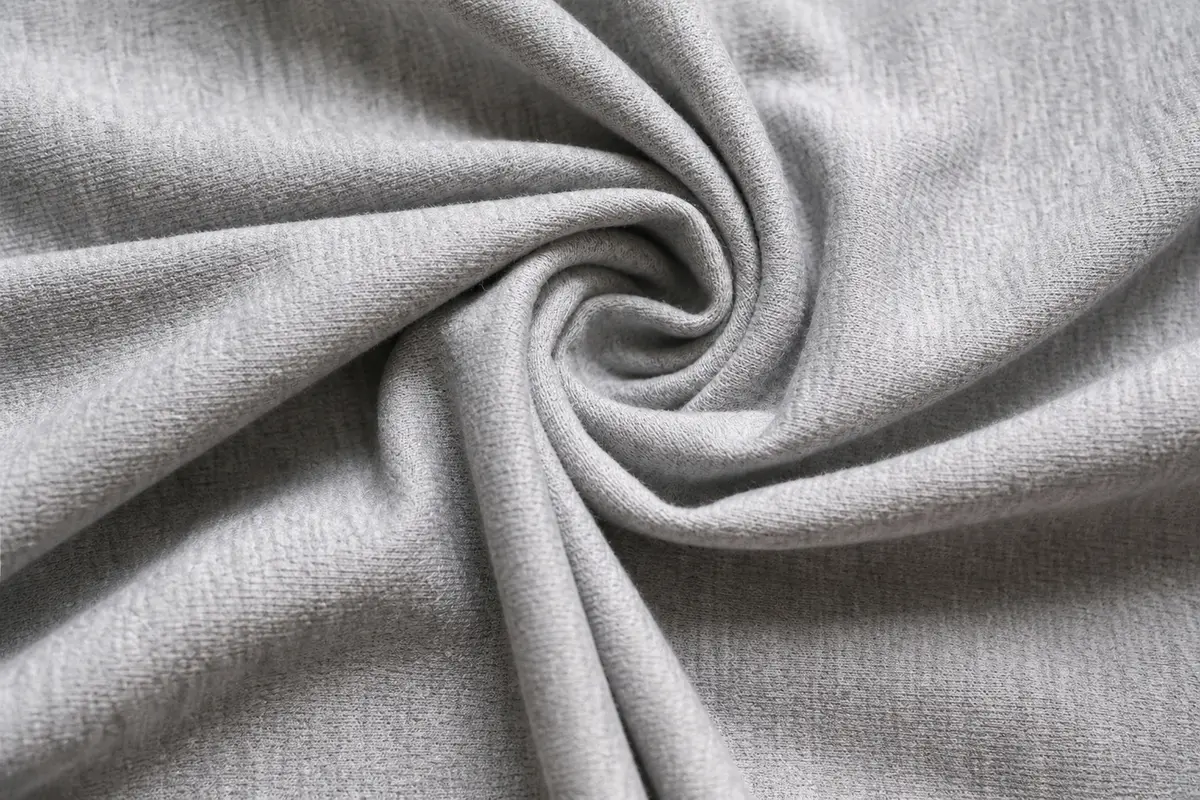
Cordura vs Plain Nylon vs Polyester: Side-by-Side
A useful comparison starts with the actual fabric, not only the fiber label. “Plain nylon” may mean anything from an inexpensive light lining to a strong 1000D woven face. “Polyester” also spans a wide range. The table below describes typical backpack sourcing outcomes when denier, coating, and weight are reasonably comparable.
| Factor | Cordura construction | Plain nylon | Polyester, such as Oxford fabric |
|---|---|---|---|
| Abrasion resistance | Usually high and supported by a defined performance family | Low to high; depends on yarn and finish | Moderate to high; heavy grades can be very robust |
| Tear resistance | Strong when the selected grade and weave suit the use | Highly variable | Good in many heavy constructions, but construction matters |
| Weight | Medium to heavy, with Lite options | Broad range, often easy to optimize | Often similar at the same denier, with a denser hand in some grades |
| Material price | Premium; about 15-70% above comparable plain 1000D nylon | Baseline to premium | Often lower than branded nylon at similar visual weight |
| Hand feel | Textured, substantial, and grade dependent | Can be smooth, soft, or technical | Often crisp or structured; varies with coating |
| Color consistency | Strong when the approved mill and dye lot are controlled | Depends on mill and lot discipline | Often good, but repeat shades still need lab approval |
| Typical bulk lead time | Can be longer when a branded color or test document is required | Often shortest for stocked colors | Often competitive for stocked black and common colors |
| Best reason to choose it | Traceable, premium wear performance for demanding packs | Cost, weight, or a specific hand | Value, color range, and robust everyday construction |
Cordura versus ordinary nylon in a real backpack
For an urban laptop pack, the most important wear points are usually the bottom corners, shoulder-strap anchors, zipper ends, and the area that rubs against a desk or floor. A full Cordura body may be the right premium signal, but a carefully reinforced plain nylon body can also work. We ask what the owner carries, how often the bag is set down, whether it is dragged, and whether the buyer needs a named fabric claim on the label.
For outdoor and tactical work, the value of Cordura is easier to defend because abrasion, repeated loading, and field repair matter. For a promotional giveaway used a few times a year, the premium may be better spent on zipper quality, stitching, or a stronger bottom than on a branded body fabric.
Ripstop nylon vs polyester
The question ripstop nylon vs polyester is usually a question about the whole construction, not a simple winner. Ripstop nylon tends to offer a strong strength-to-weight ratio and a technical hand. Polyester usually offers good UV stability, lower moisture absorption, and competitive cost. A heavy polyester Oxford can outperform a light nylon ripstop in abrasion, while a well-designed nylon ripstop can save substantial weight.
| Use case | Practical starting point | Why |
|---|---|---|
| Lightweight daypack | 210D-420D ripstop nylon or an equivalent light fabric | Keeps carried weight down while limiting tear spread |
| Premium commuter pack | 500D Cordura Classic or a comparable tested nylon | Balances appearance, wear, and sewing efficiency |
| Hard-use travel pack | 500D-1000D Cordura with targeted ballistic reinforcement | Places weight where abrasion is concentrated |
| Value school or promotional pack | Coated polyester Oxford | Controls cost and offers a structured, repeatable body |
| Motorcycle or equipment bag | Cordura Ballistic or a verified heavy ballistic alternative | Handles repeated contact and load better |
Whichever route you choose, approve a physical sample. Feel the fold, test the zipper curve, inspect bartacks, rub the bottom against a rough surface, and look at the color under daylight and indoor light. Material performance is a system outcome: the fabric, pattern, seam allowance, needle, thread, coating, and workmanship have to agree.
A factory checklist before approving Cordura
- Name the product family, denier, finished weight, width, color standard, and coating.
- State whether branded labeling or only a performance equivalent is required.
- Mark abrasion zones, reinforcement panels, and any areas that must remain lightweight.
- Request a fabric swatch, mill documentation, and relevant test data before bulk approval.
- Make the sample with production-intent fabric and hardware, not a visually similar substitute.
- Compare quotes at 500, 1,000, and 5,000 pieces, including development and testing costs.
- Confirm the color approval, inspection standard, packing, and expected 20-day bulk schedule.
Senszx can develop the sample in 3-5 days when the specification is complete, then quote the selected construction at those three volume levels. We manufacture in Baigou, China, with 100 production lines and systems covering BSCI, ISO 9001, ISO 14001, ISO 45001, and CE. For a Cordura project, send the intended use, size, target weight, color reference, and whether the brand claim must be verified. Contact [email protected] or WhatsApp +86 17331531825.
The practical conclusion is simple: Cordura is worth paying for when its traceable construction and abrasion performance solve a real use problem. It is not worth choosing merely because “1000D” sounds stronger. Start with the stress points, select the lightest grade that passes the job, and make the quote show the difference between branded fabric, plain nylon, and polyester rather than hiding it behind one word.
How a Backpack Factory Sources Cordura: Licensed Mills, Lead Times and MOQ
A factory does not buy “Cordura” as a generic color card. We first define the product family, denier, finished weight, width, weave, coating, color reference, and whether the customer needs an authorized brand label. The mill and the paperwork then become part of the specification. This matters because two rolls that both look like black 1000D fabric can behave differently at the spread table, under the needle, and in a colorfastness test.
The authorized mill network is the first practical distinction. Invista's Cordura program is supplied through approved or licensed textile mills, including mills serving customers in China, Taiwan, and South Korea. A buying agent may know several mills, but a mill name on a quotation is not by itself proof that a particular roll is approved for a branded Cordura claim. We ask for the product-family information, mill documentation, and the route by which the finished goods may carry the applicable Cordura mark.
| Sourcing question | Typical factory check | Why it changes the order |
|---|---|---|
| Is the fabric branded Cordura or a performance equivalent? | Match the quotation, swatch, invoice, and test sheet | A similar denier does not authorize the brand claim |
| Is the mill in the approved supply route? | Request current mill and product-family documentation | Traceability is needed for labels and repeat orders |
| Is the shade stocked? | Check the mill's active color card and available lot | Stocked black and common colors usually move faster |
| Is the finish standard or customized? | Confirm coating, back side, width, and finished weight | A finish change can alter handle, cutting, and lead time |
| Will the finished bag use a Cordura hangtag or mark? | Confirm the approved label route before production | Labels are not a substitute for fabric verification |
For a regular stocked construction, fabric minimums are often discussed by meter or by roll. A practical planning range is about 300-800 meters for a small mill release, while some mills prefer roughly 1,000-2,000 meters or a full roll for a special width or color. These are planning ranges, not a universal Cordura rule. The actual minimum changes with the mill, fabric family, dye lot, coating line, and whether the order can be combined with another customer’s production. We normally ask the mill to state the minimum in both meters and rolls so the cutting plan can be compared with the finished-bag quantity.
The backpack MOQ can remain 500 pieces even when the fabric mill has a larger material minimum. In that case, the factory carries the balance as usable inventory, combines the material with another approved project, or proposes a different color or construction. The customer should see that decision in the quote. Hiding a large fabric commitment inside a 500-piece bag price makes the unit cost look simple while leaving the leftover-roll risk unclear.
Lead time has two separate clocks. The first is mill release time; the second is bag production time. For stocked black or an already-approved shade, fabric release is typically about 7-15 days after the specification and payment conditions are confirmed. A custom shade or a new finish is more commonly about 20-35 days because lab dips, dyeing, finishing, inspection, and packing must be sequenced. A complicated branded construction can take longer when the mill needs a new trial or a special test report. These are normal planning intervals rather than promises for every order.
Our sample development remains about 3-5 days when the pattern and material specification are complete. For bulk, our normal production target is about 20 days after approved materials, sample, and purchase details are ready. That 20-day factory schedule does not erase the fabric mill lead time. If a customer needs a custom color, the safest plan is to approve the shade and reserve the mill capacity before the final sewing date. Otherwise, the sewing line may be ready while the correct roll is still in finishing.
The approved label route also needs early attention. Depending on the product family and current brand requirements, an order may need a certified woven label, hangtag, heat-transfer mark, or other authorized identifier. We verify which mark is permitted, where it can be placed, and whether the finished bag needs an authorization record or supporting paperwork. A factory should not print an attractive “Cordura” claim on a private label simply because the fabric seller used the word in a message. The material claim, label file, purchase record, and inspection file should agree.
We keep a material file for each bulk color. It normally includes the approved swatch, shade reference, mill or supplier information, construction details, finished-width check, weight check, coating note, test documents, and incoming inspection result. We also keep a roll map because different roll lots can show small differences in shade, stiffness, or coating pickup. When the order has multiple body panels, the cutting team needs to know whether rolls can be mixed on one bag or whether the approved appearance requires one lot per visible panel set.
Small orders expose the hardest sourcing problem. A customer may ask for 500 bags in three colors, with only a few dozen pieces per color, while the mill minimum is much higher for each shade. A branded mill may also prioritize standard production runs over a tiny custom dye lot. In that situation, a “Cordura-like” 1000D nylon or a tested heavy Oxford may be more practical. We describe it as a performance equivalent, not as Cordura, and we compare abrasion, tear, coating, hand, and color data before making the substitution.
That alternative is not automatically inferior. If the bag is a short-run promotional item, a school program, or a prototype, a verified equivalent can prevent excessive leftover fabric and keep the schedule realistic. If the bag is for military, motorcycle, industrial, or long-term outdoor use, the customer may need the traceability and product-family requirements of the genuine branded material. The decision belongs in the product brief, not in a last-minute purchasing compromise.
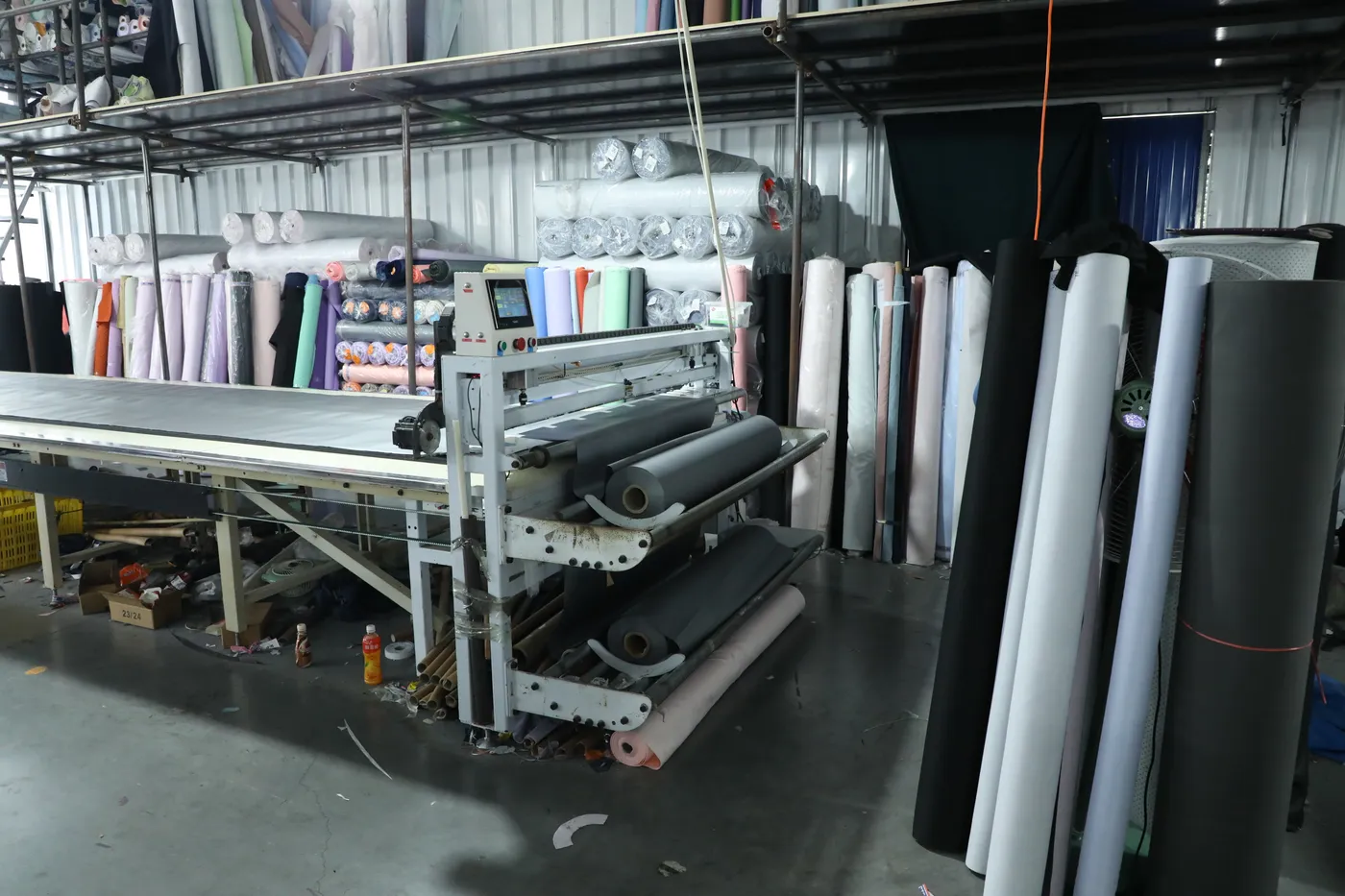
A useful purchase request includes the intended use, body and reinforcement deniers, fabric width, target finished weight, coating side, color standard, branded-label requirement, quantity by color, and delivery date. It should also show the three production tiers: 500, 1,000, and 5,000 pieces. Those tiers reveal whether the material minimum, dye-lot charge, testing cost, or leftover inventory is driving the quote. The factory can then recommend genuine Cordura, a different Cordura family, or a tested equivalent without pretending that one option fits every order.
Cordura Cost Per Meter and What It Does to Your Backpack Price
Cordura changes a backpack quote in more than one line. The fabric itself is normally more expensive than plain polyester, but the cost impact also follows from roll minimums, cutting speed, needle wear, reinforcement decisions, testing, labels, and the amount of material lost in a layout. We use a relative index rather than an absolute dollar promise because country, width, coating, exchange rate, and mill lot can move the actual price.
The table below uses plain 600D polyester as the working baseline of 1.0x. Each range is a typical planning relationship for comparable usable widths and finished constructions, not a universal price list.
| Fabric family | Typical relative material level | Factory pricing note |
|---|---|---|
| Plain 600D polyester | 1.0x baseline | Usually the easiest value reference for a standard bag |
| Plain 1000D nylon | About 1.2-1.8x | Stronger yarn and construction raise the material level |
| Cordura Classic 500D | About 1.8-2.8x | Branded supply and defined construction add cost |
| Cordura Classic 1000D | About 2.2-3.5x | Heavy construction also affects cutting and sewing |
| Ballistic 1050D | About 2.0-3.2x | Dense weave can improve wear performance but adds handling work |
| Ballistic 1680D | About 2.4-4.0x | Heavy face and finish can increase weight and labor |
| Cordura Lite families | About 1.6-2.7x | Lower weight may reduce material use but not always the meter level |
| Cordura Eco families | About 1.8-3.2x | Recycled inputs and documentation can change the sourcing premium |
A 30-liter backpack typically consumes about 1.5-2.5 linear meters of main-body and related shell fabric, depending on width, pattern efficiency, gussets, pockets, reinforcements, directionality, and whether the lining is counted. The estimate is not the purchase quantity. We usually add a cutting allowance of about 5-12% for marker loss, roll defects, shade separation, and production handling. A bag with many curved panels can use more fabric than a simple two-panel pack even when both are called 30 liters.
For many mid-range backpack constructions, the shell fabric represents about 8-20% of FOB cost. A highly technical bag with several heavy panels, branded fabric, extensive reinforcement, and low volume can push that share to about 20-35%. A simple promotional pack with inexpensive polyester, low labor content, and large volume may sit closer to about 5-12%. These are cost-share ranges, not a claim about every factory quotation. Hardware, labor, freight terms, packaging, inspection, and development can be larger drivers than the face fabric.
At 500 pieces, the quote is sensitive to fixed costs. A fabric dye lot, a partial-roll balance, a Cordura mark or approved label route, a test package, and sample corrections are spread over a small number of bags. The material multiplier may look large, but the more important issue is often the minimum commitment. If 500 bags require a mill release closer to 1,000 meters, the unused balance becomes part of the commercial decision. We ask whether the balance can be used on a repeat order, another colorway, or a future style.
At 1,000 pieces, the material plan usually becomes more efficient. A larger cut order can use more of the roll, fixed testing and development costs are spread more evenly, and the factory can schedule cutting with fewer interruptions. The unit price does not simply fall in proportion to quantity because the branded fabric may still sit within its own meter or roll bracket. Still, 1,000 pieces often produces a clearer comparison between a genuine branded construction and a tested 1000D equivalent.
At 5,000 pieces, the main advantage is planning rather than only negotiation. The buyer can reserve a dye lot, combine rolls into a controlled shade program, optimize the marker, and schedule sewing and inspection in a stable sequence. A lower unit level may be available when the material is stocked and the order has one or two colors. A custom color, multi-color assortment, or special coating can reduce that benefit. We still quote the material and labor assumptions separately so a volume saving is not confused with a lower-performance substitution.
The shell price also interacts with pattern design. A full-Cordura body may require a heavier lining, stronger edge binding, or different foam compression to balance the hand. Conversely, a hybrid design can place 500D or 1000D material at the bottom, corners, shoulder-strap anchors, and abrasion panels while using a lighter fabric on broad low-wear surfaces. Hybrid construction can reduce weight and material consumption, but it adds seam lines and labor. The best option is the one that lowers lifetime failure risk without adding decorative complexity.
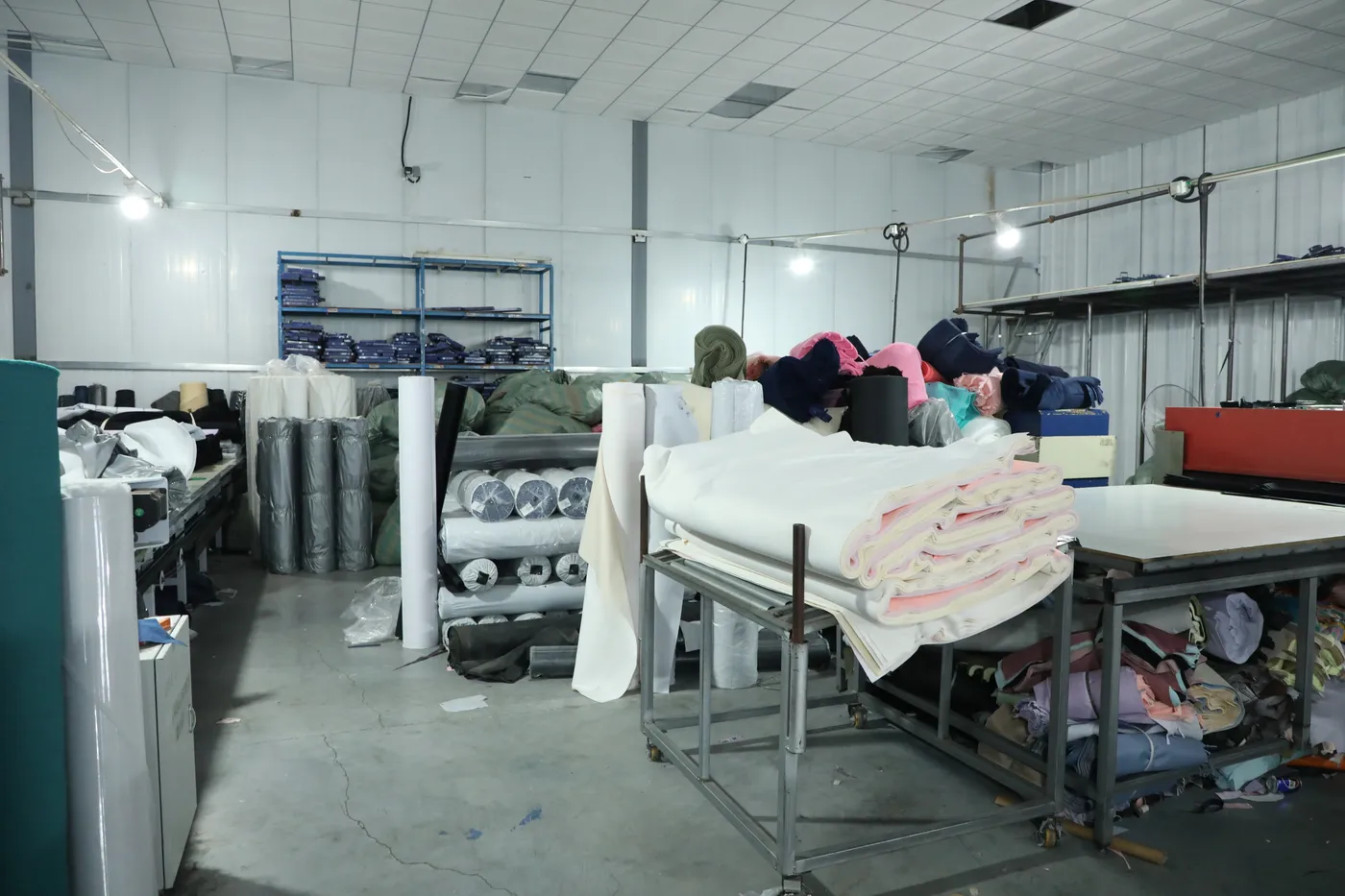
When comparing quotes, we separate five questions: how much fabric is consumed per bag, what percentage of cutting loss is assumed, whether the quoted material is genuine branded Cordura or an equivalent, what fixed costs are included, and how price changes at 500, 1,000, and 5,000 pieces. We also confirm whether the quoted price includes testing and approved labels. Without those questions, a lower quote may simply be using a thinner construction, a different width, or a supplier’s generic “Cordura-style” description.
A disciplined cost model therefore starts with the job, not the logo. If abrasion is concentrated at the bottom, a premium panel can be more economical than a full-body upgrade. If the customer needs a documented branded claim, the premium may be justified even when a plain nylon passes a basic rub test. If the customer needs only a durable appearance for occasional use, a tested polyester or nylon can protect the budget better. The factory’s job is to show the trade-off clearly and let the product use case decide.
Which Backpacks Are Worth Making in Cordura (and Which Are Not)
Cordura is not automatically the right answer for every bag. We decide by looking at abrasion, load, moisture, replacement cost, buyer expectation, and order volume. The same 1000D face can be sensible on a motorcycle pannier and wasteful on a giveaway tote. The table is our first factory discussion, before pattern engineering begins.
| Backpack type | Is Cordura usually worth it? | Factory reason |
|---|---|---|
| Tactical, military, or law-enforcement pack | Worth it | Repeated abrasion, load, field handling, and traceability can justify the premium |
| Workwear or tool bag | Worth it | Sharp tools, hard floors, and concentrated bottom wear punish weak fabric |
| Outdoor hiking or climbing pack | Depends | Weight, weather exposure, and abrasion zones may favor a lighter or hybrid grade |
| Motorcycle bag or pannier | Worth it | Road spray, contact, vibration, and repeated loading make wear resistance valuable |
| Premium EDC pack | Depends | Bottom, straps, and laptop zones may need it; a full-body upgrade depends on the price target |
| Commuter laptop pack | Depends | A premium face can help at corners and base, but design and padding often matter more |
| Student backpack | Usually not necessary | A tested polyester or nylon can meet use needs at a lower replacement-sensitive price |
| Promotional or event pack | Usually not worth it | Short and occasional use rarely recovers the branded-fabric premium |
For tactical and work bags, the question is not only whether the fabric survives a rub test. The pack may be placed on concrete, dragged around a vehicle, loaded with metal equipment, and lifted by one handle. We normally inspect the bottom pattern, corner binding, compression foam, handle anchors, and bartack layout together with the fabric. A strong face with a weak seam is still a failed bag.
Outdoor bags need a more balanced decision. A heavy Cordura grade can protect against rock and trail abrasion, but it also adds carried weight. A pack designed for long climbs may use a lighter shell, then reinforce the base, hip-belt contact, shoulder areas, or crampon panel. If the design uses a membrane, laminate, or taped seam, the fabric backing and coating compatibility become as important as the face brand.
A premium EDC or laptop pack sits between performance and appearance. Buyers may touch the bag every day, set it on a floor, and expect the fabric to retain its surface. In that case, 500D Cordura on the exterior or high-wear panels can be sensible. The factory should not use a heavy grade merely to make the product sound stronger if the added stiffness makes the zipper curve, laptop sleeve, or shoulder strap uncomfortable.
For student and promotional bags, we first check expected life, carrying load, wash or wipe requirements, and retail price. A coated polyester Oxford can provide structure, color control, and reasonable abrasion at lower cost. Money saved on the body fabric may be better spent on a wider shoulder strap, smoother zipper, bartacks, or a water-resistant base. The answer changes when the customer needs a premium brand claim or the bag is intended for repeated commercial use.
Coatings, Laminates and Backings: PU, TPU, Silicone and DWR on Cordura
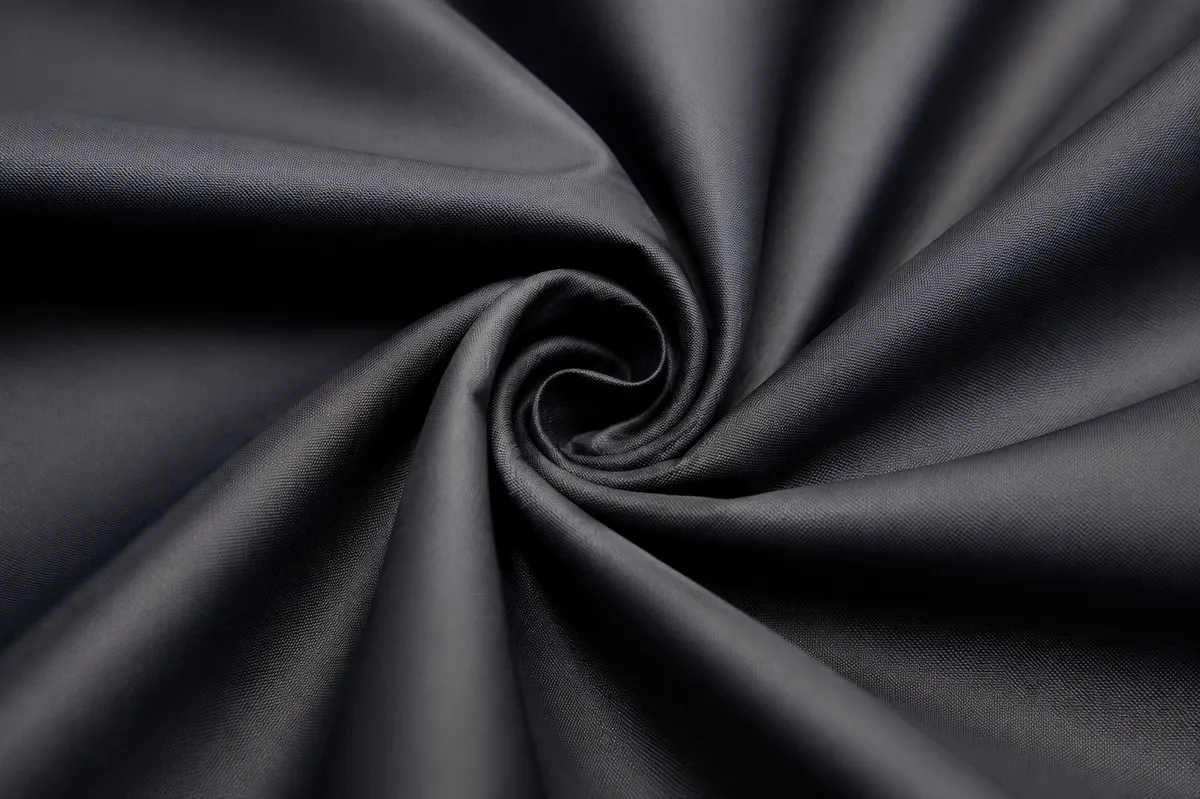
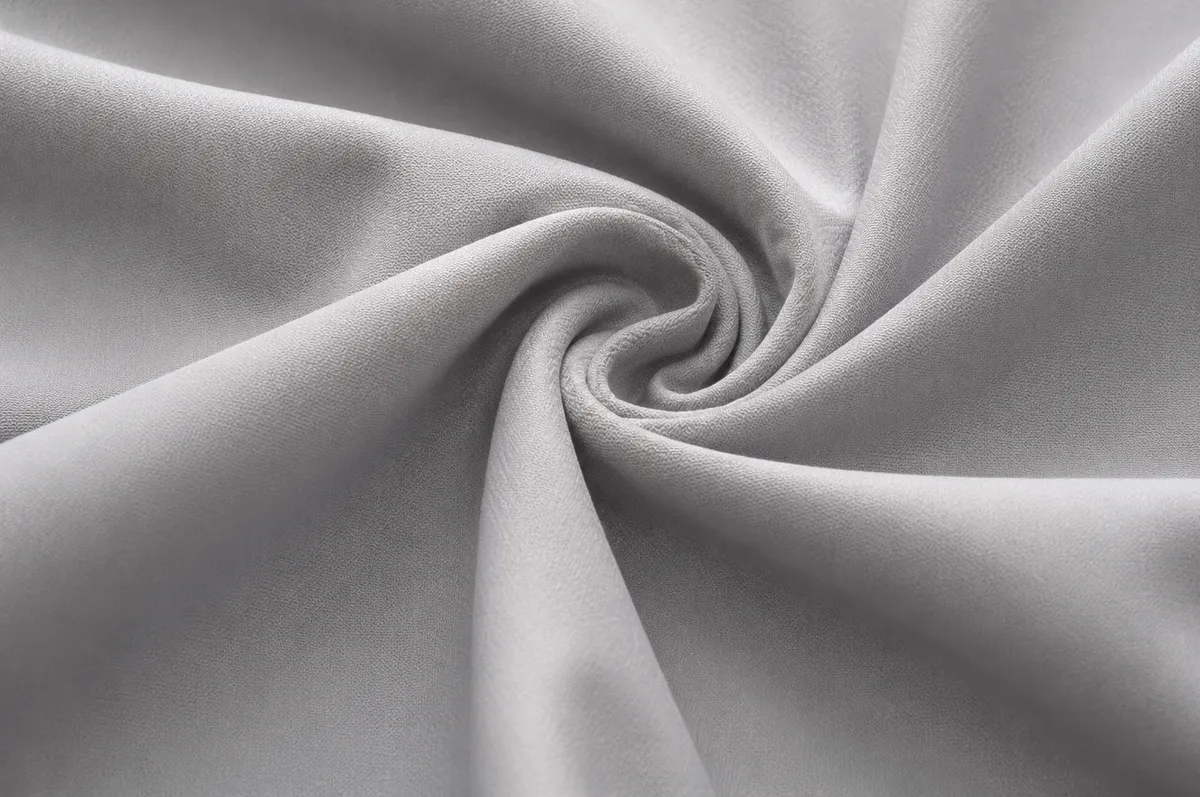
“Cordura” describes a fabric family or construction, not one fixed waterproof finish. The face may be paired with a PU coating, TPU film, silicone treatment, DWR, or another backing. Each choice changes water resistance, hand, weight, price, needle behavior, and print options. We identify the coated side before cutting because reversing the roll can change both appearance and performance.
| Finish or backing | Water effect | Hand and weight | Production effect |
|---|---|---|---|
| PU coating | Improves resistance to water passing through the fabric | Usually adds moderate body; heavier pickup feels stiffer | Coated side can drag, mark, or affect seam needle heat |
| TPU coating or film | Can provide a stronger barrier and a smooth technical back | Often heavier and less flexible than a light finish | Heat, folding, bonding, and print compatibility need approval |
| Silicone coating | Adds water repellency with a relatively flexible hand | May remain slick and change friction | Adhesion, screen printing, and some seam tapes can be difficult |
| DWR treatment | Helps surface water bead and roll away | Usually the lightest change in hand and weight | Does not equal a waterproof barrier; wear and laundering reduce effect |
| Film laminate or membrane backing | Can greatly improve barrier performance | Adds structure, thickness, and sometimes noise | Cutting, needle holes, bonding, and seam sealing need trials |
A single-side coating usually protects the back of the fabric while leaving the woven face visible and easier to handle. A double-side coating or laminate can improve barrier performance, but it may make the fabric harder to fold, turn through a seam, or print. The right choice depends on whether the product needs a dry interior, splash resistance, or a fully seam-sealed waterproof claim. We avoid calling a bag waterproof simply because its face beads water.
Coating weight affects the quote and the sewing floor. A heavier PU or TPU layer can add roughly 5-20% to finished fabric weight, while a light DWR may add little measurable bulk. Actual pickup varies by construction and mill. More coating can close the surface and protect yarns, but it can also reduce breathability, increase stiffness, and make needle holes more visible. We request a finished weight and coating-side sample rather than approving only a face photo.
Printing is another limitation. A coated surface may require a compatible ink, primer, heat setting, or transfer process. Silicone-treated surfaces can reject ordinary ink. TPU films can soften or mark under heat. A large print over a flexible coated panel may crack when the bag is folded. We run a print sample on production-intent material, especially when the logo crosses a seam, before approving bulk artwork.
Sewing also changes. The presser foot may grip a coated back differently from an uncoated textile. The operator may need a different foot pressure, needle, thread tension, or stitch length to avoid puckering and skipped stitches. A laminated fabric can show needle perforation if the stitch density is too high. For a wet-use bag, we inspect seam construction and water entry at zipper ends and binding; coating alone does not seal those openings.
Cutting and Sewing Cordura: What Changes on the Production Floor
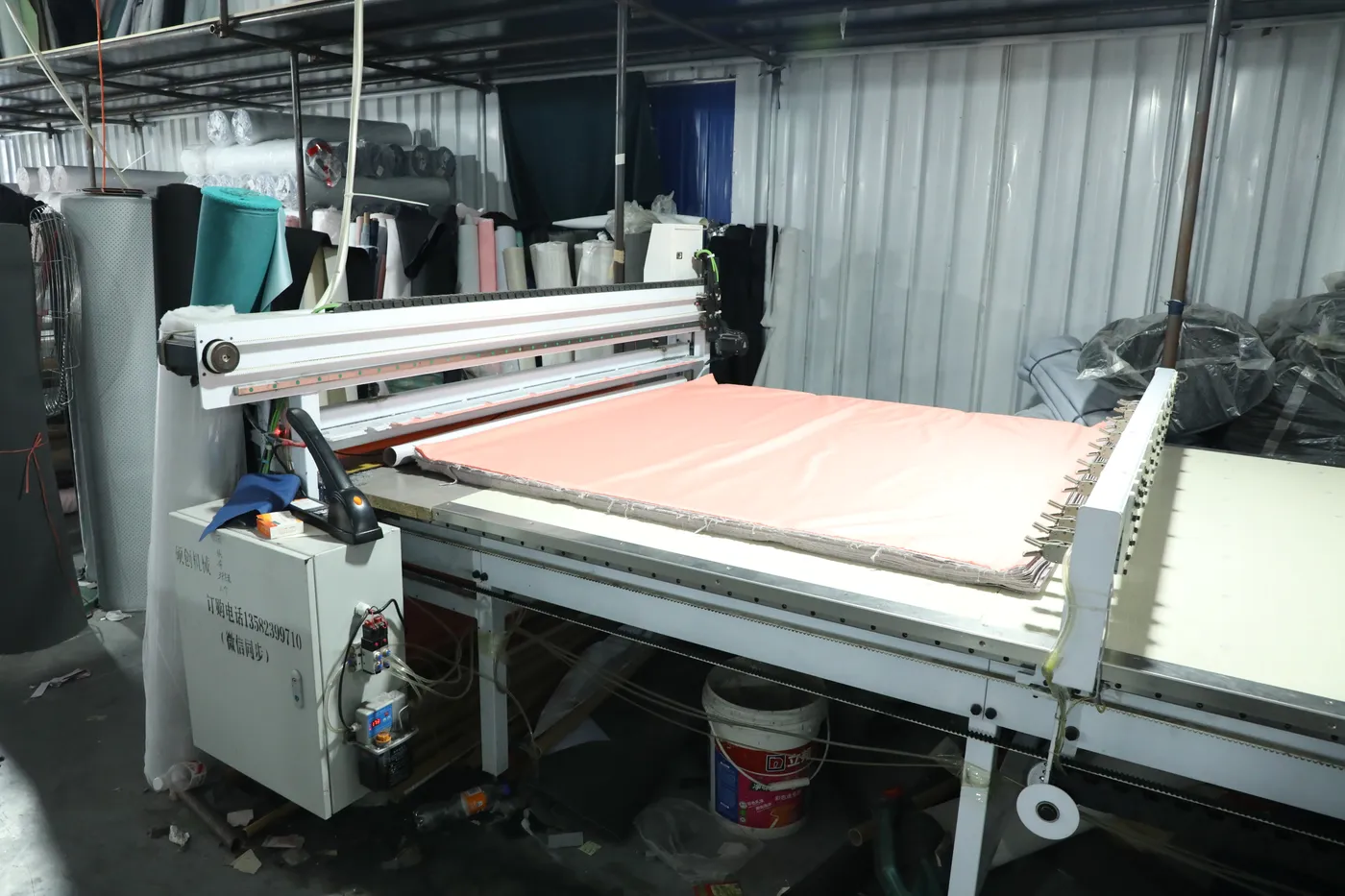
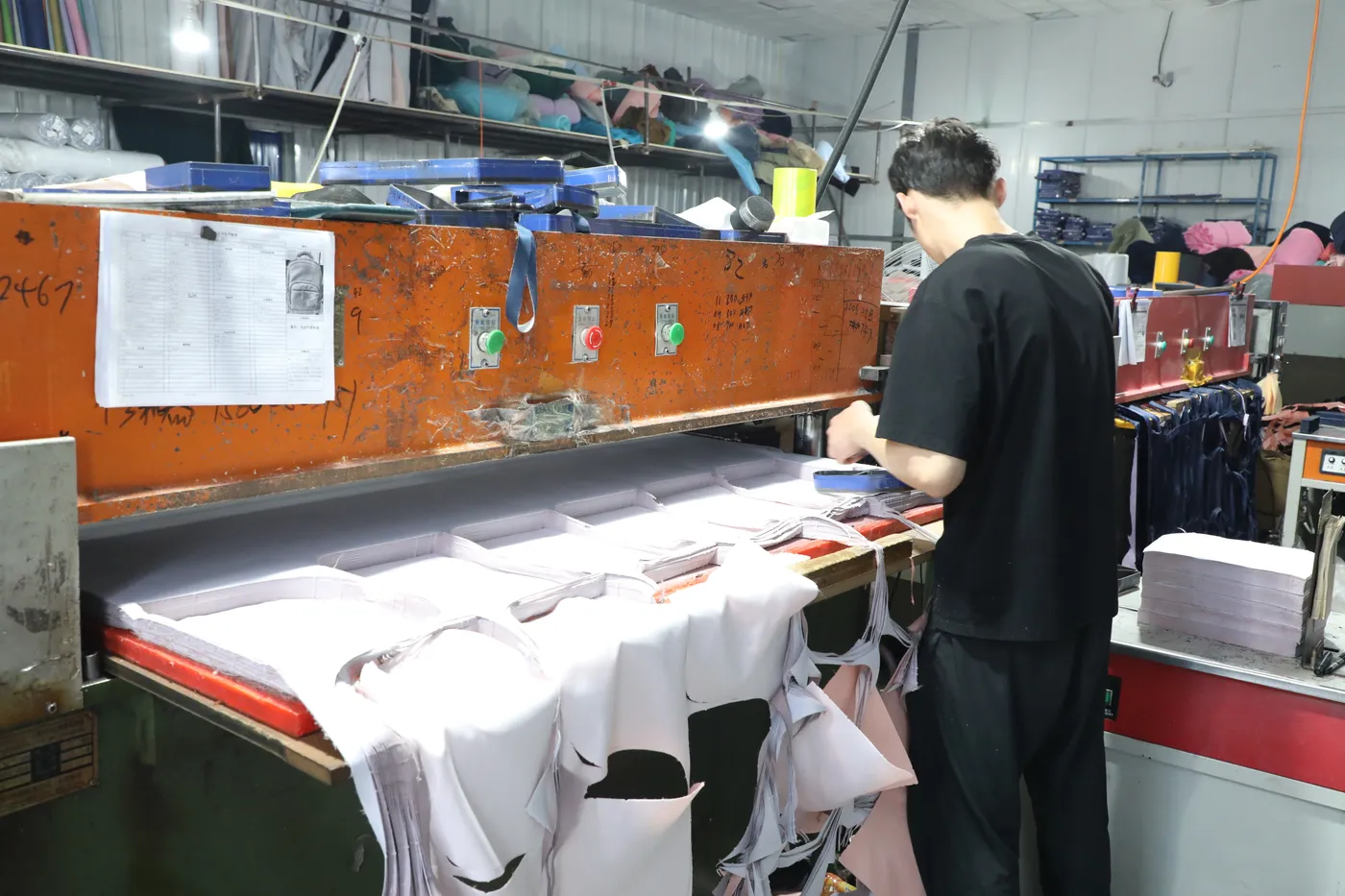
High-denier fabric changes the work sequence before the first seam. The roll is conditioned, checked for width and coating marks, and spread with enough control to prevent shifting. CNC cutting can produce accurate repeated panels, but the operator must select a blade and speed that handle thickness without pulling the weave or leaving a melted edge. Die cutting can be efficient for repeated small parts, yet the die, pressure, stack height, and edge condition need a production trial.
We typically plan heavier needles around #18-21 for dense Cordura constructions, depending on the actual coating, layers, and machine. Bonded nylon thread around #69 or #92 is also common for structural seams, but the correct choice still comes from the seam load and stitch appearance. These are usual starting points, not instructions to copy without a trial. Too large a needle can leave visible holes; too small a needle can deflect, break, or create heat and skipped stitches.
Heat cutting can help control edge fraying on selected synthetic fabrics, but it is not a cure for every coated or laminated construction. The operator checks that the edge is fused cleanly without a hard bead, discoloration, smoke residue, or a smell that transfers to the product. For visible edges, binding or folded construction may give a cleaner result. We do not rely on heat sealing where the fabric finish is incompatible with the method.
Cordura often needs more handling time than plain nylon. Turning a stiff gusset, aligning a thick corner, feeding multiple layers under the foot, and trimming a heavy seam allowance can add roughly 5-15% sewing or handling time on a demanding style. The increase may be smaller on a simple panel bag and larger on a multi-pocket tactical pack. A good marker and seam design can recover some of that time.
Reinforcement is placed where load enters the bag. Bartacks are commonly used at shoulder-strap ends, handle anchors, webbing returns, pocket corners, and zipper stress points. A bartack cannot compensate for a narrow seam allowance, weak webbing, or poor stitch penetration. We check the first pieces for thread tension, skipped stitches, back-tack length, edge distance, and distortion before allowing the line to continue.
How We Test Cordura and Cordura-Grade Fabrics Before Bulk
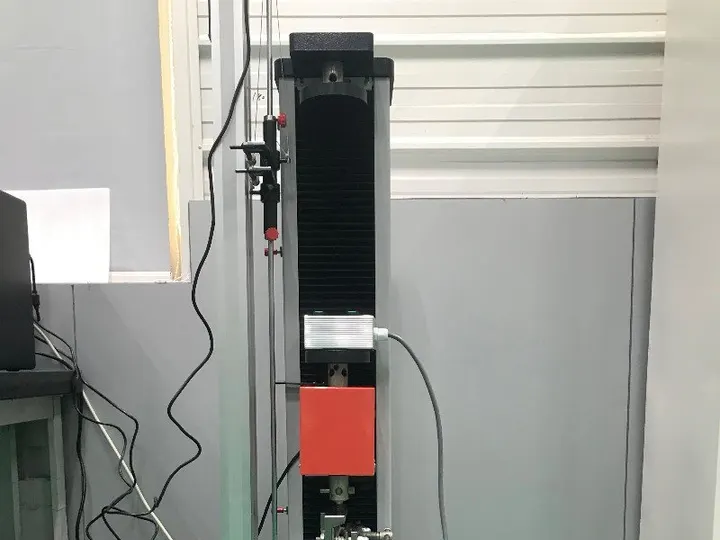
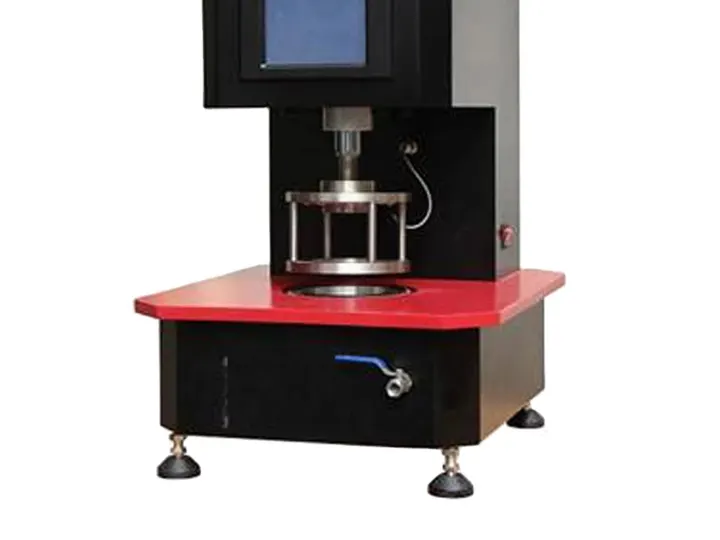
We test the fabric as a production material, not only as a marketing specification. A mill report helps with traceability, but incoming rolls still need visual and dimensional checks. We compare face, back, weave, width, finished weight, shade, coating uniformity, and obvious defects. Then we use risk-based tests for the intended backpack: abrasion at contact zones, tensile strength in load-bearing panels, tear behavior around cuts, hydrostatic head for water claims, and colorfastness where the bag rubs against clothing.
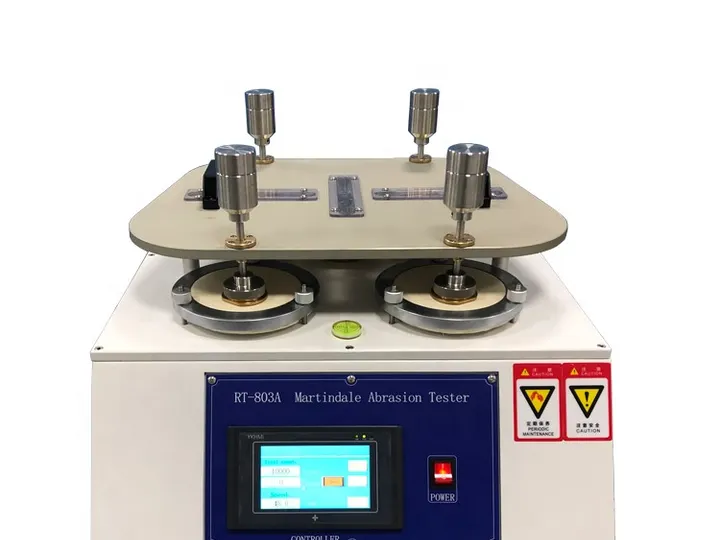
Martindale abrasion testing places a fabric specimen under a controlled load and rubs it against a specified abradant in repeated cycles. The test records appearance change, yarn breakage, hole formation, or another defined endpoint. Common planning ranges for heavy backpack fabrics are about 20,000-100,000 cycles, while some specialized constructions are assessed above that range. A high cycle number does not predict every field failure because seam design, grit, pressure, and wet conditions also matter.
| Test | Common reference or method | Our internal planning threshold range | What it helps decide |
|---|---|---|---|
| Martindale abrasion | ISO 12947 or an agreed equivalent | About 30,000-80,000 cycles for demanding shell zones | Whether the face suits contact and repeated rubbing |
| Tensile strength | ISO 13934 or an agreed strip method | About 800-2,000 N, depending on direction and grade | Whether panels and webbing zones carry design load |
| Tear strength | ISO 13937 or an agreed tear method | About 30-100 N, with warp and weft recorded | Whether a nick will spread during use |
| Hydrostatic head | ISO 811 or an agreed water-pressure method | About 500-2,000 mm for splash or coated-body targets | Whether the finish supports the stated water claim |
| Colorfastness to rubbing | ISO 105-X12 or an agreed method | About grade 3-4 or better, depending on color and claim | Whether the face transfers color to clothing or lining |
| Colorfastness to water | ISO 105-E01 or an agreed method | About grade 3-4 or better for the target use | Whether wet contact changes shade or stains adjacent parts |
| Dimensional and weight check | Approved swatch, width, and finished-weight method | About +/-3-5% from the approved construction | Whether rolls can run together in one bulk order |
The internal thresholds are starting ranges. A tactical black bag, a light hiking pack, and a promotional school bag do not need the same acceptance level. More importantly, we record direction. A fabric may pass tensile strength in the warp but tear more easily across the weft. The marker and seam direction should reflect that result, especially around shoulder straps and handles.
For water testing, hydrostatic head measures resistance to water pressure through the textile. It does not simulate rain striking a zipper, a needle hole, or a seam under a loaded pack. We therefore test the coated fabric and inspect finished samples at zipper ends, binding, bartacks, and panel joins. If the product requires a waterproof claim, seam sealing and closure design must be specified separately.
Before bulk, we cut specimens from more than one roll when the order is large or shade lots are mixed. We retain the approved swatch and test record with the incoming material file. If a roll is outside the approved weight, width, shade, or coating behavior, the cutting team isolates it before it becomes dozens of assembled panels. This early hold is cheaper than finding a mixed-color or weak panel during final inspection.
The final decision is a pass against the intended job, not a contest for the largest number. We approve a Cordura-grade fabric when its documented construction, physical test results, coating, color, and production behavior fit the backpack design. The bulk order then follows the same fabric route used for the sample: about 3-5 days for a complete sample development cycle, a normal bulk target of about 20 days after materials are ready, and comparison quotes at 500, 1,000, and 5,000 pieces.
How to Tell Real Cordura From "Cordura-Style" Nylon
The most common Cordura purchasing mistake is not choosing the wrong denier. It is paying for a branded performance fabric while receiving an unverified heavy nylon that only looks similar in a photograph. A quotation that says “Cordura” should start a verification conversation, not end one. In our sample room, we separate the brand claim from the material observation, then record exactly what the customer has approved.
Start with the authorization trail
A genuine branded construction should have a traceable mill route. Ask for the fabric mill name, product family, denier, finished weight, width, coating, color reference, and the documentation associated with that lot. If the finished backpack is intended to carry an approved Cordura hangtag or woven label, confirm how that label is supplied and attached. A loose tag photographed beside a roll is not, by itself, proof that the roll is authorized.
The buyer can also use the official INVISTA Cordura fabric and partner information available through the brand's current channels to check whether the stated mill, product family, or approved source can be verified. The exact process and database availability may change, so the useful practice is to save a dated screenshot, certificate, or written confirmation in the purchase file. We do not represent a generic nylon as Cordura merely because it passes an internal abrasion check. If a customer wants the trademark claim, the paperwork and label route must support it.
Use the swatch as evidence, not as a verdict
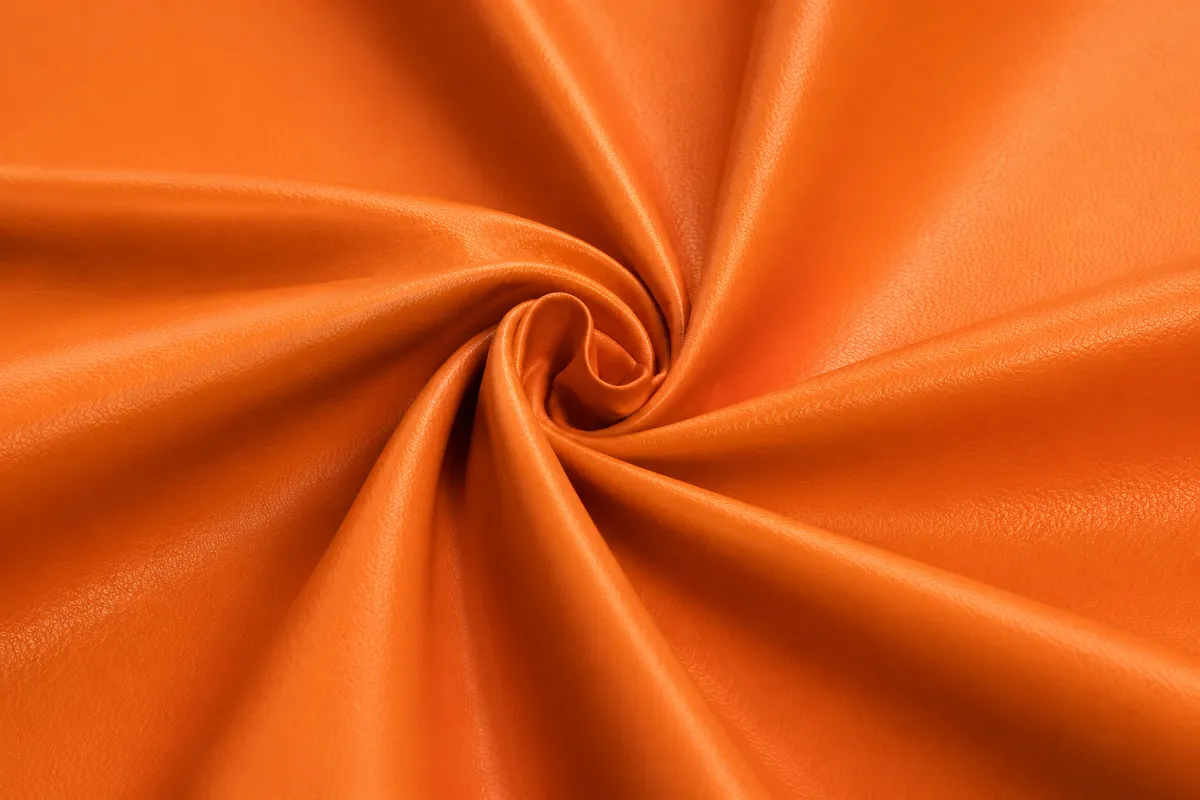
A real Cordura fabric may have a recognizable dry, textured hand, even weave, controlled luster, and consistent back coating. Classic textured nylon often feels less slippery than a smooth filament fabric. The face should not show random thick-and-thin bars, loose yarns, oily transfer, or a coating that flakes when the sample is folded. Look at the selvedge and the back: a clean mill identification, stable width, uniform PU or other backing, and a consistent coating color are useful clues.
These clues are not a laboratory authentication method. A skilled mill can make a high-quality generic nylon with a very similar hand, and a genuine fabric can vary between constructions. Do not identify a fabric by burning it, scraping off its coating, or relying on a single close-up photo. Destructive checks can create safety and contamination problems and still cannot establish trademark authorization. Instead, compare the approved swatch with the production roll, request the technical sheet, and test the construction required by the finished backpack.
| Clue | Real Cordura performance fabric | “Cordura-style” or unverified nylon |
|---|---|---|
| Hangtag or roll label | Approved route, traceable product family, mill and lot information | Generic tag, copied artwork, or no lot traceability |
| Supplier wording | Names the applicable Cordura family and specification | Says only “Cordura type,” “Cordura quality,” or “similar” |
| Face hand and weave | Controlled texture, even weave, consistent surface | Can be smooth, overly glossy, uneven, or inconsistent between rolls |
| Back coating | Uniform coating with stated type and weight | Coating may be thin, patchy, brittle, or unspecified |
| Technical documents | Construction, weight, width, coating, color and test data can be matched | Data is missing, rounded excessively, or belongs to another article |
| Price | Premium is explainable by grade, color, coating, and quantity | Unusually low price with a branded claim and no explanation |
| Repeatability | New lot is checked against an approved swatch and records | Supplier treats any heavy nylon as an interchangeable substitute |
Read suspicious wording and pricing correctly
A line such as “1000D nylon (Cordura type)” normally means the supplier is quoting a generic 1000D nylon designed to resemble a Cordura construction, not promising an authorized Cordura article. It may be a perfectly serviceable fabric. The phrase is not automatically a quality failure; it is a disclosure that the material should be evaluated and sold under its generic specification unless authorization is demonstrated. Ask the supplier to write “generic 1000D nylon” or the exact branded family in the final quotation so there is no dispute after approval.
Price is another signal, not proof. Branded grades often cost about 15-70% above comparable plain 1000D nylon, depending on product family, color, coating, width, and order quantity. A price far below the market range can indicate a generic article, old stock, a different width, a lighter coating, a recycled-content substitution, or a quotation that excludes the label and testing. It can also be a legitimate clearance lot. Ask what changed before assuming either fraud or a bargain.
At sample stage, Senszx tells the customer which route we are using: a named Cordura family with its available documentation, a specified generic nylon, or another approved alternative. The sample request, material board, quotation, and purchase order should use the same language. If the customer approves “1000D nylon (Cordura type),” we do not silently upgrade or downgrade it later. If the label claim matters for retail, the label artwork and authorization route are listed as a separate approval item. This approach also fits our quality assurance process: incoming rolls are checked for weight, width, shade, weave, coating, and obvious defects before cutting.
Cordura Alternatives Worth Knowing: 1000D Nylon, 1680D Ballistic, X-Pac, Ripstop and Recycled Options
Cordura is valuable when its abrasion performance, brand story, and specification justify the premium. It is not the only responsible choice. We compare the use case, target selling price, decoration method, weight, water requirement, and expected order quantity before recommending an alternative. Our guide to 600D vs. 900D vs. 1680D polyester gives a separate comparison for buyers whose priority is polyester cost and printability.
| Alternative | Performance position | Price level | Good fit | When we recommend it |
|---|---|---|---|---|
| Generic 1000D nylon | Strong, familiar, flexible heavy-duty baseline; quality depends on yarn, weave and coating | Lower than branded Cordura, with a broad range | Work bags, tactical-inspired packs, equipment cases and private-label products | When the customer needs a durable face but does not need the Cordura trademark |
| 1680D ballistic nylon | Very dense, structured and abrasion resistant, often with a basket-weave appearance; heavier and stiffer | Medium-high to high | Premium laptop bags, motorcycle luggage, luggage bases and high-contact panels | When structure, premium hand and repeated abrasion matter more than low weight |
| X-Pac or similar laminate | Lightweight laminated construction with strong dimensional stability and water-shedding face; seams and punctures still need design attention | High | Technical daypacks, bike bags, outdoor and design-led urban packs | When low weight, visual identity and weather resistance are more important than a traditional woven hand |
| Nylon ripstop | Grid reinforcement helps limit tear propagation; it is not automatically as abrasion resistant as a heavy plain weave | Low-medium to medium | Lightweight outdoor, travel, packable and sports products | When tear control and low weight are priorities; confirm whether ripstop nylon or ripstop polyester better suits the finish |
| Recycled nylon | Can reduce reliance on virgin nylon while retaining a familiar performance platform; exact strength and recycled percentage vary | Medium to high | Premium outdoor, travel and sustainability-led programs | When the customer has a recycled-content target and accepts certification, color-lot and cost requirements |
| RPET or recycled polyester | Recycled polyester platform with broad color and print options; hand, coating and abrasion vary by article | Low-medium to medium | Promotional, school, lifestyle, and value-focused bags | When recycled content, price, color availability, or sublimation/printing is more important than a nylon hand |
1000D nylon versus 1680D ballistic
Generic 1000D nylon is often the most practical substitute for a branded 1000D Cordura request. It can deliver a tough face at a lower material cost, but the quote must identify its finished GSM, weave density, yarn construction, coating, and test results. It is usually easier to sew than a very dense ballistic article and can give a slightly more flexible bag.
1680D ballistic is a different design decision rather than a simple upgrade. The thicker, denser construction adds body and can protect corners or bases, but it adds bag weight, needle resistance, seam bulk, and shipping weight. We may recommend it for a premium equipment bag or use it only on a base panel while retaining 500D or 1000D elsewhere. A buyer who wants a lighter carry should not specify it across every panel just because it sounds stronger.
X-Pac, ripstop nylon, and ripstop polyester
X-Pac-style laminated fabrics can create a clean technical appearance and a useful water-shedding barrier at a lower finished weight than heavy nylon. However, the laminate changes folding, needle-hole behavior, seam taping, and recycling considerations. We confirm the laminate stack and test a finished sample rather than transferring ordinary woven-fabric settings directly to it.
“Ripstop nylon vs polyester” is not a complete comparison until the buyer states the yarn, grid, coating, and intended use. Ripstop nylon generally offers a softer, tougher hand at comparable light weights, while ripstop polyester can offer good color stability, lower cost, and useful UV behavior. A ripstop grid helps stop a small tear from traveling; it does not guarantee high abrasion resistance at a rough loading point. For those points we may add a heavier panel, binding, or reinforcement.
Recycled nylon and RPET deserve the same discipline. “Eco” is not a performance grade. Ask for the percentage and source of recycled content, certification if required, coating details, and test data. A recycled nylon construction may be a strong choice for a premium outdoor line, while RPET may be the better value for a branded promotional program. Our custom fabrics team can compare these articles against the final tech pack, and our OEM/ODM service can keep the approved substitution documented through sampling.
The correct alternative is the one that meets the claim without adding cost the customer cannot recover. We normally compare at least two constructions on the sample: one that protects the target retail price and one that protects the target performance. For tactical applications, see our custom tactical backpack capability; for everyday bags, a controlled 600D-900D polyester or 500D nylon can be more sensible than a heavy branded fabric.
Cordura Color, Print and Branding Options
Color decisions affect availability, lead time, price, and repeatability. Branded fabrics usually offer a stock color library, but “stock color” still needs a current mill reference and a physical swatch. A screen image is not a color standard. We compare the approved face, backing, thread, webbing, lining, zipper tape, and logo together because a black nylon face can make a supposedly matching black webbing look blue or brown.
For stock colors, a common planning quantity is about 500-1,000 meters depending on the article, color, width, and mill schedule. Custom dye lots often begin around 1,000-3,000 meters, with some specialty constructions requiring more. These are ranges for early budgeting, not a guaranteed mill minimum. We request a lab dip or strike-off, check it under agreed lighting, and record whether the approval is for the face only or for the complete finished construction. Bright red, fluorescent colors, very dark shades, and repeat seasonal colors may need extra approval time.
Colorfastness should match the claim. We may check dry and wet rubbing, water exposure, light exposure, and shade change against an agreed method. A high score on a loose swatch does not guarantee that a sewn black backpack will never mark a pale garment at a wet zipper edge. Coating, heat, bartacks, folding, and storage can all affect the final result. We keep the approved swatch with the production file so a reorder is compared to the same reference rather than memory.
Logo methods and coating limits
- Woven labels work well on a seam, front pocket, or webbing panel and suit detailed brand marks. They require a stable attachment area and a defined label size. If the fabric is heavily coated or very stiff, the label edge and stitch holes need sampling.
- Heat-transfer or pressure-applied logos can give a clean low-profile result, but temperature and dwell time must suit the face and coating. A heat process that bonds to a plain textile may blister, gloss, shrink, or damage a PU/TPU-coated panel.
- Screen printing is practical for bold artwork on a relatively flat textile area. Coated surfaces may reject ink, need a compatible primer, or show cracking when the panel folds. We test wash, rub, and flex behavior on the actual fabric.
- Laser marking can create a controlled tonal mark on selected synthetics, but it is not suitable for every coating or color. The beam can expose a lighter layer, create a shiny halo, or leave an odor if settings are wrong. We require a physical strike-off before approval.
A logo on a coated face is not the same as a logo on an uncoated lining. We ask where the mark sits, how large it is, how many colors it uses, and whether the finished bag will be folded or repeatedly rubbed there. Hardware can also carry the identity: our custom zipper pulls and buckles service supports molded, metal, laser-marked, or engraved details when a fabric logo is not the best answer.
The most reliable workflow is to put the color reference and decoration artwork in the backpack tech pack, approve a decorated fabric or panel, and then freeze the approved sample. Customers who need a low-risk first check can request a free sample route; the free-sample conditions depend on the style, shipping destination, and material availability.
Frequently Asked Questions
Is Cordura a brand or a material?
Cordura is a registered performance-fabric brand and trademark system owned by INVISTA. It is not the generic name of one fiber, weave, or heavy nylon fabric. Authorized mills produce specific constructions under the applicable Cordura requirements.
What is Cordura fabric compared with ordinary nylon?
Cordura identifies a controlled performance construction, yarn, texture, and testing program. Ordinary nylon is a broad category whose denier, yarn strength, weave, coating, and abrasion performance can vary widely from one mill to another.
What is the difference between Cordura and ballistic nylon?
Ballistic nylon is a construction and market term associated with dense, heavy fabric, often 1680D or higher. Cordura Ballistic is a branded product family made under Cordura specifications; generic ballistic nylon may not be branded or authorized Cordura.
How do I choose 1000D versus 500D Cordura?
Choose 500D for most everyday, travel, and urban packs where weight matters. Choose 1000D when repeated abrasion, rough loading, or a tactical work environment justifies extra weight, sewing effort, and cost.
Is Cordura waterproof?
Cordura is normally water resistant rather than automatically waterproof. PU or TPU coating, a durable water-repellent finish, seam construction, and zipper design determine the finished backpack’s water performance. A waterproof claim needs a defined test and construction.
How much does Cordura cost?
There is no single price. Grade, denier, width, color, coating, certification, and quantity change the mill quote. As a planning range, branded grades are often about 15-70% above comparable plain 1000D nylon.
What is the MOQ for a custom Cordura backpack?
Senszx’s MOQ is 500 pieces per style for full customization. Below 500 pieces, a development-fee model applies: one fee includes three sample rounds and is credited against bulk production at 500 pieces or more.
How can I tell whether Cordura is genuine?
Ask for the fabric mill’s Cordura documentation, approved hangtag or label route, construction and denier details, and test data. A supplier calling any heavy nylon Cordura is not proof of authorization.
What is Cordura Eco?
Cordura Eco refers to lower-impact constructions that can use recycled or other specified inputs, depending on the product. Confirm the exact recycled content, certification, backing, and performance data rather than treating Eco as one universal fabric.
Can Cordura be dyed to my brand color?
Yes, but a custom dye lot needs a technical color standard, minimum quantity, and lab-dip approval. Stock colors usually shorten development; deep, bright, or repeat colors can affect lead time and shade consistency.
How many years does a Cordura backpack last?
A well-built Cordura backpack can serve for many years, but lifespan depends on load, UV exposure, abrasion, coating, stitching, and care. Factory testing predicts performance; it cannot promise a fixed number of years for every use case.
Which backpack styles are worth using Cordura for?
Cordura is most defensible for tactical, motorcycle, work, camera, outdoor, premium travel, and high-contact everyday packs. For a light promotional backpack, plain polyester or nylon may deliver better value.
Get a Cordura Backpack Quote From the Factory
Send us your sketch, reference photo, or backpack tech pack with the intended use, target weight, color, logo, and quantity. Within about 12 hours, our sales engineers can return two or three fabric routes—such as branded Cordura, specified generic 1000D nylon, 1680D ballistic, or a lighter recycled option—so you can compare performance and landed cost rather than approve a label alone. We can quote 500, 1,000, and 5,000 pieces in parallel, with assumptions clearly separated.
For an approved direction, a complete sample development cycle is normally about 3-5 days, and the normal bulk target is about 20 days after materials are ready and the pre-production sample is approved. We document the fabric, coating, color, logo method, and inspection points before cutting. Contact Senszx on WhatsApp at +86 17331531825 or email [email protected]. Tell us the Cordura family you want—or tell us the performance and budget, and we will recommend the fabric route.
Hi, I'm Senszx Bag Manufacturer, Hope You Like This Blog Post.
With more than 20 years of experience in OEM/ODM/Custom luggage and bag, I'd love to share with you the valuable knowledge related to luggage and bag products from a top-tier Chinese supplier's perspective.
Senszx Factory
Est. 2006 · Baigou, China
Related articles
Custom Travel Bags with Logo: The Complete Manufacturing, Materials & Branding Guide
An exhaustive B2B manufacturing guide to custom travel bags with logo. Master custom duffle, weekender, and carry-on production, compare 6 branding techniques (screen print, heat transfer, woven labels, rubber patches, debossed leather, digital print), fabric specs (600D-1680D, nylon, canvas), hardware, and OEM factory quality control for 500+ unit runs.
Custom Tactical Backpack Manufacturing & Sourcing Guide: Mil-Spec Fabrics, MOLLE Engineering, and OEM Factory Quality Control
A comprehensive B2B engineering guide to manufacturing custom tactical backpacks. Explore 500D vs 1000D Cordura, laser-cut vs nylon MOLLE webbing, reinforced bartack stitching, POM mil-spec hardware, and OEM/ODM production standards for 500+ unit runs.
Backpack CPSIA Compliance & Safety Testing: The Complete US Importer's Technical Guide
Master US backpack safety compliance: CPSIA regulations, CPC vs GCC certificates, Lead & Phthalates limits, Prop 65, tracking labels, and CPSC lab testing protocols.
Get a Custom Bag Quote from Our China Factory
Our sales team is online around the clock and usually replies within the hour.
Email
[email protected]Factory
Qinzheng Road No.89, New Industry Zone, Baigou Town
Baoding City, Hebei Province 074004, China