Quart Size Bag: TSA Rules, Exact Dimensions and the Manufacturer's Guide to Toiletry Bags
Quart size bag in inches, cm and litres; the TSA 3-1-1 rule explained; PVC vs TPU vs EVA; and how brands source TSA-approved toiletry bags in bulk.
Every week, thousands of travellers arrive at an airport security lane with a toiletry bag that is almost right. It is clear, it zips, it holds their 100 ml bottles - and the officer still asks them to repack into a plastic bag from the bin because the one they brought is "too big". The rule they tripped on is three words long, quart size bag, and almost nobody can say what it actually means in inches.
This guide answers that question precisely, and then goes further than the travel blogs do. Senszx has manufactured bags in Baigou since 2006, and the clear toiletry bag - the quart size bag - is one of the products we build for airlines, hotel groups, promotional distributors and travel brands. So the second half of this guide is about how the bag is made: what the clear film actually is, why some bags cloud and crack while others stay glassy for years, how the seams are welded, and how to specify one in bulk. Whether you are packing for a flight or sourcing ten thousand units for an amenity programme, the dimensions and the rules are the same.
What Is a Quart Size Bag? The Exact Dimensions
A quart is a unit of volume: one US liquid quart equals 0.946 litres, or 32 US fluid ounces, or roughly 57.75 cubic inches. The "quart size bag" the TSA refers to is the standard American quart-size resealable food storage bag - the Ziploc quart, in everyday terms.
That bag measures approximately 7 × 8 inches (17.8 × 20.3 cm) when laid flat. It has no gusset, so its capacity depends entirely on how far the sides can bow outward, which is why "quart" describes the nominal volume rather than a fixed three-dimensional box.
| Measurement | US customary | Metric |
|---|---|---|
| Volume | 1 quart = 32 fl oz | 0.946 L (946 ml) |
| Flat dimensions (standard quart freezer bag) | 7 × 8 in | 17.8 × 20.3 cm |
| Flat area | 56 sq in | 361 cm² |
| Typical loaded thickness | 2-2.5 in | 5-6 cm |
| Typical capacity in 100 ml (3.4 oz) bottles | 7-9 bottles | 7-9 bottles |
Three practical consequences follow from these numbers:
- A quart bag is small. Many travellers picture something closer to a litre-and-a-half cosmetic pouch. The real quart bag is about the size of a paperback book laid flat.
- "Quart size" is about footprint, not strict volume. The TSA officer judges by eye against the familiar 7 × 8 inch bag. A rigid 1-litre box with the same volume but a 9 × 9 inch footprint will often be rejected; a soft bag with a 7 × 8 inch footprint and a 3-inch gusset will often pass even though its true volume is well over a quart. This matters enormously when you design or buy a reusable bag.
- Imperial dominates the rule, metric dominates the bottles. The bag is defined in US quarts; the liquids inside it are capped at 100 ml (the TSA writes 3.4 oz, which is 100 ml rounded). Keeping both systems straight is half the battle.
Quart conversions at a glance
Because the rule mixes US volume with metric containers, a quick reference table saves arithmetic at the packing stage and in a spec sheet:
| Unit | Equals | Note |
|---|---|---|
| 1 US quart | 0.946 L / 946 ml / 32 US fl oz | The TSA reference |
| 1 litre | 1.057 US qt / 33.8 US fl oz | The EU / UK / GCC reference |
| 1 UK (imperial) quart | 1.136 L / 40 imp fl oz | Not used by any aviation rule |
| 3.4 US fl oz | 100.6 ml | Why the TSA says 3.4 oz for a 100 ml limit |
| 100 ml | 3.38 US fl oz | The container cap worldwide |
| 7 × 8 in | 17.8 × 20.3 cm | Quart bag flat footprint |
| 20 × 20 cm | 7.9 × 7.9 in | EU 1-litre bag flat footprint |
Quart vs litre vs other "quarts"
A UK imperial quart is 1.136 litres - about 20% larger than a US quart - but the TSA rule means the US quart. The European Union and most other aviation authorities express the same rule as a 1-litre resealable bag, maximum 20 × 20 cm, which is slightly larger in both volume and footprint than the US bag. A bag that meets the US quart standard will therefore pass in Europe; the reverse is not always true, because a 20 × 20 cm EU bag exceeds the 7 × 8 inch US footprint. If you fly both ways, size to the US quart.
The TSA 3-1-1 Rule, Line by Line
The quart bag exists because of the 3-1-1 liquids rule, introduced in 2006 and still in force. Each number means one thing:
- 3 - each container of liquid, gel, aerosol, cream or paste must be 3.4 ounces (100 ml) or less by container capacity, not by remaining contents. A half-empty 200 ml bottle is not allowed.
- 1 - all containers must fit comfortably in one quart-size, clear, resealable bag.
- 1 - one bag per passenger, placed in a bin or on the belt separately from the carry-on for screening.
The details that cause most trouble at the checkpoint:
"Liquids" is broader than it sounds. Toothpaste, lip gloss, mascara, peanut butter, hummus, gel deodorant, aerosol dry shampoo, snow globes and some solid-looking items like cream cheese all count. Solid deodorant sticks, bar soap, solid perfume, lip balm in stick form and powders do not (powders over 12 oz / 350 ml may be screened separately).
The bag must close. An overstuffed quart bag that cannot seal is non-compliant, and it is the most common reason a compliant collection of 100 ml bottles gets pulled aside. Rule of thumb: seven to nine standard 100 ml bottles, or more of the flatter travel tubes.
Exemptions exist but must be declared. Medications, baby formula, breast milk, juice for infants and medically necessary liquids can exceed 100 ml and do not have to fit in the bag, but they must be removed and declared for separate screening. Duty-free liquids bought airside in tamper-evident bags are also exempt on the same journey.
TSA PreCheck changes the handling, not the rule. PreCheck passengers can leave the quart bag inside their carry-on; the 100 ml and quart-bag limits still apply.
The bag does not have to be a Ziploc. The TSA's language is "quart-sized bag"; it does not specify material, brand or closure. A clear, resealable, quart-footprint toiletry bag with a zip is fully compliant and is what the rest of this guide is about.
Checkpoint reality: how the rule is actually applied
Officers judge by sight in seconds. Three things make a bag pass smoothly:
- Clarity. Frosted, tinted or heavily printed bags slow screening and invite a bin-bag repack. Keep print to a small logo or a thin band.
- Footprint. A bag whose flat outline is visibly close to 7 × 8 inches reads as compliant; a wider or taller bag reads as oversize regardless of volume.
- Closure. A zip that is fully closed. Open bags, or bags held closed by hand, get repacked.
International Rules: EU, UK, GCC and Asia
Most major aviation authorities adopted the same 100 ml / 1-litre framework within a year of the TSA, so a quart bag travels well. The differences are in the stated bag size and in how fast each region is moving away from the rule as CT scanners arrive.
| Authority | Container limit | Bag size | Bags per passenger | Notes |
|---|---|---|---|---|
| TSA (United States) | 100 ml / 3.4 oz | Quart (~7 × 8 in, ~0.95 L) | 1 | Rule unchanged since 2006; some airports with CT scanners allow liquids to stay in the bag |
| EU / EASA | 100 ml | 1 L, max 20 × 20 cm | 1 | Several airports trialled relaxations with CT scanners, then reverted to 100 ml in 2024 pending certification |
| UK CAA | 100 ml | 1 L, max 20 × 20 cm | 1 | Larger limits at a few CT-equipped airports; always check the departure airport |
| GCAA (UAE), GACA (Saudi Arabia), QCAA (Qatar) | 100 ml | 1 L resealable transparent bag | 1 | Dubai, Abu Dhabi, Riyadh, Jeddah and Doha hubs all enforce the 1-litre bag; duty-free STEB exemptions apply on transit |
| Transport Canada / CATSA | 100 ml | 1 L resealable | 1 | Aligned with TSA in practice |
| Australia / New Zealand | 100 ml | 1 L resealable | 1 | Applies to international flights; domestic has no liquid limit |
| Japan, Korea, Singapore, Hong Kong | 100 ml | 1 L resealable | 1 | Enforced on international departures |
The practical rule for a frequent traveller or for a brand selling a travel bag globally: design to the US quart footprint (7 × 8 inches) and the bag passes everywhere. For the Gulf, which is Senszx's largest market, the 1-litre rule is enforced at every hub, and a quart bag is the standard airline amenity item precisely because it is compliant on the outbound and return legs alike.
A note on the future: CT scanners that can image liquids in 3D are being rolled out across US, European and Gulf airports, and some have already relaxed the bag requirement. But the rollout is uneven, rules have been reinstated after being relaxed, and a passenger with a connection cannot rely on the departure airport's policy. For the next several years the quart bag remains the universal safe choice - which is also why demand for it as a branded amenity item keeps growing rather than shrinking.
Will My Bag Pass? Ten Common Toiletry Bag Sizes Measured Against the Quart
Buyers and travellers ask the same question in different words: is this bag quart size? The answer depends on the footprint and the gusset, so here are ten common toiletry bag formats measured the way an officer sees them.
| Bag format | Typical flat size | Gusset | Nominal volume | Passes as quart? | Why |
|---|---|---|---|---|---|
| Quart freezer bag (reference) | 7 × 8 in / 18 × 20 cm | None | ~0.95 L | Yes | The standard itself |
| Flat clear zip pouch | 7 × 8 in / 18 × 20 cm | None | ~0.9 L | Yes | Identical footprint, reusable zip |
| Small gusseted clear pouch | 7 × 5 in / 18 × 13 cm | 2.5 in / 6 cm | ~1.1 L | Yes | Footprint well inside quart; gusset not visually judged |
| Standard gusseted clear pouch | 8 × 6 in / 20 × 15 cm | 3 in / 7.5 cm | ~1.6 L | Usually | Footprint slightly over; depends on officer and how full it is |
| EU 1-litre pouch | 8 × 8 in / 20 × 20 cm | None | ~1.1 L | Usually in US, yes in EU | Footprint over the US reference; most TSA officers accept it |
| Large clear cosmetic case | 9 × 6 in / 23 × 15 cm | 3.5 in / 9 cm | ~2.5 L | No | Visibly oversize |
| Clear hanging toiletry organiser | 10 × 7 in / 25 × 18 cm folded | Multiple | 3 L+ | No | Must repack into a quart bag at screening |
| Opaque dopp kit | 9 × 5 in / 23 × 13 cm | 4 in / 10 cm | ~2 L | No | Not clear; liquids must be removed to a quart bag |
| Mini clear pouch | 5 × 4 in / 13 × 10 cm | 1.5 in / 4 cm | ~0.3 L | Yes | Compliant but holds only 2-3 bottles |
| Clear quart with structured base | 7.5 × 5.5 in / 19 × 14 cm | 3 in / 7.5 cm | ~1.3 L | Yes | Footprint inside quart; the format most airlines and brands choose |
The last row is the design sweet spot for a reusable product: a 7-7.5 × 5-5.5 inch footprint with a 2.5-3 inch gusset. It reads as quart-sized at a glance, stands up on a hotel counter, holds eight to ten 100 ml bottles, and is what we build most often for airline amenity kits and travel brands. We cover this format in detail in the manufacturing section.
A quick self-test before you fly
Lay the bag flat and empty on a sheet of US letter paper (8.5 × 11 in). If the bag's outline fits inside the paper with about an inch to spare on each side, the footprint passes. Then load it: if the zip closes without strain, the bag passes. If either test fails, you will be repacking at the lane.
Reusable Quart Bag vs Ziploc: The Honest Comparison
A quart Ziploc is free, compliant and disposable. A reusable clear toiletry bag costs money. Why does anyone buy one, and when is the disposable bag genuinely the better choice?
| Factor | Disposable quart freezer bag | Reusable clear toiletry bag |
|---|---|---|
| Compliance | Yes, the reference standard | Yes, if sized to quart footprint |
| Durability | 1-5 trips before the seal fails or the film tears | 2-5 years of regular travel for TPU; 1-2 years for cheap PVC |
| Leak containment | Poor: seal pops under pressure, film punctures | Good: welded seams, zip closure, thicker film |
| Opening and closing at the lane | Fiddly; seal often not fully closed | One-motion zip |
| Standing on a counter | No | Yes, with a structured base |
| Appearance | Utilitarian | Can be branded; reads as a product |
| Environmental | Single-use plastic; often binned at the airport | One bag replaces dozens of disposables |
| Cost per trip | ~USD 0.05 | USD 0.10-0.50 amortised over its life |
| Who it suits | Occasional flyers, emergency replacements | Frequent travellers, airline/hotel amenity programmes, brand merchandise |
The disposable bag wins on one occasion only: when you have forgotten your reusable one. For everyone who flies more than twice a year, the reusable bag is cheaper over time, contains leaks the Ziploc does not, and removes the small ritual of hunting for a fresh freezer bag before every trip. For airlines, hotels and brands, the reusable bag is a branded object a traveller keeps for years - the highest-retention promotional item in the travel category, and the reason the clear toiletry bag is a programme product rather than a packaging afterthought.
What a Quart Bag Is Made Of: PVC, TPU and EVA From the Factory Floor
Here the guide crosses from travel advice into manufacturing. The clear window that makes a quart bag a quart bag is a sheet of thermoplastic film, and the choice of film decides whether the bag is glassy and supple for years or yellow, cloudy and cracked by the second winter. Three films cover the market.
PVC (polyvinyl chloride) film
The original clear-bag material and still the cheapest. Clear PVC film for bags runs from 0.2 mm to 0.5 mm thick; toiletry bags use 0.25-0.35 mm. It is glass-clear when new, easy to weld and easy to print on. Its weaknesses are structural: the plasticisers that keep PVC flexible migrate out over time, so the film stiffens, yellows and eventually cracks, faster in heat and sunlight. Cheap PVC also carries a chemical odour and, unless specified phthalate-free, may contain plasticisers restricted under REACH and CPSIA. PVC is the right choice for a low-cost promotional bag with a one- or two-year expected life; it is the wrong choice for anything sold as a durable product or supplied to markets with strict chemical rules unless the phthalate-free grade is specified.
TPU (thermoplastic polyurethane) film
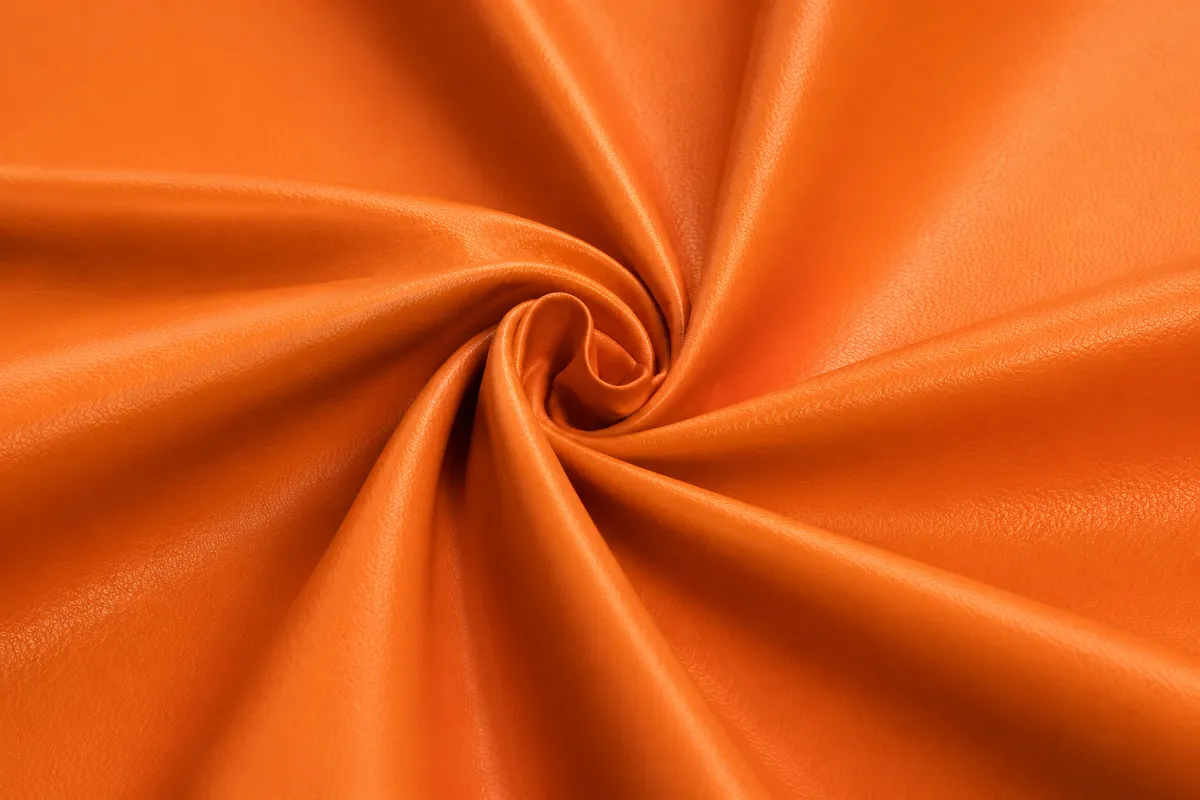
The premium clear film and the one we recommend for any quart bag meant to last. TPU needs no plasticiser, so it does not stiffen or yellow; it stays supple from -30 °C to 80 °C; it resists oils, cosmetics and alcohol-based products that cloud PVC; and it is far more puncture- and tear-resistant at the same thickness. Toiletry bags use 0.3-0.5 mm TPU, often with a matte or frosted option. It welds cleanly by high-frequency or hot-air methods and takes screen print and foil. The cost is roughly 2-3x PVC at the film level, which translates to USD 0.60-1.50 more per finished bag. TPU is also recyclable and free of chlorine, which matters to brands with sustainability claims. Airlines, premium travel brands and anyone selling the bag at retail should specify TPU.

EVA (ethylene-vinyl acetate) film
The middle option: softer and more rubbery than PVC, free of chlorine and phthalates, cheaper than TPU. Clear EVA is slightly less glassy - it has a faint haze - and is more prone to scuffing, but it does not yellow or crack the way PVC does. It is popular for frosted and coloured translucent bags and for children's products where chemical safety matters more than optical clarity. Thickness 0.3-0.5 mm; cost between PVC and TPU.
| Film | Clarity | Cold-crack resistance | Yellowing | Chemical safety | Relative film cost | Best for |
|---|---|---|---|---|---|---|
| PVC (standard) | Excellent when new | Poor below 0 °C | Yes, 1-2 years | Phthalate concerns unless specified | 1.0x | Low-cost promotional, short life |
| PVC (phthalate-free) | Excellent | Fair | Slower | Compliant | 1.3x | Promotional with compliance needs |
| EVA | Good (slight haze) | Good | Minimal | Compliant | 1.5x | Frosted/translucent, children's, mid-tier |
| TPU | Excellent | Excellent to -30 °C | None | Compliant, chlorine-free | 2.5-3x | Retail, airline amenity, long-life |
The other materials in a quart bag
A quart bag is rarely all film. The components that surround the window:
- Trim and binding: polyester webbing or PU-coated fabric around the edges hides the weld line, adds abrasion resistance and carries colour and branding. Nylon binding is the premium option.
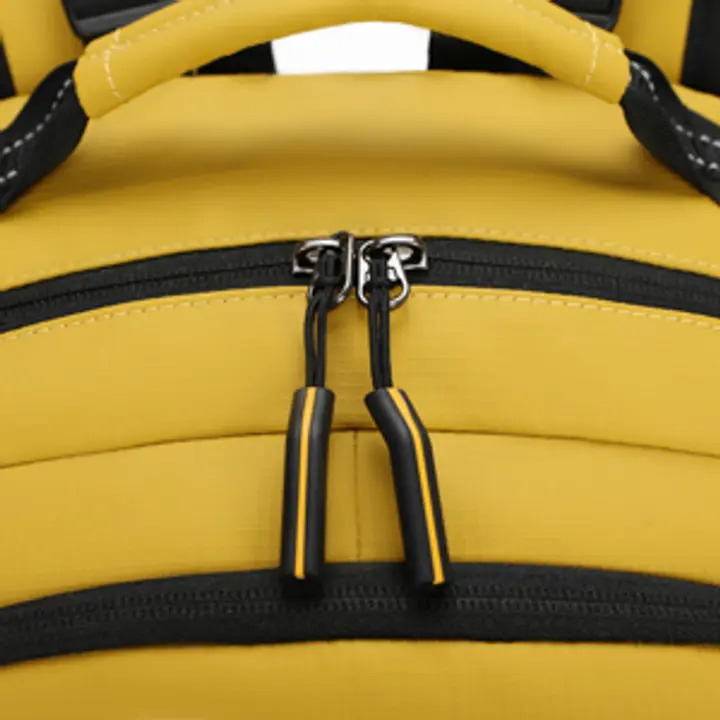
- Zip: a #3 or #5 nylon coil zip is standard; a water-resistant coil zip or a moulded zip adds leak protection; a metal zip adds weight and a premium feel. Our zipper guide covers the choices.
- Base and gusset panel: the same film, a contrasting fabric, or a structured EVA foam board to make the bag stand.
- Handle or carabiner loop: a short webbing loop or a split ring for clipping to a carry-on.
- Lining: usually none - a lined clear bag defeats the purpose - but a fabric back panel is common on hybrid designs.
How a Quart Size Toiletry Bag Is Made: Welding, Sewing and the Details That Decide Its Life
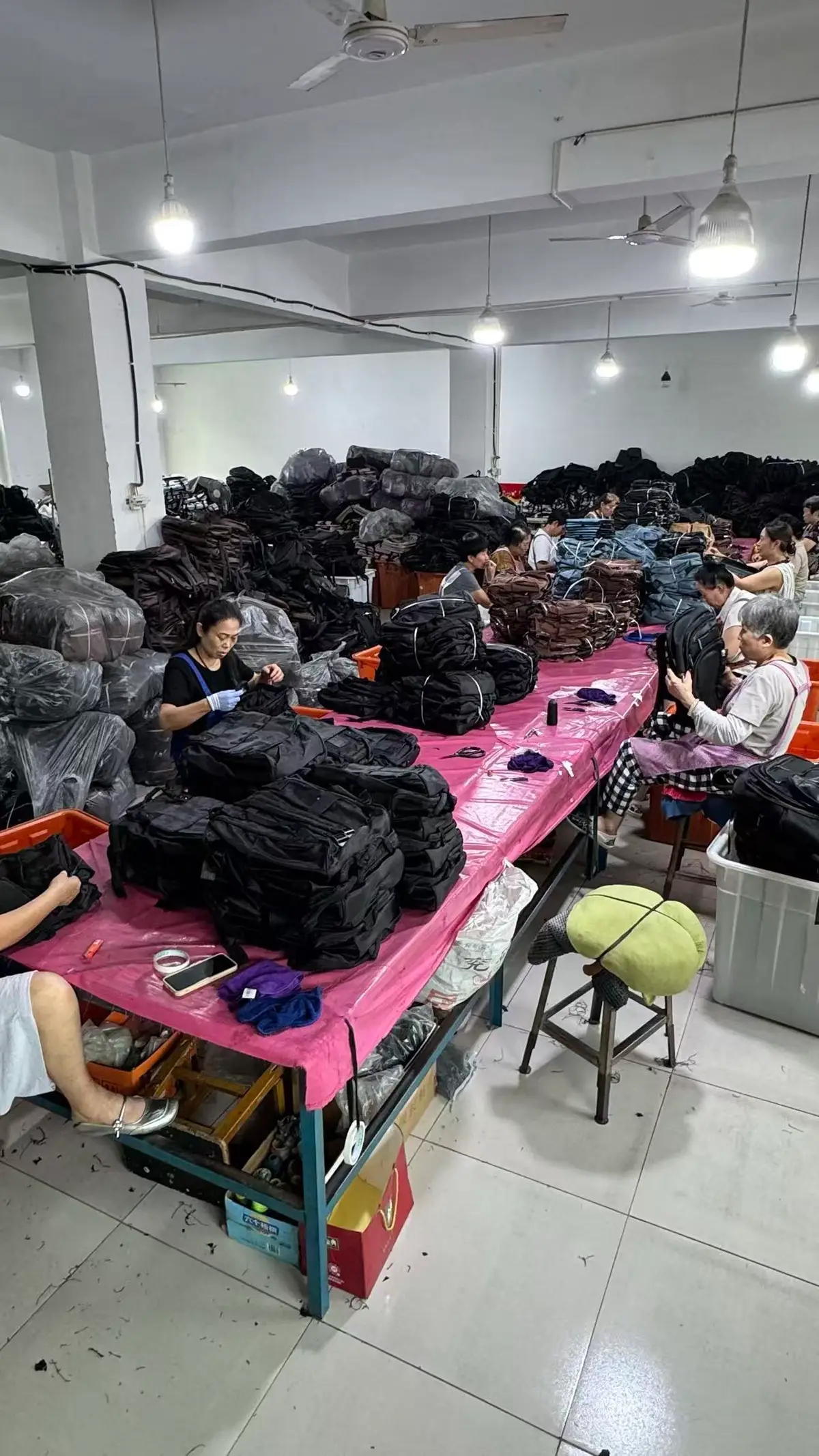
A clear bag looks simple and is one of the more exacting products in a bag factory, because every flaw is visible and the film forgives nothing. The production path on our floor:
1. Film inspection and cutting
Clear film is inspected roll by roll for haze, gels (small specks in the extrusion), scratches and thickness (micrometer at five points; tolerance ±0.03 mm). It is then die-cut flat; unlike fabric, film cannot be stacked deep because the blade drags, so cutting is slower and waste must be managed tightly. Every panel is cut with a protective paper interleaf and handled with gloves - fingerprints on TPU show in the finished bag.
2. Welding versus sewing
This is the decision that separates a quart bag that leaks from one that does not.
High-frequency (HF / RF) welding uses radio-frequency energy to fuse PVC, TPU or EVA panels together without thread. The seam is airtight and watertight, flush, and as strong as the film. It is the correct construction for the body seams of a leak-proof toiletry bag and the only method for an all-film bag. HF welding requires tooling (a brass die per seam shape, USD 80-300 each) and is limited to the film materials listed; it cannot join film to fabric.
Sewing joins film to fabric trim, webbing and zips, and is the only option where fabric is involved. Every stitch hole is a potential leak path, so sewn clear bags rely on the binding or a welded inner seam for water resistance. Sewing film needs a Teflon or roller presser foot, a sharp fine needle (size 9-11) and long stitches (6-7 per inch) - too many holes close together perforate the film like a postage stamp, which is the classic failure of cheap clear bags that tear along the seam.
The hybrid, and the standard for quality quart bags: body panels HF-welded for the watertight shell, then a fabric or webbing binding sewn over the edges and the zip sewn into a fabric strip rather than directly into the film. The weld carries the leak-proofing; the sewing carries the trim and hardware; the film is never perforated where liquid sits.
3. Zip installation
The zip is the component that fails first on a quart bag, from pulling it open and closed at every checkpoint. We install the zip into a fabric tape sewn to the film (not directly through the film), use a #5 coil for its smoother action over a #3, and specify a self-locking slider so the bag stays closed in a carry-on. A water-resistant coil zip (polyurethane-coated tape) adds leak protection at the top. The zip is tested for 300 open-close cycles on the first sample and 50 cycles on in-line QC.
4. Structure and base
A flat quart pouch needs nothing else. A standing quart bag gets a base panel: either a second welded film panel forming a box bottom, or an EVA foam board (1.5-2 mm) inserted in a welded film pocket so the bag holds its shape on a counter. Corners are the stress point; we round them to a 15-20 mm radius so the film does not crease and crack, and weld rather than sew wherever the geometry allows.
5. Decoration
Clear film takes four decoration methods: screen print (one or two colours, the standard; use film-grade ink or it flakes), foil stamping (metallic logos, premium look, modest cost), embossing or debossing into the film (subtle, no ink, very durable), and printed trim (the logo on the fabric binding rather than the window, which keeps the window clear for screening). For airline amenity programmes the trim print is the usual choice because it keeps the bag clean for the checkpoint and the logo visible on the counter. Keep window print under 20% of the panel area - heavily printed clear bags slow screening and look cheaper.
6. Quality control for clear bags
The QC gates specific to film products, on top of the AQL 2.5 final inspection used for all Senszx production:
- Optical: every bag held to a light panel for haze, gels, scratches and weld marks.
- Weld integrity: a sample from every HF batch is filled with water and hung for 4 hours; no weeping at any seam.
- Film thickness: micrometer check on incoming rolls and on finished bags at the weld.
- Cold-crack: a sample of finished bags held at -20 °C for 4 hours, then flexed; no cracking at folds or welds (this test is where cheap PVC fails).
- Zip cycling: 50 cycles in-line, 300 on sample.
- Chemical: phthalate and heavy-metal certificates on the film lot for any programme going to the US, EU or GCC; children's products get CPSIA or EN 71 testing.
- Odour: a sealed-bag sniff test after 24 hours at 40 °C - a strong plastic odour means low-grade PVC and is rejected.
Who Buys Quart Bags in Bulk, and How to Spec Them
The reusable quart bag is a programme product in four B2B markets. Each has a different brief, and we build all four.
Airline amenity kits
The clear quart bag is the amenity kit of choice for carriers whose passengers transit multiple liquid-rule jurisdictions, because it replaces the Ziploc the passenger would otherwise be handed at the gate. Brief: TPU 0.35-0.4 mm, quart footprint with 2.5-3 inch gusset, #5 water-resistant coil zip, printed fabric binding in livery colour, carabiner loop, foil or print logo on the trim. Quantities 5,000-50,000 per order; two or three cabin classes often get different trim colours on the same mould. Gulf carriers are a core market for this product.
Hotel and resort amenity programmes
Hotels place a clear toiletry bag in the room so the guest can carry the amenities home - and through the next airport. Brief: TPU or EVA, standing format with base, hotel logo on trim, often paired with the hotel's own amenity sizes (which must be 100 ml or under to make the bag useful). Quantities 2,000-20,000; the bag ships with the amenity supplier or direct to the property.
Travel brands and retail
Brands selling the bag as a product at USD 12-30. Brief: TPU 0.4-0.5 mm for a glassy, durable window; premium zip (metal or moulded); nylon binding; embossed or foil logo; often a set of two or three sizes (quart plus a mini); retail packaging. Quantities 1,000-10,000 per style and colour. The product and its photography are the brand, so the sample round is longer and the optical QC tighter.
Promotional and corporate
Trade shows, travel-industry conferences, corporate travel programmes and pharmacy or cosmetics brands giving away a bag with a purchase. Brief: phthalate-free PVC or EVA for cost, flat quart pouch or simple gusseted format, one-colour screen print, carabiner. Quantities 500-10,000. Price-driven, but the compliance checklist still applies because the bag will be used at airports.
The spec sheet that gets a comparable quote
A clear-bag quote is only comparable to another if both list the same eight lines. We quote this way and recommend asking every factory for the same:
- Film: material (PVC / phthalate-free PVC / EVA / TPU), thickness in mm, clarity (clear / frosted / tinted)
- Finished size: W × H × D in cm, laid flat and gusset depth stated separately
- Construction: welded body / sewn / hybrid; corner radius
- Zip: gauge, type (coil / moulded / metal), slider (standard / self-locking), tape (standard / water-resistant)
- Trim: material, colour, width
- Base: none / welded box / EVA board
- Decoration: method, position, size, Pantone references
- Compliance: phthalate-free, REACH, CPSIA, EN 71 - which certificates and whose scope
MOQ is 500 pieces per fully custom design - your own dimensions, film spec, trim and tooling. HF welding dies are a one-time tooling charge and are retained for reorders. Samples ship in 3-5 days on existing dies; a new die adds about a week. See the free sample page for how the sample round runs.
Indicative bulk pricing
Factory-gate (FOB China) unit prices, standing quart format (approximately 19 × 14 × 7.5 cm), #5 coil zip, fabric binding, one-colour trim print, polybagged. Freight, duty and tooling excluded.
| Quantity | Phthalate-free PVC 0.3 mm | EVA 0.35 mm | TPU 0.4 mm |
|---|---|---|---|
| 1,000-2,999 | USD 1.40-1.90 | USD 1.70-2.30 | USD 2.60-3.60 |
| 3,000-4,999 | USD 1.20-1.65 | USD 1.50-2.00 | USD 2.30-3.20 |
| 5,000-9,999 | USD 1.05-1.45 | USD 1.35-1.80 | USD 2.05-2.85 |
| 10,000+ | USD 0.92-1.30 | USD 1.20-1.60 | USD 1.85-2.60 |
In-stock designs with your logo at 100-999 pieces are quoted individually from the showroom range; a flat quart pouch in phthalate-free PVC with a one-colour print typically runs USD 1.60-2.40 at that tier. Add-ons: water-resistant zip +USD 0.15-0.30; metal zip +USD 0.30-0.60; EVA base board +USD 0.12-0.25; foil logo +USD 0.10-0.20; embossing (tooling) +USD 150-400 one-time; retail header card +USD 0.05-0.10. The structure of these numbers is the same as for every bag we make - fabric (here, film) is the largest line, then hardware, then labour and decoration - and the custom bag cost breakdown explains the stack in detail.
Three Programmes, Three Specs: Case Patterns From the Factory
The B2B briefs above are abstract until you see how three real programmes resolved them. Names withheld; the specs and the lessons are as they ran.
The Gulf carrier that chose TPU after a PVC pilot. A regional airline ran a 20,000-piece pilot of clear PVC amenity bags at the lowest quote. The bags looked excellent on delivery. Within four months, passenger-facing crew reported bags that had stiffened and clouded in the aircraft hold's temperature swings, and a batch stored in a Jeddah warehouse through summer yellowed on the shelf. The reorder switched to 0.4 mm TPU at roughly USD 1.10 more per bag - and the carrier reported that the bag began appearing in passenger photographs and reviews as a keepsake rather than being binned at the destination. Lesson: on a product that lives in heat, cold and sunlight, the film choice is the product; PVC's saving is spent on the reorder.
The hotel group that sized to the quart, not to the amenities. A resort group ordered 8,000 standing clear bags sized to fit its full in-room amenity set: 150 ml shampoo, conditioner and body lotion. The bag was handsome and useless at the airport - the bottles exceeded 100 ml and the bag's 22 × 16 cm footprint read as oversize. Guests left it in the room. The second programme resized the bag to a quart footprint (19 × 14 × 7.5 cm) and the amenity bottles to 50 ml; the bag became the item guests carried to the airport and home, and the group's logo travelled with it. Lesson: a hotel amenity bag only earns its keep if it passes security with the amenities inside; design the bag and the bottles together.
The promotional distributor that needed a certificate, not a cheaper bag. A US distributor ordered 5,000 flat clear pouches for a pharmacy chain's travel-season promotion. The pouches arrived at the customer's compliance team, who asked for a phthalate test report under California Proposition 65 and CPSIA - the pouch would be sold near children's products. The supplier (not Senszx) had used standard PVC with no certificate; the order was rejected and reordered in phthalate-free PVC with a lot-specific report, at four weeks' delay. Lesson: for anything entering US or EU retail, "phthalate-free, certificate with the lot" is a line on the quotation, not a question to ask after delivery.
Transit through the Gulf: a practical note for travellers and programmes
Dubai, Doha, Abu Dhabi, Riyadh and Jeddah are among the world's busiest transit hubs, and the 1-litre bag rule is enforced on transfer screening as well as departure. Two things trip passengers connecting through the Gulf: duty-free liquids bought at the origin airport are only exempt if they remain in the sealed tamper-evident bag with the receipt visible, and a quart bag that was accepted at a US or European departure can be re-screened on transfer. For airlines and hotels in the region, this is exactly why the branded clear bag is a high-value amenity: the passenger needs it twice on every itinerary, and the bag that passes both screenings cleanly is the one they keep. The GCC import guide covers how these programmes are shipped and cleared into the region.
Packing a Quart Bag: What Fits and How to Make It Fit
Rules and materials aside, the daily question is how to get a week's toiletries into 0.95 litres. The techniques frequent flyers use, and that brands should design around:
Count by container, not by product. The bag holds roughly eight 100 ml bottles standing, or ten to twelve flat travel tubes lying down. Most travellers over-pack with five full-size "travel" bottles that are actually 3.4 oz each and wonder why the zip will not close.
Decant into 50 ml, not 100 ml. A week of shampoo is 40-60 ml for most people. Half-size bottles double the number of products the bag holds and keep the zip comfortable. Silicone squeeze bottles are flatter than rigid ones.
Go solid where you can. Bar shampoo, solid deodorant, stick sunscreen, solid perfume, toothpaste tablets and lip balm sticks are all exempt from the liquid rule and can live outside the quart bag entirely. Every solid swap frees a slot.
Lay flat tubes horizontal, stand bottles vertical. A standing quart bag with a gusset takes bottles upright along the back and flat tubes stacked at the front; this uses the gusset volume without pushing the footprint.
Keep the bag outside the suitcase lining. For non-PreCheck lanes the bag comes out of the carry-on; the top pocket of a backpack or the outer pocket of a roller is the right place. Our travel bag range builds a dedicated quart-bag pocket into several styles for this reason.
One bag per person, really. Families often try to combine; each passenger gets one quart bag, and each person's liquids must be in their own.
Design note for brands: every one of these habits is a feature request. A standing base, a flat-tube pocket inside the gusset, a 50 ml bottle set sold alongside the bag, and a loop that clips to the outside of a carry-on are the four features travellers mention most, and they are the four that justify a USD 20 retail price over a USD 1 freezer bag.
Sustainability: The Reusable Quart Bag as a Plastic-Reduction Product
A single-use quart freezer bag weighs about 5 grams. A traveller who flies ten times a year and takes a fresh bag each way uses roughly 100 g of single-use film annually; across the two billion-plus passengers flying each year, the quart bag is a measurable stream of airport plastic waste. Airlines and airports have noticed, and the reusable quart bag is increasingly specified as a sustainability item rather than a convenience one.
For a brand or programme making that claim, three specifications make it credible:
- TPU over PVC. TPU is chlorine-free, plasticiser-free and recyclable; a TPU bag that lasts five years genuinely displaces several hundred freezer bags. PVC's shorter life and chlorine content undercut the claim.
- Recycled content where available. Recycled TPU film is emerging in limited supply; recycled polyester for the trim and webbing (GRS-certified rPET) is readily available and is the easiest substitution.
- Durability as the metric. A reusable bag only reduces waste if it is actually reused; the cold-crack test, the zip cycling and the welded seams are the sustainability spec, not the marketing copy.
We hold GRS chain-of-custody for recycled polyester trim and can supply phthalate-free film certificates on every lot; the certifications page lists what is on file.
Frequently Asked Questions
How big is a quart size bag?
About 7 × 8 inches (17.8 × 20.3 cm) laid flat, holding roughly 0.95 litres - the size of a standard quart freezer bag. A reusable toiletry bag with a similar footprint passes as quart-sized even with a gusset of 2.5-3 inches, because screening officers judge by footprint rather than measured volume.
What are the TSA quart size bag dimensions in cm?
Approximately 18 × 20 cm flat. The TSA does not publish a cm figure; the quart freezer bag it refers to is 7 × 8 inches. The EU and UK state the equivalent rule as a 1-litre bag of maximum 20 × 20 cm.
Does the TSA quart bag have to be a Ziploc?
No. The TSA specifies "quart-sized, clear, resealable"; it does not specify a brand or a material. A clear TPU or PVC toiletry bag with a zip closure and a quart-sized footprint is fully compliant and is the standard product in airline amenity kits.
How many 3 oz bottles fit in a quart size bag?
Seven to nine standard 100 ml / 3.4 oz bottles standing, or ten to twelve flat travel tubes. The bag must zip closed comfortably; an overstuffed bag that will not seal is non-compliant.
Can I use a gallon bag instead of a quart bag for TSA?
No. A gallon bag (roughly 10.5 × 11 inches) is visibly larger than the quart standard and will be rejected; you will be asked to repack into a quart bag at the checkpoint.
Is a quart size bag the same as a litre bag?
Nearly. A US quart is 0.946 litres, so a quart bag and a 1-litre bag are within 5% of each other in volume. The practical difference is footprint: the EU's 20 × 20 cm bag is slightly larger than the US 7 × 8 inch bag. A quart-sized bag passes in both regions; a 20 × 20 cm bag may be questioned in the US.
Does the quart bag rule apply to international flights?
Yes, in almost every country. The EU, UK, GCC states, Canada, Australia and major Asian hubs all apply a 100 ml container limit and a 1-litre / quart-size clear bag. Some airports with CT scanners have relaxed the bag requirement, but rules have been reinstated at several, and connecting airports may differ - carry the bag.
What is the best material for a reusable quart size toiletry bag?
TPU. It stays clear and flexible for years, does not yellow or crack in cold weather, resists cosmetics and alcohol-based products, and contains no chlorine or plasticisers. PVC is cheaper but stiffens and yellows within one to two years; EVA sits between the two. For a bag sold at retail or supplied as an airline amenity, specify 0.35-0.5 mm TPU.
Why do clear toiletry bags leak at the seams?
Because the seams were sewn through the film rather than welded. Every stitch hole is a leak path. A quality clear bag has high-frequency welded body seams, with sewing used only for the fabric binding and zip tape where no liquid sits. Ask for the 4-hour water-hang test result.
Can I get custom quart size bags with my logo in bulk?
Yes. Senszx manufactures clear TPU, EVA and PVC toiletry bags for airlines, hotels, travel brands and promotional programmes. MOQ is 500 pieces per fully custom design with your own dimensions and tooling. Samples ship in 3-5 days; bulk in 20 days after approval.
Are quart bags required for checked luggage?
No. The 3-1-1 rule and the quart bag apply only to carry-on bags and the items screened at the checkpoint. Liquids in checked luggage have no 100 ml limit (though aerosols and flammables have their own restrictions). Many travellers still use a clear bag in checked luggage purely for leak containment.
Will the quart bag rule be abolished when airports get CT scanners?
Eventually, but not uniformly or soon. CT scanners that can image liquids are being installed at major airports, and some have already dropped the bag requirement for departing passengers. But installations are uneven, several airports reinstated the rule in 2024 pending certification, and a passenger connecting through a non-CT airport is still bound by it. For the next several years the quart bag remains the universal safe choice.
The One-Page Summary
- A quart size bag is 7 × 8 inches (18 × 20 cm) flat, about 0.95 litres - the standard quart freezer bag. Officers judge by footprint, not measured volume.
- 3-1-1: containers of 100 ml / 3.4 oz or less, all in one quart bag, one bag per passenger, bag out of the carry-on for screening (unless PreCheck).
- It does not have to be a Ziploc. A clear, resealable toiletry bag with a quart footprint is compliant everywhere the 100 ml rule applies - the US, EU, UK, GCC, Canada, Australia and Asia.
- Best reusable format: 7-7.5 × 5-5.5 inch footprint, 2.5-3 inch gusset, standing base, #5 coil zip.
- TPU is the material that lasts; PVC is the cost tier; EVA is the chemical-safe middle.
- Welded seams, not sewn through the film, are what make a clear bag leak-proof.
- For programmes: eight-line spec sheet, MOQ 500 fully custom, TPU for anything meant to last.
Source Custom Quart Size Toiletry Bags
If you are specifying a clear toiletry bag for an airline amenity kit, a hotel programme, a travel brand or a promotional campaign, send us the eight-line spec - or just the quantity and the market - and you will have a quotation with film swatches within 24 hours. Request a free sample, send your brief, or browse the base styles in our showroom. For Gulf programmes the GCC buyer page covers documents, ports and the seasonal calendar; for any bag, the tech pack guide shows how to write the spec that gets the right quote first time.
Hi, I'm Senszx Bag Manufacturer, Hope You Like This Blog Post.
With more than 20 years of experience in OEM/ODM/Custom luggage and bag, I'd love to share with you the valuable knowledge related to luggage and bag products from a top-tier Chinese supplier's perspective.
Senszx Factory
Est. 2006 · Baigou, China
Related articles
Custom Travel Bags with Logo: The Complete Manufacturing, Materials & Branding Guide
An exhaustive B2B manufacturing guide to custom travel bags with logo. Master custom duffle, weekender, and carry-on production, compare 6 branding techniques (screen print, heat transfer, woven labels, rubber patches, debossed leather, digital print), fabric specs (600D-1680D, nylon, canvas), hardware, and OEM factory quality control for 500+ unit runs.
Custom Tactical Backpack Manufacturing & Sourcing Guide: Mil-Spec Fabrics, MOLLE Engineering, and OEM Factory Quality Control
A comprehensive B2B engineering guide to manufacturing custom tactical backpacks. Explore 500D vs 1000D Cordura, laser-cut vs nylon MOLLE webbing, reinforced bartack stitching, POM mil-spec hardware, and OEM/ODM production standards for 500+ unit runs.
Backpack CPSIA Compliance & Safety Testing: The Complete US Importer's Technical Guide
Master US backpack safety compliance: CPSIA regulations, CPC vs GCC certificates, Lead & Phthalates limits, Prop 65, tracking labels, and CPSC lab testing protocols.
Get a Custom Bag Quote from Our China Factory
Our sales team is online around the clock and usually replies within the hour.
Email
[email protected]Factory
Qinzheng Road No.89, New Industry Zone, Baigou Town
Baoding City, Hebei Province 074004, China