Custom Laptop Backpack Manufacturing & Sourcing Guide: Compartment Architecture, Impact Foam, Hardware & OEM Cost Breakdown
A comprehensive B2B engineering guide to manufacturing custom laptop backpacks. Explore laptop cradle dimensions, EVA vs EPE shock foam, ballistic nylon specs, anti-theft zipper integration, and OEM/ODM cost breakdown for 500+ unit production runs.
In the global luggage and bag manufacturing landscape, no single product category commands higher average order values, tighter mechanical tolerances, and more demanding consumer expectations than the custom laptop and business tech backpack. Modern professionals, remote digital nomads, university students, field engineers, and enterprise corporate teams carry thousands of dollars worth of fragile electronics on every commute—including flagship laptops, high-resolution tablets, multi-terabyte portable NVMe SSDs, high-capacity lithium power banks, active noise-cancelling headphones, and sensitive enterprise credentials.
For procurement executives, private-label e-commerce brand owners, corporate merchandise directors, and luggage distributors, sourcing custom laptop backpacks involves far more than picking an attractive aesthetic silhouette and sewing on a logo patch. A commercial-grade tech backpack is an intricately engineered piece of protective gear that must seamlessly unite structural ergonomics, high-density kinetic impact absorption, precision compartment architecture, moisture barrier chemistry, and robust anti-theft hardware.
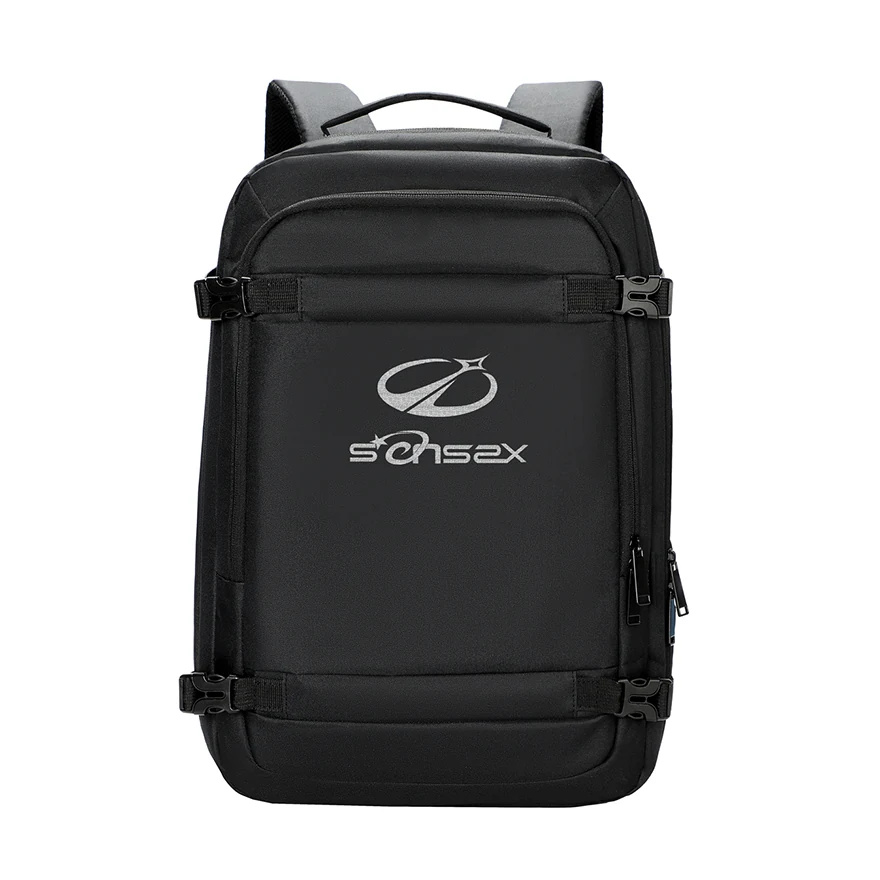
With over 20 years of specialized OEM and ODM luggage manufacturing experience at our Baigou, China production facility, Senszx has engineered, prototyped, and mass-produced millions of custom laptop backpacks for premier consumer brands, Amazon top-sellers, and enterprise clients across North America, Europe, Australia, and the Middle East.
This comprehensive technical guide provides an exhaustive engineering roadmap for creating, specifying, and manufacturing custom laptop backpacks. Whether you are drafting your first custom backpack tech pack, evaluating shell materials in our custom fabric catalog, calculating production budgets with our custom backpack cost breakdown, or seeking a trusted OEM backpack manufacturing partner, this guide delivers the actionable data and factory-floor insights necessary to build market-leading laptop backpacks.
1. The Anatomy of a High-Performance Laptop Backpack
A standard casual daypack typically consists of 15 to 25 cut fabric pieces joined with basic single-needle lockstitches. In stark contrast, a professional-grade custom laptop backpack comprises 45 to 85 individual pattern pieces, multiple layers of specialized multi-density shock foams, reinforced internal lining dividers, heavy-duty molded hardware, and extensive perimeter structural piping.
Understanding how these internal and external subsystems interact is the first step in creating a defect-free tech pack and setting realistic manufacturing standards.
1.1 Structural Subsystems Breakdown
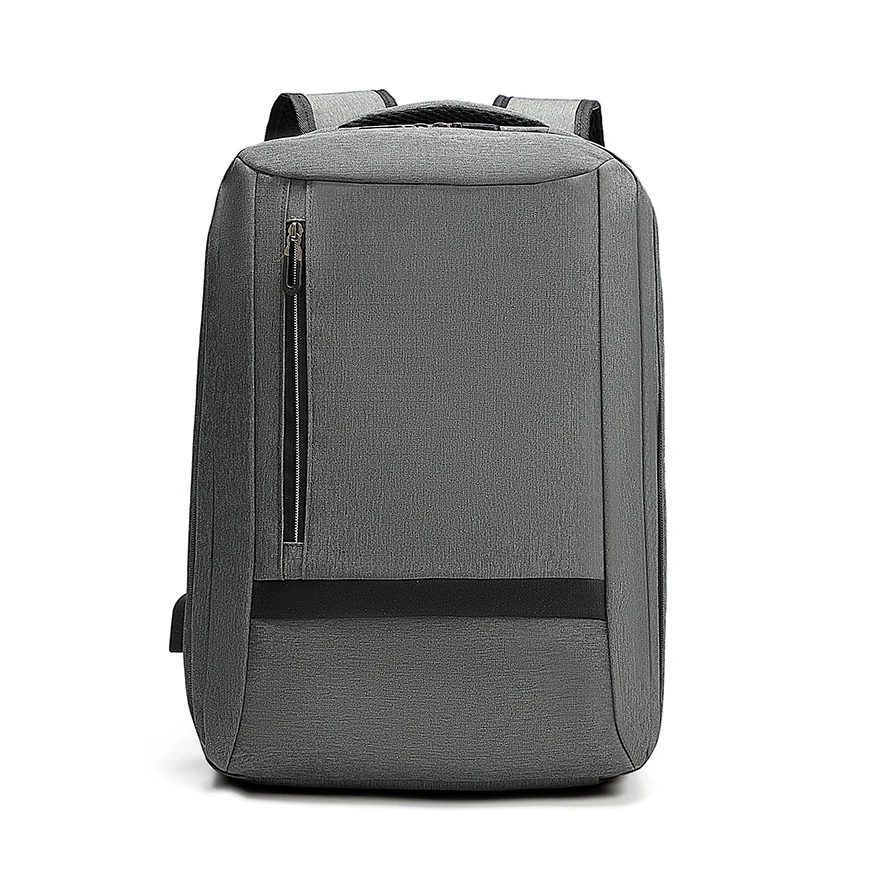
A commercial laptop backpack is organized into five mission-critical structural zones:
- The Device Suspension Zone (Rear Tech Vault): Positioned directly against the wearer's center of gravity, this dedicated compartment houses the laptop cradle, secondary tablet sleeve, and accessory slip pockets. It requires 360-degree closed-cell foam padding, suspended floor clearance, and soft non-abrasive lining.
- The Main Cargo & Organization Zone: The central volume designed for bulkier items such as documents, binders, tech accessory pouches, light outerwear, and water bottles. Features accordion dividers, zippered mesh organizers, and structured base gussets.
- The Quick-Access Perimeter Zone: Comprises front utility pockets, fleece-lined top sunglass pockets, hidden side stash compartments, and side water bottle holders with elasticized gussets or zippered expansions.
- The Ergonomic Chassis & Suspension System: The anatomical back panel, dual-density S-curve shoulder straps, breathable air-mesh padding, load-lifter adjustment straps, sternum stabilization buckle, and integrated luggage trolley pass-through sleeve.
- The Structural Base & Impact Foundation: The bottom panel of the backpack, reinforced with abrasion-resistant coated fabrics, high-density EVA bottom buffers, or molded rubber feet to withstand thousands of direct ground contacts.
2. Laptop Compartment Engineering & Sizing Standards
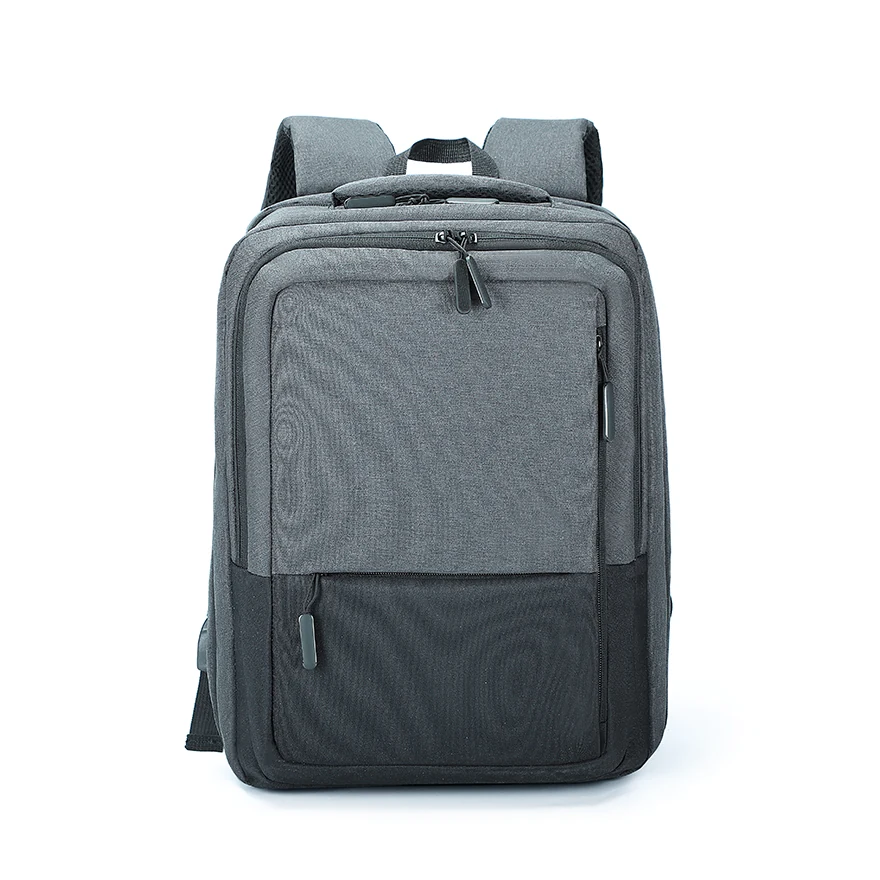
The defining feature of any laptop backpack is the device pocket itself. Inadequate compartment sizing, poor elastic retention, or lack of floor clearance are the leading causes of customer returns and negative product reviews in the e-commerce sector.
When engineering a custom laptop compartment for mass manufacturing, product developers must account for the exact physical dimensions of contemporary laptops across various screen sizes—including the extra bulk added by aftermarket hard-shell protective cases.
2.1 Dimensional Sizing Matrix for Custom Manufacturing
The table below outlines the industrial manufacturing dimensions, fabric allowances, and device fit recommendations standardized across our custom backpack production lines:
| Laptop Screen Target | Max Device Dimensions (L x W x D) | Recommended Inner Pocket Dimensions | Foam Thickness (Walls / Base) | Primary Market Devices |
|---|---|---|---|---|
| 13.3" - 14.0" (Ultra-Portable) | 325 x 228 x 18 mm | 340 x 245 x 25 mm | 5 mm EVA / 8 mm EVA Base | Apple MacBook Air 13", MacBook Pro 14", Dell XPS 13, Lenovo ThinkPad X1 |
| 15.6" - 16.0" (Universal Business) | 365 x 255 x 22 mm | 385 x 270 x 30 mm | 8 mm EVA / 10 mm EVA Base | MacBook Pro 16", Dell XPS 15, HP Pavilion 15.6", ThinkPad T15 |
| 17.0" - 17.3" (Mobile Workstation/Gaming) | 400 x 285 x 30 mm | 425 x 300 x 38 mm | 10 mm EVA / 12 mm EVA Base | Alienware M17, ASUS ROG Strix 17, MSI Raider, HP Omen 17 |
| Dual Device (Laptop + 11"-12.9" Tablet) | Laptop + 285 x 215 x 10 mm | Dual Tier: 385 x 270 mm + 260 x 200 mm | 8 mm EVA Divider Wall | iPad Pro 12.9", iPad Air, Samsung Galaxy Tab S9 Ultra |
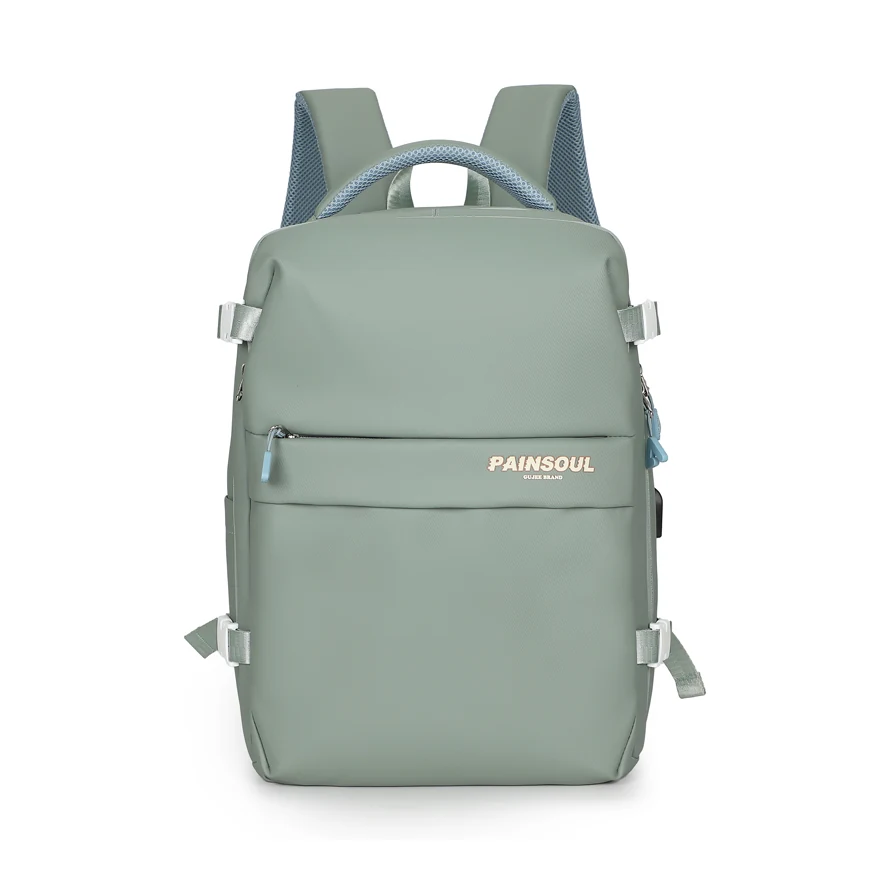
2.2 The Suspended "Floating Cradle" Architecture (Anti-Bottoming Design)
The most critical engineering flaw in entry-level laptop backpacks is the flush-stitched bottom seam. When a laptop sleeve is stitched directly to the bottom panel of the backpack, every time the wearer drops the backpack onto a concrete sidewalk, airport floor, or office desk, the bottom corners of the laptop absorb 100% of the kinetic impact force.
How the Floating Cradle Works:
- Suspension Clearance: The bottom edge of the laptop sleeve is suspended 1.0 to 1.5 inches (25 mm to 38 mm) above the exterior base panel of the pack.
- Anchor Geometry: The sleeve is anchored exclusively to the interior back panel and side gusset seams, creating a hammock-like sling mechanism.
- Deceleration Buffer: If the backpack is dropped onto hard concrete from a height of 1 meter, the external bottom panel collapses into the 30 mm air-and-foam gap first, decelerating the falling laptop safely before its chassis can make physical contact with the floor.
- Elastic Security Strap: A high-grade 38 mm elastic webbing strap equipped with hook-and-loop (Velcro) closure or an injection-molded magnetic Fidlock buckle bridges the top of the sleeve, locking the laptop firmly downward into the suspended pocket so it cannot bounce upwards during active commuting.
2.3 Corner Bumper Protection & 360-Degree Edge Defense
While top and bottom impacts are common, field studies indicate that over 42% of catastrophic laptop screen cracking incidents occur when the backpack is dropped diagonally onto one of its bottom corners.
To protect vulnerable device corners, advanced OEM laptop backpacks incorporate three specialized edge defense systems:
- Thermoformed EVA Corner Cups: Pre-molded three-dimensional EVA foam cups (density 65 kg/m³) stitched directly into the lower left and right corners of the laptop sleeve. When a corner drop occurs, the molded cup wraps around the corner radius of the laptop, distributing the concentrated point-load impact across a 60 mm radius.
- Perimeter High-Density PE Piping (Polyethylene Tube): A semi-rigid 3.0 mm solid PE core enclosed within woven fabric piping is sewn continuously around the perimeter seam of the device compartment. This acts as an external roll cage, resisting crush forces when the backpack is compressed in crowded subway trains or overhead airplane bins.
- Dual-Sleeve Lateral Gussets: Elasticized side panels engineered from heavy-duty spandex-nylon blends allow the pocket to dynamically expand to fit thicker workstation laptops while applying constant lateral compression to eliminate internal shifting during walking or running.
2.4 Lining Fabrics: Preventing Surface Scratches and Micro-Abrasion
The inner lining of the laptop compartment is in constant contact with premium anodized aluminum (such as Apple MacBooks), polished magnesium alloys, or matte composite laptop lids. Standard rough 210D polyester linings can cause micro-scratches and finish wear over months of daily vibration.
We engineer custom laptop sleeves using three specialized lining materials:
- Microfiber Crystal Velvet (320 GSM): Ultra-soft, plush pile fabric that completely eliminates surface friction and provides an ultra-luxury tactile handfeel for executive bags.
- Anti-Static Brushed Tricot (240 GSM): Warp-knitted fabric with short napped loops that cushions against vibration while preventing static electrical charge buildup around electronic ports.
- High-Density 210D Ripstop Polyester with DWR Finish: Smooth, diamond-grid woven polyester that allows laptops to slide in and out effortlessly without catching on rubber bumper feet.
2.5 Multi-Device Nesting Architecture
Modern tech professionals rarely carry only a laptop. A complete digital loadout typically includes an auxiliary tablet (such as an Apple iPad Pro 12.9" or Microsoft Surface), a Kindle e-reader, a portable USB-C second monitor, a wireless keyboard, and a mouse.
In our OEM laptop backpack engineering department, we design multi-tier nested organizer partitions:
- Primary Tier: 15.6" or 17.3" floating cradle laptop compartment with 8 mm EVA padding.
- Secondary Tier: 11" to 12.9" dedicated tablet pocket with 4 mm EVA foam and microfiber velvet facing, positioned directly in front of the laptop pocket.
- Tertiary Tier: Dual elastic mesh accessory slots for Apple Magic Mouse, slim Bluetooth keyboard, and magnetic Apple Pencil stylus sleeve.
- Cable Pass-Through Ports: Precision die-cut silicone eyelets linking the secondary tablet compartment to the power bank pocket, enabling in-bag charging of tablets during transit.
3. Shock-Absorbing Foams & Cushioning Materials
The protective performance of a laptop backpack depends heavily on the chemical composition, density, cell structure, and compression resilience of its internal cushioning foams. Using the wrong foam grade can result in a bag that feels bulky yet collapses permanently under minor compression, leaving the laptop vulnerable.
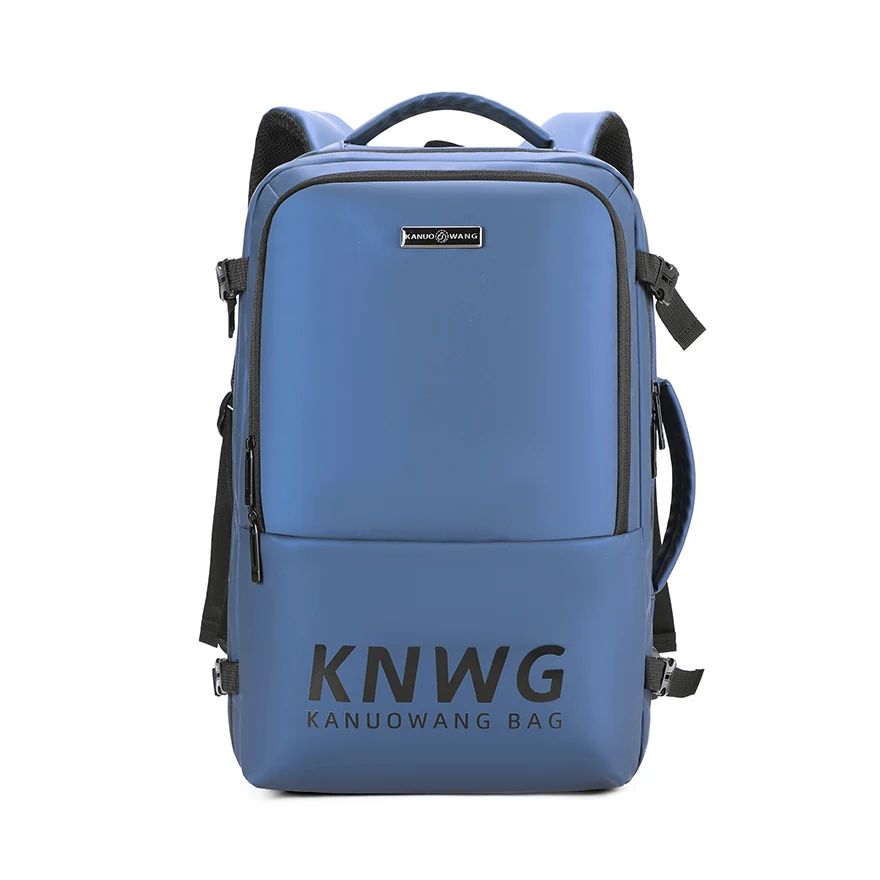
3.1 Comprehensive Foam Comparison: EVA vs. EPE vs. Memory Foam vs. Air-Cell TPU
The engineering matrix below highlights the mechanical properties, density benchmarks, shock-absorption ratings, and manufacturing cost factors across the primary cushioning materials used at our Senszx factory:
| Foam Type | Density Range | Cell Structure | Impact Absorption | Compression Set Resistance (Durability) | Weight Profile | Relative Unit Cost Factor | Primary Application in Laptop Backpacks |
|---|---|---|---|---|---|---|---|
| High-Density EVA (Ethylene-Vinyl Acetate) | 45 – 60 kg/m³ | Closed-Cell | 9.2 / 10 | Excellent (<5% permanent deformation) | Medium | 1.8x | Industry Gold Standard: Laptop wall dividers, suspended floor buffers, molded protective shells |
| EPE Pearl Cotton (Expanded Polyethylene) | 20 – 32 kg/m³ | Closed-Cell | 6.5 / 10 | Moderate (15-25% compression over time) | Ultra-Light | 1.0x (Baseline) | Budget laptop sleeves, secondary front panel soft padding, side bottle pocket cushioning |
| Viscoelastic Memory Foam (PU Slow-Rebound) | 50 – 75 kg/m³ | Open-Cell | 8.8 / 10 | Good (requires textile encapsulation) | Heavy | 2.2x | Luxury ergonomic contouring, shoulder strap pressure point relief, tablet screen face padding |
| Neoprene (Chloroprene Rubber) | 120 – 160 kg/m³ | Closed-Cell | 8.0 / 10 | Very High (super elastic) | Heavy | 2.5x | Form-fitting snug laptop sleeves, expansion gussets, water-resistant perimeter seals |
| Thermally Welded Air-Cell TPU (Inflatable Bubble) | N/A (Sealed Air) | Sealed Matrix | 9.5 / 10 | Maximum (hydrostatic air displacement) | Ultra-Light | 3.2x | High-end extreme drop-protection bags, military/tactical tech packs, ruggedized gaming cases |
3.2 Impact Dynamics & G-Force Deceleration Physics
When an object drops, the peak deceleration force ($G$-force) experienced by the fragile internal electronic components—such as the motherboards, liquid crystal display glass, and delicate solder joints—is mathematically inversely proportional to the stopping distance ($d$) provided by the foam matrix:
$$G = \frac{v^2}{2 \cdot g \cdot d}$$
Where $v$ is the impact velocity ($\approx 4.43\text{ m/s}$ from a 1.0-meter drop), $g$ is gravity ($9.8\text{ m/s}^2$), and $d$ is the effective deceleration compression distance.
- Standard 2 mm Foam: Provides less than 1.5 mm of usable deceleration before bottoming out, subjecting the laptop chassis to over 150G of destructive shock.
- Engineered Tri-Laminate Sandwich (8 mm EVA + 30 mm Floating Air Gap): Extends deceleration distance to over 32 mm, reducing peak shock to under 25G—well within the safe mechanical tolerance of modern aluminum laptop unibodies.
[Outer Face Fabric: 1680D Ballistic Nylon or 900D Matte PU]
                       │
                       ▼
[Layer 1: 2.0 mm High-Resilience High-Density EVA Foam (Structural Shield)]
                       │
                       ▼
[Layer 2: 6.0 mm Medium-Density EPE Pearl Cotton (Kinetic Shock Dissipation)]
                       │
                       ▼
[Layer 3: 1.5 mm Polyethylene (PE) Stiffener Board (Puncture / Deflection Barrier)]
                       │
                       ▼
[Inner Lining: 320 GSM Microfiber Velvet or 210D Brushed Tricot]
This multi-tier architecture guarantees that sharp external impacts (e.g., table corners, baggage trolley collisions) are first dispersed across the rigid PE board, absorbed by the progressive EVA/EPE foam matrix, and buffered smoothly against the laptop without puncturing the inner compartment.
3.3 Foam Shore Hardness Calibration & Temperature Stability
In production, foam density is verified using Shore durometer hardness testing:
- Shoulder Strap Foam: Calibrated to 35° to 40° Shore C (providing soft pressure dissipation without feeling mushy).
- Laptop Sleeve Dividers: Calibrated to 45° to 50° Shore C (optimal structural stiffness combined with impact flex).
- Base Shock Buffers & Molded Outer Shells: Calibrated to 60° to 65° Shore C (heavy-duty deflection barrier).
Furthermore, our EVA formulations incorporate thermal stabilization polymers that ensure consistent elasticity from $-20^\circ\text{C}$ in winter North American climates up to $+70^\circ\text{C}$ in Middle Eastern summer trunks, preventing foam embrittlement or melting.
4. Outer Shell Fabrics & Water Resistance Engineering
Laptop backpacks protect sensitive high-voltage electronics. As a result, moisture barrier performance and puncture resistance are primary purchasing criteria for B2B buyers. A sudden rainstorm during an urban commute must never result in water seeping through seams into the laptop vault.
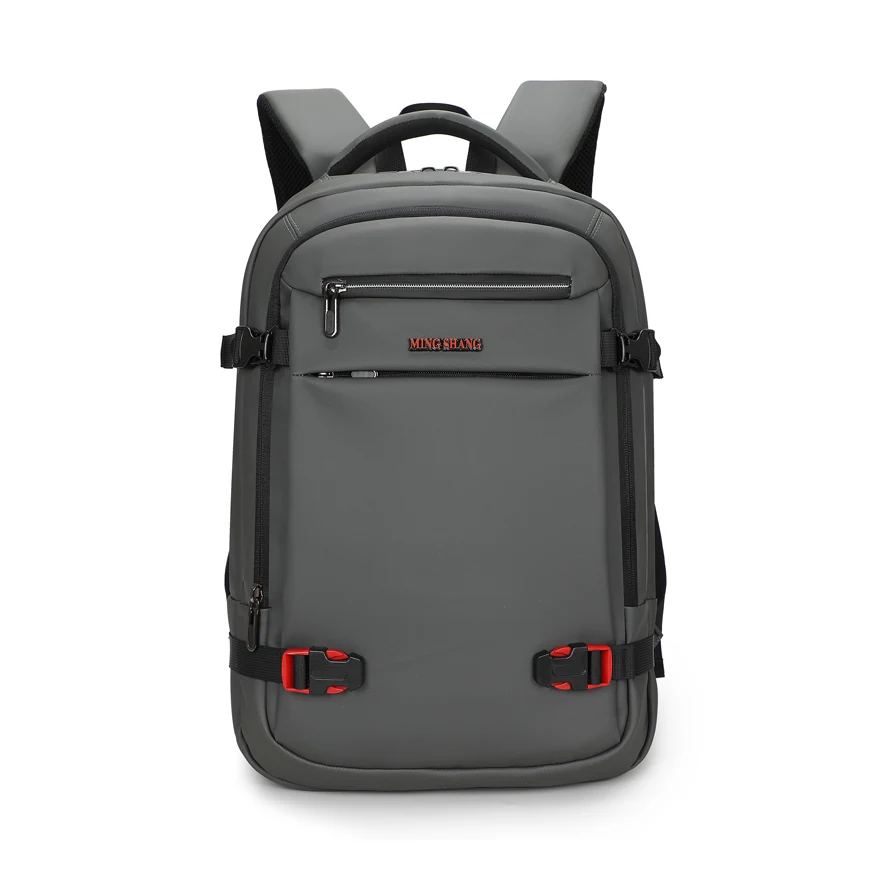
4.1 Shell Fabric Technical Comparison
The table below compares the five most popular outer fabrics specified for custom laptop backpacks, based on laboratory testing data and our custom fabrics guide:
| Fabric Classification | Yarn Composition & Denier | Fabric Weight (GSM) | Hydrostatic Head Rating (Waterproofing) | Taber Abrasion Resistance (Cycles to Failure) | Visual Aesthetic & Handfeel | Best Sourcing Application |
|---|---|---|---|---|---|---|
| 1680D Ballistic Nylon | 100% High-Tenacity Polyamide (2x2 Basketweave) | 380 - 420 GSM | 2,000 mm (Dual PU Backing) | >50,000 cycles | Heavyweight, rugged sheen, executive technical luxury | High-end corporate business backpacks, executive travel tech bags |
| Cordura® 1000D Nylon | 100% Air-Textured Nylon 6,6 | 320 - 350 GSM | 1,500 mm (PU + DWR Face) | >60,000 cycles | Matte, rough canvas-like, military-grade durability | Outdoor commuter hybrids, tactical EDC laptop packs |
| 900D Matte PU Polyester | 100% Polyester with Matte Polyurethane Membrane | 280 - 310 GSM | >10,000 mm (Fully Waterproof Face) | >30,000 cycles | Ultra-sleek, rubberized smooth matte, futuristic minimalist | Urban tech packs, cycling commuter bags, weather-proof modern backpacks |
| 600D High-Density Polyester | 100% Polyester (Plain Weave) | 220 - 250 GSM | 1,000 mm (Standard PU) | >18,000 cycles | Classic fine grain, lightweight, easy to print/embroider | Promotional corporate gift backpacks, university laptop bags, high-volume retail |
| Recycled rPET 600D/900D | 100% Post-Consumer Recycled PET Plastic Bottles | 240 - 290 GSM | 1,500 mm (Water-based PU) | >22,000 cycles | Crisp eco-twill or matte finish (GRS certified) | Sustainable brand collections, ESG-focused enterprise corporate gifts |
4.2 Hydrophobic Coating Technologies & Seam Waterproofing
Achieving true weatherproofing requires treating both the face of the fabric and the structural stitch lines:
- C0 Eco-DWR (Durable Water Repellent): A fluorocarbon-free, environmentally compliant chemical finish applied to the exterior face of the fabric. Causes rainwater and spilled coffee to bead up into spherical droplets and roll off the surface without wetting out the yarn.
- Back-Side Dual PU Coating: Two sequential coats of liquid polyurethane are knife-coated onto the back of the woven fabric, creating an impermeable barrier against pressurized moisture penetration.
- Waterproof Reverse Coil Zippers (AquaGuard Style): Standard exposed zipper coils allow water to seep between interlocking teeth. High-performance laptop bags utilize polyurethane-laminated reverse coil zippers where the rubberized PU tape seals tightly over the teeth when zipped shut.
- Heat-Sealed Seam Tape (For Extreme Weather Packs): In specialized fully waterproof cycling laptop packs, interior stitch seams are sealed with thermoplastic polyurethane (TPU) tape applied via 220°C hot-air welding machines, completely blocking needle-hole capillary moisture leaks.
4.3 Sustainable rPET & Environmental Compliance (GRS Certification)
For Fortune 500 corporate gift sourcing and European consumer brands, sustainability is no longer optional. Senszx manufactures custom laptop backpacks utilizing Global Recycled Standard (GRS 4.0) certified recycled polyester (rPET) derived from post-consumer plastic bottles.
- Environmental Impact: An average 24L laptop backpack recycled fabric consumes 18 to 22 discarded 500 ml plastic bottles, reducing carbon emissions by 45% and water consumption by 52% compared to virgin petroleum polyester.
- Verification & Traceability: We provide authentic Transaction Certificates (TC) issued by accredited third-party testing bodies (such as Intertek and Control Union) for every production batch, ensuring full legal compliance for ESG retail claims.
5. Ergonomic Suspension & Air-Flow Back Panel Engineering
A fully loaded laptop backpack—containing a 16-inch workstation laptop (2.2 kg), charging brick and cables (0.6 kg), water bottle (0.8 kg), tablet, documents, and daily accessories—routinely weighs between 5.0 kg and 8.5 kg (11 to 19 lbs).
Carrying this weight during a 45-minute public transit commute or airport walk places immense strain on the cervical spine, trapezius muscles, and lumbar vertebrae. Superior ergonomic engineering is what separates a world-class bag from a cheap promotional giveaway.
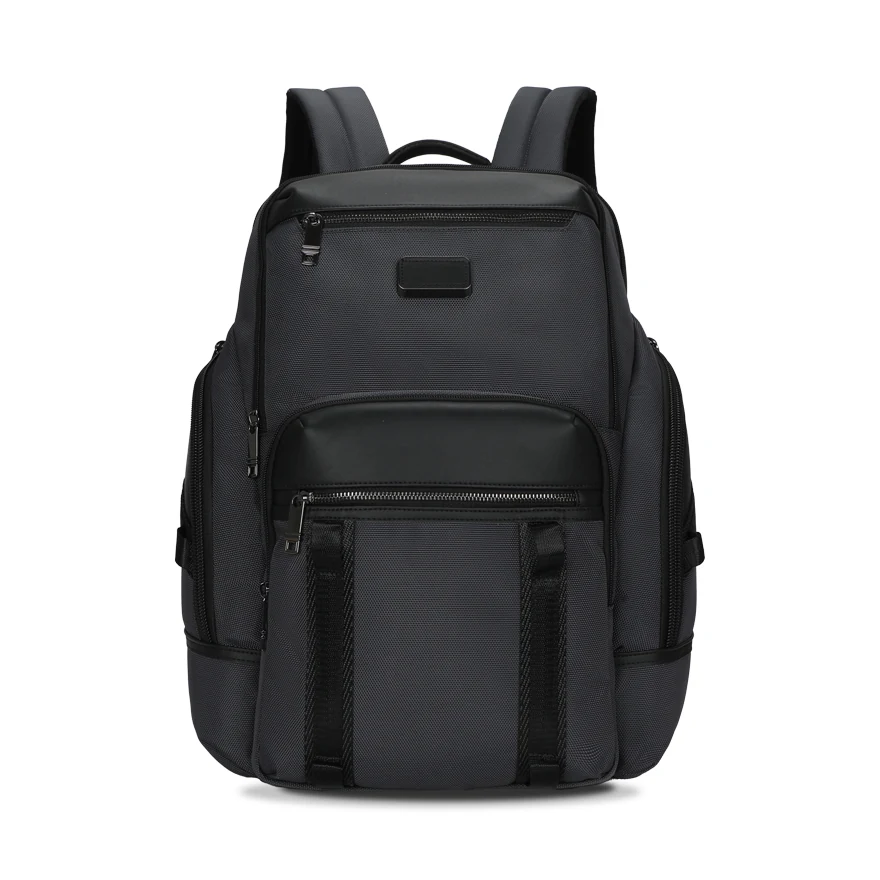
5.1 The Three Back Panel Ventilation Architectures
Our OEM design department manufactures three distinct back panel systems tailored to different target price points and user profiles:
[Type 1: Dual-Ridge Air Channel]     [Type 2: 3D Moulded EVA Panel]      [Type 3: Suspended Mesh Trampoline]
   ┌──────┐  Airflow  ┌──────┐            ┌────────────────────────┐              ┌────────────────────────┐
   │ Padded│   Gap    │Padded│            │ Hexagonal Embossed EVA │              │ Taut Monofilament Mesh │
   │ Column│ (25mm)   │Column│            │ Chimney Air Channels   │              │ (35mm Air Clearance)   │
   │ Mesh  │          │ Mesh │            │ Ergonomic Lumbar Pod   │              │ Full Back Ventilation  │
   └──────┘           └──────┘            └────────────────────────┘              └────────────────────────┘
- Dual-Ridge Air Chimney (Padded Sandwich Mesh):
- Structure: Two vertical columns of 12 mm thick perforated high-density EVA foam covered in 3D honeycomb sandwich mesh, separated by a 25 mm central vertical air channel along the spine.
- Benefits: Creates natural thermal convection—body heat rises through the chimney gap, drawing in cool ambient air from the sides. Highly cost-effective and lightweight.
- 3D Compression-Moulded EVA Foam Back Panel:
- Structure: A solid sheet of EVA foam heated and pressed in hydraulic aluminum tooling molds at 160°C to create permanent geometric channels, logo impressions, and anatomical lumbar support pods.
- Benefits: Exceptional structural stability, premium executive appearance, zero fabric bunching or sagging over years of heavy use.
- Suspended Monofilament Trampoline Frame:
- Structure: A lightweight internal perimeter spring-steel or Delrin frame holds a taut breathable mesh panel suspended 30 to 40 mm away from the curved back of the pack.
- Benefits: 100% unobstructed air flow across the entire back; completely eliminates perspiration transfer during summer cycling or humid commuting.
5.2 Shoulder Strap Ergonomics & Load-Bearing Anchor Reinforcement
Shoulder straps on a laptop backpack must distribute dynamic load across the clavicle while preventing neck pinching and underarm chafing.
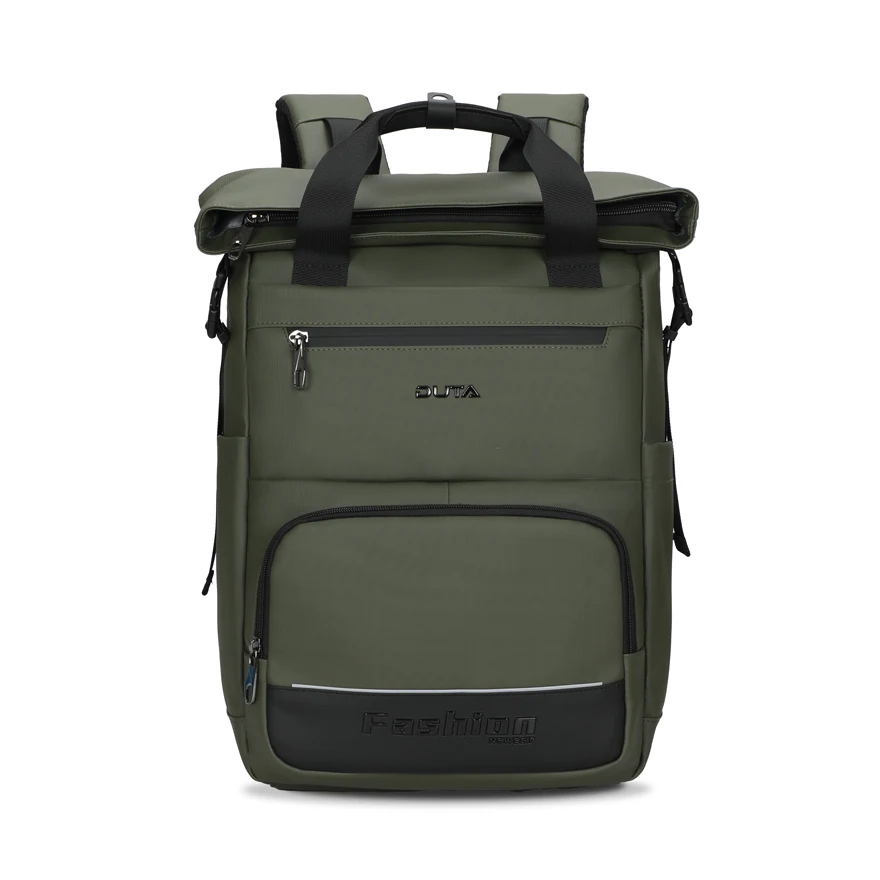
S-Curve Anatomical Contouring:
Straight shoulder straps slide off narrow shoulders and pinch the pectoral muscles. We cut all laptop backpack shoulder straps with a double-radius S-curve geometry that contours naturally around the chest and flares outward below the armpits.
Dual-Density Strap Foam:
- Upper Layer (Body Contact): 4 mm soft open-cell sponge with 3D air-mesh for immediate surface cushioning and sweat wicking.
- Core Layer (Load Bearing): 8 mm high-density closed-cell EVA foam (55 kg/m³) that resists compression fatigue and prevents the structural nylon webbing from cutting into the shoulders.
Three-Tier Anchor Reinforcement Standard:
To ensure shoulder straps never rip out under extreme weight, Senszx enforces a strict structural stitching protocol:
- Webbing Underlay Insert: A 38 mm high-tensile nylon herringbone webbing tab is sandwiched between the outer shell fabric and the internal lining.
- Automated Computerized Bar-Tack: A high-speed programmable bar-tack machine stitches a dense 42-stitch rectangular grid across the junction line.
- Box-X Cross Stitching: The strap root is reinforced with a 25 mm x 30 mm Box-X stitch using bonded Tex 70 high-tenacity polyester thread, delivering an ultimate tensile breaking strength exceeding 45 kg (100 lbs) per strap.
5.3 Biomechanical Load Transfer & Sternum Stabilization
On long journeys, stabilizing the pack against dynamic body sway reduces perceived exertion by over 30%.
- Sliding Rail Sternum Strap: Mounted on vertical piping tracks along each shoulder strap, the sternum buckle can be slid up or down 120 mm to align precisely with the wearer's sternum height. It incorporates an integrated elastic dampener to flex naturally during heavy breathing.
- Top Load-Lifter Straps (On 25L+ Packs): Connecting the top of the shoulder strap back to the top frame of the backpack at a $45^\circ$ forward angle. Pulling these straps cinches the top of the laptop pack closer to the user's upper thoracic spine, eliminating backward lever torque that causes neck and shoulder fatigue.
- Hideaway Waist Belt: For heavy 17-inch workstation backpacks, a tuck-away 25 mm nylon waist strap stabilizes the bottom of the bag against the sacrum, preventing lateral sway during cycling or brisk running.
5.4 Top Grab Handle Architecture & Cable Core Reinforcement
When retrieving a 7 kg laptop backpack from an overhead airplane bin or lifting it out of an automotive trunk, the entire mechanical payload is concentrated onto the top grab handle.
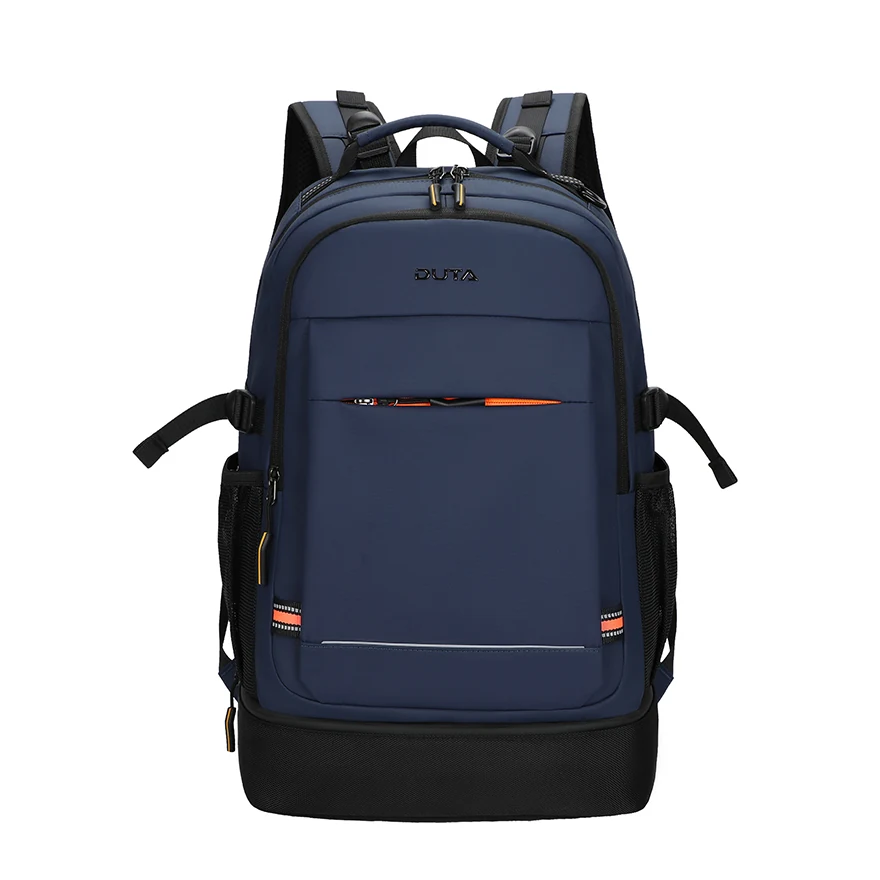
We engineer three industrial handle specifications:
- Tubular Padded Webbing Handle: A 32 mm nylon webbing tube enclosing a flexible 6 mm EVA core, stitched directly into the primary top arch seam with internal herringbone reinforcement webbing.
- Aircraft Steel Cable Reinforced Handle: A flexible galvanized multi-strand aircraft steel cable encased inside high-friction silicone tubing and anchored to the internal frame with dual zinc-alloy rivet plates, delivering a tensile breaking strength exceeding 75 kg (165 lbs).
- Molded TPU Ergonomic Handle: An injection-molded thermo-plastic polyurethane handle with anatomical finger contours and internal aluminum load-spreader plates for executive styling.
6. Functional Hardware, Security & Smart Travel Features
Modern laptop backpacks serve as mobile workstations and travel carry-on luggage. Incorporating smart travel utilities, anti-theft mechanisms, and electronic charging integration significantly elevates the perceived value and retail price of custom backpacks.
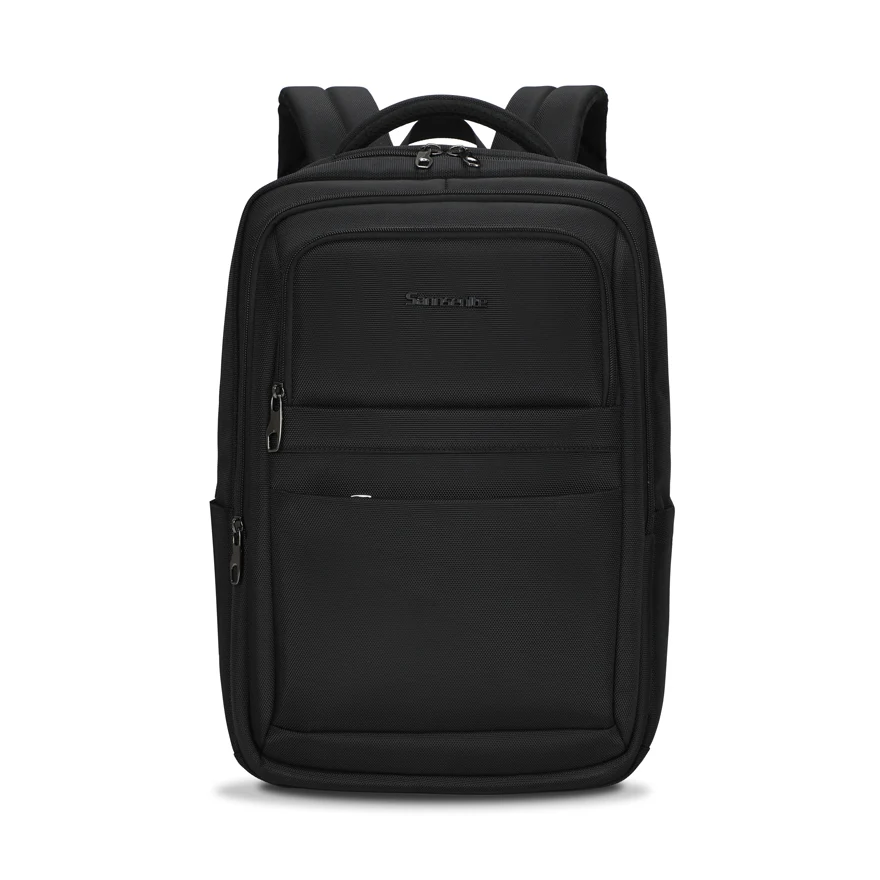
6.1 Anti-Theft Security Architecture
Urban commuters on crowded subways and international travelers at crowded transit hubs are vulnerable to pickpocketing and luggage tampering. We incorporate five dedicated anti-theft technologies:
- Concealed Rear Lumbar Security Pocket: A discreet horizontal zippered pocket embedded flush into the lower lumbar cushion. When the backpack is worn, this pocket is completely pressed against the wearer's lower back, making it physically impossible for a pickpocket to access passports, wallets, or smartphones without the wearer knowing.
- Puncture-Resistant Dual-Layer Anti-Theft Zippers: Standard nylon coil zippers can be easily punctured and forced open using a simple ballpoint pen, allowing thieves to steal contents and zip the slider back over the teeth without leaving visible damage. Dual-layer anti-theft zippers feature two intermeshed layers of coil teeth that resist over 30 kg of direct puncture force.
- Integrated TSA-Approved 3-Digit Combination Locks: Mounted to the top or side panel, these zinc-alloy locks secure the primary laptop compartment zipper pullers into locking slots. Airport security screeners can open and relock the bag using master TSA keys without cutting the zippers.
- RFID-Blocking Shielding Pockets: Internal utility pockets lined with a conductive fabric woven from nickel-copper alloy and polyester. This blocks high-frequency (13.56 MHz) RFID signals, preventing digital pickpockets from skimming RFID-enabled credit cards, biometric passports, and smart transit passes.
- Concealed Perimeter Zipper Flaps: The primary zipper tracks are hidden beneath a folded overhang of 900D fabric, concealing the zipper sliders from plain view and adding physical friction against quick unauthorized opening attempts.
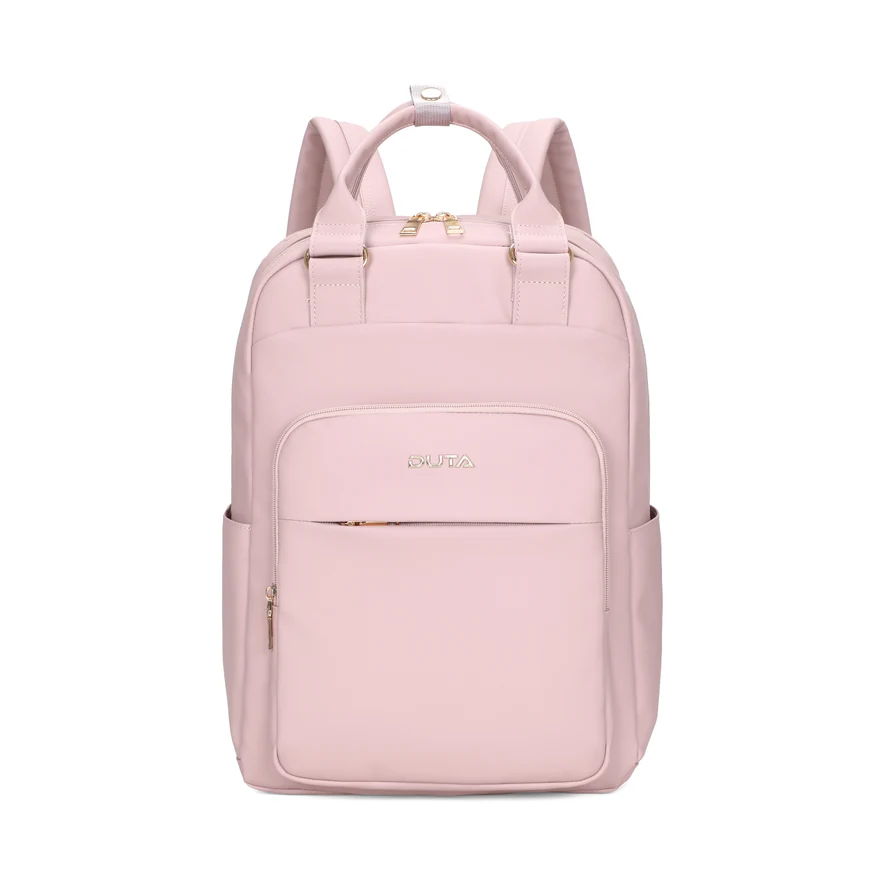
6.2 Smart Power & Connectivity Integration
With corporate users running power-hungry laptops, tablets, and 5G smartphones, integrated charging capabilities have evolved from a novelty into a baseline expectation.
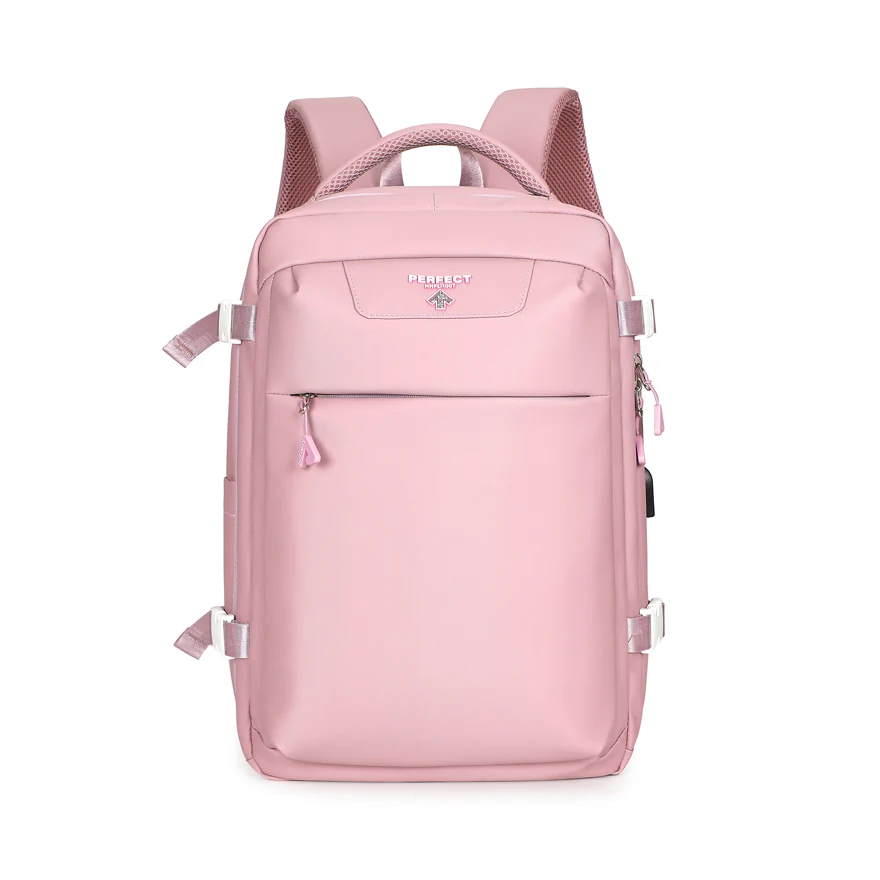
USB-A and USB-C Fast-Charging Hubs:
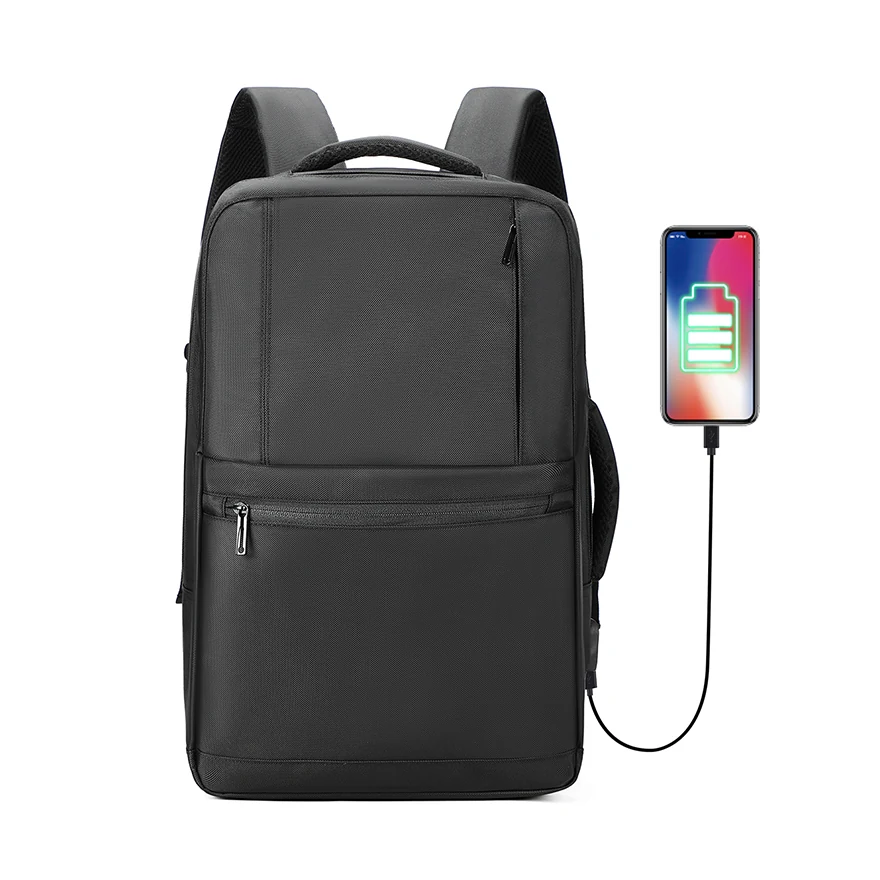
- External Port Housing: An injection-molded, weather-sealed TPU/ABS port mounted flush on the exterior side panel or integrated into the shoulder strap. Features a silicone dust-and-waterproof sealing cap.
- Internal Cable Channeling: A reinforced interior zipper pocket houses the user's power bank, connected to the external port via an integrated heavy-duty braided cable capable of supporting 65W to 100W USB-C Power Delivery (PD) fast charging protocols for direct laptop operation.
6.3 Airport Checkpoint & Luggage Integration
For business travelers, seamless airport navigation is paramount:
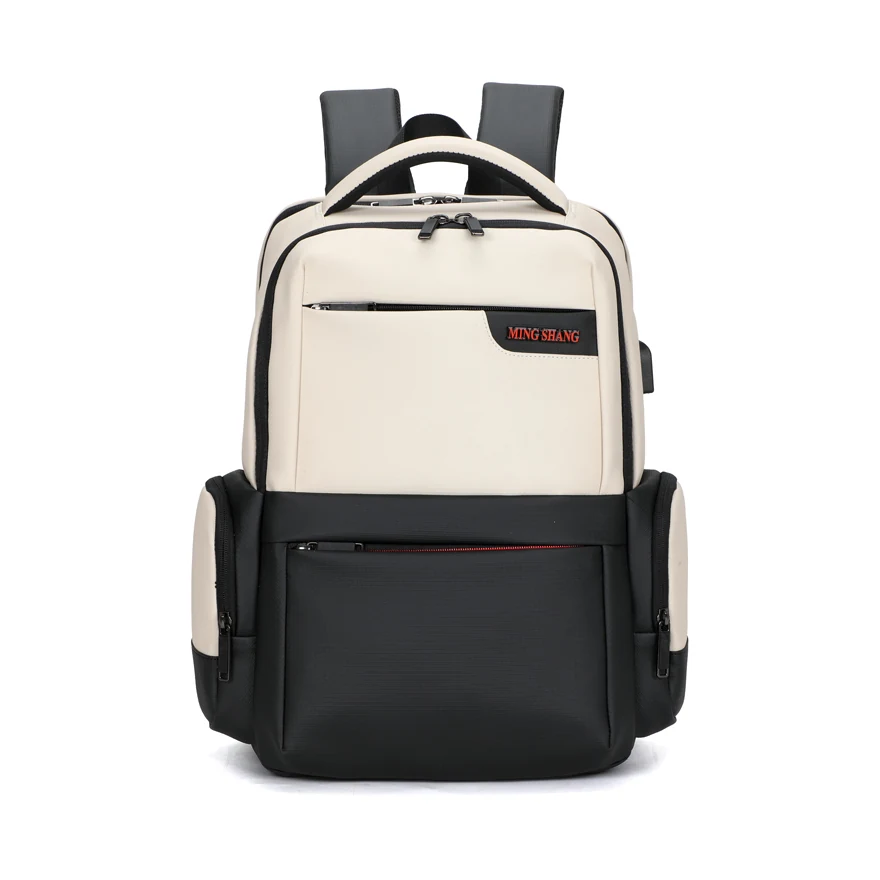
- TSA 180-Degree Flat-Lay Design (Checkpoint Friendly):
The laptop compartment features a perimeter zipper that unzips completely around three sides, allowing the bag to split open flat like a clamshell book. At airport security checkpoints, the pack lies flat on the X-ray conveyor belt with the laptop on one side and cargo on the other, satisfying TSA guidelines without requiring the traveler to remove their device from the bag.
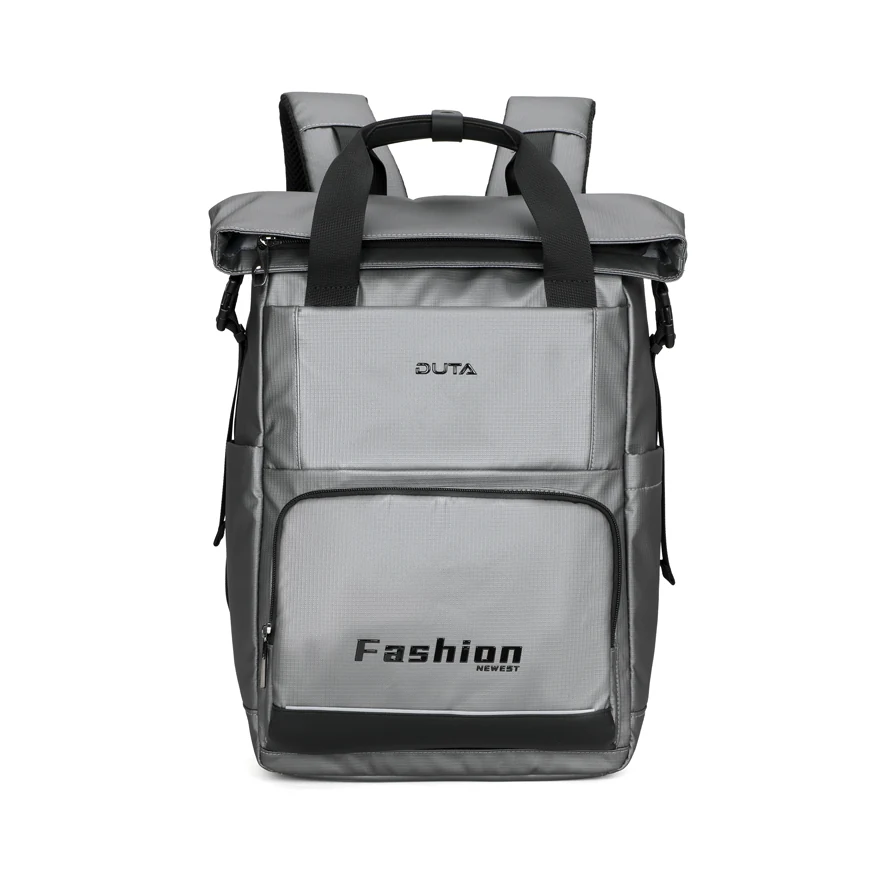
- Heavy-Duty Luggage Trolley Pass-Through Strap: A 50 mm wide, high-density nylon webbing band stitched horizontally across the center of the back panel. Allows the backpack to slide securely over the telescoping handle of rolling carry-on luggage, transferring 100% of the bag's weight onto the wheeled suitcase during airport terminal transit.
- Expandable Cargo Gusset System (18L to 32L Quick Expansion):
A continuous perimeter expansion zipper equipped with an accordion fabric gusset allows the backpack to expand from a slim 18-liter daily commuter profile to a spacious 32-liter weekender travel pack in seconds.
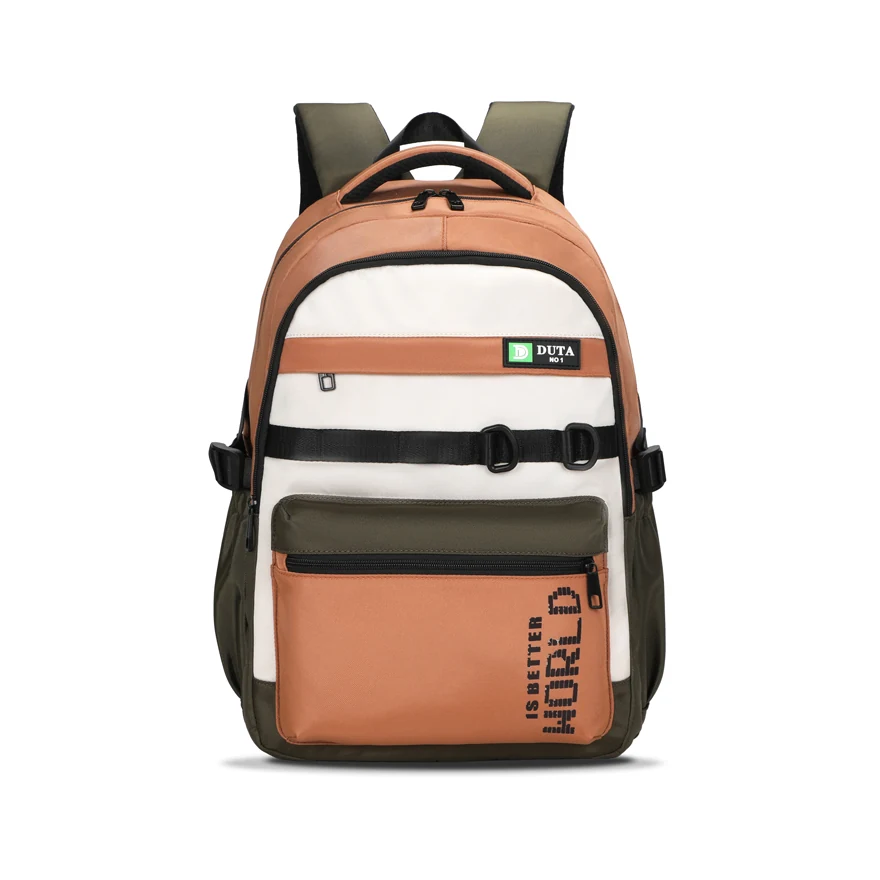
- Side Expandable Water Bottle Pockets: Engineered with internal elastic gussets or perimeter expansion zippers. When empty, the pocket folds completely flat against the side panel for a clean executive silhouette; when needed, it expands to securely hold 24 oz to 32 oz Hydro Flask or Stanley tumblers without falling out during rapid movement.
6.4 Custom Branding & Hardware Surface Engineering
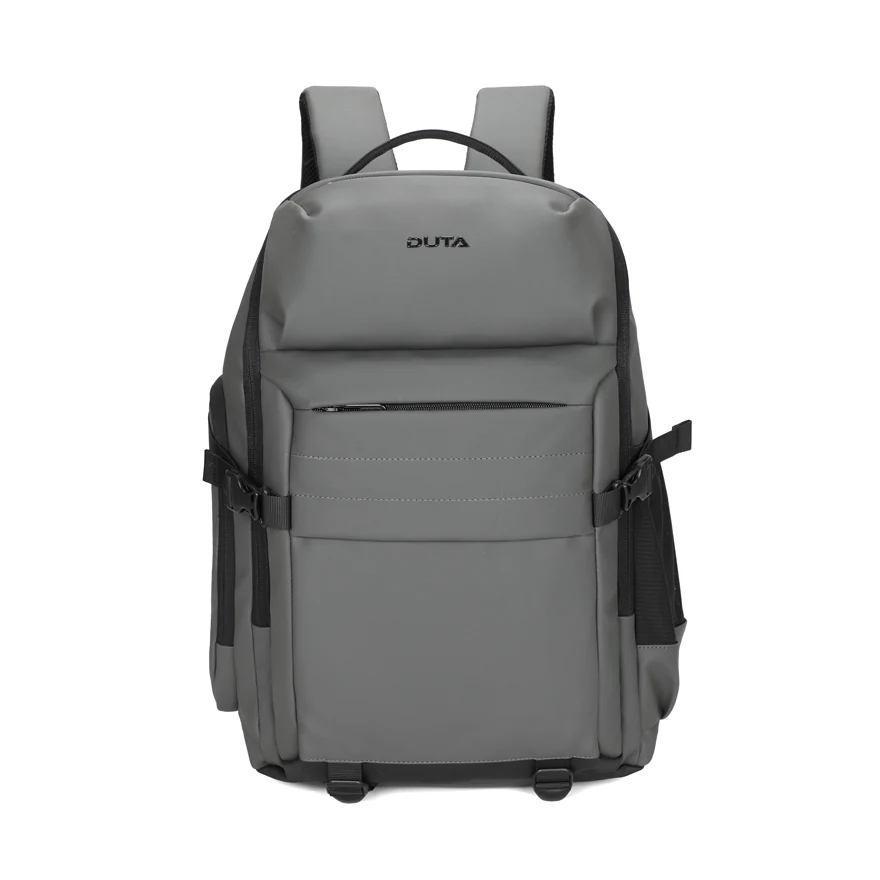
Hardware components represent high-impact touchpoints where buyers perceive luxury and craftsmanship.
At Senszx, we support five industrial hardware branding modalities:
- Electroplated Zinc-Alloy Metal Pullers: Precision die-cast pullers finished in matte gunmetal, brushed nickel, or anodized electro-black. Features debossed or raised logo lettering with a salt spray corrosion resistance exceeding 72 hours (ASTM B117).
- Tactile Rubber Coated Molded Pullers: High-friction TPU injection-molded pullers with molded relief logos, providing superior grip in wet or cold weather.
- Reflective Woven Cord Pullers with Plastic Aglets: Sporty, lightweight outdoor aesthetic incorporating 3M Scotchlite reflective tracer threads for nighttime pedestrian visibility.
- Laser-Engraved Anodized Aluminum Badges: Ultra-crisp corporate branding mounted flush to the front panel with dual rivet posts and backplate washers.
- High-Frequency Sonic Welded TPU Patches: Sleek, waterproof, 3D textured patches with micro-relief graphics welded directly onto the outer shell fabric without stitching holes.
7. Manufacturing Process & Factory Quality Assurance
At Senszx, manufacturing high-reliability laptop backpacks requires an uncompromising industrial quality control framework. An imperfection in stitching or a weak zipper anchor can lead to catastrophic electronic device damage for the end-user.
Our 100 in-house parallel production lines operate under a Six-Gate Quality Assurance Protocol, audited and compliant with BSCI, ISO 9001, ISO 14001, and ISO 45001 standards.
7.1 Step-by-Step Manufacturing Workflow
[Phase 1: Fabric & Trim IQC] ──► [Phase 2: CNC Laser & Die Cutting] ──► [Phase 3: Sub-Assembly Preparation]
  • 100% Fabric Roll Inspection     • Precision Vacuum CNC Cutting         • Laptop Sleeve EVA Lamination
  • Color Fastness & GSM Testing    • Automated Lay Tension Control        • Logo Embossing / Screen Printing
  • Zipper & Buckle Pull Testing    • Barcoded Batch Bundling              • Pocket Sub-Assembly Prep
                                                                                        │
                                                                                        ▼
[Phase 6: Final QA & Export]  ◄── [Phase 5: 100% Inline QC & Trimming] ◄── [Phase 4: Main Sewing Line Assembly]
  • AQL 2.5 Audit Check              • 100% Zipper Cycling Check            • 100 In-House Parallel Lines
  • Barcode & Polybag Verification   • Thread Trimming & Inspection         • S-Curve Strap Anchor Stitching
  • Custom Carton Palletizing        • Drop & Seam Stress Sampling          • Perimeter Binding & Final Close
7.2 Laboratory Testing & Quality Verification Benchmarks
Every custom laptop backpack production run at Senszx undergoes rigorous physical and mechanical testing in our on-site testing lab:
The table below outlines our mandatory quality benchmarks for laptop backpack manufacturing:
| Test Protocol | Test Standard / Equipment | Test Parameter & Severity | Mandatory Acceptance Threshold | Sourcing Significance |
|---|---|---|---|---|
| Dynamic Drop Impact Test | Free-Fall Drop Tester | 15.0 kg payload inside bag, dropped 25 consecutive times from 1.2 m height | Zero seam tearing, zero strap detachment, zero buckle cracking | Simulates dropping a fully loaded backpack onto concrete sidewalks over 2+ years |
| Static Handle / Strap Pull Test | Digital Tensile Load Cell | 40.0 kg continuous static downward pull held for 4 hours | <2 mm seam elongation, zero structural stitch failure | Guarantees top grab handles and shoulder straps will never pull out under heavy loads |
| Zipper Reciprocating Cycle Test | Automated Zipper Tester | Continuous pull-open and close cycling at 30 cycles/minute with 5 kg lateral tension | >5,000 smooth cycles without tooth distortion or slider separation | Ensures main compartment zippers will operate flawlessly for years of daily use |
| Fabric Abrasion Resistance | Martindale Abrasion Tester | 12 kPa pressure with standard abrasive wool abradant | >30,000 rubs (Polyester) / >50,000 rubs (Ballistic Nylon) before thread break | Verifies bottom and front panel wear resistance against desks, car trunks, and ground contact |
| Hydrostatic Water Penetration | Hydrostatic Head Tester | Pressurized column of water applied directly over shell fabric | >1,500 mm H₂O (Standard) / >10,000 mm H₂O (PU Coated) | Ensures sudden rain showers cannot penetrate the outer shell into electronics |
| Color Fastness to Light & Rubbing | Crockmeter & Xenon Arc | Wet and dry crocking tests (10 cycles under 9 N downward load) | Grade 4.0 – 5.0 (No color transfer onto white shirts/jackets) | Prevents black dye on back panels and straps from staining wearers' business suits |
7.3 Defect Classification & AQL 2.5 Audit Matrix
During final pre-shipment inspections, our quality assurance inspectors evaluate finished laptop backpacks against strict ANSI/ASQ Z1.4 (ISO 2859-1) AQL 2.5 Major / 4.0 Minor defect criteria:
[Critical Defects (0% Tolerance)]
  • Broken needle tip detected by metal detector scanner
  • Exposed sharp metal or plastic burrs on buckles or sliders
  • Pungent chemical odor exceeding REACH/CPSIA VOC limits
  • Incorrect electrical polarity or short circuit in USB wiring

[Major Defects (AQL 2.5 Threshold)]
  • Stitch gauge variance exceeding ±1 stitch per inch from tech pack
  • Laptop compartment dimension out of tolerance by >5.0 mm
  • Zipper track binding, catching lining fabric, or skipping teeth
  • Incomplete bar-tack stitching at strap anchor points
  • Crooked or off-center brand logo placement (>2.0 mm variance)

[Minor Defects (AQL 4.0 Threshold)]
  • Untrimmed loose thread tail longer than 3.0 mm
  • Removable surface chalk or handling dust
  • Minor packaging polybag wrinkle or non-critical carton label skew
8. OEM/ODM Cost Breakdown & Sourcing Walkthrough
Understanding how raw materials, labor, specialized hardware, and order volumes influence unit manufacturing costs enables sourcing directors to optimize their tech packs and maximize gross profit margins.
At Senszx, we operate transparent factory pricing based on physical Bills of Materials (BOM) and standardized sewing labor matrices.
8.1 Tiered Unit Cost Breakdown (B2B Factory Direct Pricing)
The table below illustrates a representative production cost breakdown for a high-spec 15.6-inch executive custom laptop backpack (featuring 1680D Ballistic Nylon shell, 8 mm EVA floating laptop cradle, YKK reverse coil zippers, molded EVA back panel, and USB-C pass-through hub) across tiered order volumes:
| Bill of Materials (BOM) Component | Cost Breakdown (MOQ 500 pcs) | Cost Breakdown (1,000 pcs) | Cost Breakdown (5,000 pcs) | Cost Optimization Opportunities for Brand Buyers |
|---|---|---|---|---|
| Primary Shell Fabric (1680D Ballistic Nylon) | $4.80 | $4.20 | $3.60 | Switch to 900D coated polyester to save $0.80–$1.20/pc |
| Lining & Padding (210D Lining + EVA/EPE Foams) | $2.40 | $2.10 | $1.80 | Use EPE foam in front panels, reserve premium EVA for laptop pocket |
| Zippers & Pullers (YKK Reverse Coil / Zinc Pulls) | $2.80 | $2.40 | $1.90 | Specify high-grade SBS zippers to save $0.60–$0.90/pc with excellent reliability |
| Hardware & Trims (POM Buckles, Webbing, USB Port) | $1.60 | $1.40 | $1.10 | Standardize buckle tooling across product line to eliminate custom mould fees |
| Sewing Labor & Assembly (100 Specialized Lines) | $5.20 | $4.60 | $3.90 | Streamline internal pocket count to reduce labor minutes per bag |
| Custom Branding (Metal Badges, Rubber Labels, Print) | $0.90 | $0.70 | $0.45 | High-density screen print or woven labels offer lower unit cost than metal badges |
| Quality Control, Packaging & Export Cartons | $1.10 | $0.90 | $0.75 | Use standard master carton dimensions to maximize 40HQ container pallet space |
| Total Estimated Ex-Factory Unit Cost (FOB) | $18.80 | $16.30 | $13.50 | Target Retail MSRP: $65.00 – $120.00 (Gross Margin: 72% – 88%) |
Note: The figures above represent typical benchmark pricing for illustrative reference. Final quotations depend on exact tech pack dimensions, specialized fabric treatments, custom metal hardware tooling, and packaging specifications.
8.2 Sourcing Logistics & Landed Cost Optimization
When importing custom laptop backpacks into destination markets such as the United States, European Union, or United Kingdom, the factory-gate FOB price represents only part of your total unit economics. Sourcing teams must account for shipping density, duty classifications, and packaging optimization:
Ocean Freight Packing Density (CBM Optimization):
- A standard 22L laptop backpack measures approximately $46 \times 32 \times 16\text{ cm}$ when stuffed.
- By utilizing flat-pack nested carton folding with internal tissue paper removed, we pack 12 to 15 backpacks per master carton ($60 \times 40 \times 45\text{ cm} = 0.108\text{ CBM}$).
- A standard 40HQ ocean container (68 CBM) accommodates approximately 7,200 to 8,000 custom laptop backpacks, reducing per-unit ocean freight costs to just $0.85 – $1.30 per bag from Tianjin/Shanghai port to US West Coast ports.
US Customs Tariff Classification (HTS Code Guidance):
- HTS 4202.92.3120: Backpacks with outer surface of man-made textile materials (Polyester/Nylon).
- Standard General Duty Rate: 17.6% (Plus applicable Section 301 tariffs where in effect).
- Our export team provides compliant commercial invoices, packing lists, and Form A origin certificates to streamline clearance with US Customs and Border Protection (CBP).
8.3 The 5-Step Sourcing Workflow at Senszx
[Step 1: Tech Pack / Concept Review] ──► [Step 2: Rapid Prototyping (3-5 Days)]
  • Submit drawings, samples or BOM        • Pattern drafting & fabric cutting
  • Engineering feasibility feedback       • Physical sample shipped for sign-off
  • Detailed quotation within 24 hours     • Iterative revisions until 100% approved
                                                              │
                                                              ▼
[Step 5: Global Export Delivery]      ◄── [Step 4: Bulk Production (20 Days)]   ◄── [Step 3: Pre-Production Sign-Off]
  • FOB / CIF / DDP ocean shipping         • 100 in-house parallel sewing lines       • Gold sealed counter-sample signed
  • Customs documentation support          • 6-gate inline & final QC audits          • Production scheduling & deposit
- Step 1: Tech Pack Submission & Engineering Review (24 Hours): You send your vector design files, inspirational reference photos, or existing physical samples. Our engineering team reviews the construction, recommends optimal fabrics, and returns a detailed line-item cost quotation within 24 hours.
- Step 2: Rapid Prototyping (3–5 Calendar Days): Our dedicated sample development room builds your physical prototype. We refine compartment tolerances, test laptop fit, and dispatch the sample via express air courier for your physical evaluation and feedback.
- Step 3: Pre-Production Approval & Material Procurement: Once the golden sample is signed off and deposit confirmed, raw materials are ordered and undergo 100% incoming quality control (IQC) inspection.
- Step 4: In-House Bulk Production (20 Calendar Days): Your order moves through our automated cutting room and 100 parallel sewing lines. Roaming QC auditors verify stitch tension, bar-tack alignment, and foam placement every 200 units.
- Step 5: Final Audit & Global Shipping: Finished goods undergo an AQL 2.5 final audit, individual polybag packaging, barcode application, and export cartoning. We coordinate ocean container loading, customs documentation, and deliver via FOB, CIF, or door-to-door DDP to your fulfillment warehouse.
9. Frequently Asked Questions (B2B Sourcing FAQ)
Q1: What is the minimum order quantity (MOQ) for custom laptop backpacks at Senszx?
Senszx operates on a single-track OEM/ODM minimum order quantity of 500 pieces per style/colourway for fully customized laptop backpacks. For startups and corporate clients requiring smaller pilot batches, we provide a Development Fee Program covering 3 iterative sample rounds and complete technical pattern making, where 100% of the development fee is credited against your first 500+ unit bulk production order.
Q2: What is the difference between a standard laptop sleeve and a suspended floating cradle compartment?
A standard flat laptop sleeve stitches the foam pocket directly flush with the bottom panel of the backpack, exposing the laptop's fragile edges to direct ground impact whenever the pack is dropped or placed on hard surfaces. A suspended floating cradle terminates the inner sleeve 1.0 to 1.5 inches (25–38 mm) above the exterior bottom panel, ensuring that dropping the pack absorbs energy through exterior foam before any impact reaches the laptop chassis.
Q3: Which protective foam offers the best balance of impact shock absorption and lightweight design for laptop bags?
High-density closed-cell EVA (Ethylene-Vinyl Acetate) foam at 45 to 60 kg/m³ density is the premier choice for professional laptop compartments. Unlike standard open-cell sponge or low-density EPE pearl cotton, EVA delivers superior rebound resilience, high compressive strength without permanent bottoming-out, and thin cross-sectional thermal insulation that keeps the backpack sleek and lightweight.
Q4: What are the standard internal laptop compartment dimensions for 14-inch, 15.6-inch, and 17.3-inch laptops?
Standard internal compartment dimensions recommended for custom manufacturing are:
- 13.3–14.0 inch laptops: 340 mm H x 245 mm W x 25 mm D
- 15.6–16.0 inch business laptops: 385 mm H x 270 mm W x 30 mm D
- 17.0–17.3 inch workstation/gaming laptops: 425 mm H x 300 mm W x 38 mm D We always recommend adding 10–15 mm of lateral tolerance to accommodate thick protective laptop shells.
Q5: How long does physical sample development take for a custom laptop backpack?
Custom laptop backpack prototyping takes 3 to 5 business days once your tech pack, vector artwork, and bill of materials (BOM) are confirmed. If specialized custom-tooled metal zipper pullers, molded EVA back panels, or custom jacquard webbing are required, initial sample tooling adds 5 to 7 days.
Q6: What is the typical bulk production turnaround time for 500 to 5,000 custom laptop backpacks?
Standard bulk manufacturing lead time is 20 calendar days from pre-production sample (PPS) sign-off and raw material procurement. This encompasses computer-guided automated spreading and laser cutting, 100 in-house parallel sewing lines, six-gate inline QC inspection, 100% finished goods auditing, and export cartoning.
Q7: What outer shell fabrics provide optimal water resistance and abrasion durability for corporate tech backpacks?
The top commercial fabric choices are 1680D Ballistic Nylon with dual PU back-coating (highest abrasion resistance and executive sheen), 840D to 1000D Cordura Nylon (extreme tear strength for outdoor/commuter hybrids), 900D Matte PU-Coated Polyester (minimalist water-repellent urban aesthetic), and 600D recycled rPET polyester (sustainable eco-friendly option with GRS certification).
Q8: Can Senszx integrate TSA checkpoint-friendly flat-lay 180-degree opening compartments?
Yes. We engineer TSA-compliant flat-lay compartments featuring heavy-duty #8 or #10 perimeter reverse coil zippers that unzip 180 degrees flat. This allows the dedicated laptop and tablet sleeve to lie flat on the airport security X-ray scanner belt without requiring the traveler to remove their device from the bag.
Q9: How do you integrate USB-A and USB-C fast charging pass-through ports into custom backpacks?
We install weather-sealed external injection-molded ABS/TPU charging ports on the side panel or shoulder strap. A reinforced internal braided cable channel connects the exterior port directly to an internal elasticized power bank pocket, supporting high-speed 65W/100W Power Delivery (PD) fast-charging without cable strain.
Q10: What anti-theft security features can be built into private-label laptop backpacks?
Key anti-theft features include puncture-resistant dual-layer anti-theft coil zippers, concealed rear lumbar security pockets for passports and wallets, integrated TSA-approved 3-digit combination locks, slash-resistant high-density webbing reinforcement, and RFID-blocking copper-nickel fabric lined pockets for credit cards and electronic IDs.
Q11: What stress and quality tests does Senszx conduct on finished laptop backpacks before shipment?
Every production batch undergoes strict mechanical testing: dynamic drop load testing (15 kg payload dropped 25 times from 1.2 m), static shoulder strap tensile pull tests (>35 kg load held for 4 hours), zipper cycle durability testing (>5,000 continuous opening/closing cycles), and hydrostatic water spray testing (>1,500 mm water column rating).
Q12: What international factory audit and social compliance certifications does Senszx hold?
Senszx is fully certified and audited under BSCI (Business Social Compliance Initiative), ISO 9001 (Quality Management Systems), ISO 14001 (Environmental Management), ISO 45001 (Occupational Health & Safety), and CE standards, ensuring ethical labor practices, safe working conditions, and consistent high-precision industrial output.
10. Start Your Custom Laptop Backpack Project with Senszx
Whether you are developing a sleek 14-inch minimalist commuter pack for corporate gifting, a rugged 17-inch gaming backpack for retail distribution, or an expandable waterproof tech travel bag for an e-commerce brand, Senszx provides the turnkey OEM/ODM engineering capabilities you need to succeed.
- In-House Capacity: 100 dedicated sewing lines, 10,000 m² factory floor, 100,000+ custom bags produced monthly.
- Single-Track MOQ: 500 pcs/style (with flexible sample development program for emerging lines).
- Speed to Market: Physical prototypes in 3–5 days; bulk order delivery in 20 days.
- Direct Factory Communication: Work directly with experienced bag engineers who understand technical tech packs, fabric chemistry, and international compliance.
Ready to elevate your tech backpack product line?
Contact our OEM engineering team today to receive a free physical sample,
material swatch book, or rapid 24-hour manufacturing quotation.

• Official Website: https://senszxfactory.com
• Email: [email protected]
• Direct WhatsApp: +86 17331531825
• Factory Address: Baigou Industrial Zone, Baoding, Hebei, China (Since 2006)
Bring Your Custom Laptop Backpack Design to Life
Send your tech pack, sketches, or reference bag photos. Our engineering department will analyze your compartment architecture and deliver a formal line-item quotation within 24 hours.
Hi, I'm Senszx Bag Manufacturer, Hope You Like This Blog Post.
With more than 20 years of experience in OEM/ODM/Custom luggage and bag, I'd love to share with you the valuable knowledge related to luggage and bag products from a top-tier Chinese supplier's perspective.
Senszx Factory
Est. 2006 · Baigou, China
Related articles
Custom Travel Bags with Logo: The Complete Manufacturing, Materials & Branding Guide
An exhaustive B2B manufacturing guide to custom travel bags with logo. Master custom duffle, weekender, and carry-on production, compare 6 branding techniques (screen print, heat transfer, woven labels, rubber patches, debossed leather, digital print), fabric specs (600D-1680D, nylon, canvas), hardware, and OEM factory quality control for 500+ unit runs.
Custom Tactical Backpack Manufacturing & Sourcing Guide: Mil-Spec Fabrics, MOLLE Engineering, and OEM Factory Quality Control
A comprehensive B2B engineering guide to manufacturing custom tactical backpacks. Explore 500D vs 1000D Cordura, laser-cut vs nylon MOLLE webbing, reinforced bartack stitching, POM mil-spec hardware, and OEM/ODM production standards for 500+ unit runs.
Backpack CPSIA Compliance & Safety Testing: The Complete US Importer's Technical Guide
Master US backpack safety compliance: CPSIA regulations, CPC vs GCC certificates, Lead & Phthalates limits, Prop 65, tracking labels, and CPSC lab testing protocols.
Get a Custom Bag Quote from Our China Factory
Our sales team is online around the clock and usually replies within the hour.
Email
[email protected]Factory
Qinzheng Road No.89, New Industry Zone, Baigou Town
Baoding City, Hebei Province 074004, China