Importing Backpacks From China to the Middle East: The Complete GCC Buyer's Guide
GCC buyer's guide to importing backpacks from China: HS codes, duty and VAT by country, SABER certification, shipping routes, landed cost and risk control.
Every week we load containers of backpacks bound for Jebel Ali, Dammam and Jeddah, and every week we answer the same questions from first-time GCC importers: Which HS code applies? How much duty will I pay in Saudi Arabia versus Dubai? What is SABER and do I really need it? How long does the ship actually take? This guide is the answer we wish every new buyer could read before placing a first order. It walks through the entire journey of a backpack shipment from a Chinese factory floor to a Gulf warehouse: classification, duties and taxes country by country, conformity certification, documents, incoterms, freight routes, container mathematics, labeling, inspection and a fully worked landed-cost example.
Nothing here replaces your customs broker. Tariff schedules and conformity programmes change, and the GCC states apply them with local variations. What this guide gives you is the working map - the questions to ask, the numbers to expect and the mistakes that cost real money. Where figures are quoted, treat them as indicative planning values and confirm the live rate against your exact 12-digit HS code before you commit. If you want a quotation priced to a specific destination port, send us a tech pack or start with a free sample.
Why GCC Buyers Source Backpacks From China
The Gulf imports almost all of its bags. There is no significant local backpack manufacturing base in Saudi Arabia, the UAE, Qatar, Kuwait, Bahrain or Oman - the combination of fabric mills, hardware suppliers, lamination plants and trained sewing labour that a bag factory depends on simply does not exist in the region at scale. That makes the question not whether to import, but from where.
China remains the default answer for structural reasons that matter more in bags than in almost any other product category:
| Factor | Why it matters for backpacks specifically |
|---|---|
| Complete supply chain | A backpack contains 40-80 components: fabric, lining, foam, webbing, zippers, sliders, buckles, cord, labels. In China every one is available within a day's drive of the sewing floor. |
| Hardware ecosystem | YKK, SBS and SAB zipper plants plus hundreds of buckle moulders operate domestically. Hardware is 16-22% of a backpack's cost and import substitution elsewhere is weak. |
| Sampling speed | A development sample that takes 3-5 days in a Chinese factory routinely takes 3-4 weeks elsewhere because trims must be imported first. |
| Port density | Weekly direct sailings from Shenzhen, Ningbo and Shanghai to Jebel Ali, Dammam and Jeddah keep transit predictable. |
| Price at MOQ 500-1,000 | Smaller GCC orders stay economical because tooling, printing and hardware minimums are low in a mature cluster. |
Vietnam, Cambodia and Bangladesh have growing bag industries, but they serve mainly the very large US and EU programmes of 50,000+ pieces, and most of their fabric and hardware still ships in from China. For the 100-5,000 piece orders typical of GCC distributors, school suppliers, corporate-gift companies and e-commerce brands, China is usually both cheaper and several weeks faster. We covered the factory-side economics in detail in our cost breakdown guide; this article covers everything that happens after the goods leave the line.
HS Codes: How Backpacks Are Classified
Everything in your import - the duty rate, the conformity requirements, even whether your shipment is flagged for inspection - starts from the Harmonized System code on the commercial invoice. Backpacks fall under heading 4202, the chapter that covers trunks, suitcases, handbags and similar containers.
The headings that matter
| HS code | Covers | Typical use |
|---|---|---|
| 4202.92 | Bags with outer surface of plastic sheeting or textile materials | Most polyester and nylon backpacks - the workhorse code |
| 4202.91 | Bags with outer surface of leather or composition leather | Genuine-leather backpacks and satchels |
| 4202.12 | Trunks, suitcases, executive cases with outer textile/plastic surface | Hard luggage, trolley school bags with rigid shells |
| 4202.22 | Handbags with textile/plastic outer surface | Tote bags, shoulder bags |
| 4202.99 | Other containers not elsewhere specified | Specialty cases |
A standard 600D polyester school or laptop backpack is almost always declared under 4202.92, extended to the national 8-, 10- or 12-digit level. The GCC states use an integrated customs tariff based on the international 6-digit root, so the first six digits of your code will be identical whether you clear in Dubai, Dammam or Doha - but the national extensions and the duty attached to them differ, which is exactly why the next section exists.
Three classification mistakes that cost money
Declaring the wrong outer surface. 4202.91 (leather) and 4202.92 (textile) can carry different duty treatment. A PU-coated polyester backpack is textile-surfaced, not leather - declaring it as leather because the listing says "PU leather" can trigger reclassification, reassessment and penalties.
Splitting sets incorrectly. A backpack sold with a matching pencil case and lunch bag may be classified as a set or as separate articles depending on packing and invoicing. Ask your broker before you print the invoice, not after the container lands.
Copying the supplier's code blindly. The exporter's Chinese 13-digit code is for Chinese export statistics. Only the 6-digit root transfers; the import-side extension is your responsibility. We print the 6-digit root on every commercial invoice and leave national extension to the consignee's broker - that is the correct division of labour.
Duty and VAT by GCC Country
The GCC operates a customs union with a Common External Tariff historically set at 5% for most goods, collected once at the first point of entry into the union. In practice, individual member states have moved selected categories above the 5% baseline in recent years - Saudi Arabia in particular raised duties on a wide range of consumer goods, including articles of heading 4202, as part of its 2020 tariff revision. The table below reflects the planning values we see on our customers' clearance documents; always confirm the live rate for your exact 12-digit code before costing a programme.
| Country | Typical duty on textile backpacks (4202.92) | VAT on import | Conformity requirement | Main sea gateway |
|---|---|---|---|---|
| Saudi Arabia | Elevated band - commonly assessed above the 5% GCC baseline since the 2020 revision; confirm per 12-digit code | 15% | SABER shipment certificate | Jeddah (Red Sea), Dammam (Gulf) |
| UAE | 5% of CIF | 5% | No pre-shipment programme for ordinary bags | Jebel Ali (Dubai) |
| Qatar | 5% of CIF | No VAT at time of writing | Local standards checks | Hamad Port |
| Kuwait | 5% of CIF | No VAT at time of writing | Local standards checks | Shuwaikh / Shuaiba |
| Bahrain | 5% of CIF | 10% | Local standards checks | Khalifa Bin Salman |
| Oman | 5% of CIF | 5% | Local standards checks | Sohar / Salalah |
Three structural points matter more than the individual numbers:
Duty is charged on CIF, not FOB. Cost + Insurance + Freight. If your backpacks are $40,000 FOB and the freight plus insurance adds $2,500, duty is calculated on $42,500. When freight rates spike, your duty bill rises with them even though the goods cost the same.
VAT on import is usually recoverable. In Saudi Arabia and the UAE, a VAT-registered importer pays import VAT and then deducts it as input tax on the next return. It is a cash-flow cost, not a P&L cost - but you must be registered, and you must budget the cash.
Intra-GCC movement after first entry. Goods that have cleared customs in one GCC state and paid the common duty can in principle move to another member state without paying duty again, subject to proof-of-payment documentation (the makasa mechanism). Many distributors clear everything through Jebel Ali and truck onward to Saudi Arabia, Qatar and Oman - but Saudi Arabia requires goods entering from the UAE to meet its own conformity rules, so SABER does not disappear just because you routed through Dubai.
SABER and SASO: Clearing Saudi Customs
Saudi Arabia is the largest backpack market in the GCC and the one with the most formal import-compliance programme. If you sell into the Kingdom you will deal with SABER, the online conformity platform operated under SASO (the Saudi Standards, Metrology and Quality Organization). Shipments without the required SABER certificates are not cleared at Saudi ports - this is not a formality you can negotiate at the quay.
How the system works
SABER issues two linked documents:
- Product Certificate of Conformity (PCoC). Registered once per product against its HS code and valid for a defined period (typically one year for regulated products). For regulated categories it must be issued by a SASO-approved certification body; for lower-risk products a self-declaration pathway exists on the platform.
- Shipment Certificate of Conformity (SCoC). Issued per consignment, referencing the valid product certificate. Every shipment needs its own SCoC before arrival.
The sequence for a backpack importer looks like this:
- The Saudi importer (not the Chinese factory) registers on SABER with their commercial registration and importer code.
- The product is registered under its HS code with images, specifications and - where the category requires it - test reports.
- The certification body reviews and issues the PCoC. Budget several working days to two weeks for a first registration.
- For each shipment, the importer applies for the SCoC against the PCoC, pays the platform fee, and receives the certificate electronically.
- Saudi customs matches the SCoC to the customs declaration at clearance.
What this means for backpacks specifically
Textile bags are generally treated as a lower-risk consumer category than toys or electrical goods, but the platform registration is still mandatory, and requirements tighten over time - Saudi Arabia has repeatedly expanded the range of products needing formal declarations on SABER, and textile-sector conformity rules have been updated in recent years. Practical implications:
- Start SABER registration when you place the production order, not when the vessel sails. Production takes 20 days; a first-time PCoC can take just as long. Running them in parallel costs nothing.
- The factory's job is documentation. We supply product photos, material composition sheets, care-label artwork and, when the certification body requests them, test reports from our in-house lab or third-party laboratories. Our quality assurance programme keeps these on file for repeat registrations.
- Children's school backpacks attract more scrutiny than adult commuter bags - age-grading, drawstring and small-parts considerations mirror international children's-product practice. Tell us the target age group at sampling stage so materials and construction are specified accordingly.
- Budget the fees. Platform and certificate fees per product and per shipment are modest relative to a container's value, but first-time importers are often surprised they exist at all. Ask your certification body for the current fee schedule.
If you are new to the Kingdom, appoint a clearing agent who processes SABER daily. The platform is in Arabic and English, but category judgement - which technical regulation applies, whether a test report is needed - is exactly where an experienced agent saves you demurrage.
Importing Through the UAE: The Jebel Ali Route
Dubai is the re-export hub of the Gulf, and Jebel Ali is its engine - the largest container port in the Middle East, with weekly direct services from every major Chinese port. For many backpack importers the UAE is both a destination market and a distribution base for the wider region.
Mainland vs free zone
The first structural decision is where the goods legally land:
- Mainland import. You hold a UAE trade licence and an importer code with the emirate's customs authority. Duty of 5% on CIF is paid at clearance, import VAT of 5% applies, and the goods circulate freely in the UAE market.
- Free zone import (JAFZA and others). Goods enter the free zone without paying duty. Duty becomes payable only when stock moves from the zone into the mainland market. For a distributor serving Saudi Arabia, Qatar, Oman and Africa from one Dubai warehouse, this defers duty on everything that is re-exported and pays it only on the UAE-consumed portion.
For a backpack business the free-zone model shines when less than half your volume stays in the UAE. If you import 10,000 pieces and re-export 7,000 to other markets, you pay UAE duty on 3,000 - and the re-exported goods clear into their destination country under that country's rules instead.
The clearance sequence at Jebel Ali
- Carrier files the manifest; you or your agent submit the import declaration through Dubai Trade with invoice, packing list, certificate of origin and bill of lading.
- Duty (5% of CIF) and import VAT (5%) are assessed and paid electronically.
- Risk engine assigns a channel - most textile-bag shipments clear on documents alone; a minority are called for physical inspection.
- Delivery order released, container gated out. For clean paperwork, allow 1-3 working days from vessel discharge to gate-out.
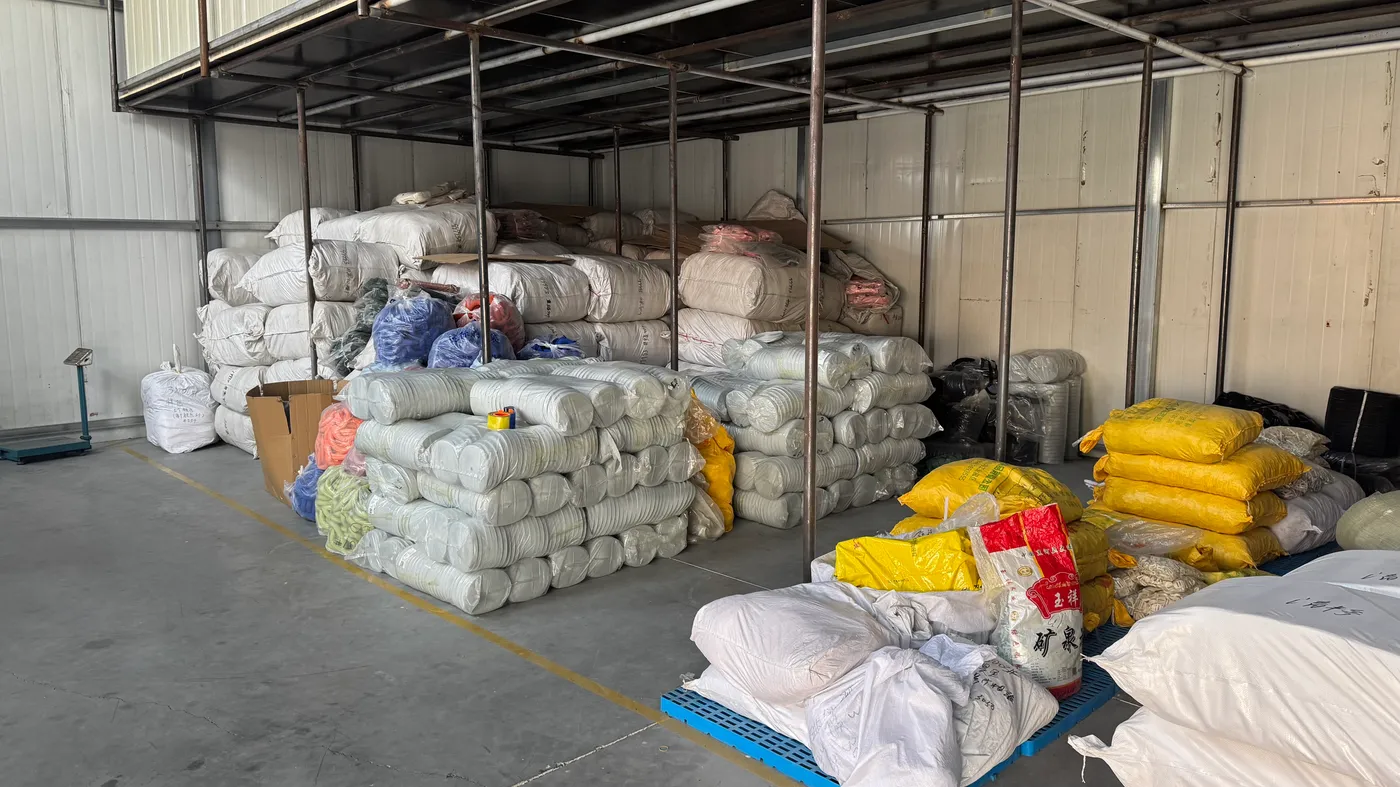
Dubai customs runs almost entirely paperless, and demurrage-free days at the terminal are limited - late or inconsistent documents are the single most common reason a backpack container sits at Jebel Ali burning storage charges.
The Document Set: What Must Be On File Before the Vessel Sails
Customs clearance across the GCC runs on the same core document set. Errors here cause more delay than anything that happens at sea.
| Document | Issued by | What customs checks |
|---|---|---|
| Commercial invoice | Factory/exporter | Value, currency, incoterm, HS root, consignee details, country of origin |
| Packing list | Factory/exporter | Cartons, pieces per carton, net/gross weight, CBM - must reconcile with the B/L |
| Bill of lading | Carrier/forwarder | Shipper, consignee, notify party, container and seal numbers |
| Certificate of origin | China Council for the Promotion of International Trade (CCPIT) or local issuing body, often legalised | Country of origin claim - several GCC states require attestation |
| SABER SCoC (Saudi only) | Certification body via SABER platform | Matches product certificate and HS code |
| Insurance certificate | Insurer | Required to construct CIF value where duty is CIF-based |
Three field-level details that repeatedly trip up first-time importers:
Consignee name consistency. The name on the bill of lading, the invoice and the importer registration must match character for character. "Al Noor Trading LLC" and "Alnoor Trading L.L.C." are different entities to a customs computer.
Origin marking on the goods. GCC customs expects the goods themselves to carry origin marking - every Senszx backpack ships with a sewn-in "Made in China" label and carton-level origin print as standard. Unmarked goods can be held for re-marking at the port, at your cost.
Values that look too low. GCC customs maintains valuation databases by HS code. An invoice at $2.00 for a padded laptop backpack will be queried against reference values, and the uplift plus penalty costs far more than the duty saved. Declare the real transaction value.
Incoterms: Who Owns Which Risk
The incoterm on your purchase order decides who books freight, who insures, and where responsibility transfers. For China-to-GCC backpack shipments, three terms cover almost every real transaction:
| Term | Factory handles | You handle | Best for |
|---|---|---|---|
| FOB (Free On Board) | Production, export clearance, delivery onto vessel at Chinese port | Ocean freight, insurance, destination clearance, delivery | Buyers with their own forwarder - the default for experienced importers |
| CIF (Cost, Insurance, Freight) | Everything in FOB plus ocean freight and minimum insurance to destination port | Destination clearance, port charges, delivery | Buyers who want one price to port but can clear locally |
| DDP (Delivered Duty Paid) | Everything, including destination duty, VAT and delivery | Receiving the goods | First orders, e-commerce sellers without an importer code |
Our standing advice after two decades of GCC shipments: buy FOB as soon as you have a reliable forwarder. You see the real freight market, you choose the carrier and the routing, and you are never hostage to a seller-nominated forwarder's destination charges - the classic trap of cheap CIF, where a low headline freight is recovered through inflated destination handling fees. CIF is fine from a factory you trust; DDP is a service we arrange for small first orders and e-commerce consignments, priced transparently with the duty and VAT shown as line items.
One more term deserves a mention: EXW (Ex Works) sometimes appears on trading-company quotes because it is the lowest possible number. It leaves Chinese export clearance to you - which you cannot do without a Chinese export licence. Treat EXW quotes from China as FOB quotes with a hidden $300-500 surcharge waiting to surface.
Sea Freight: Routes, Transit Times and Container Choices
Backpacks are a volume cargo, not a weight cargo - a container cubes out long before it weighs out. That makes your freight decision mostly about CBM, sailing schedule and routing.
Main lanes from China to the Gulf
| Lane | Service pattern | Indicative port-to-port transit |
|---|---|---|
| Shenzhen / Ningbo / Shanghai → Jebel Ali (UAE) | Multiple direct weekly sailings | ~15-22 days direct |
| South & East China → Dammam (Saudi east coast) | Direct calls plus transhipment via Jebel Ali | ~18-30 days; transhipment adds 4-7 days |
| South & East China → Jeddah (Saudi west coast) | Direct services on Asia-Red Sea loops, schedule-sensitive | ~18-28 days, route-dependent |
| China → Hamad (Qatar), Sohar (Oman), Shuwaikh (Kuwait), Bahrain | Mostly feeder via Jebel Ali or Khor Fakkan | Jebel Ali transit + 3-7 feeder days |
Treat these as planning ranges, not promises. Actual transit swings with carrier schedules, congestion and - on the Jeddah lane especially - regional routing conditions that have varied significantly in recent years. Two rules keep you safe: ask your forwarder for the live schedule of a named vessel, not a brochure average, and add a 7-10 day buffer between ETA and any contractual delivery date. A school-season programme that must be on Saudi shelves on 15 August should be sailing in June, not mid-July.
Direct vs transhipment
A direct service drops your container at the destination port from one vessel. A transhipped service discharges it at a hub - usually Jebel Ali for Gulf feeders - and reloads it onto a smaller vessel. Transhipment is often $100-300 cheaper per container and entirely respectable, but it adds the hub dwell time and one more handling event. For time-critical seasonal cargo, pay for direct; for stock replenishment, transhipment money is usually better spent elsewhere.
LCL, 20ft or 40ft: the cube arithmetic
A mid-size 25L backpack packs roughly 25-35 pieces per export carton of about 0.11-0.14 CBM, which works out to roughly 220-300 backpacks per CBM depending on size and padding. Applied to standard equipment:
| Mode | Usable volume | Approximate backpack capacity (25L size) | When it wins |
|---|---|---|---|
| LCL (groupage) | Pay per CBM, ~1-12 CBM practical | up to ~3,000 pcs | Orders below ~10 CBM; note LCL destination charges per CBM are high in the Gulf |
| 20ft container | ~26-28 CBM | ~6,000-8,000 pcs | Mid-size orders; heavier dense cargo |
| 40ft high-cube | ~68-72 CBM | ~16,000-20,000 pcs | Full programmes; lowest freight per piece |
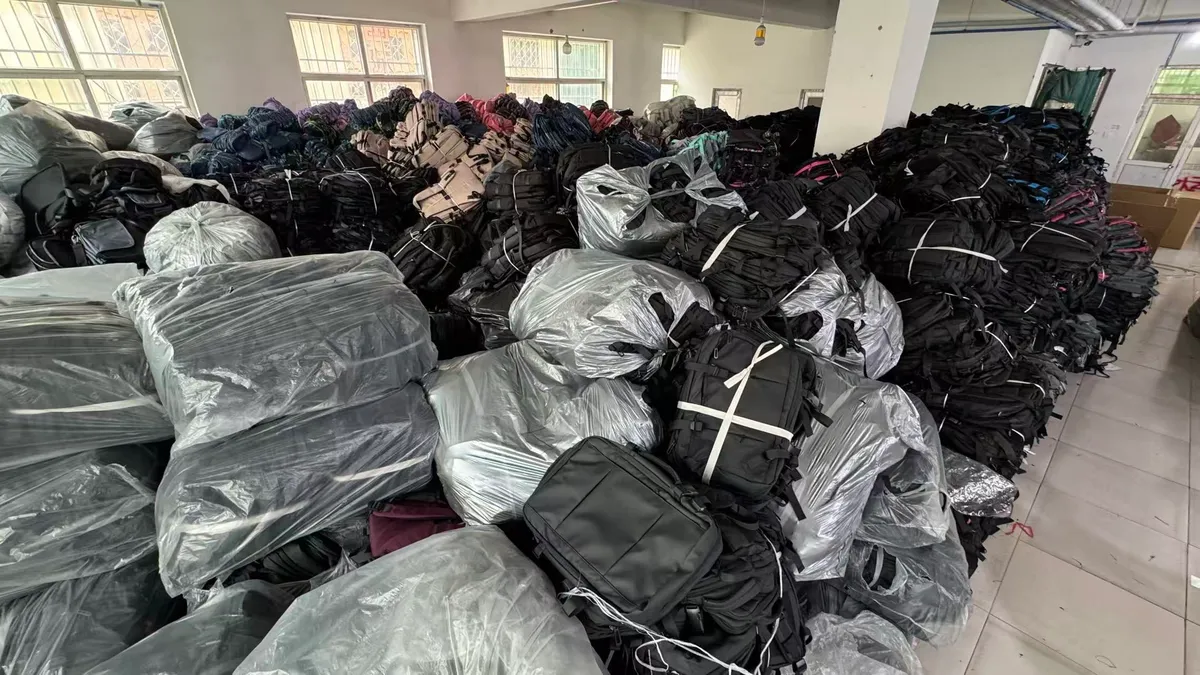
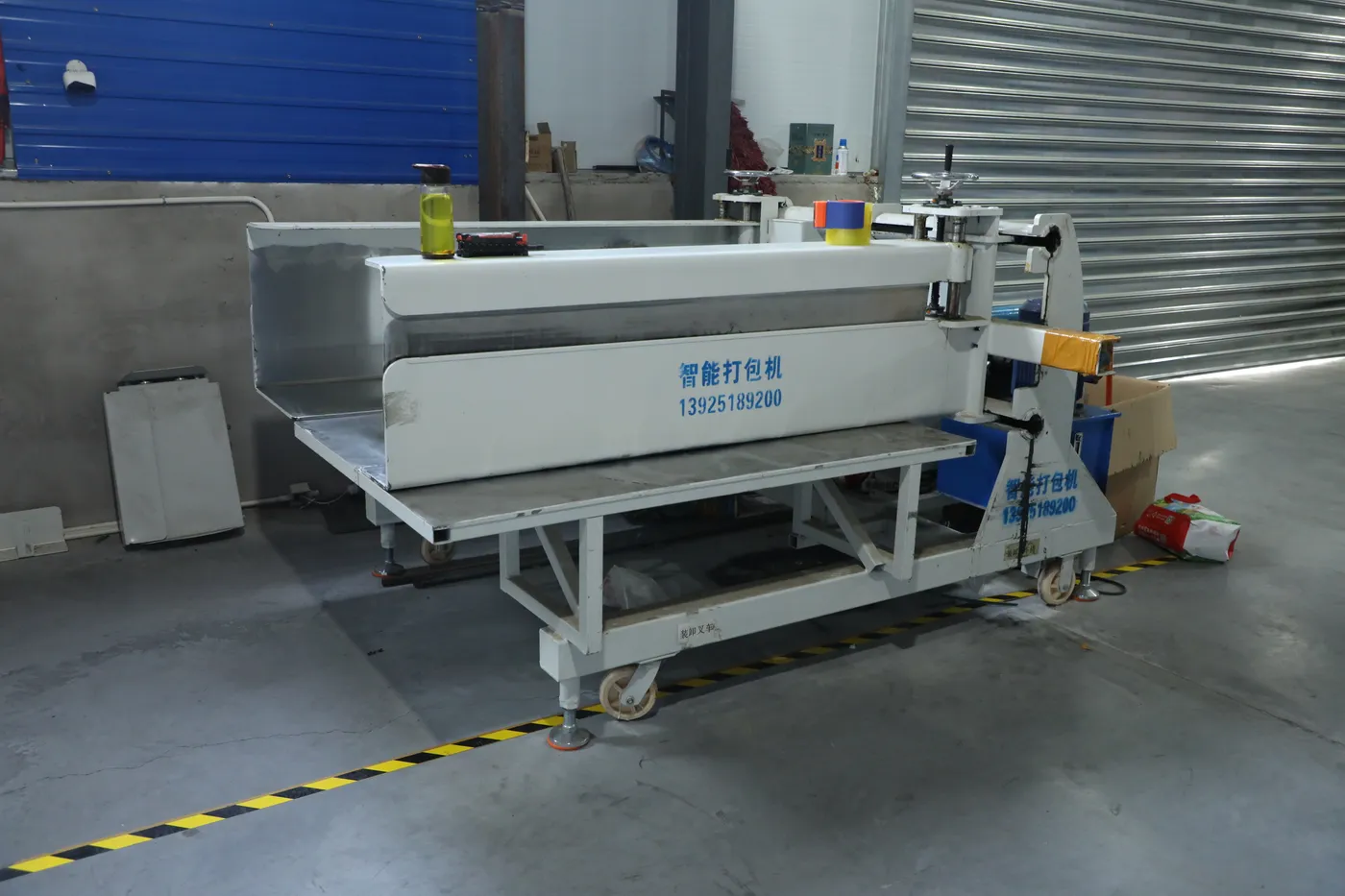
Two cost levers live inside this table. First, LCL destination charges in GCC ports are notoriously heavy - handling, documentation and delivery-order fees per CBM can double the apparent ocean rate, so once an order passes roughly 8-10 CBM a dedicated 20ft box is usually cheaper end-to-end. Second, compression packing matters: soft backpacks without rigid frames can be vacuum- or bale-compressed to cut carton volume significantly. Our warehouse runs bale presses for exactly this reason - on unstructured designs, compression can save a meaningful share of the freight bill, and we will tell you at quotation stage whether your design tolerates it without creasing damage.
Air and express: when the maths flips
Sea freight from China to the Gulf costs a small fraction of air, but air exists for a reason:
- Samples and pre-production approvals always fly - a 2-5 kg sample parcel by express courier reaches Riyadh or Dubai in 3-6 days.
- Shortfall top-ups. If a bestseller runs out mid-season, flying 500 pieces while the sea replenishment follows can protect a listing's momentum that is worth far more than the freight difference.
- Ultra-light launches. For a product launch where two weeks of market lead matters, air on the first 10-15% of the order with the balance by sea is a pattern we see from experienced e-commerce sellers.
The rough decision rule: air freight makes sense when the per-piece freight penalty is below the per-piece margin you protect by being early. For a $9 FOB backpack retailing at AED 149, that is true surprisingly often.
Packing, Labeling and Markings the GCC Expects
Clearance problems are cheaper to prevent in the packing specification than to fix at the port. Our standard GCC export packing for backpacks:
- Unit packing: each backpack in a self-seal polybag with a suffocation-warning print; barcode sticker on the bag where the buyer provides EAN/UPC data.
- Sewn-in labels: brand label, origin label ("Made in China"), material-composition and care label. Arabic-language consumer information is increasingly expected at retail in Saudi Arabia - supplying bilingual Arabic/English care labels at production costs cents and avoids relabelling at destination. Send label artwork with the tech pack.
- Export cartons: 5-ply corrugated, moisture-resistant, printed with consignee mark, carton number, quantity, net/gross weight, CBM and origin. Carton markings must reconcile exactly with the packing list - GCC inspectors do count.
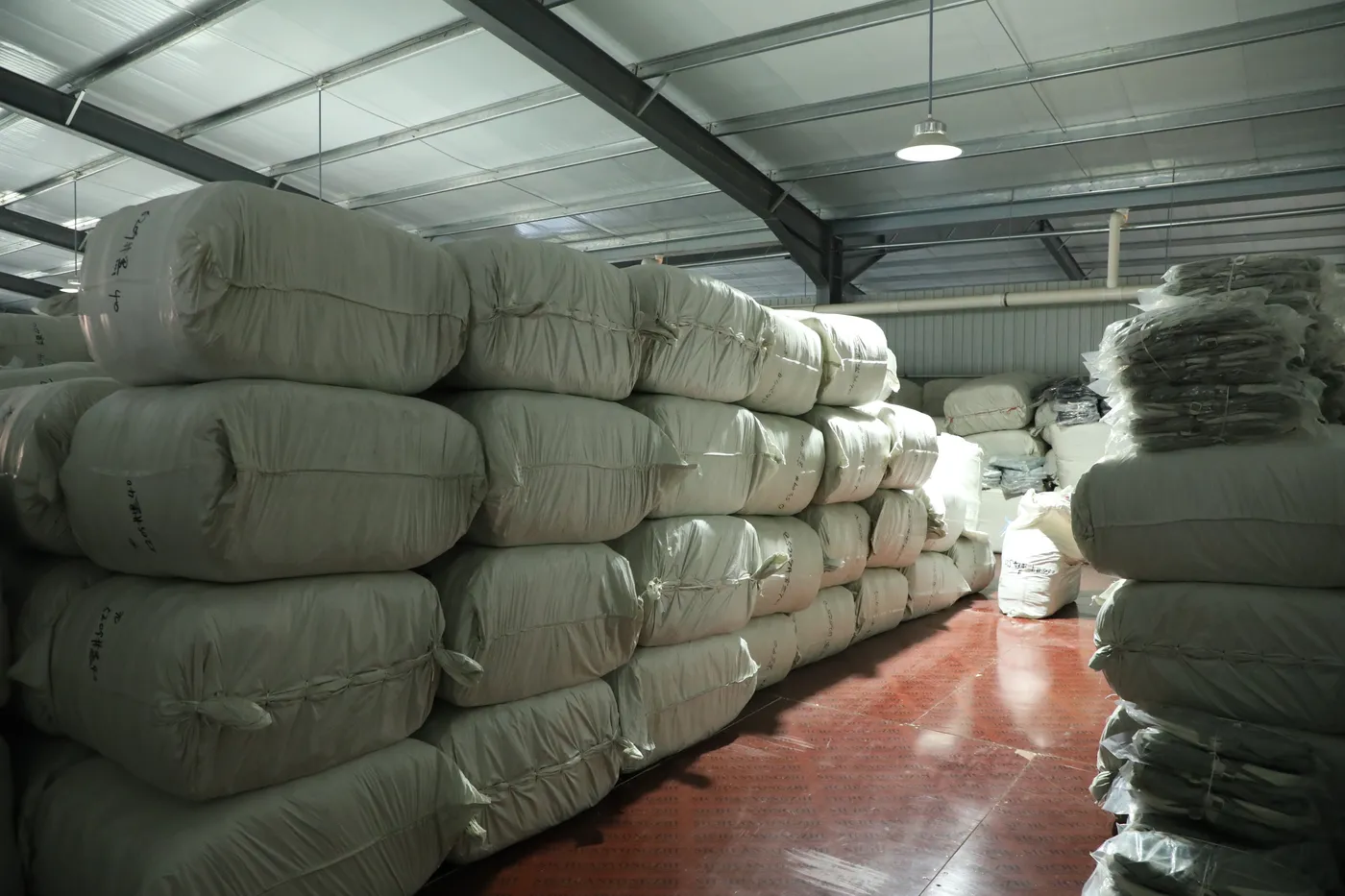
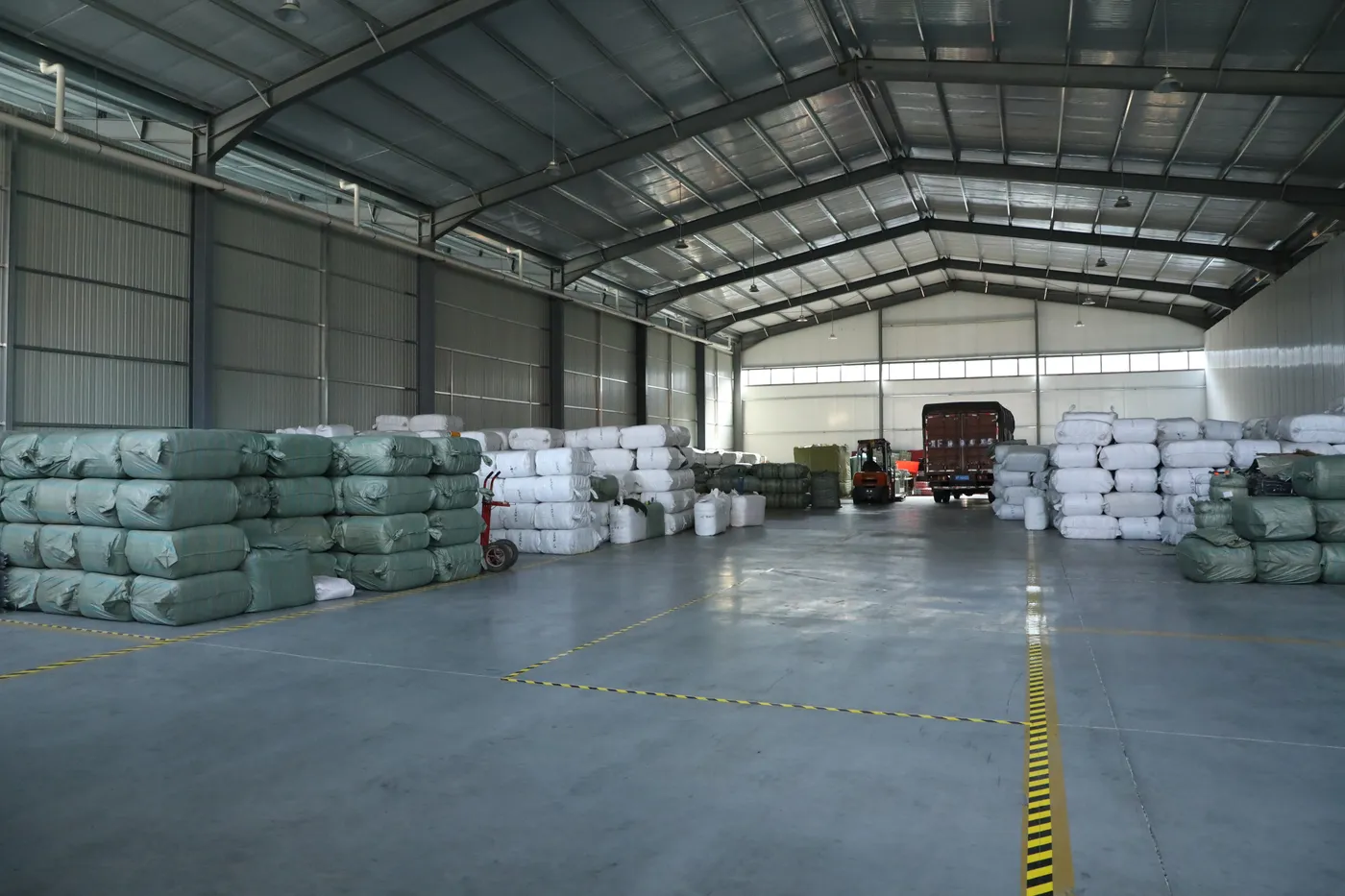
- Container loading: floor-loaded for maximum cube or palletised on request; desiccant inside every carton for the humid Gulf summer, and a loading plan photographed carton by carton before the doors close.
For children's school backpacks, we additionally recommend age-appropriate design review at sampling - no long free cords, secure small parts, lead- and phthalate-compliant materials with test documentation available for conformity registration. It is far easier to specify this upstream than to argue it with a certification body downstream. Our school backpack programmes build these requirements in by default.

Pre-Shipment Inspection: Your Last Cheap Decision
Once a container sails, every quality problem becomes a Gulf-side problem: re-export is uneconomic, local rework is expensive, and a rejected batch of school backpacks in July is a lost season. The inspection regime is therefore not bureaucracy - it is the last point where a defect costs cents instead of dollars.
The standard sequence for a GCC order:
- Pre-production sample approval. You sign off a golden sample before bulk cutting. Every later check references it.
- During-production inspection (DUPRO) at 20-40% completion - catches systematic errors while they are still correctable on the line.
- Final random inspection (FRI) against AQL 2.5/4.0 (major/minor) on the packed goods, checking workmanship, measurements, labeling, barcode scans, carton drop performance and the packing-list reconciliation.
- Loading supervision where the buyer wants it: container condition, desiccant placement, carton count at the door, seal number photographed.
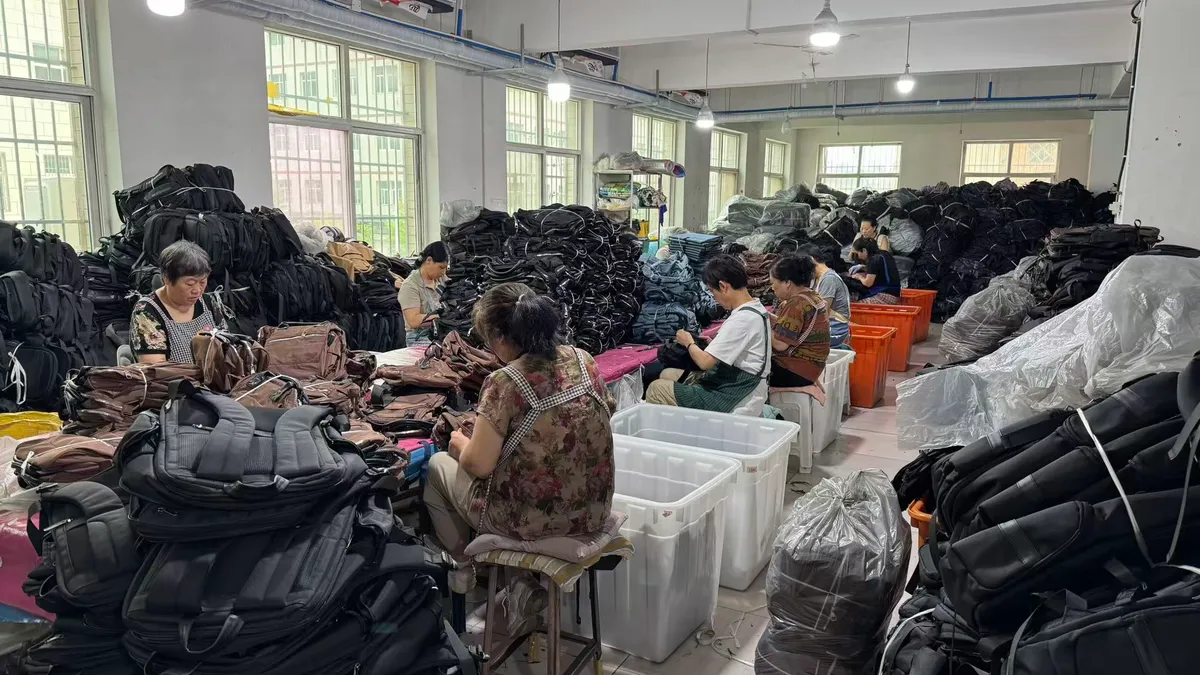
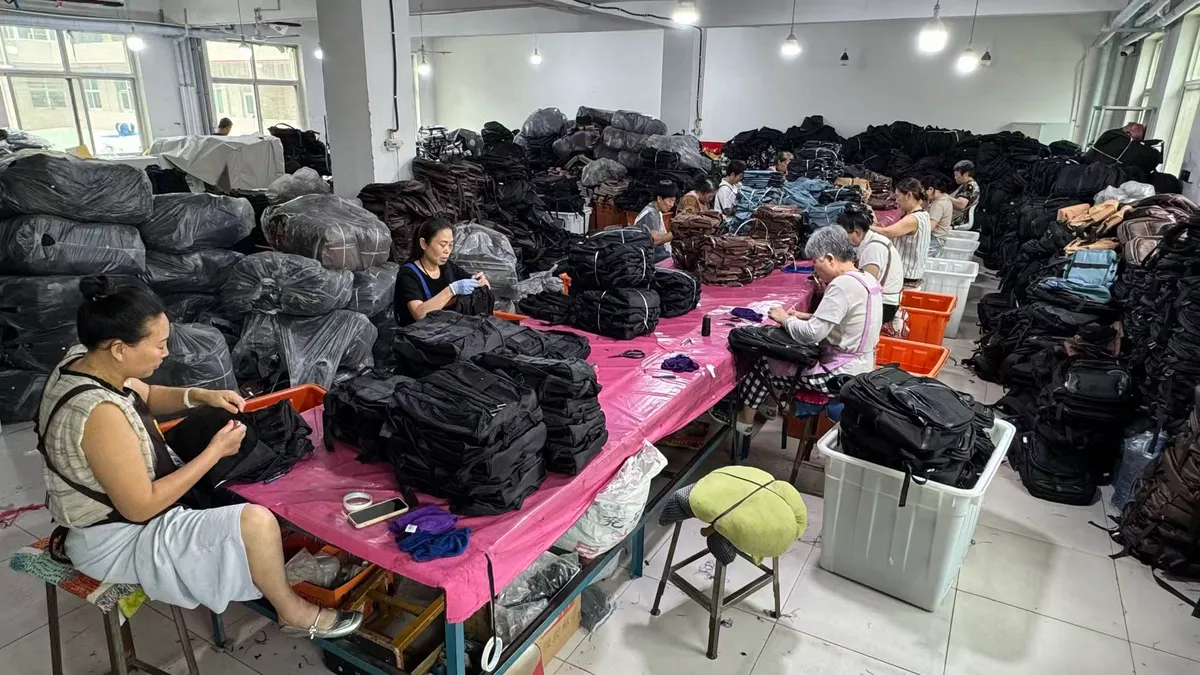
You have three ways to run this: rely on the factory's internal QC, hire a third-party agency (typical cost a few hundred dollars per man-day in China), or both for first orders. We run 100% piece-level inspection internally - every zipper cycled, every strap bartack checked - and we actively welcome third-party FRI on top; the factories that discourage external inspection are telling you something. Full detail on our internal regime is on the quality assurance page, and the machine park behind it (tensile testers, colour-fastness, zipper fatigue) is documented there too.
The practical advice: write the AQL level and the golden-sample reference into your purchase order. "Goods to match approved sample ref S-2417, FRI at AQL 2.5/4.0, inspection access guaranteed" is one sentence that converts quality from a hope into a contract term.
Worked Example: Landed Cost of a Backpack Order to Riyadh and Dubai
Numbers make the structure concrete. Take a real-shaped order: 2,000 custom 25L laptop backpacks at $8.00 FOB Shenzhen, packed 30 per carton, 67 cartons, about 8.7 CBM, 1,450 kg - comfortably inside LCL territory or a light 20ft box. Figures below are illustrative planning values; freight moves weekly and fees vary by agent.
| Cost line | Riyadh via Dammam (SAR market) | Dubai mainland via Jebel Ali |
|---|---|---|
| Goods FOB | $16,000 | $16,000 |
| Ocean freight + insurance (indicative) | $1,100 | $900 |
| CIF value | $17,100 | $16,900 |
| Customs duty | elevated band on 4202 - confirm live rate; at an illustrative 15%: $2,565 | 5%: $845 |
| Import VAT | 15% on (CIF + duty): $2,950 | 5% on (CIF + duty): $887 |
| SABER certificates (product + shipment) | ~$400-600 first time | - |
| Port, clearance, delivery order, trucking | ~$700 | ~$650 |
| Cash to landed, before VAT recovery | ~$23,800 | ~$19,300 |
| VAT recoverable as input tax | $2,950 | $887 |
| Net landed cost | ~$20,850 → ~$10.40/pc | ~$18,400 → ~$9.20/pc |
Read three lessons out of this table rather than the absolute numbers:
The FOB price is only 75-85% of your real cost. A buyer comparing factory quotes by FOB alone, while ignoring who pays for compliant labeling, SABER documentation support and inspection access, is comparing the wrong number. Our cost breakdown guide shows what sits inside the FOB; this table shows what sits on top of it.
Saudi duty exposure makes classification and value accuracy worth real money. At an elevated duty band, a $0.50 error per piece in declared value moves the duty bill meaningfully on every container - in both directions. Get the 12-digit code and the valuation right once, with a competent broker, and reuse the file for every subsequent shipment.
VAT is cash flow, not cost - if you are registered. The $2,950 Saudi import VAT comes back as input tax, but only to a VAT-registered importer. Unregistered small buyers eat it. For a serious Saudi programme, registration is not optional arithmetic.
The Seven Mistakes That Actually Cost GCC Importers Money
After two decades of shipping into the Gulf we see the same failures repeat. None of them is exotic; all of them are preventable.
1. Starting SABER after the goods ship
The container arrives in 25 days; a first-time product registration can take two weeks. Sequential instead of parallel processing turns a routine clearance into demurrage. Start platform work on order day.
2. Booking freight for the brochure transit time
"18 days" becomes 26 with one missed transhipment connection. Seasonal goods need a buffer week minimum - school-season cargo, two.
3. Comparing CIF quotes without destination charges
The cheap CIF quote recovers its margin in destination handling fees you discover at the delivery-order stage. Always ask: what are the destination charges, in writing, before booking.
4. Invoice values that fight the valuation database
Under-declaration triggers reassessment, penalties and - worse - a flagged importer record that slows every future shipment. The duty saved once is paid back for years.
5. Inconsistent consignee details across documents
One character of mismatch between B/L, invoice and importer registration is a hold. Fix the template once; proofread every shipment.
6. No Arabic labeling plan
Relabelling thousands of backpacks in a Gulf warehouse costs multiples of what bilingual sewn-in labels cost at production. Decide labeling at tech-pack stage.
7. Skipping final inspection to save a few hundred dollars
A $300 third-party FRI against a $20,000 consignment is the cheapest insurance in the entire chain. The money saved by skipping it is remembered precisely until the first customer return wave.
The End-to-End Timeline: Order Day to Gulf Warehouse
Importers consistently underestimate not the production time, but the sum of small administrative intervals around it. Here is the realistic calendar for a first custom order to Saudi Arabia, assuming a buyer who starts with a design brief rather than a finished tech pack:
| Phase | Working days | What happens | Who drives it |
|---|---|---|---|
| Specification & quotation | 2-4 | Tech pack review, material confirmation, FOB quote | Both |
| Sampling | 3-5 | Development sample made and couriered | Factory |
| Sample review & revision | 3-7 | Your approval or one revision round (+3-5 days per round) | Buyer |
| Deposit & order confirmation | 1-2 | PI signed, 30% deposit, golden sample sealed | Buyer |
| SABER product registration | 5-15 | Runs in parallel with production from day one | Importer + cert body |
| Bulk production | ~20 | Materials in, cutting, sewing, finishing | Factory |
| Final inspection & booking | 2-4 | FRI, balance payment, container booking and loading | Both |
| Ocean transit | 15-30 | Port to port, lane-dependent (see freight section) | Carrier |
| Shipment certificate (SCoC) | 1-3 | Issued against the registered product before arrival | Importer + cert body |
| Clearance & delivery | 2-5 | Declaration, duty/VAT payment, gate-out, trucking | Broker |
Total: roughly 8-12 weeks door to door for a first order, of which production is only three. Repeat orders compress dramatically - sampling disappears, SABER product registration is already on file, and the realistic cycle drops to 5-7 weeks. The planning rule we give every seasonal buyer: count backward from the shelf date, add two buffer weeks, and that is your last safe order date. For Saudi back-to-school (shelves stocked by early August), final orders should be confirmed by mid-May.
For urgent gap-filling there is a shortcut worth knowing: our in-stock wholesale programme ships existing designs from warehouse stock in days rather than weeks, with custom branding applied in small runs - a common bridge while a full custom programme is in production.
How a Factory Can Carry Part of the Import Burden
A manufacturer cannot clear Saudi customs for you, but the difference between a factory that understands GCC trade and one that merely sews is measured in days of demurrage and hours of document correction. What a GCC-experienced factory should be doing on your behalf - and what we do as standard at Senszx after nearly two decades of Middle East shipments:
- Documents built for your broker, not for our filing cabinet. Commercial invoice and packing list issued in the consignee's exact registered name, 6-digit HS root stated, incoterm explicit, carton marks reconciled line by line. Certificate of origin arranged through CCPIT, with legalisation where the destination requires it.
- Conformity support as a service, not a favour. Material composition sheets, product photos to certification-body specification, care-label artwork files and lab test reports packaged for SABER product registration - supplied with the order, because asking for them three weeks after shipment is how clearances stall.
- GCC-literate product engineering. Bilingual Arabic/English labels, suffocation-warning polybags, desiccant for Gulf humidity, school-age safety detailing, and fabric choices that survive 45°C container transits without delamination - specified at the sample room stage, not discovered at destination. Materials guidance lives in our fabric guide and custom fabrics pages.
- Freight-ready packing. Carton engineering for container cube, bale compression where the design tolerates it, loading plans photographed, and direct coordination with your nominated forwarder on FOB terms - or a transparent CIF/DDP arrangement through our long-term freight partners when you prefer one invoice.
- Inspection without friction. 100% internal piece inspection as baseline, third-party FRI access written into every order, and the full factory floor open to buyer audits - see the factory tour.
Certifications sit underneath all of this: BSCI social compliance plus ISO9001, ISO14001 and ISO45001 management systems, documentation available for your vendor-onboarding files on the certifications page. Payment terms, bank details and the standard 30/70 structure are documented on payment information.
None of this replaces your broker, your forwarder or your VAT registration. It means that when they do their jobs, every document they need already exists, in the right name, with the right numbers. That is the factory's share of a clean import - and it is the part you should be auditing when you compare suppliers, because it never shows up in the FOB price.
Planning Around the GCC Sales Calendar
Import timing in the Gulf is not generic - demand concentrates around a handful of fixed peaks, and the production-plus-transit lead time means order dates are effectively set by the calendar, not by preference.
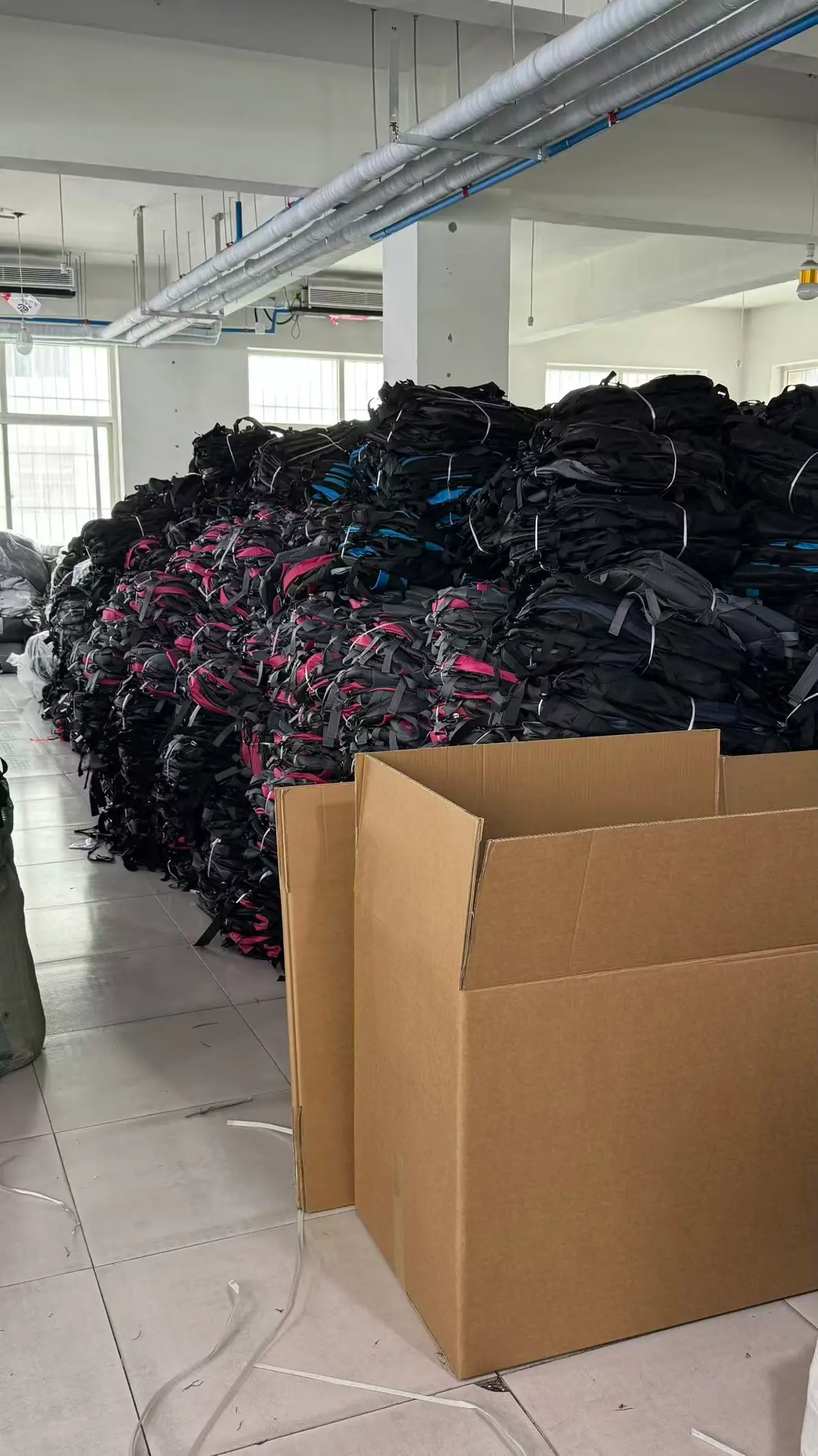
Back-to-school is the giant. The Saudi and UAE school year starts in late August to early September, and retail shelves are stocked from mid-July. Working backward - two weeks buffer, four weeks transit, three weeks production, two weeks sampling and approval - final purchase orders for school backpack programmes belong in April to mid-May. Buyers who arrive in June are choosing between air freight premiums and missing the season; there is rarely a third option.
Ramadan shifts logistics as well as demand. Gift-oriented products peak before and during Ramadan, but clearance capacity at Gulf ports runs on reduced working hours through the month, and the Eid holidays pause clearance entirely for several days. Containers arriving in the final week before Eid routinely gate out after it. Schedule arrivals at least two weeks before Ramadan begins, or accept the dwell.
Chinese New Year is the supply-side blackout. Factories across China close for two to three weeks around the holiday (January-February, dates shift annually), and the fortnight before it is the busiest, most error-prone shipping window of the year. Orders intended to sail before CNY need confirmation by late November; otherwise plan for production restarting in late February - which, counted forward, is still comfortably in time for back-to-school orders placed on the April schedule.
Corporate gifting clusters at year-end and around trade fairs. Conference season and corporate-gift programmes concentrate in Q4, and buyers sourcing at the Canton Fair (April and October) should note that fair-sourced orders join everyone else's post-fair production queue - sampling before the fair and confirming at it is the experienced buyer's pattern.
One planning table makes the rhythm explicit: school programmes ordered by May, Ramadan stock arriving a fortnight early, CNY treated as a three-week supply gap, and Q4 gifting confirmed by September. Importers who internalise these four dates stop paying rush surcharges entirely - the calendar does not negotiate, but it is completely predictable.
Frequently Asked Questions
What is the HS code for backpacks imported into the GCC?
Textile-surfaced backpacks (polyester, nylon, PU-coated fabrics) classify under heading 4202.92 at the international 6-digit level; genuine-leather backpacks under 4202.91. GCC states extend this to a national 12-digit code which determines the exact duty rate, so confirm the full code with your clearing broker before costing - the 6-digit root from the factory invoice is the starting point, not the final answer.
How much customs duty will I pay on backpacks in Saudi Arabia?
Saudi Arabia moved articles of heading 4202 above the 5% GCC baseline in its 2020 tariff revision, and bags are commonly assessed in an elevated band - our worked example uses an illustrative 15%. The live rate for your exact 12-digit code should be confirmed with a Saudi broker before you fix retail pricing, because duty is the single largest variable between a Saudi and a UAE landed cost. Import VAT of 15% applies on top of CIF plus duty, recoverable for VAT-registered importers.
Do backpacks need SABER certification to enter Saudi Arabia?
Yes - goods imported commercially into Saudi Arabia require registration through the SABER platform: a Product Certificate of Conformity registered once per product, and a Shipment Certificate of Conformity issued per consignment before arrival. Textile bags follow a lighter pathway than high-risk categories, but skipping the platform entirely means the shipment is not cleared. Registration is done by the Saudi importer; the factory's role is supplying specification documents, photos and test reports.
How long does shipping take from China to Dubai or Saudi Arabia?
Indicative port-to-port transits: China to Jebel Ali roughly 15-22 days on direct services; to Dammam roughly 18-30 days (direct or via Jebel Ali transhipment, which adds 4-7 days); to Jeddah roughly 18-28 days depending on routing. Add inland time, clearance and a buffer - realistic door-to-door planning is 4-6 weeks from vessel departure. For first custom orders, the full cycle from design brief to Gulf warehouse runs 8-12 weeks including production.
What is the minimum order quantity for custom backpacks to the Middle East?
Our MOQ is 500 pieces per fully custom style, which ships economically as LCL cargo. Full customisation - fabric colour, logo application, lining print, custom zipper pulls - is available from this quantity, with unit economics explained in the cost breakdown. For quantities below MOQ, the development programme covers pattern making and sampling for a one-time fee credited against the first 500+ piece order.
Should I buy FOB, CIF or DDP for my first order?
For a genuine first order with no importer code and no forwarder relationship, DDP through the factory's freight partner is the lowest-friction start - one price, goods delivered, duty and VAT itemised. From the second order onward, move to FOB with your own forwarder: you control routing, see the real freight market, and avoid destination-charge surprises baked into cheap CIF quotes.
Can I clear goods in Dubai and then sell them in Saudi Arabia?
Yes - goods that paid the common external duty at first GCC entry can move onward under the intra-GCC mechanism with proof of duty payment. But two caveats: Saudi conformity requirements (SABER) still apply to goods entering the Kingdom, and the practical paperwork of duty-paid transfers needs a broker experienced in GCC transit. Many distributors instead hold stock in a UAE free zone duty-unpaid and clear each market separately as orders come.
What documents do I need to import backpacks into the UAE?
Core set: commercial invoice, packing list, bill of lading, certificate of origin, and an importer code with the emirate customs authority. Duty is 5% of CIF and import VAT 5%, both payable at clearance through the electronic declaration. Clean, consistent documents clear Jebel Ali in 1-3 working days; the most common delay cause is consignee-name mismatch between documents.
How many backpacks fit in a 20ft or 40ft container?
Planning figures for a mid-size 25L backpack at 25-35 pieces per carton: a 20ft container (~26-28 usable CBM) holds roughly 6,000-8,000 pieces; a 40ft high-cube (~68-72 CBM) roughly 16,000-20,000. Smaller kids' backpacks pack denser, padded laptop designs looser, and bale compression on unstructured styles can increase capacity meaningfully - we confirm the exact cartonisation with every quotation.
Do my backpacks need Arabic labeling?
For retail sale in Saudi Arabia, Arabic consumer information is increasingly expected and bilingual Arabic/English care and composition labels are the safe standard across the GCC. Sewn-in bilingual labels cost cents at production; relabelling at a Gulf warehouse costs multiples. Specify labeling in the tech pack and the issue disappears.
What quality standard should I specify for a GCC backpack order?
Write three things into the purchase order: the golden-sample reference, a final random inspection at AQL 2.5 major / 4.0 minor, and guaranteed access for third-party inspection. For children's school bags, add age-appropriate safety requirements (small parts, cord lengths, restricted substances) with test documentation - these also feed directly into Saudi conformity registration. Our internal regime of 100% piece inspection runs underneath whatever external standard you specify.
Is it cheaper to import from China or buy from a Dubai wholesaler?
Dubai wholesale is faster - stock today, no import work - but you are buying someone else's import margin, typically 25-40% above landed cost, with no customisation and no exclusivity. Direct import pays off from roughly 300-500 pieces upward if you can wait the production and transit time. The common pattern for growing GCC brands: start with Dubai stock to test the market, then move the proven designs to direct factory programmes with their own branding.
Can Senszx handle the entire process including delivery to my warehouse?
We manufacture, pack to GCC standards, produce the full export document set, support SABER registration with specification documents, and on DDP terms deliver duty-paid to a UAE or Saudi address through long-term freight partners - with duty and VAT shown transparently as line items. What remains yours: importer registration, VAT registration, and final conformity certificates in your name, because the law places those with the importer. We make sure everything they require already exists.
Start With the Spec, Not the Ship
Every durable import programme we supply into the Gulf started the same way: not with a freight quote, but with a precise product specification that priced correctly, certified smoothly and cleared without drama. The sequence that works is unglamorous - tech pack, sample, parallel SABER registration, inspected production, buffered freight - and this guide has given you each step with the numbers attached.
If the Middle East is your market, start the conversation where the cost and compliance are decided: the specification. Visit our GCC buyer page for CIF terms, compliance support and the seasonal calendar, send us your design brief or tech pack for an FOB quotation with GCC-ready packing and documentation included, or request a free sample to put a physical benchmark on your desk. From the first sample courier to the container doors closing, the import process is a known road - and it is considerably shorter with a factory that has driven it for eighteen years. Email [email protected] or message us on WhatsApp at +86 173 3153 1825: tell us the destination port, and we will tell you the realistic calendar.
Hi, I'm Senszx Bag Manufacturer, Hope You Like This Blog Post.
With more than 20 years of experience in OEM/ODM/Custom luggage and bag, I'd love to share with you the valuable knowledge related to luggage and bag products from a top-tier Chinese supplier's perspective.

Senszx Factory
Est. 2006 · Baigou, China
Related articles
Custom Travel Bags with Logo: The Complete Manufacturing, Materials & Branding Guide
An exhaustive B2B manufacturing guide to custom travel bags with logo. Master custom duffle, weekender, and carry-on production, compare 6 branding techniques (screen print, heat transfer, woven labels, rubber patches, debossed leather, digital print), fabric specs (600D-1680D, nylon, canvas), hardware, and OEM factory quality control for 500+ unit runs.
Custom Tactical Backpack Manufacturing & Sourcing Guide: Mil-Spec Fabrics, MOLLE Engineering, and OEM Factory Quality Control
A comprehensive B2B engineering guide to manufacturing custom tactical backpacks. Explore 500D vs 1000D Cordura, laser-cut vs nylon MOLLE webbing, reinforced bartack stitching, POM mil-spec hardware, and OEM/ODM production standards for 500+ unit runs.
Backpack CPSIA Compliance & Safety Testing: The Complete US Importer's Technical Guide
Master US backpack safety compliance: CPSIA regulations, CPC vs GCC certificates, Lead & Phthalates limits, Prop 65, tracking labels, and CPSC lab testing protocols.
Get a Custom Bag Quote from Our China Factory
Our sales team is online around the clock and usually replies within the hour.
Email
[email protected]Factory
Qinzheng Road No.89, New Industry Zone, Baigou Town
Baoding City, Hebei Province 074004, China