Custom Tactical Backpack Manufacturing & Sourcing Guide: Mil-Spec Fabrics, MOLLE Engineering, and OEM Factory Quality Control
A comprehensive B2B engineering guide to manufacturing custom tactical backpacks. Explore 500D vs 1000D Cordura, laser-cut vs nylon MOLLE webbing, reinforced bartack stitching, POM mil-spec hardware, and OEM/ODM production standards for 500+ unit runs.
In the global luggage, defense apparel, and outdoor equipment manufacturing industries, no product demands higher tensile structural integrity, tighter engineering tolerances, and more demanding mechanical durability than the custom tactical and military-grade backpack. Originally developed for armed forces, special operations units, and law enforcement personnel operating in hostile terrain, tactical backpacks have rapidly evolved into a multi-billion-dollar commercial category spanning outdoor bushcraft, survival gear, tactical training, private security, emergency medical services, and rugged everyday carry (EDC) for professionals.
For brand founders, tactical gear distributors, defense supply contractors, and private-label e-commerce directors, sourcing custom tactical backpacks requires technical precision that far exceeds casual bag manufacturing. A field-ready tactical pack is an intricately engineered piece of load-bearing equipment that must flawlessly integrate mil-spec ballistic textiles, modular PALS/MOLLE grid geometry, high-tensile bartack seam architecture, virgin POM hardware mechanics, and multi-tier ergonomic suspension ergonomics.
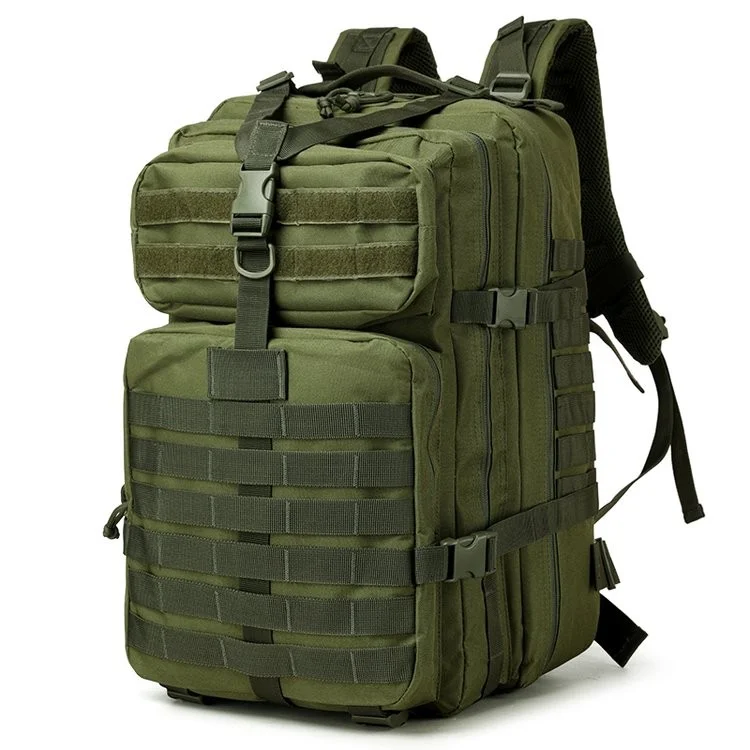
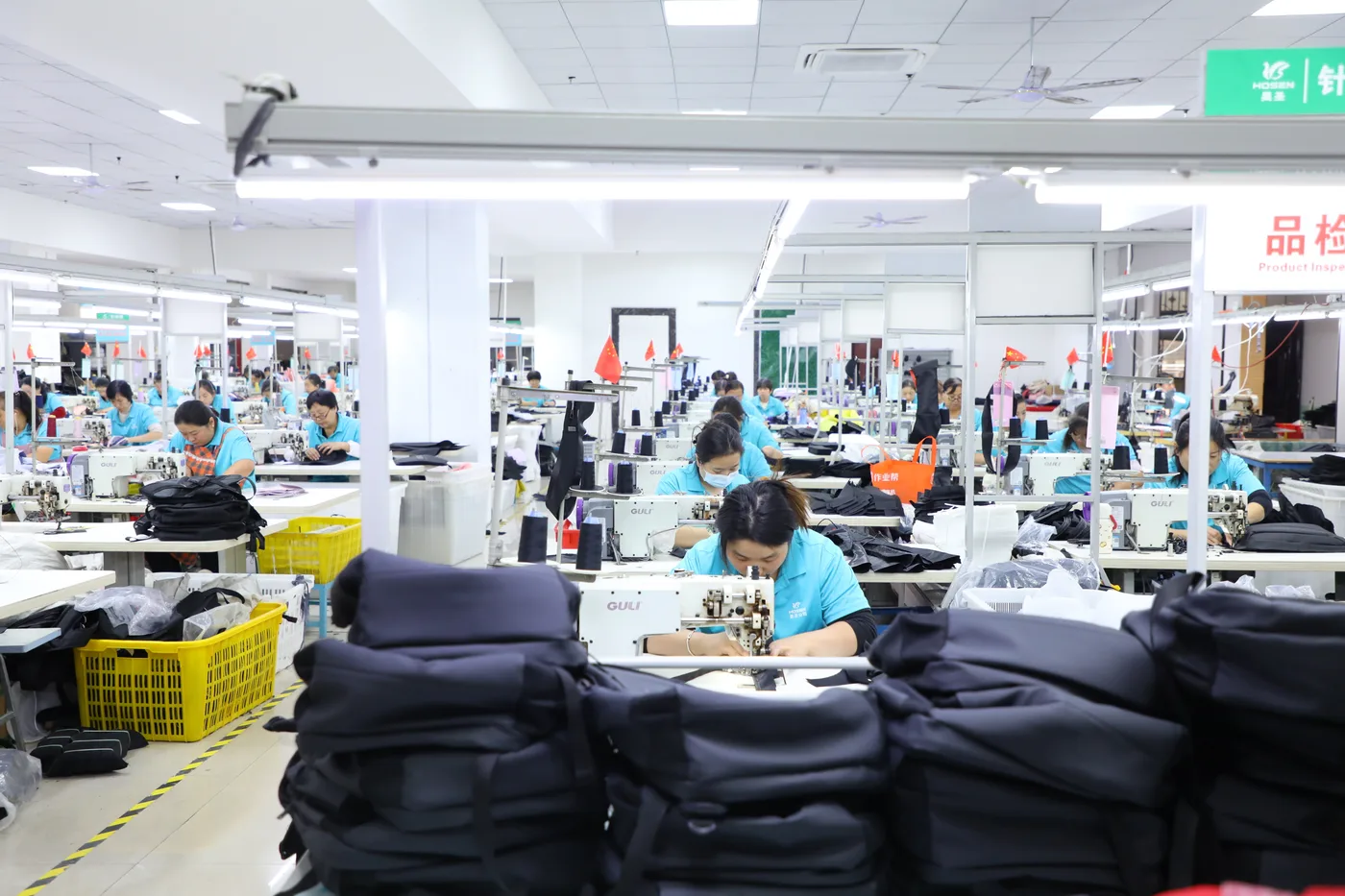
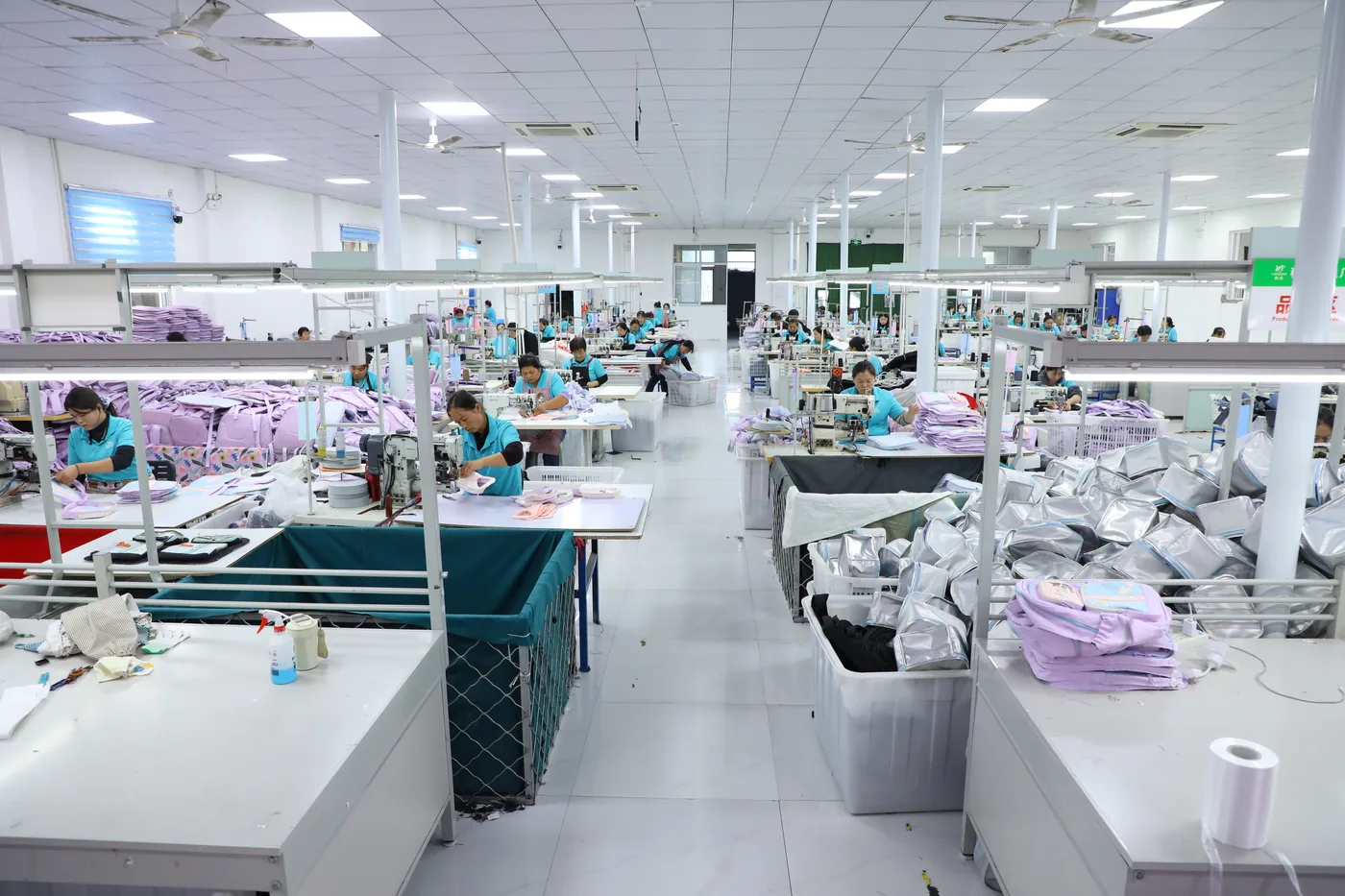
With over 20 years of specialized OEM and ODM luggage manufacturing experience at our production facility in Baigou, China, Senszx has engineered, prototyped, and mass-manufactured millions of heavy-duty backpacks for leading outdoor brands, tactical gear retailers, and enterprise clients across North America, Europe, Australia, and the Middle East.
This comprehensive technical guide provides an exhaustive engineering roadmap for designing, specifying, and manufacturing custom tactical backpacks. Whether you are drafting your first custom backpack tech pack, evaluating mil-spec textiles in our custom fabric catalog, calculating manufacturing budgets with our custom backpack cost breakdown, exploring diverse silhouettes in our types of backpacks guide, learning about heavy-duty Cordura textiles in our what is Cordura guide, or selecting a verified OEM custom backpack manufacturing partner, this guide provides the actionable data and factory-floor insights necessary to build world-class tactical gear.
1. Introduction: The Evolution of Custom Tactical Backpack Manufacturing
The modern tactical backpack market has transitioned from rigid, heavy-weight military surplus gear into a sophisticated ecosystem of lightweight, ergonomic, and modular platforms. Today's commercial tactical consumers—from law enforcement officers and first responders to competitive marksmen, outdoor hikers, and urban commuters—demand bags that combine battlefield-grade abrasion resistance with executive internal organization and all-day carry comfort.
In historical military supply chains, packs were primarily evaluated on brute fabric weight, resulting in 1000D to 1200D cotton-duck canvas or heavy nylon rucksacks that weighed in excess of 2.5 to 3.5 kilograms empty. While indestructible, these legacy packs imposed severe physical fatigue on the operator. Contemporary tactical gear engineering centers on optimized strength-to-weight ratios, utilizing high-tenacity air-textured 500D nylon, composite laser-cut laminates, and advanced dual-density closed-cell foams to cut dry pack weight by up to 35% without sacrificing critical puncture, tear, or tensile load limits.
1.1 Commercial Market Demand and B2B Procurement Realities
When evaluating the North American and European tactical gear markets, commercial brands face intense consumer scrutiny. End-users subject these backpacks to rigorous field abuse: strapping heavy steel plate carriers over the shoulder harness, mounting 15-kilogram ammunition and radio loads, dragging packs across jagged granite rock faces, and operating across torrential monsoon rains and freezing winter snowstorms.
For private-label brand owners, partnering with an experienced OEM factory prevents the common engineering failures that plague low-tier manufacturers:
- MOLLE Grid Shear Failures: Stitching failure along PALS ladder loops caused by inadequate thread tensile strength or lack of automated bartacking.
- Shoulder Strap Anchor Delamination: Catastrophic seam blowout where the upper shoulder harness meets the back panel under dynamic shock loads.
- Hardware Embrittlement: Plastic side-release buckles shattering in sub-zero winter temperatures due to cheap recycled polypropylene (PP) or ABS substitutions.
- Zipper Cross-Tension Jamming: Tooth misalignment or fabric tape tearing when overstuffing main cargo compartments under high lateral stress.
| Tactical Manufacturing Metric | Senszx Mil-Spec OEM Standard | Standard Commercial Bag Baseline |
|---|---|---|
| Minimum Order Quantity (MOQ) | 500 pieces / style / colourway (Single-Track OEM/ODM) | 1,000 - 3,000 pieces required |
| Sample Prototyping Lead Time | 3 to 5 business days (100% credited to bulk) | 14 to 21 business days |
| Bulk Production Turnaround | 20 calendar days from pre-production sample sign-off | 45 to 60 calendar days |
| Primary Structural Thread | High-tensile bonded nylon size #69 (Tex 70) / #92 (Tex 90) | Standard spun polyester Tex 40 |
| Stitch Density Standard | 9 to 11 Stitches Per Inch (SPI) with Box-X anchors | 6 to 8 Stitches Per Inch (SPI) |
| Plastic Hardware Standard | 100% Virgin POM (Polyoxymethylene / Acetal) resin | Recycled Polypropylene (PP) / ABS |
| In-House Daily Capacity | 8,000+ completed packs across 100 parallel lines | 1,000 - 2,000 units / line dependencies |
| Social & Quality Compliance | BSCI, ISO 9001, ISO 14001, ISO 45001, CE Certified | Unverified or single local certification |
2. Anatomical Architecture of a Tactical Backpack
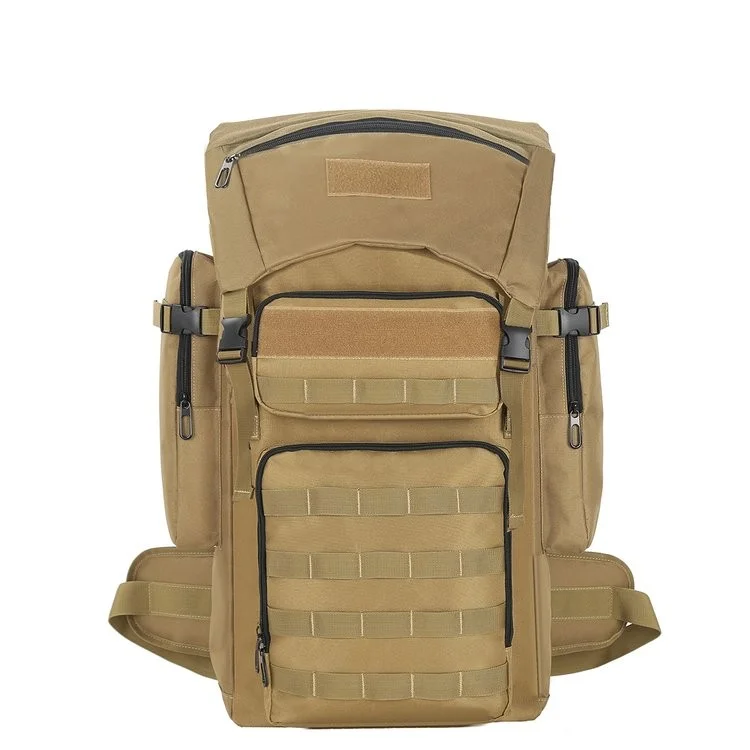
A basic promotional daypack consists of 15 to 20 simple pattern pieces assembled with single-needle lockstitches. In sharp contrast, a commercial-grade custom tactical backpack consists of 65 to 110 discrete cut components, heavy-gauge structural webbing networks, multi-layered closed-cell EVA foam padding, modular hook-and-loop lining fields, and extensive perimeter load-bearing piping.
2.1 Mission-Critical Structural Subsystems
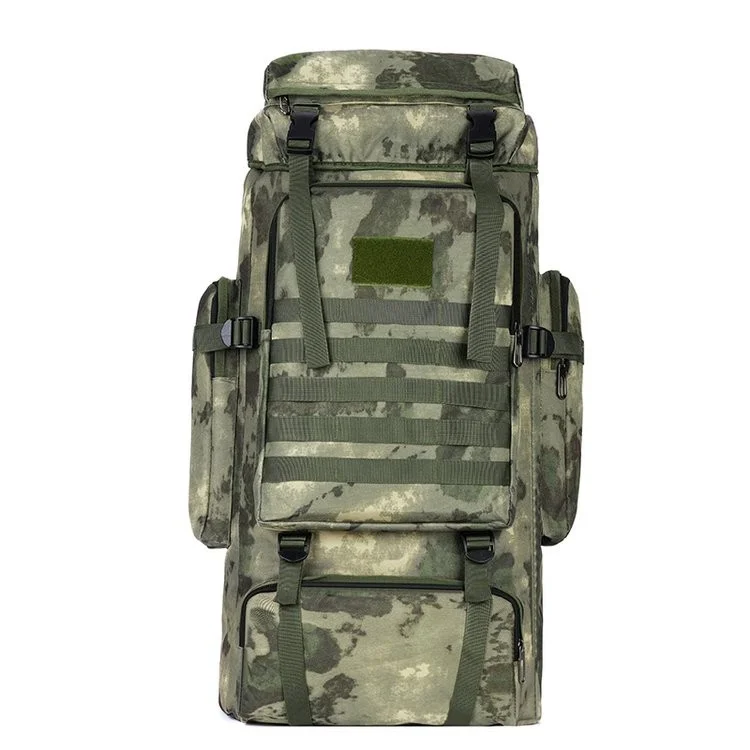
A field-grade tactical backpack is engineered around six integrated structural zones:
- The Primary Tactical Cargo Chassis: The central storage reservoir designed for mission-critical gear, rations, and apparel. It features full 180-degree clamshell flat-opening dual #10 perimeter zippers, internal compression tie-down straps, and multiple zippered mesh utility pockets for segregated gear identification.
- The Hydration & Communications Vault: An internal suspended sleeve dedicated to 2L or 3L water reservoirs, equipped with dual hook-and-loop hanging loops, insulated thermal lining, and sealed left, right, and central hose/cable routing ports with storm-flap covers.
- The Quick-Access Admin & CCW Suite: A multi-tiered front compartment featuring dedicated slots for tactical flashlights, multi-tools, writing instruments, passports, and battery banks, backed by a concealed loop-lined pocket designed for modular hook-and-loop firearm holsters and magazine pouches.
- The Modular Perimeter PALS/MOLLE Grid Surface: Precision-spaced 1-inch mil-spec nylon webbing or CNC laser-cut composite laminates distributed across the front panel, side gussets, and shoulder harness surfaces for modular accessory attachment.
- The Load-Bearing Ergonomic Harness: Anatomically contoured S-curve dual-density shoulder straps, sternum stabilization slider track with emergency whistle buckle, upper load-lifter tension straps, and a removable padded lumbar waist belt transferring weight to the hips.
- The Heavy-Duty Abrasion Base & Drainage Foundation: A double-layered high-denier base panel reinforced with abrasion-resistant PVC/PU coatings, heavy-gauge bottom lash webbing for bedrolls or tripods, and dual brass or coated steel drainage grommets to evacuate moisture.
| Structural Component | Primary Function | Standard Technical Specifications | Key Defect Risk in Manufacturing |
|---|---|---|---|
| Main Clamshell Chassis | 180-degree flat-lay rapid access | Dual #10 reverse-coil zippers, dual slider pulls | Tooth blowout under lateral overstuffing |
| Hydration Reservoir Sleeve | Suspends 2L-3L hydration bladders | 210D ripstop lining, dual hook-and-loop tabs | Seam leak into main compartment |
| Concealed Carry (CCW) Pocket | Secure, quick-draw firearm storage | High-cycle loop velvet lining, silent zipper tabs | Loop delamination from backing panel |
| Admin Utility Organizer | Small tool, pen, and EDC retention | Tiered 600D slip pockets, key leash, elastic loops | Elastic degradation and seam unraveling |
| Side Compression Straps | Stabilizes internal load, reduces pack bulk | 25mm mil-spec nylon webbing, dual POM side-release buckles | Seam shear at side-gusset anchor points |
| Reinforced Base Panel | Resists direct ground friction and wear | Dual-layer 1000D Cordura, dual drainage grommets | Puncture wear and water capillary ingress |
3. Mil-Spec Fabrics & Material Selection Matrix
The fabric shell is the frontline defense of any tactical backpack. Selecting the correct yarn composition, denier count, weave density, and backing chemistry directly dictates the pack's weight, puncture resistance, hydrostatic water barrier, and longevity.
3.1 Technical Comparison of Core Tactical Fabrics
The table below outlines the mechanical properties, hydrostatic performance, and recommended applications for the premier fabrics utilized on our custom fabric manufacturing lines:
| Fabric Classification | Yarn Composition & Denier | Fabric Weight (GSM) | Tensile Strength (Warp / Weft) | Tear Resistance (N) | Hydrostatic Head Rating | Martindale Abrasion Resistance | Best Commercial Application |
|---|---|---|---|---|---|---|---|
| 1000D Mil-Spec Cordura Nylon | 100% Air-Textured Nylon 6.6 | 340 - 360 GSM | 3,100 N / 2,800 N | 420 N / 380 N | 1,500 - 2,000 mm | > 100,000 Rub Cycles | Military rucksacks, heavy-duty deployment bags, base reinforcement |
| 500D High-Tenacity Cordura | 100% High-Tenacity Nylon 6.6 | 220 - 240 GSM | 2,200 N / 1,950 N | 280 N / 250 N | 1,500 - 2,000 mm | > 50,000 Rub Cycles | Modern 3-Day assault packs, lightweight modular tactical daypacks |
| 1680D Ballistic Polyester | 100% Filament Polyester (2x2 Basketweave) | 380 - 410 GSM | 2,600 N / 2,300 N | 310 N / 270 N | 1,200 - 1,500 mm | > 40,000 Rub Cycles | Commercial tactical-style backpacks, rugged corporate gear |
| 900D Heavy-Duty Oxford Polyester | 100% High-Density Polyester | 260 - 280 GSM | 1,850 N / 1,600 N | 220 N / 190 N | 1,500 - 2,000 mm | > 30,000 Rub Cycles | Cost-effective outdoor tactical packs, promotional tactical gear |
| 600D Ripstop Tactical Polyester | 100% Polyester with Grid Reinforcement | 210 - 230 GSM | 1,500 N / 1,350 N | 180 N / 160 N | 1,000 - 1,500 mm | > 20,000 Rub Cycles | Entry-level tactical daypacks, ultralight hunting gear |
| Hypalon / TPU Composite Laminate | Synthetic Rubber / Thermoplastic Polyurethane | 450 - 550 GSM | 3,500 N / 3,200 N | 500 N / 460 N | > 10,000 mm | > 150,000 Rub Cycles | Laser-cut MOLLE panels, waterproof abrasion patches, lash tabs |
3.2 Chemical Backings, PU Coatings & Hydrostatic Performance
To ensure complete water resistance in inclement weather, Senszx applies a multi-stage chemical coating treatment to all tactical textiles:
- Exterior DWR (Durable Water Repellent) Finish: An eco-friendly C0 or C6 fluorocarbon-free surface treatment applied to the face yarns causes rainfall and surface moisture to bead into droplets and roll off, preventing fabric face saturation and added water weight during extended field operations.
- Dual-Pass Polyurethane (PU) Backing: A microscopic liquid polyurethane coating applied in dual uniform passes to the fabric reverse side seals interstitial yarn pores, establishing a baseline hydrostatic water column barrier of 1,500 mm to 2,000 mm.
- Thermoplastic Polyurethane (TPU) Lamination: For specialized waterproof tactical packs and composite laser-cut MOLLE sheets, an extruded 0.1 mm to 0.3 mm TPU membrane is thermally bonded to the textile backing, elevating hydrostatic resistance beyond 10,000 mm while providing exceptional structural stability for CNC laser cutting.
| Chemical Coating System | Dry Coating Thickness | Hydrostatic Head (ISO 811) | Cold Flex Crack Resistance (-30°C) | Breathability (Moisture Vapor) | Target Component Placement |
|---|---|---|---|---|---|
| Single-Pass PU Coating | 15 - 20 microns | 800 - 1,000 mm | Passes 5,000 Cycles | High (800 g/m²/24h) | Internal pocket dividers, lining textiles |
| Dual-Pass Heavy PU Coating | 35 - 45 microns | 1,500 - 2,000 mm | Passes 10,000 Cycles | Moderate (300 g/m²/24h) | Exterior 500D/1000D main shell fabric |
| Hot-Melt TPU Film Lamination | 80 - 120 microns | > 10,000 mm | Passes 50,000 Cycles | Impermeable (0 g/m²/24h) | Laser-cut MOLLE fronts, waterproof roll-tops |
| PVC Heavy Elastomer Coating | 150 - 200 microns | > 8,000 mm | Fails < 1,000 Cycles (Stiff) | Impermeable (0 g/m²/24h) | Heavy-duty base abrasion wear patches |
3.3 Advanced Ballistic Fabric Mechanics & Tensile Failure Modes
Understanding the microscopic mechanics of high-tenacity synthetic yarns allows technical designers to select the optimal denier and weave density for specific field roles:
- Filament Extrusion & Air-Texturing Mechanics: Mil-spec Cordura utilizes continuous filament Nylon 6.6 yarns subjected to an air-jet texturing process. This creates microscopic loops and tangles on the individual filament surfaces, vastly increasing the physical surface contact area and generating exceptional friction resistance against coarse abrasives such as asphalt, concrete, and granite.
- Warp vs. Weft Tensile Stress Distribution: Under full payload rucking conditions, vertical gravitational stresses concentrate primarily along the warp (lengthwise) yarns of the back panel and shoulder strap roots, while lateral expanding stresses from cargo overstuffing concentrate along the weft (crosswise) yarns of the side gussets. Senszx engineers fabric cut orientations to align maximum warp tensile strength with the primary gravitational load vectors.
- Near-Infrared (NIR) Reflectance Signature Management: For tactical brands servicing defense, law enforcement, or tactical training markets, standard commercial dyed fabrics reflect high levels of near-infrared radiation, making the wearer glow brightly under night-vision optics (NODs). Senszx sources military-spec NIR-treated fabrics that match the natural spectral reflectance signature of surrounding foliage and terrain across the 600 nm to 900 nm wavelength spectrum.
| Material Property Metric | Mil-Spec 1000D Nylon 6.6 | High-Tenacity 500D Nylon 6.6 | 1680D Ballistic Polyester | 900D Heavy Oxford Polyester |
|---|---|---|---|---|
| Yarn Tenacity (g/denier) | 8.5 - 9.2 g/d | 8.5 - 9.2 g/d | 6.2 - 6.8 g/d | 5.5 - 6.0 g/d |
| Melting Point Temperature | 255°C - 260°C (491°F - 500°F) | 255°C - 260°C (491°F - 500°F) | 245°C - 250°C (473°F - 482°F) | 240°C - 245°C (464°F - 473°F) |
| Puncture Resistance (ASTM F1342) | > 145 N | > 105 N | > 115 N | > 85 N |
| Cold Temperature Flexibility | Flexible at -40°C (-40°F) | Flexible at -40°C (-40°F) | Stiffens below -15°C (5°F) | Stiffens below -10°C (14°F) |
| Resistance to Mildew & Rot | Complete biological immunity | Complete biological immunity | Complete biological immunity | Complete biological immunity |
4. MOLLE Webbing System Engineering: Laser-Cut vs Traditional Webbing
The MOLLE (Modular Lightweight Load-bearing Equipment) and PALS (Pouch Attachment Ladder System) grid is the defining modular signature of tactical gear. The spacing, stitching density, and tensile strength of these attachment points dictate whether external utility pouches stay secure under intense kinetic movement or shear off under load.
4.1 Traditional Sewn Webbing vs. Modern Laser-Cut Laminates
When designing a custom tactical line, brand developers must choose between traditional sewn nylon webbing and modern CNC laser-cut laminate systems:
- Traditional Sewn Mil-Spec Webbing: Constructed from 1-inch (25.4 mm) high-density woven nylon webbing compliant with military specifications (MIL-W-17337 or A-A-55301). Webbing strips are spaced at 25.4 mm vertical intervals and secured with automated vertical bartacks spaced at 38.1 mm (1.5-inch) horizontal increments. This architecture delivers unmatched mechanical strength, with individual loops exceeding 120 kg (1,176 N) of multi-directional shear pull resistance.
- CNC Laser-Cut Composite Laminates: Constructed by fusing 500D high-tenacity nylon face fabric with an impermeable Hypalon or thermoplastic TPU backing sheet. Precision computerized laser cutting heads melt and cauterize rectangular PALS slots (25.4 mm high x 38.1 mm wide) directly into the panel. This eliminates auxiliary webbing strips, reducing front-panel dry weight by 25% to 32%, creating a modern flush aesthetic, and preventing brush snags in dense foliage.
| Engineering Parameter | Traditional Sewn Mil-Spec Webbing | CNC Laser-Cut Composite Laminate |
|---|---|---|
| Material Composition | 100% High-Density Mil-Spec Nylon Webbing (1" / 25.4 mm) | 500D Cordura fused with Hypalon / 0.8mm TPU Backing |
| Grid Interval Geometry | 25.4 mm webbing height, 25.4 mm vertical gap, 38.1 mm bartack pitch | 25.4 mm slot height, 25.4 mm vertical gap, 38.1 mm slot width |
| Reinforcement Method | Automated high-density 42-stitch Box-X / Bartack | CNC thermal laser edge sealing (anti-fray fusion) |
| Single-Loop Shear Pull Strength | > 120 kg (1,176 N) per individual loop | > 85 kg (833 N) per individual laser slot |
| Dry Weight Profile | Baseline (adds ~120-180g per standard pack) | -25% to -32% lighter than sewn webbing |
| Snag & Catch Hazard | Moderate (webbing loops can catch on dense brush) | Extremely Low (flush surface lies flat against chassis) |
| Visual Styling | Traditional military, rugged tactical aesthetic | Modern urban tactical, sleek low-profile aesthetic |
4.2 Laser-Cut MOLLE Manufacturing Parameters & Tolerance Control
To achieve clean, defect-free laser-cut MOLLE panels during mass production, Senszx controls precise thermal cutting variables:
- Laser Optical Frequency & Power: Tuned to 10.6 micron CO2 laser optics at 120W to 150W cutting power, balancing cut speed with thermal edge fusion.
- Edge Cauterization Depth: The thermal beam creates a 0.15 mm to 0.20 mm heat-affected melted perimeter bead that seals both the face nylon fibers and the TPU backing sheet simultaneously, preventing fraying under 50,000 cycles of mechanical insertion.
- Positional Grid Tolerance: Maintained within ±0.25 mm across the entire 500 mm x 400 mm front panel array, ensuring seamless alignment with standard aftermarket MOLLE accessories and pouch malice clips.
5. Heavy-Duty Hardware & Fasteners: Virgin POM Buckles, D-Rings & Zippers
Hardware failures on the trail or in the field can compromise the entire pack. Budget bag manufacturers frequently cut costs by substituting recycled plastics or low-grade zinc alloy zippers, which shatter in sub-zero temperatures or jam when exposed to sand and grit.
5.1 Plastic Hardware Material Chemistry: Virgin POM vs Recycled Plastics
Senszx strictly specifies 100% Virgin Polyoxymethylene (POM / Acetal) resin for all tactical buckles, tri-glides, D-rings, and sternum sliders:
- Sub-Zero Impact Strength: Virgin POM maintains high tensile yield strength and flexural resilience down to -40°C (-40°F), completely eliminating the brittle shattering common in low-cost recycled polypropylene (PP) hardware.
- High-Temperature Creep Resistance: Operates reliably in ambient temperatures up to +90°C (+194°F) without dimensional distortion or latch release failure under high spring tension.
- Elastic Memory & Flexural Recovery: Side-release buckle prongs retain greater than 98% of their original spring deflection geometry after over 10,000 rapid engagement cycles.
| Mechanical Property | 100% Virgin POM (Acetal) | Recycled Polypropylene / ABS | Impact on Field Durability |
|---|---|---|---|
| Operating Temperature Range | -40°C to +90°C (-40°F to +194°F) | -5°C to +60°C (23°F to 140°F) | Buckles remain operational in Arctic winter or desert heat |
| Low-Temp Impact Brittle Point | < -45°C (Zero brittle fracture) | -10°C (High shattering risk) | Eliminates field cracking when stepping on or dropping pack |
| Yield Tensile Strength | 65 - 75 MPa | 25 - 35 MPa | High pull resistance under heavy compression strap loads |
| Elastic Memory (10k Cycles) | > 98% retention | Deforms permanently <2,000 | Prevents loose, self-releasing side-buckle latches |
| UV & Environmental Degradation | High UV stability (non-chalking) | Rapid chalking & micro-fissuring | Maintains structural strength after years of sun exposure |
5.2 Tactical Zipper Sizing & Selection Standards
Zippers on a tactical pack endure continuous outward tension from overstuffed cargo. We engineer tactical closures using heavy-duty reverse-coil or molded tooth zippers matched to specific compartment loads:
| Location on Pack | Recommended Zipper Gauge & Style | Slider Type & Puller Hardware | Continuous Cross-Tension Rating | Primary Function |
|---|---|---|---|---|
| Main Cargo Clamshell | #10 Heavy-Duty Nylon Coil or Reverse Coil | Dual Locking Sliders with 550 Paracord Pulls | > 950 N (Heavy Load Capacity) | 180-degree flat opening under full pack tension |
| Secondary Cargo / Admin | #8 Reverse Coil Water-Repellent (PU Coated) | Dual Matte Black Sliders with Heat-Shrink Tabs | > 750 N (Medium Load Capacity) | Weatherproof quick-access utility storage |
| Hydration / CCW Pocket | #8 Concealed Reverse Coil | Silent Single Slider with Rubberized Grip | > 750 N (Concealed Profile) | Low-noise, snag-free firearm and bladder access |
| Internal Mesh Organizers | #5 Standard Nylon Coil | Single Enamel Coated Slider with Nylon Tab | > 450 N (Light Load Capacity) | Smooth internal partition organization |
6. Ergonomic Load-Bearing Suspension Systems
Carrying 20 to 30 kg of tactical gear across rugged terrain requires an advanced ergonomic suspension chassis that efficiently transfers load weight from the fragile cervical spine and trapezius muscles directly onto the stable pelvic girdle.
6.1 Suspension Architecture Breakdown
A commercial-grade ergonomic suspension system integrates five technical components:
- Internal Frame Sheet & Aluminum Stays: Lightweight 1.5mm to 2.0mm high-density polyethylene (HDPE) frame sheets integrated with contoured 6061-T6 aircraft aluminum stays prevent pack barreling and maintain vertical rigidity under heavy payload compression.
- Dual-Density Shoulder Straps: A laminated core pairing 8mm high-density closed-cell EVA foam (45 kg/m³ density for structural load spreading) with 6mm soft open-cell PU foam (for anatomical pressure relief), wrapped in breathable 3D honeycomb air-mesh.
- Multi-Channel Airflow Back Panel: Molded vertical and horizontal airflow chimney channels allow convective heat dissipation, preventing excessive sweat accumulation during active field operations.
- Anatomical Lumbar Cushion & Hip Belt: Ergonomically shaped lumbar pad combined with a removable, forward-pull dual-tension waist belt transferring up to 70% of gross pack weight onto the hips.
- Adjustable Sternum Slider & Load-Lifter Straps: 20mm mil-spec sternum strap on an integrated vertical slider rail equipped with an emergency whistle buckle and 25mm upper load-lifters to control pack lean.
| Suspension Component | Material Specification | Structural Role in Load Distribution | User Comfort Impact |
|---|---|---|---|
| Internal Frame Sheet | 1.8mm HDPE + Dual 6061-T6 Stays | Prevents pack sagging and spinal point loading | Maintains upright balance on steep ascents |
| Upper Shoulder Harness | 8mm EVA + 6mm PU + 3D Mesh | Distributes downward shoulder pressure evenly | Prevents shoulder nerve pinching and muscle fatigue |
| Contoured Lumbar Pad | 15mm High-Density Molded EVA | Locks pack base securely against the sacrum | Eliminates horizontal pack sway and lower back chafing |
| Removable Waist Belt | Dual-Wing Padded Belt with 50mm Buckle | Transfers 60-70% of gross pack weight to pelvic bones | Enables all-day heavy rucking without spinal compression |
| Load-Lifter Tensioners | 25mm Mil-Spec Nylon Webbing + Ladderlocks | Draws pack top closer to wearer center of gravity | Reduces backward pulling torque on upper torso |
6.2 Ergonomic Foam Lamination Science
The foam core inside the shoulder harness and back panel dictates whether a pack maintains its cushioning or bottoms out permanently after 30 days of heavy use:
- Closed-Cell EVA Foam (45 - 60 kg/m³ Density): Used as the primary load-bearing foundation. Closed-cell EVA does not absorb sweat or moisture, exhibits zero permanent compression set under 50 kg dynamic loads, and acts as a structural buffer against hard gear inside the pack.
- Open-Cell Breathable PU Foam (25 - 30 kg/m³ Density): Positioned directly against the body contact layer to provide initial soft compliance, cushioning pressure points around the clavicle and collarbones.
- 3D Air-Mesh Knitted Shell (280 - 320 GSM): An open-honeycomb polyester spacer mesh that elevates the pack 3 mm to 5 mm off the wearer's clothing, creating continuous micro-air channels that dissipate convective heat and evaporate sweat.
7. Reinforced Stitching & Critical Seam Engineering
Fabric and hardware are only as strong as the stitches that bind them together. In field environments, shear and tensile stresses concentrate heavily at strap joints, haul handles, and compression strap anchor points.
7.1 Thread Specifications & Stitch Densities
Senszx uses high-tensile Bonded Nylon 6.6 Thread across all tactical assembly operations:
- Bonded Nylon Size #69 (Tex 70): Used for all primary structural seams, zipper attachments, and internal lining assemblies. Delivers an individual thread tensile break strength of 4.8 kg (47 N) with high resistance to needle friction and fraying.
- Bonded Nylon Size #92 (Tex 90): Used for high-stress anchor points, haul handle joints, shoulder harness yokes, and MOLLE webbing arrays. Delivers an individual thread tensile break strength of 6.5 kg (64 N).
- Stitch Density Calibration: Standardized at 9 to 11 stitches per inch (SPI). Lower densities (<7 SPI) create weak, loose seams prone to thread pull, while higher densities (>13 SPI) create micro-perforations in high-denier fabrics, causing needle cut and fabric tearing under tension.
| Stress Node Location | Primary Stitching Pattern | Secondary Reinforcement | Minimum Tensile Break Force |
|---|---|---|---|
| Top Haul Handle Anchors | 40x25 mm Box-X Dual Lockstitch | Under-Panel 1000D Webbing Backer + Dual Bartacks | > 65 kg (637 N) Dynamic Pull |
| Shoulder Strap Upper Yoke | Triple Straight Seam + Box-X Array | Integrated Continuous 1.5" Webbing Bridging Harness | > 85 kg (833 N) Continuous Pull |
| Shoulder Strap Lower Anchor | Triangular Gusset with Box-X | Internal High-Density Webbing Tail Anchored to Seam | > 60 kg (588 N) Continuous Pull |
| Side Compression Webbing | Double Lockstitch into Side Seam | High-Density 28-Stitch End Bartack | > 45 kg (441 N) Lateral Pull |
| MOLLE Grid Intersections | Computerized 42-Stitch Vertical Bartack | Dual Backstitch at Edge Termination Points | > 120 kg (1,176 N) Shear Pull |
7.3 Micro-Mechanics of 42-Stitch Computerized Bartacking
The difference between a commercial backpack that tears under a 20 kg drop and a mil-spec pack that survives thousands of heavy drops lies in the precision geometry of the computerized bartack:
- Perpendicular Interlocking Stitch Density: A standard 42-stitch bartack concentrates high-tensile bonded nylon thread into a tight 12 mm x 3 mm footprint, penetrating through the outer 500D/1000D shell, the structural mil-spec webbing strip, and an internal 1000D under-panel backer plate.
- Tension Balancing to Eliminate Fabric Micro-Cuts: If sewing machine thread tension is calibrated too tight, the high-speed needle can shear individual warp threads during penetration, creating invisible stress micro-fractures. Senszx utilizes programmable computerized electronic bartackers equipped with synchronized digital thread tension controllers that maintain uniform loop formation without fiber damage.
- Multi-Pass Edge Termination Lock: The start and termination of every bartack cycle receives an automatic 3-stitch backtack lock, preventing thread unraveling even if an exterior loop is abraded by sharp rock edges in the field.
8. Popular Tactical Backpack Categories & Technical Sizing
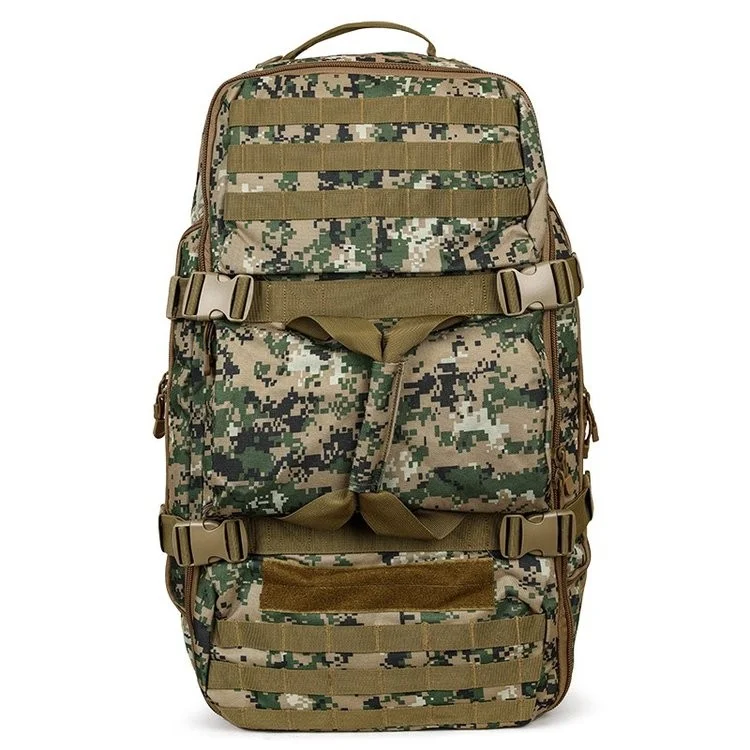
Tactical backpacks are categorized by their mission volume, operational profile, and internal organizational architecture. Sizing standards across our OEM production lines cover three primary commercial categories:
8.1 Tactical Backpack Category Comparison
| Category & Profile | Typical Volume | Target Dimensions (H x W x D) | Empty Dry Weight Target | Key Architectural Features | Target Commercial Audience |
|---|---|---|---|---|---|
| Everyday Carry (EDC) Tactical Pack | 20L - 28L | 46 x 28 x 18 cm (18" x 11" x 7") | 0.95 - 1.25 kg | Concealed CCW pocket, 15.6" padded laptop cradle, admin organizer | Commuters, security officers, range shooters, urban EDC |
| 3-Day Modular Assault Pack | 35L - 45L | 52 x 34 x 24 cm (20.5" x 13.5" x 9.5") | 1.45 - 1.85 kg | 180° clamshell opening, 3L hydration sleeve, 4-point compression | Military training, law enforcement, weekend bushcraft |
| Extended Deployment / Bug-Out Pack | 55L - 75L | 68 x 38 x 28 cm (27" x 15" x 11") | 2.20 - 2.85 kg | Aluminum stay frame, modular sleeping bag compartment, padded hip belt | Survivalists, extended expeditions, tactical deployments |
| Convertible Tactical Duffle Backpack | 40L - 60L | 58 x 32 x 26 cm (23" x 12.5" x 10") | 1.35 - 1.70 kg | Stowable shoulder harness, top/side haul handles, full U-zip lid | Military travel, crossfit athletes, tactical range deployment |
9. Custom Branding, Camouflage Patterns & OEM Customization
Private-label tactical brands require specialized branding options that maintain low visual and optical signatures while clearly displaying brand identity.
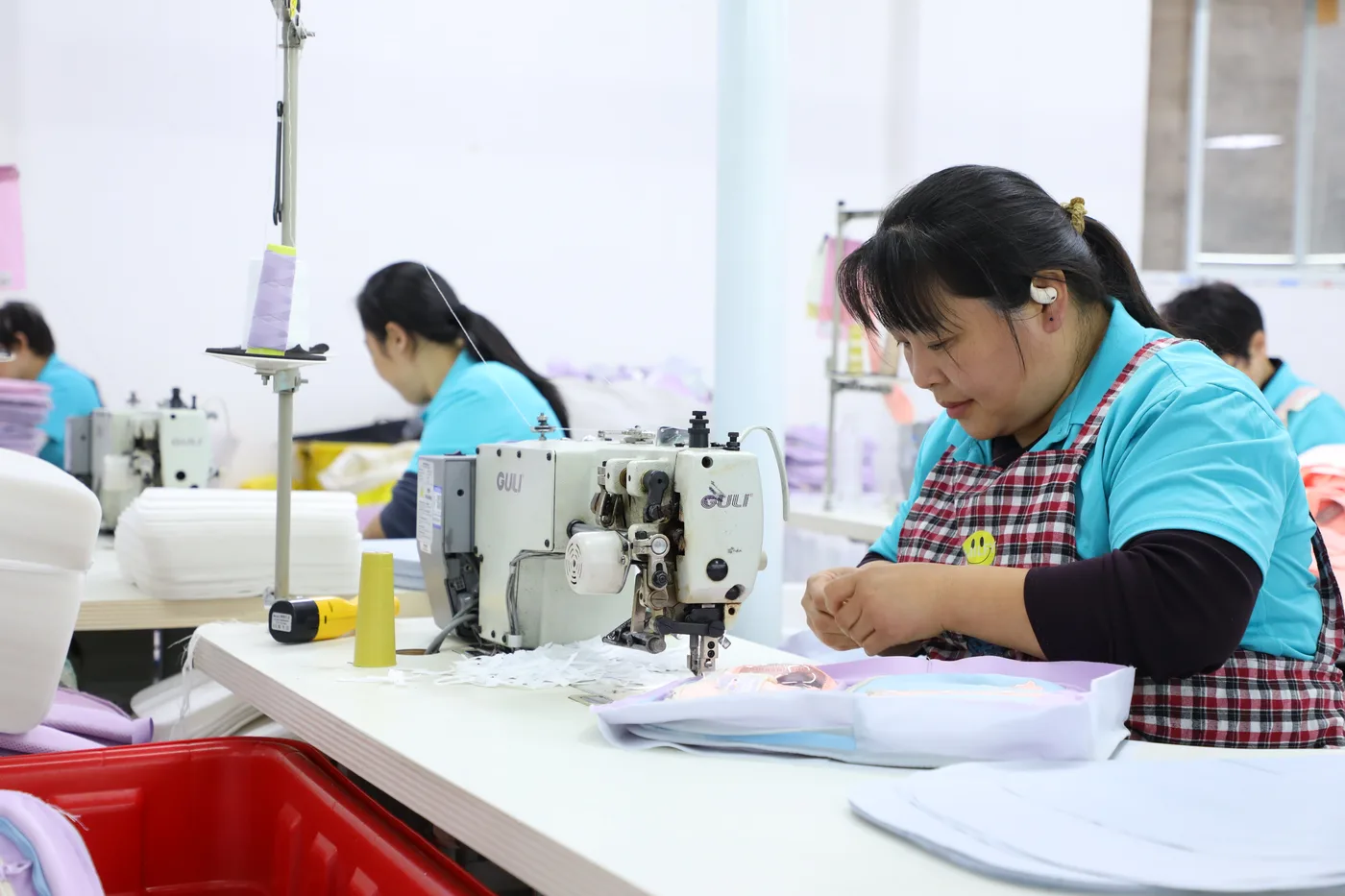
9.1 Branding Methods for Tactical Gear
| Customization Method | Technical Specifications | Ideal Placement & Styling | Visual Signature Level |
|---|---|---|---|
| Loop Hook-and-Loop Field (Velcro) | Mil-Spec 100x50mm Loop Patch | Upper front panel (Morale patches, unit tags) | Neutral (allows user patch customization) |
| Micro-Injection Molded Rubber Patch | 3D Flexible PVC / TPU Logo Patch | Side gusset or lower admin flap | Modern, water-resistant tactile brand identity |
| High-Density Tactical Embroidery | Matte Polyester Subdued Thread | Tone-on-tone subdued chest or strap branding | Low-visibility subdued military aesthetic |
| Custom Molded POM Hardware Pullers | Custom Laser/Debossed Logo Tooling | Zipper pulls, POM side-release buckle faces | Subtle, premium executive hardware branding |
| Woven Mil-Spec Edge Labels | High-Density Damask Weave | Side seam insertion or harness shoulder strap | Clean, durable classic apparel branding |
9.2 Camouflage Patterns & Colorfastness Standards
Senszx manufactures tactical gear in a wide range of solid tactical hues and precision camouflage patterns:
- Solid Tactical Tones: Coyote Brown (Pantone 17-1113 TCX), Ranger Green (Pantone 19-0414 TCX), Wolf Grey (Pantone 18-4005 TCX), Tactical Black (Jet Black), and Olive Drab.
- Camouflage Patterns: MultiCam (Standard, Black, Alpine, Tropic), Classic Woodland M81, Digital Woodland/Desert (MARPAT style), and Hexagonal Tactical Camo.
- Colorfastness & NIR Compliance: Textiles achieve Grade 4.5+ colorfastness to light (AATCC 16E) and Grade 4.0+ colorfastness to washing and perspiration, with optional Near-Infrared (NIR) signature management compliant with military specifications.
10. The 7-Step OEM/ODM Tactical Backpack Manufacturing Process
Executing high-volume tactical bag manufacturing requires rigid coordination across pattern engineering, precision cutting, multi-tier assembly, and mechanical quality verification.
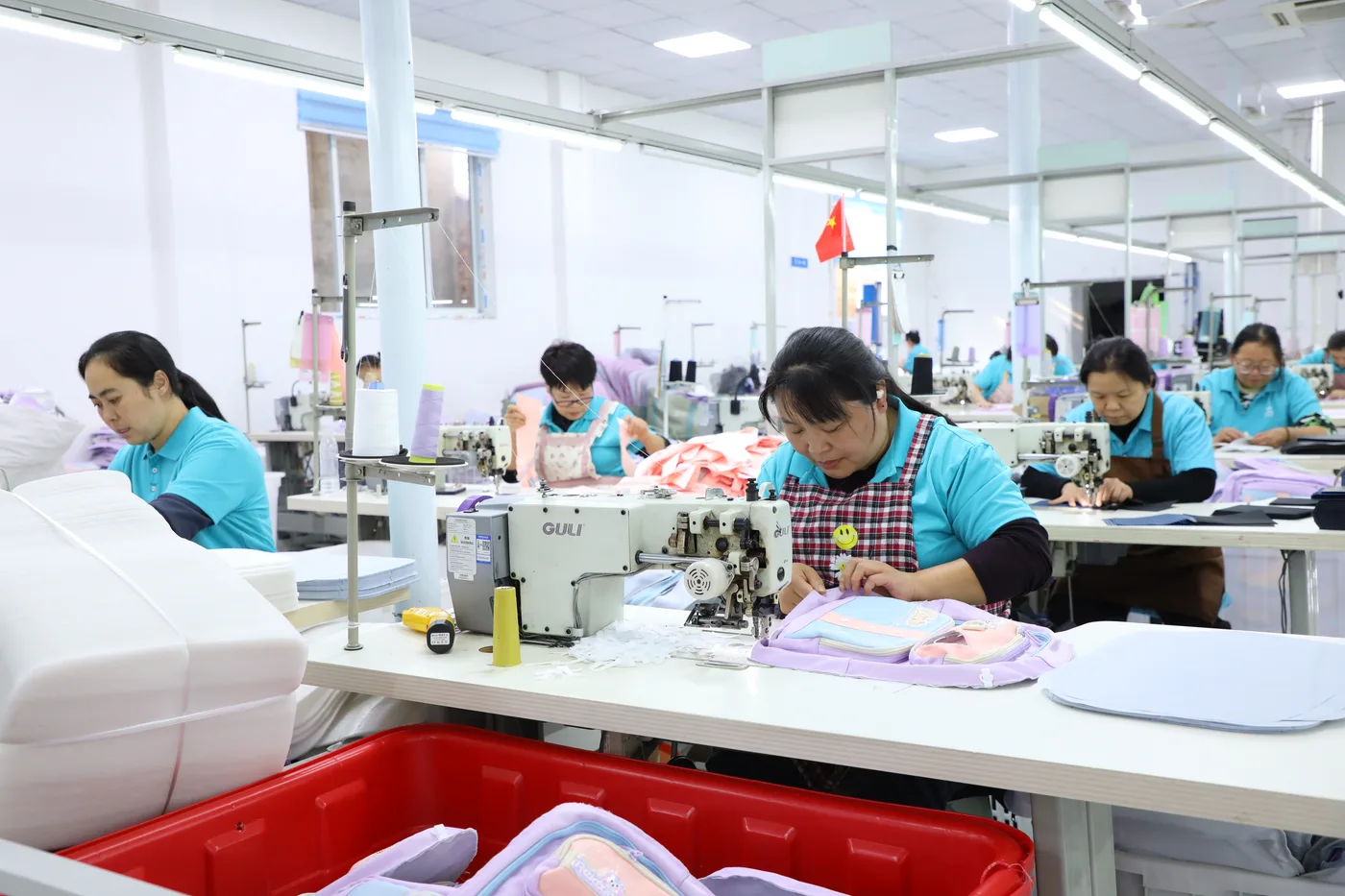
10.1 Detailed Manufacturing Breakdown
- CAD Pattern Engineering & Nesting Optimization (1-2 Days): Client tech packs and vector camouflage design files are imported into our digital CAD apparel pattern software. Our master pattern makers draft all 65 to 110 discrete pattern parts, adding precise seam allowances (standard 10 mm on structural seams, 15 mm on zipper closures) and programming automated nesting layouts to maximize textile utilization and minimize fabric scrap waste.
- Prototype Prototyping & Physical Sample Verification (3-5 Days): Our dedicated sample room cuts and hand-assembles complete physical prototypes. Prototyping tests dimensional proportions, hardware alignment, zipper glide resistance, and ergonomic harness drape. The finished sample is photographed from multiple angles and dispatched via express courier for client physical evaluation and sign-off.
- Inbound Textile Quality & Lab-Dip Verification (2 Days): Inbound bulk fabric rolls and webbing undergo physical laboratory verification: checking yarn denier, Martindale abrasion resistance, tear strength, hydrostatic head water column, and spectrophotometer color matching against approved master color swatches under standard D65 light booths.
- Automated Multi-Layer Spreading & CNC Laser / Die Cutting (2 Days): High-precision automated spreading tables lay out up to 30 plies of heavy-duty Oxford or Cordura fabric under tension-free conditions. Computer-guided CNC laser cutters and high-tonnage hydraulic clicker presses cut every component with ±0.5 mm edge precision, simultaneously heat-fusing synthetic fiber edges to prevent unraveling.
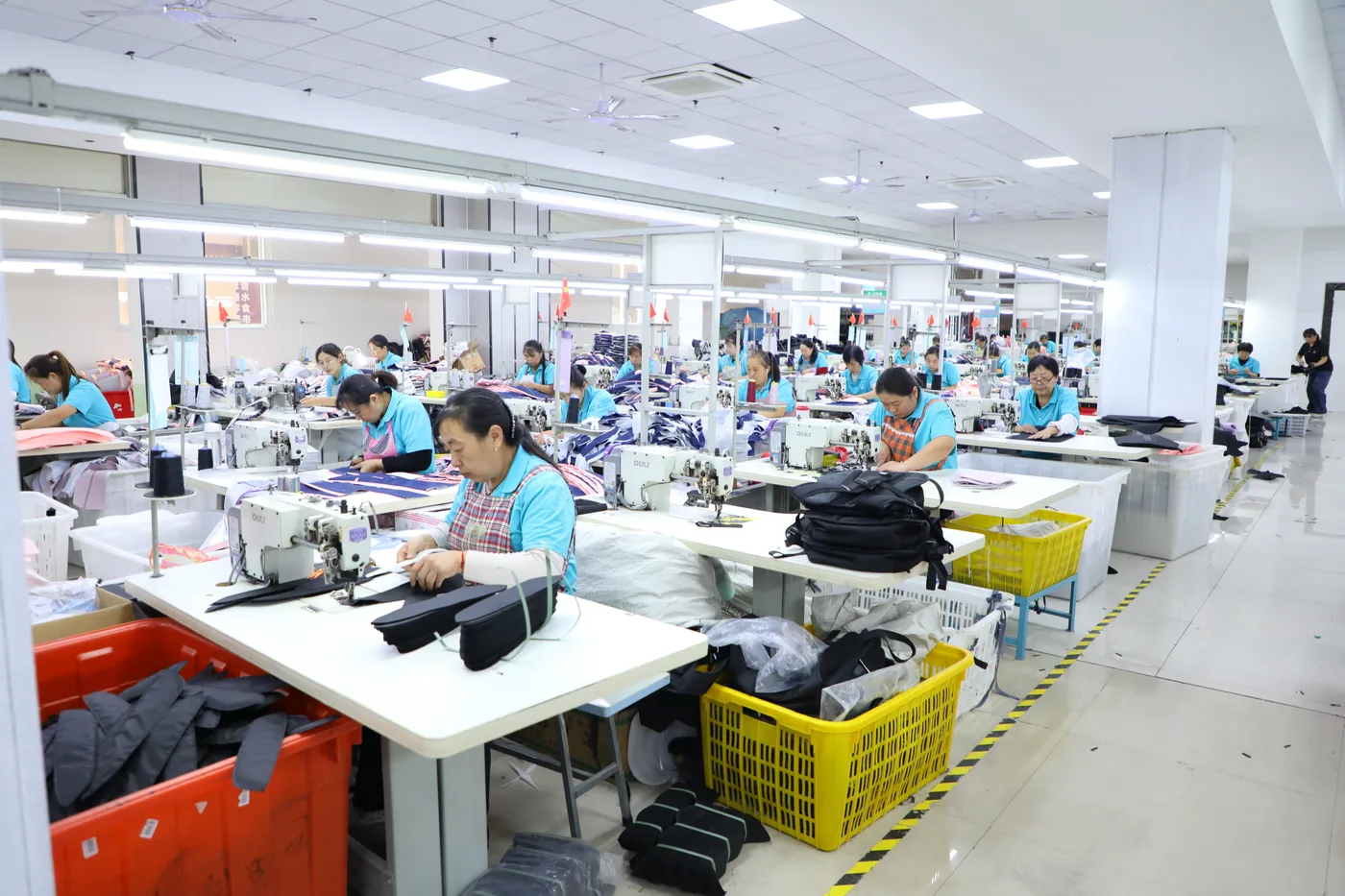
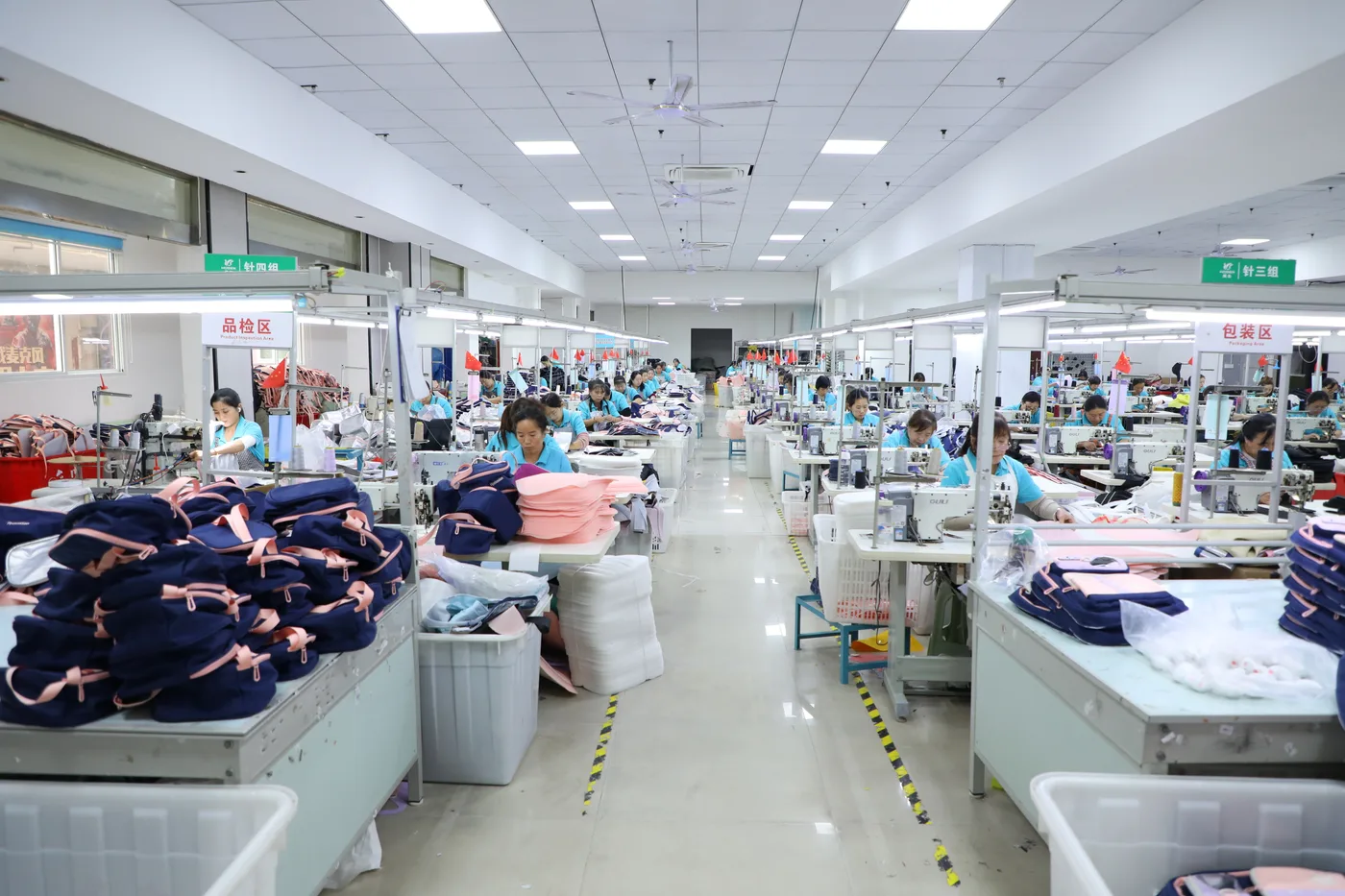
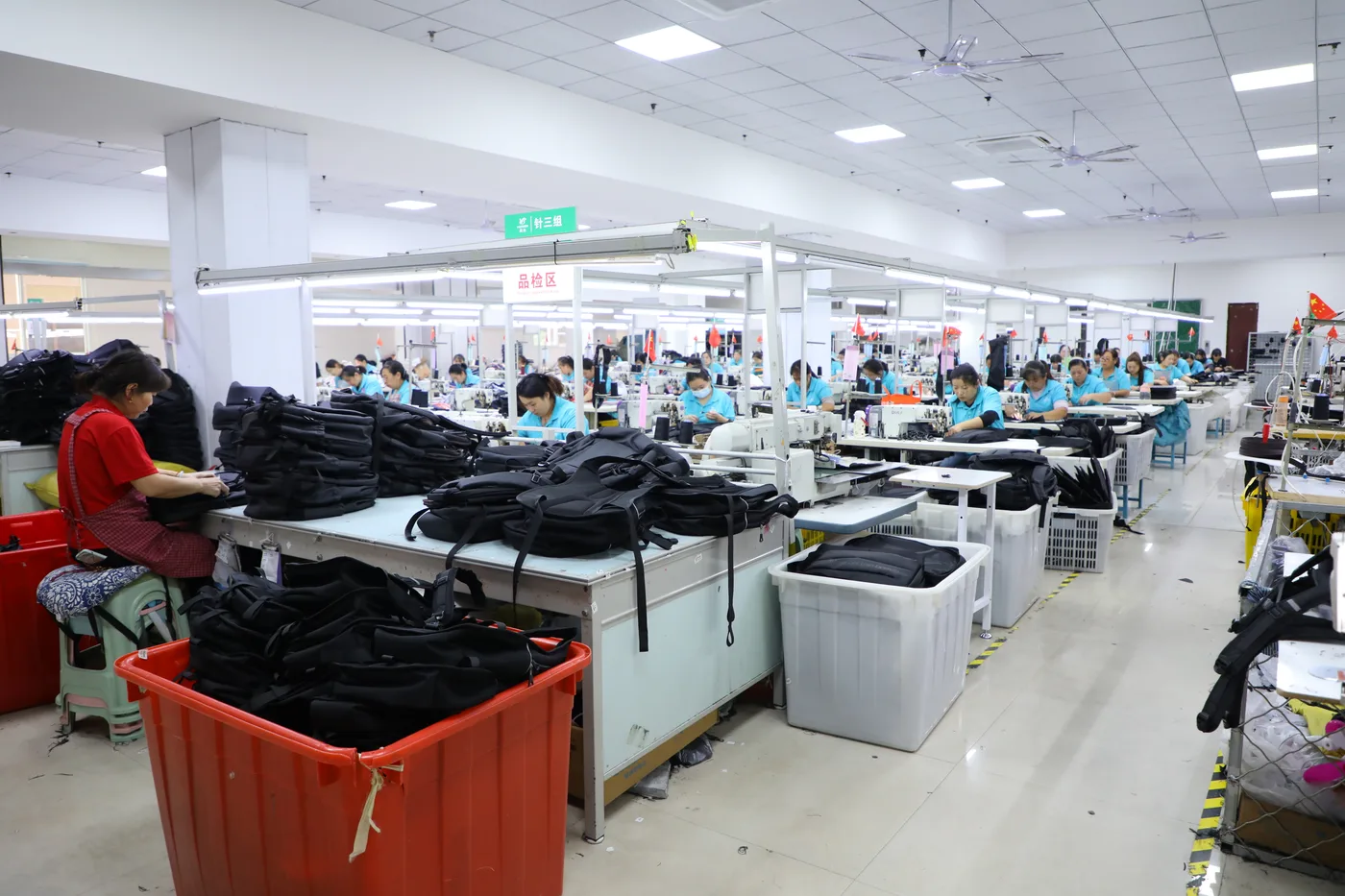
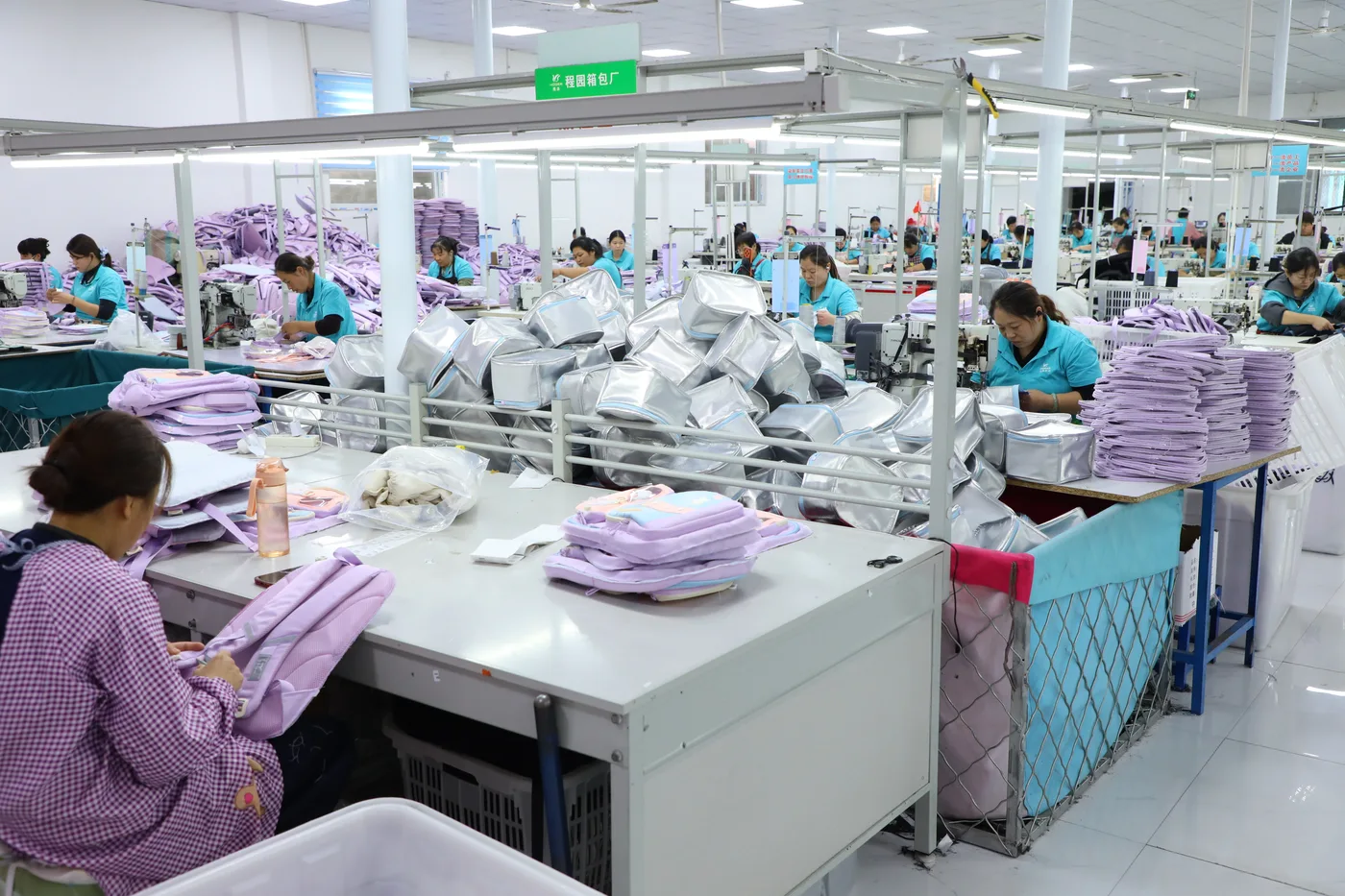
- Multi-Station Parallel Sewing, Box-X Stitching & Bartack Reinforcement (10-12 Days): Production is divided across specialized sewing cells. Sub-assembly lines construct shoulder harnesses, front admin pockets, and MOLLE webbing grids in parallel. Sub-assemblies then converge on the main assembly line, where walking-foot heavy-duty machines join the shell, lining, zipper track, and structural foam into a unified 3D chassis.
- Six-Gate Inline QC, 100% Thread Trimming & Mechanical Tensile Stress Auditing (2 Days): Every pack moves through six quality inspection gates: checking stitch density, seam alignment, symmetry, hardware retention, zipper fluidity, and cosmetic cleanliness. Dedicated trimming operators remove all loose threads before random units undergo calibrated drop-load and tensile testing in our factory laboratory.
- Needle Detection, Export Packaging & Container Logistics Dispatch (1 Day): Every finished pack passes through high-sensitivity conveyor metal needle detector machines to ensure zero broken needle fragments remain embedded in the foam or fabric. Packs are folded, bagged with desiccants, packed into 5-ply export master cartons, strapped, and prepared for maritime container shipping or air freight.
| Production Stage | Standard Factory Equipment | Quality Verification Metric | Defect Prevention Protocol |
|---|---|---|---|
| CAD Pattern Drafting | Lectra / Gerber Digital CAD Systems | Pattern boundary tolerance ±0.5 mm | Pre-production digital stitch simulation |
| Material Verification | Martindale Tester / Hydrostatic Head Tester | >1,500mm water column, >50k rub cycles | Inbound roll quarantine and laboratory testing |
| Textile Cutting | Automated CNC Laser / Hydraulic Presses | ±0.5 mm cut edge accuracy | Thermal perimeter edge cauterization |
| Sub-Assembly Sewing | Computerized Walking-Foot Lockstitch | 9 to 11 SPI, synchronized thread tension | Automated 42-stitch Box-X bartack arrays |
| Final Assembly | Cylinder-Bed & Post-Bed Heavy Machines | Seam allowance 10 mm ± 1 mm | Full 210D internal raw-edge seam binding |
| Inline Inspection | 6-Gate Inspection Stations | AQL 2.5 Major / 4.0 Minor Standards | 100% manual loose-thread heat trimming |
| Metal Needle Scanning | Conveyor Metal Detector (0.8 mm Fe sensitivity) | Zero ferrous metal contamination | Automatic belt stop and rejection on detection |
11. Senszx Quality Control Standards: AQL 2.5 & Tactical Defect Prevention
At Senszx, quality control is integrated directly into the manufacturing flow rather than treated as a post-production formality. We enforce strict inline audits and 100% pre-packaging inspections following ANSI/ASQ Z1.4 / ISO 2859-1 (AQL 2.5 Major / 4.0 Minor) standards.
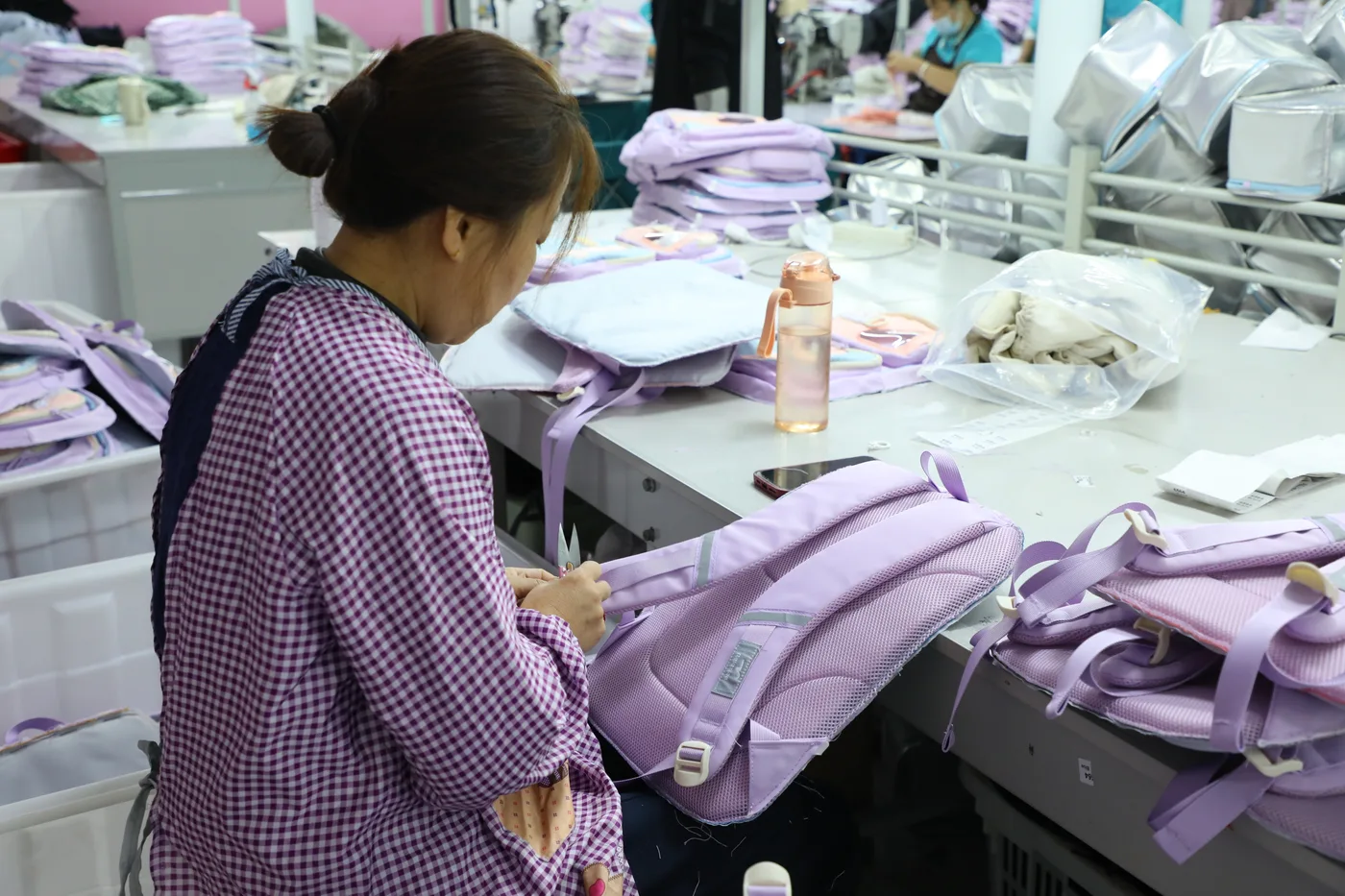
11.1 Mechanical Laboratory Stress Testing
Before bulk packaging commences, random production units undergo rigorous mechanical stress testing in our factory testing laboratory:
| Laboratory Test Protocol | Test Parameters & Applied Load | Acceptance Quality Threshold | Operational Failure Risk Prevented |
|---|---|---|---|
| Dynamic Drop Load Test | 25 kg payload, dropped from 1.2 m height | 30 continuous drop cycles with zero seam slip | Shoulder harness blowout on rough ground impact |
| Shoulder Strap Tensile Pull | 45 kg continuous deadweight pull | Held for 4 hours; zero stitch failure | Upper strap yoke tear under heavy ruck payloads |
| Haul Handle Tensile Pull | 35 kg continuous vertical pull | Held for 2 hours; zero Box-X thread rupture | Handle detachment when hoisting loaded pack into vehicles |
| Zipper Cycle Durability Test | 5,000 continuous open/close runs | Smooth glide, zero tooth misalignment or tape tear | Zipper splitting under high lateral overstuffing |
| Salt Spray Corrosion Test | 5% NaCl salt fog spray for 48 hours | Zero visible surface oxidation or pitting on metal | Hardware rust and slider seizure in coastal environments |
| Hydrostatic Water Spray Test | 1,500 mm water column pressure | Zero interior water seepage through coated shell | Water damage to electronics and interior provisions |
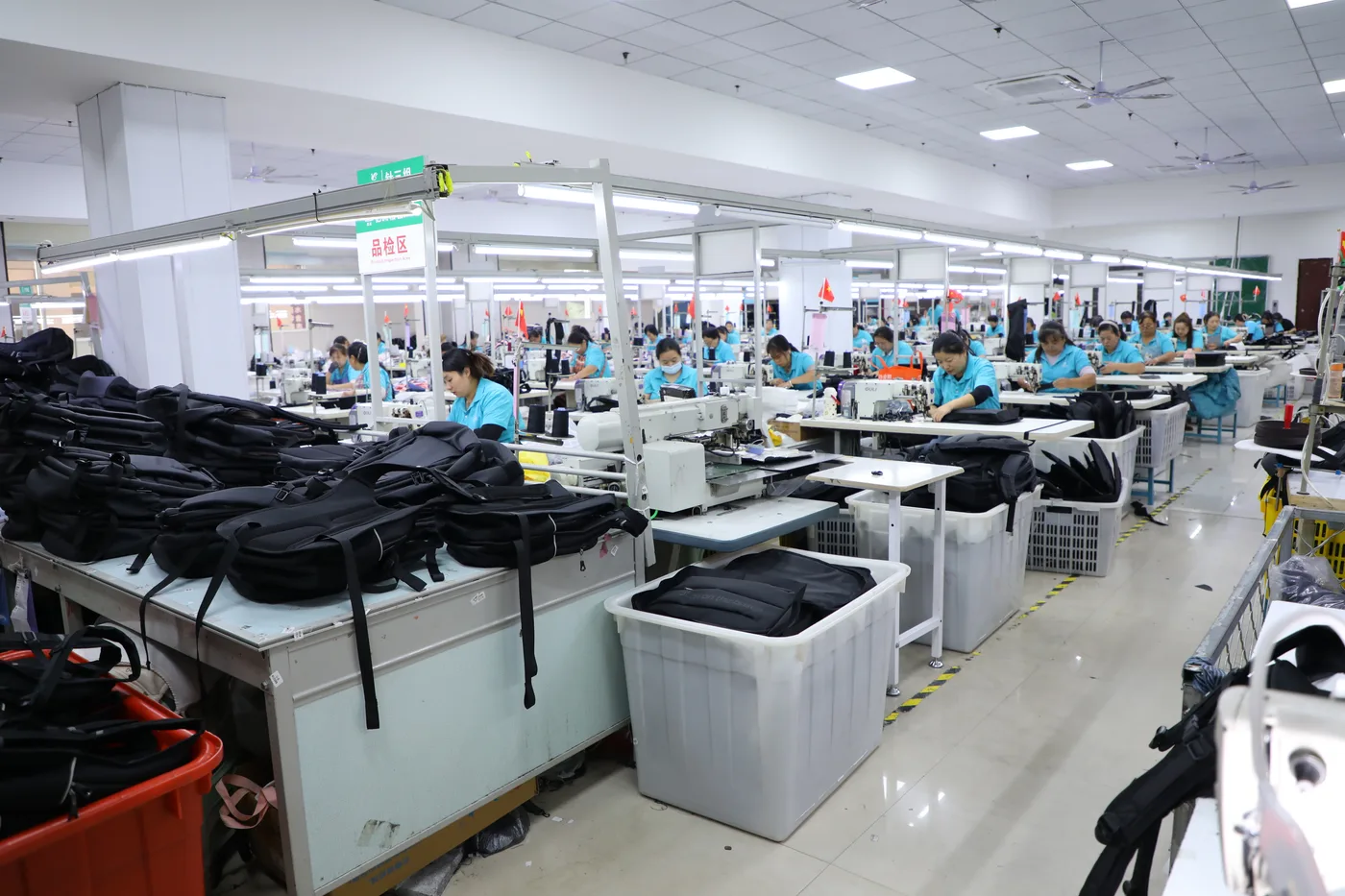
11.2 Common Tactical Manufacturing Defects & Senszx Prevention Protocols
| Critical Defect Category | Root Cause in Budget Factories | Senszx Factory Engineering Prevention Protocol |
|---|---|---|
| MOLLE Webbing Shear Failure | Low stitch density or standard straight lockstitch | Automated computerized 42-stitch high-tensile Box-X bartack arrays |
| Strap Anchor Tearing | Stitching into single fabric layer without backer | Internal 1000D high-density webbing reinforcement backer plates |
| Seam Puckering & Tension Creep | Incorrect needle size or loose thread tension balance | Synchronized compound-feed walking foot machines with digital tension control |
| Sub-Zero Hardware Fracture | Low-grade recycled plastic or polypropylene resin | 100% virgin POM (Polyoxymethylene / Acetal) resin hardware |
| Internal Water Seepage | Uncoated lining seams or low-grade PU coating | Dual-pass 2,000mm PU coating + sealed reverse coil zippers |
12. B2B Sourcing Strategy: Cost Breakdown, Tech Packs, MOQ & Lead Times
Understanding the cost drivers behind tactical backpack manufacturing allows brand developers to optimize their bills of materials (BOM), hit target retail margins, and streamline production scheduling.
12.1 OEM Tactical Backpack Cost Drivers (Standard 35L-45L Assault Pack)
- Raw Materials (42%): 500D/1000D nylon or high-density Oxford shell, 210D ripstop lining, mil-spec nylon webbing, high-density closed-cell EVA foam, and 3D air-mesh padding.
- Hardware & Fasteners (18%): 100% virgin POM side-release buckles, tri-glides, D-rings, sternum whistle buckles, and heavy-duty #10/#8 reverse coil zippers.
- Skilled Assembly Labor (24%): Multi-layer spreading, CNC laser cutting, specialized multi-station sewing assembly, Box-X bartack reinforcement, and manual thread trimming.
- Quality Assurance & Testing (6%): Six-gate inline quality audits, dynamic drop testing, static tensile pull testing, metal needle detection scanning, and lab documentation.
- Packaging & Master Logistics (5%): Individual 0.05mm polybagging, non-toxic silica gel desiccants, 5-ply double-wall export master cartons, and pallet strapping.
- Factory Overhead & Compliance (5%): Sustainable factory maintenance, BSCI/ISO audit compliance, environmental waste management, and machine tooling maintenance.
12.2 Tiered Production Pricing Matrix (35L Assault Pack Benchmark)
The table below illustrates sample OEM volume cost scaling for a commercial 35L tactical assault pack (500D high-tenacity nylon shell, full MOLLE array, virgin POM hardware, YKK-grade zippers):
| Production Batch Tier | Unit Manufacturing Price (FOB) | Sample Prototyping Lead Time | Bulk Production Turnaround | Payment & Milestone Terms |
|---|---|---|---|---|
| 500 - 999 Units (Standard MOQ) | Baseline ($18.50 - $22.50 / unit) | 3 - 5 Business Days | 20 Calendar Days | 30% Deposit / 70% Before Shipping |
| 1,000 - 4,999 Units (Mid-Tier) | -8% to -12% Volume Discount | 3 - 5 Business Days | 20 Calendar Days | 30% Deposit / 70% Before Shipping |
| 5,000+ Units (Enterprise Volume) | -15% to -20% Volume Discount | Free Sample Development | 25 Calendar Days | Custom Commercial Credit Terms |
12.3 Comprehensive Bill of Materials (BOM) Architecture for OEM Sourcing
When drafting a professional technical tech pack for custom tactical backpack manufacturing, submitting a fully itemized Bill of Materials (BOM) ensures rapid prototype turnaround and eliminates costly quoting ambiguities. The table below outlines the industrial BOM structure standardized at Senszx:
| BOM Line Item # | Component Category | Component Description | Material Composition & Grade | Placement Location | Sourcing / Brand Spec |
|---|---|---|---|---|---|
| BOM-01 | Primary Shell Fabric | 500D High-Tenacity Tactical Oxford | 100% Nylon 6.6 with C0 DWR + Dual PU Backing | Front, sides, top lid, and bottom panel | Mil-spec Grade A |
| BOM-02 | Secondary Base Fabric | 1000D Heavy Ballistic Cordura | 100% Air-Textured Nylon 6.6 with 2,000mm PU | Exterior ground contact base panel | Genuine Cordura / Mil-spec |
| BOM-03 | Internal Lining | 210D High-Density Ripstop | 100% Polyester with Diamond Grid Weave | Internal partitions, pocket dividers | High-visibility Orange or Grey |
| BOM-04 | Tactical Webbing | 1.0" (25.4mm) Mil-Spec Webbing | 100% High-Density Nylon (MIL-W-17337) | PALS/MOLLE grid, compression straps | Mil-spec Tactical Shade |
| BOM-05 | Heavy Harness Webbing | 1.5" (38mm) Load Webbing | 100% Woven Nylon (MIL-W-4088 Type I) | Shoulder strap harness anchors | Mil-spec Tactical Shade |
| BOM-06 | Main Zippers | #10 Heavy-Duty Nylon Coil | Dual Matte Black Sliders + 550 Paracord Pulls | Main cargo 180° clamshell opening | YKK / SBS Tactical Grade |
| BOM-07 | Pocket Zippers | #8 Reverse Coil Water-Repellent | PU-Coated Waterproof Tape + Single Slider | Front admin and secondary utility pockets | YKK / SBS AquaGuard Grade |
| BOM-08 | Side Release Buckles | 25mm Heavy-Duty Dual Adjust | 100% Virgin POM (Polyoxymethylene / Acetal) | Side compression and sternum straps | Duraflex / ITW Nexus |
| BOM-09 | Waist Belt Buckle | 50mm Dual-Pull Center Release | 100% Virgin POM High-Impact Acetal | Ergonomic lumbar transfer belt | Duraflex Warrior / ITW |
| BOM-10 | Structural Harness Foam | 8mm Closed-Cell EVA (45 kg/m³) | High-Rebound Microcellular EVA Foam | Shoulder strap and lumbar core padding | In-house Calibrated Core |
| BOM-11 | Breathable Air Mesh | 3D Honeycomb Air Spacer Mesh | 100% Knitted Polyester (300 GSM) | Back panel and shoulder strap underside | High-ventilation Air Mesh |
| BOM-12 | Frame Sheet Stay | 1.8mm HDPE + Dual 6061-T6 Aluminum | High-Density Polyethylene + T6 Alloy Bars | Internal back panel frame chassis | Aircraft Aluminum Stays |
| BOM-13 | Assembly Thread | Bonded Nylon Size #69 (Tex 70) | 100% Continuous Filament Bonded Nylon 6.6 | All structural seams and zipper assemblies | Coats / A&E Bonded Nylon |
| BOM-14 | Reinforcement Thread | Bonded Nylon Size #92 (Tex 90) | 100% Continuous Filament Bonded Nylon 6.6 | 42-stitch bartacks, Box-X strap joints | Coats / A&E Bonded Nylon |
13. Comprehensive Tactical Backpack Manufacturing FAQ
The following section addresses the 12 most frequent technical and commercial questions submitted by North American and European procurement directors:
Q1: What is the single-track MOQ for custom tactical backpack production at Senszx?
Senszx operates on a single-track OEM/ODM minimum order quantity of 500 pieces per style/colourway. For startups requiring pilot validation, our Development Fee Program covers 3 sample iterations and full CAD pattern making, with 100% of the fee credited against your initial 500+ unit bulk order.
Q2: Can you supply Mil-Spec NIR (Near-Infrared) compliant fabrics for defense contracts?
Yes. We source specialized military-grade fabrics treated with Near-Infrared (NIR) signature management coatings that meet military spectral reflectance standards, preventing detection by night-vision devices across the 600–900 nm wavelength band.
Q3: What is the turnaround time for tactical backpack prototypes?
Physical sample prototyping takes 3 to 5 business days once your tech pack, vector artwork, and bill of materials (BOM) are confirmed. Custom-tooled hardware or molded EVA back panels add 5 to 7 days for initial tooling creation.
Q4: How do you prevent thread fraying on laser-cut MOLLE panels?
Our CNC laser cutting machines utilize high-temperature thermal laser optics that instantly melt and fuse synthetic composite fibers (500D Cordura fused with Hypalon or TPU) as they cut, creating permanently sealed, anti-fray edges that will not unravel during extended field use.
Q5: Can Senszx integrate concealed carry (CCW) compartments into custom tactical packs?
Yes. We engineer dedicated CCW compartments lined with soft, high-cycle loop fabric compatible with modular hook-and-loop holsters, magazine pouches, and quick-pull ambidextrous zipper tabs for rapid, snag-free access.
Q6: What zipper brands and pullers do you offer for tactical gear?
We supply genuine YKK, SBS, and high-tenacity mil-spec unbranded zippers. All tactical exterior zippers can be configured with silent 550 nylon paracord pullers, heat-shrink tubing tabs, or custom molded rubber pullers to eliminate metallic clinking during active movement.
Q7: What testing documentation do you provide for bulk production batches?
Every production run includes comprehensive laboratory quality documentation: fabric tensile and tear test certificates, AQL 2.5 inspection reports, dynamic drop load test verification, needle detection scan certificates, and high-resolution packaging audit photos.
Q8: What export and customs packaging standards are followed for North American shipments?
Packs are individually folded, packed with non-toxic silica gel desiccants into 0.05mm polybags, and loaded into heavy-duty 5-ply double-wall corrugated master export cartons (ECT 44 / 275 lb burst strength), strapped with polypropylene security bands and sealed with moisture-resistant tape.
Q9: What is the bulk production lead time for orders between 500 and 5,000 units?
Standard bulk manufacturing turnaround is 20 calendar days from pre-production sample (PPS) sign-off and raw material procurement.
Q10: How do you handle custom Pantone color matching for tactical fabrics and webbing?
We match solid tactical colorways against the Pantone Fashion, Home + Interiors (TCX / TPX) color system or military Federal Standard 595C color fans. Custom lab-dip color strike-offs are prepared and dispatched for your physical approval within 3 to 5 business days.
Q11: Can third-party inspection agencies (SGS, BV, QIMA) inspect orders at your facility?
Yes. We welcome third-party quality inspection agencies to our Baigou manufacturing facility at any stage—including During Production (DUPRO) audits and Final Random Inspections (FRI) prior to container loading.
Q12: What social compliance and environmental certifications does Senszx hold?
Senszx is fully certified under BSCI (Business Social Compliance Initiative), ISO 9001 (Quality Management), ISO 14001 (Environmental Management), ISO 45001 (Occupational Health & Safety), and CE standards, guaranteeing ethical labor conditions, environmental sustainability, and consistent industrial quality.
14. Partner with Senszx: Start Your Custom Tactical Backpack Project
Building a market-leading custom tactical backpack requires an OEM manufacturing partner that combines deep material science expertise, high-tensile seam engineering, and rigorous factory-floor quality control. With over two decades of dedicated luggage manufacturing experience, 100 in-house parallel production lines, and an uncompromising commitment to defect-free execution, Senszx is your reliable manufacturing partner for commercial success.
| B2B Manufacturing Parameter | Senszx Factory Service Commitment | Commercial Value for Brand Owners |
|---|---|---|
| Single-Track OEM/ODM MOQ | 500 pieces per style / colorway | Accessible entry threshold for private-label lines |
| Rapid Prototyping Lead Time | 3 to 5 business days | Accelerates time-to-market for seasonal product launches |
| Bulk Manufacturing Lead Time | 20 calendar days from PPS sign-off | Predictable inventory replenishment and supply security |
| Quality Control Standard | AQL 2.5 Major / 4.0 Minor + 100% Inline QC | Minimizes customer return rates and protects brand reputation |
| Direct Engineering Contact | Email: [email protected] | WhatsApp: +86 17331531825 |
Ready to bring your custom tactical backpack designs to life? Contact our engineering team today to review your tech pack, request a physical fabric sample swatch book, or schedule an initial prototype run.
- Explore Our Custom Capabilities: Custom Backpack Manufacturing Services
- Browse Mil-Spec Textiles: Heavy-Duty Fabrics & Cordura Catalog
- Learn Tech Pack Drafting: How to Write a Professional Backpack Tech Pack
- Review Cost Modeling: Custom Backpack Cost Breakdown & Pricing Guide
- Explore Silhouettes: Comprehensive Types of Backpacks Guide
Hi, I'm Senszx Bag Manufacturer, Hope You Like This Blog Post.
With more than 20 years of experience in OEM/ODM/Custom luggage and bag, I'd love to share with you the valuable knowledge related to luggage and bag products from a top-tier Chinese supplier's perspective.
Senszx Factory
Est. 2006 · Baigou, China
Related articles
Custom Travel Bags with Logo: The Complete Manufacturing, Materials & Branding Guide
An exhaustive B2B manufacturing guide to custom travel bags with logo. Master custom duffle, weekender, and carry-on production, compare 6 branding techniques (screen print, heat transfer, woven labels, rubber patches, debossed leather, digital print), fabric specs (600D-1680D, nylon, canvas), hardware, and OEM factory quality control for 500+ unit runs.
Backpack CPSIA Compliance & Safety Testing: The Complete US Importer's Technical Guide
Master US backpack safety compliance: CPSIA regulations, CPC vs GCC certificates, Lead & Phthalates limits, Prop 65, tracking labels, and CPSC lab testing protocols.
Custom Laptop Backpack Manufacturing & Sourcing Guide: Compartment Architecture, Impact Foam, Hardware & OEM Cost Breakdown
A comprehensive B2B engineering guide to manufacturing custom laptop backpacks. Explore laptop cradle dimensions, EVA vs EPE shock foam, ballistic nylon specs, anti-theft zipper integration, and OEM/ODM cost breakdown for 500+ unit production runs.
Get a Custom Bag Quote from Our China Factory
Our sales team is online around the clock and usually replies within the hour.
Email
[email protected]Factory
Qinzheng Road No.89, New Industry Zone, Baigou Town
Baoding City, Hebei Province 074004, China